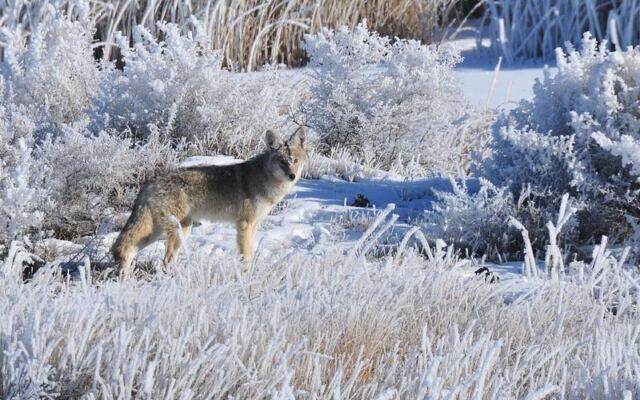
Yes, Delaware has coyotes, and the yips and howls you hear after dark are real communication between animals. State wildlife officials have documented coyotes in all three counties, even though few people ever see one.
A call can tell you a lot about coyote life in general, but not as much as you might think about one animal outside your window. Here is what the sounds mean, what they do not prove, and how to keep your home and pets safe.
Coyotes reached Delaware later than much of the country

Coyotes once lived mostly in the western half of the continent, and they spread east over many decades. Delaware was one of the last places they reached.
Delaware DNREC says Delaware was the 49th state populated by coyotes.
Maryland’s wildlife agency adds helpful regional context. Maryland DNR describes Delaware and Maryland as the last contiguous states colonized.
So if hearing a coyote here feels like a surprise, that makes sense. The animals are relative newcomers to this corner of the East.
DNREC reports that coyotes have now been documented in New Castle, Kent, and Sussex counties. The agency describes the statewide population as relatively low.
That wording matters, because it does not say coyotes are common everywhere.
The proof behind the state’s confirmation comes from several sources. These include trail-camera photographs, road-killed animals, public sightings, and coyotes reported by hunters and trappers.
Each type of record adds a piece to the picture.
Notice the difference between a county and a street. Knowing that coyotes live somewhere in Kent County does not tell you that one visits your yard every night.
Statewide documentation shows the species is here, while your own neighborhood needs its own evidence, such as a clear photo from a yard camera.
What coyote calls communicate
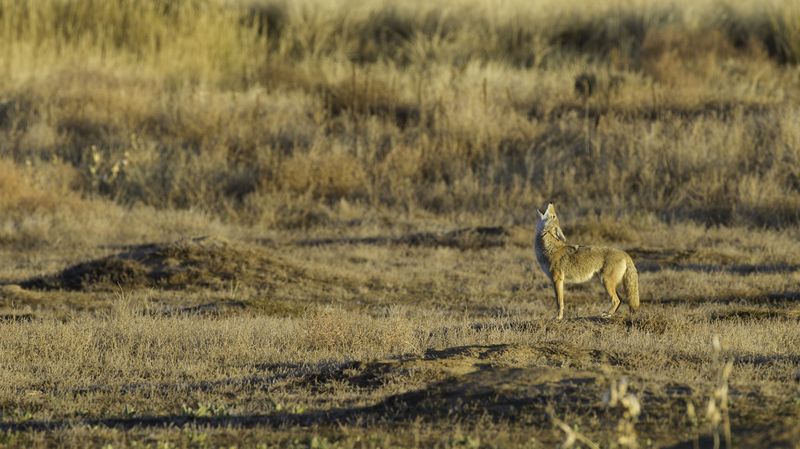
Howls, yips, and barks are how coyotes talk to each other. Wildlife researchers describe a few broad jobs for these sounds.
Two of the main ones are maintaining territory and helping family members find or reunite with one another, as explained in a Penn State overview of why coyotes howl.
Think of it like a neighborhood group chat that humans can only partly read. We know the chat exists and roughly what it is for.
We cannot read the individual messages.
That gap is the key limit. Labels such as territorial call or family check-in describe general purposes.
They are not a translation key for the call you heard at midnight. Nobody standing in a backyard can tell whether one howl meant stay away, where are you, or something else.
Researchers have also looked at how people perceive these sounds. A study in Human-Wildlife Interactions focused on how listeners judge group size, and its findings show why caution is smart when interpreting a chorus.
So the call is real communication, but it is not an alarm aimed at you. It is also not a message you can decode.
Treat it as a sign that coyote-type sounds are in the area, and nothing more specific than that.
Late November brings a different seasonal context
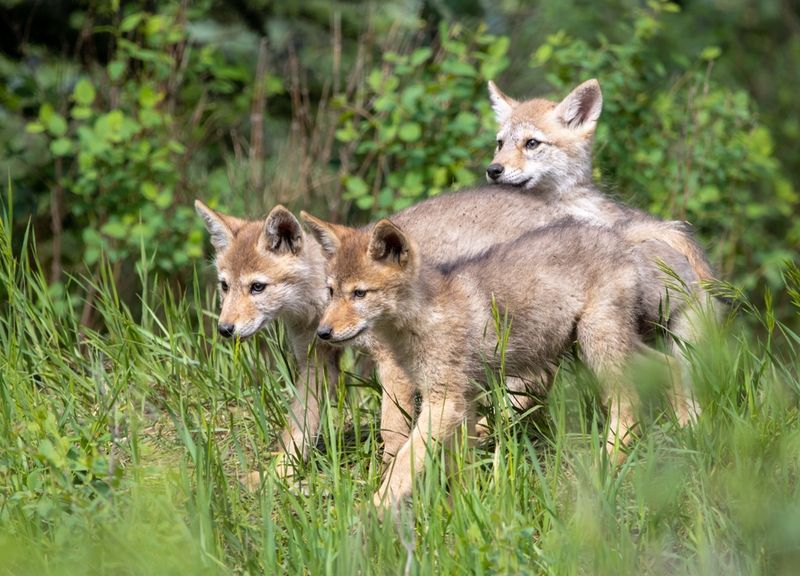
Many articles about coyote howling lean on mating season and pup rearing. Late November is a different point on the calendar.
Coyotes typically breed in February and March, and pups arrive roughly 60 days later, according to DNREC.
The pattern that fits this time of year is juvenile dispersal. Young coyotes often leave the area where they were born in October and November, looking for a place of their own.
That can mean more animals on the move than usual, including through unfamiliar ground.
These are general life-history patterns, as described in USDA APHIS coyote guidance. They are not a schedule that every coyote follows.
One family might shift earlier, another later.
A practical example helps. Suppose you hear yips behind your house on a cold November night.
You cannot say it was a young coyote on the move. Coyotes also vocalize at other times of year, so a late-night chorus does not tell you which season-related behavior triggered it.
The takeaway is simple. Seasonal timing gives you a reasonable background idea of what coyotes tend to be doing, but it works like a weather forecast rather than a report on the animal outside your window.
Why a chorus can sound larger than it is
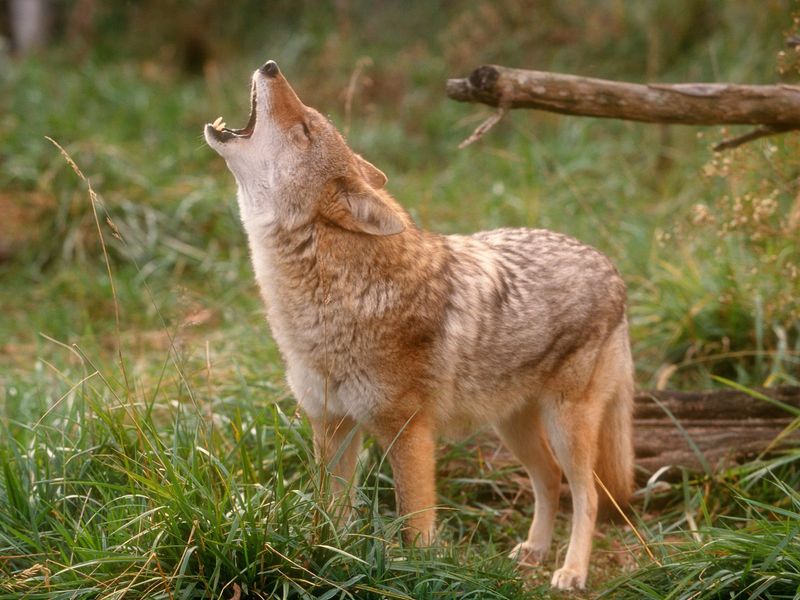
A burst of yips and howls from the dark can sound like a whole pack. Researchers tested this.
In a study of human perception of coyote group size, listeners overestimated the number of coyotes in recordings by nearly twofold.
That means counting by ear is a poor method. A small group can sound much bigger, and even one coyote heard repeatedly may sound like several.
Coyote calls vary in pitch and rhythm, which is part of why the ear gets fooled, a point also covered in USDA APHIS guidance.
If you hear what seems like ten animals, the safer conclusion is simply that at least one coyote may have been calling. You cannot know the actual number from sound alone.
Then there is the moon. Many people picture coyotes howling at a full moon, but that is folklore.
MassWildlife describes howling as communication with other coyotes, including family and territorial contact, rather than a reaction to moonlight.
The same goes for the idea that coyotes howl to celebrate a kill. Communication is the supported explanation.
A bright sky may help you notice the sound, but it does not explain it.
A call alone cannot confirm a coyote nearby
Coyotes are highly adaptable. DNREC describes them that way, and the National Park Service notes they can live in many kinds of habitat, including suburbs.
So a coyote passing through a neighborhood is not a far-fetched idea.
Still, the sources do not say coyotes are abundant on any particular beach, farm, or street in Delaware. Habitat flexibility describes what a coyote can do.
It does not map where they are today.
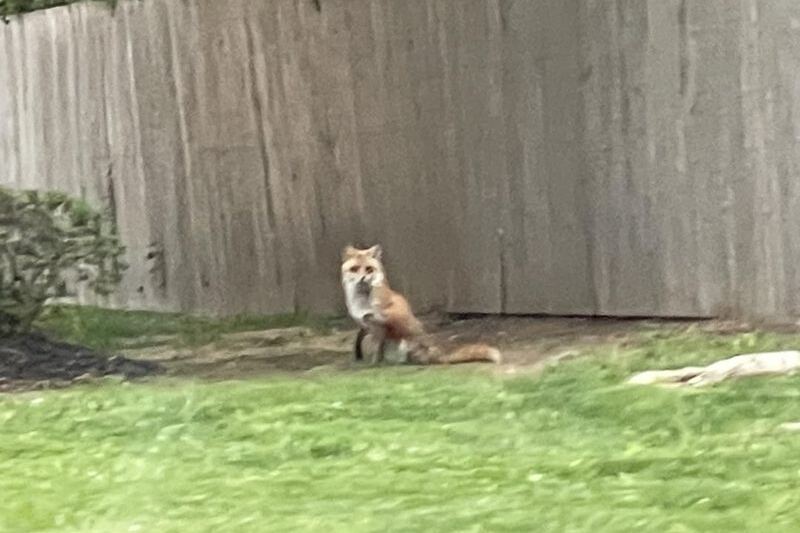
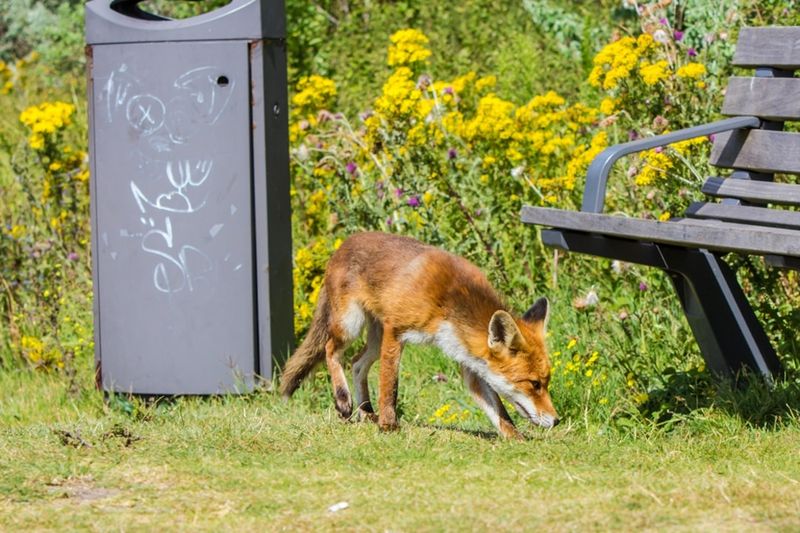
Misidentification is common too. DNREC says many reported sightings have turned out to be dogs or red foxes.
Foxes in particular make barks and yelps that can confuse a listener at night.
That leads to a useful rule. A sound can be consistent with coyotes without confirming them.
Sound alone cannot confirm an animal’s species, how many are present, or what they are doing.
If you want real confirmation, look for better clues. A clear trail-camera photo, a daylight sighting with a good view, or tracks and other physical signs all carry more weight than an audio memory from a dark yard.
Until then, the honest answer is probably coyotes, possibly something else.
Secure food and keep pets supervised
The best response to a nighttime howl is a few steady habits. DNREC advises people not to feed coyotes and to secure garbage and other food sources.
Pet food left outside, fallen fruit, and open compost piles all count.
DNREC also warns that pets can be prey. It recommends keeping them confined or supervised rather than letting them roam.
For cats and small dogs, that can be as simple as a leash or a quick trip outside with you at night.
Hearing a coyote is not the same as meeting one. A distant yip tells you little about risk.
A coyote that walks close to you is a different situation.
For that case, the National Park Service gives clear advice. Do not approach a coyote.
If one comes close, keep people and pets together, make noise, and do not run.
This is National Park Service guidance, so use it as a practical tip rather than a Delaware rule. For anything beyond that, check the guidance DNREC provides for Delaware.
These steps work whether or not a call points to a nearby animal. Take the food away and the pets in, and the night sounds can stay just that: a reminder that the dark has its own conversations.
Share this story