What Is Lawn Scarification?
Scarification involves removing thatch and moss from your lawn. Scarification, also known as “dethatching”, is a vital part of lawn care. Thatch is a build-up of dead grass, moss, and weeds, which can prevent water and nutrients from reaching the lawn’s roots. If your lawn is suffering from thatch, your grass will not grow strong and healthy and your lawn will become patchy and uneven.
Download FREE Fall Lawn Care Guide
Download our FREE 28-page fall lawn guide. Give your lawn stronger spring growth with this practical guide. Explore clear instructions, photos and diagrams covering aeration, overseeding, fertilizing, mowing, watering and leaf management, with guidance for different grasses and includes handy printable checklists for your lawn maintenance.
Why Do You Scarify Your Lawn?
The overall purpose of scarifying your lawn is to remove excess thatch and moss, allowing nutrients to reach the roots of the grass, and enabling the grass to grow. In addition scarifying your lawn will also help the lawn to be less susceptible to fungal diseases which thrive when moisture is trapped.
Scarification, when carried out correctly, can be a very effective lawn care technique as the removal of excess thatch and moss from the surface of the lawn is advantageous for the health of a lawn.
What Is Lawn Thatch?
Thatch is a build-up of dead organic material (leaves and other plant components that have decayed), including grass clippings and moss. This build-up is can occur when lawns too short, causing the grass to regrow and then die. Moss can also build up on your lawn, as it acts as a natural fertilizer for the soil, and because of the nutrients that moss contains, it can build up very quickly so excess needs to be removed.
Is Thatch Harmful to Your Lawn?

It is important to note that a small amount of thatch is beneficial for lawns, a few millimeters is sufficient because it protects the base of the grass while enabling nutrients to reach the soil and grassroots. Thatch also functions to protect against severe temperatures and to keep soil from being compacted. The problem with excessive thatch, on the other hand, is that it can stary to starve the grassroots of the water and nutrients it needs.
In the absence of appropriate attention, excess thatch dries up, hardens, and acts as a buffer through which nutrients and moisture cannot easily flow through. As a result, the grassroots can suffocate and possibly die.
Do some grass types need scarifying more than others?
Grass types can also be a factor, a grass type like ryegrass tends to produce much less thatch than other grasses.
Should You Scarify Freshly Turfed Lawns?
It should be noted that scarifying a freshly turfed or seeded lawn should be avoided until the sward has been well established. You’ll end up causing more damage than good.
When Is the Best Time to Scarify a Lawn?
The condition of the grass will largely determine when you should scarify your lawn. Generally speaking, though it is good practice to scarify at least once or perhaps twice a year, either early Spring or late Fall. However, the exact timing can be variable depending on the grass type.
For scarifying to achieve the best results the right climatic conditions must be current. Usually, it is best carried out in temperate conditions where it is neither too cold, nor too hot, nor too dry. In addition, scarifying should be carried out at the appropriate time of year since the process will leave your soil exposed and thus extra prone to the development of weeds.
The ideal time to scarify is early spring when the weather begins to warm up or late fall as it cools down. The growth and recuperation rates of your lawn are at their peak in the spring. It is critical that you do not scarify too early or too late when the temperature is too low.
Grass Type
Whether you have warm-season or cool-season grass can influence timing. Scarifying or dethatching warm-season grass will differ from cool-season lawns in timing as they have different peak growing seasons.
Problems of Shade
If areas of your lawn are constantly shaded, they will most likely thin down throughout the winter months. Scarifying these in the fall unless absolutely necessary is not suggested since it may prevent them from growing well enough in the spring and remain robust throughout the summer. If you do scarify shaded areas it is suggested that you feed these areas of the lawn well after scarifying.
If the area is shaded by a tree then early spring is ideal, as the tree foliage is still at its thinnest and will only be just beginning new leaf growth, ensuring that plenty of sunlight should be able to get through to these areas of your lawn.
Neglected Thatch
If however, you have neglected the thatch on your lawn for more than a year and it has become too excessive then scarifying in the late fall gives the grass the best chance to recuperate. This is because heavily scarifying or raking your lawn may expose large areas of the soil surface.
While this might be an excellent seedbed for new grass seeds, it also provides an excellent opportunity for weeds to establish themselves too. By scarifying in late Fall you can prevent any summer weeds and decrease the likelihood of any seeds, other than grass seeds, germinating and flourishing in your garden.
What to Do Before Scarifying a Lawn?
Scarifying is an essential part of lawn maintenance, particularly if you have a large garden or a lawn that suffers from compaction, heavy thatch, or moss. Scarifying helps to remove unwanted weeds and moss and to let air, water, and nutrients through to the grass roots. As such aerating your lawn before scarifying is good practice.
What Tools Do I Need to Scarify a Lawn?

Depending on the size of your region, you may choose whether to use hand tools or a professional machine to do the task.
If you’re feeling really enthusiastic and looking for good exercise a spring tine rake or a manual lawn scarifier will perform an excellent job of clearing the ground. Please note it is important not to remove all of the thatch since it is designed to preserve the plant’s fragile growth sections. However, as we have already discussed, an excessive amount of thatch may hinder the drainage and prevent ventilation of the lawn. So you will need to strike a balance between the two extremes.
Mechanical Lawn Scarifiers
Depending on the size of the lawn and the depth of the problem, there is various mechanical lawn scarifiers available that are capable of removing lawn thatch. Although you may feel it is expensive to buy a machine that you are only likely to use once or twice a year they can be easily rented, although ensure that if renting it is well cleaned as machinery can be a good way to transfer lawn fungal infections.
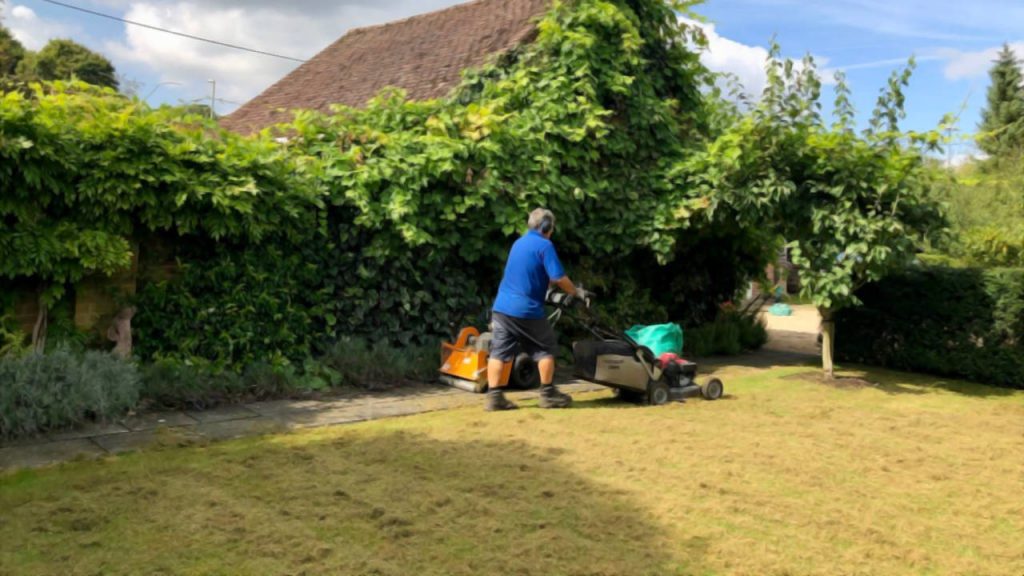
Power rakes or lawn scarifiers are machines that employ steel blades to remove thatch from the grass and help lift lateral growth.. You can also use a dethatcher which is a less invasive alternative to scarification as it cuts rather than scrapes.
If the lawn thatch is particularly heavy a more extensive course of action might be necessary. In these circumstances, the scarifier can be set to open up the soil surface by lowering the blades and allowing the machine blades to cut into the soil. This creates an excellent seedbed for introducing fresh grass seed to your lawn.

What to do after scarifying a lawn?
If you want to get the best results from scarifying a lawn you should feed your grass immediately after scarifying. Doing this will help to ensure a healthy good recovery of the lawn as the grass should grow back in a healthier state than before.
Summary | Scarify Lawn
When it comes to grass maintenance, the rule of thumb is to do little and frequently. When applying this to scarifying a lawn, a little and often tends to keep lawn thatch and moss under much better control, and the recovery period will be considerably shorter. This will result in you not having to over attack and remove a lot of stuff which may then demand sowing and topdressing.
Share this story