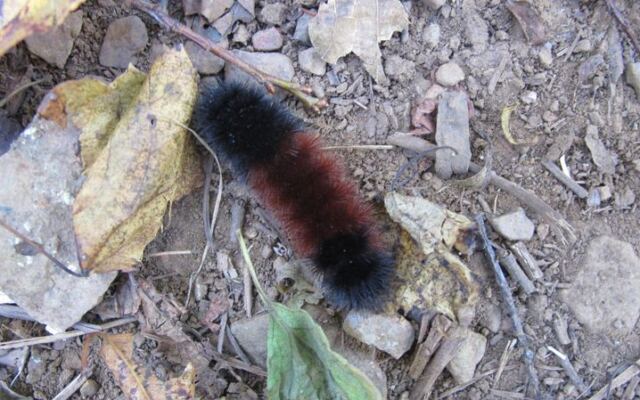
A fuzzy black-and-rust caterpillar curled into a tight ball under your leaves looks like it needs help. Usually, it is just doing what its kind has done for ages: waiting out the cold.
Delaware yards can be real winter homes for these caterpillars, and a few simple choices can protect them. Here is what scientists know, what they do not, and what folklore gets wrong.
First, Make Sure It’s the Banded Woolly Bear
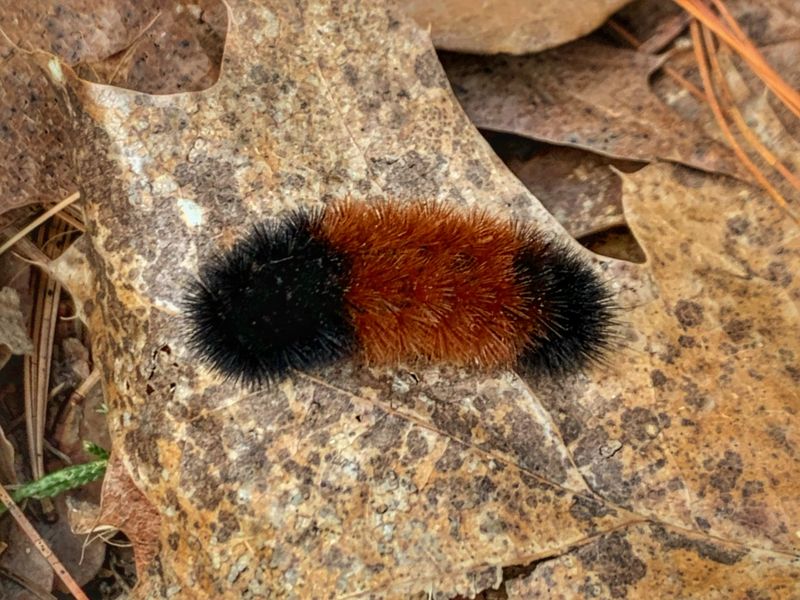
Neighbors might call any fuzzy caterpillar a woolly bear, but the classic one has a rusty-orange middle with black at both ends. That is the larva of the Isabella tiger moth, Pyrrharctia isabella.
University of Delaware guidance uses that name for the familiar banded caterpillar people find crossing Delaware roads and yards in fall.
This article is about that one species. University of Missouri Extension also ties the black-and-rust form to P. isabella.
Other fuzzy caterpillars exist, and their winter habits may be quite different. If yours is solid brown, yellow, white, or pale, do not assume the advice here fits it.
Check the banding first, then decide what to do.
Leaf Litter Gives a Wintering Caterpillar Shelter
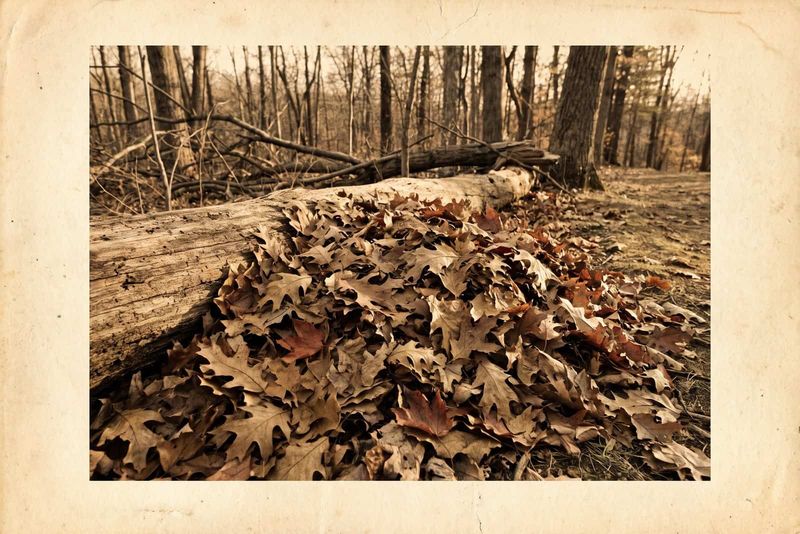
Winter cold is only part of the problem for a small caterpillar. Wind, drying out, and exposure matter too, which is why where it sleeps counts.
A peer-reviewed study describes woolly bears overwintering in moist leaf litter.
In Delaware, entomologist Brian Kunkel has pointed to other hideouts as well. The University of Delaware reports that woolly bears favor rocks, logs, and tree bark.
Fallen leaves and other organic debris can act as cover and insulation. Xerces Society guidance says as much and advises against shredding leaves with a mower, since that can destroy the insects sleeping in them.
Not every leaf-covered patch is a good home, and leaves are no guarantee of survival. A soggy, compacted pile beside a driveway is very different from loose leaves under a shrub.
Still, if you spot a woolly bear in a quiet corner, keep that corner as it is.
Practical options include raking leaves into garden beds, around tree bases, or along a fence line instead of bagging them. If you must mow, skip the spot where you saw the caterpillar.
A small leftover patch costs you almost nothing.
Cold Acclimation Helps It Survive Some Freezing
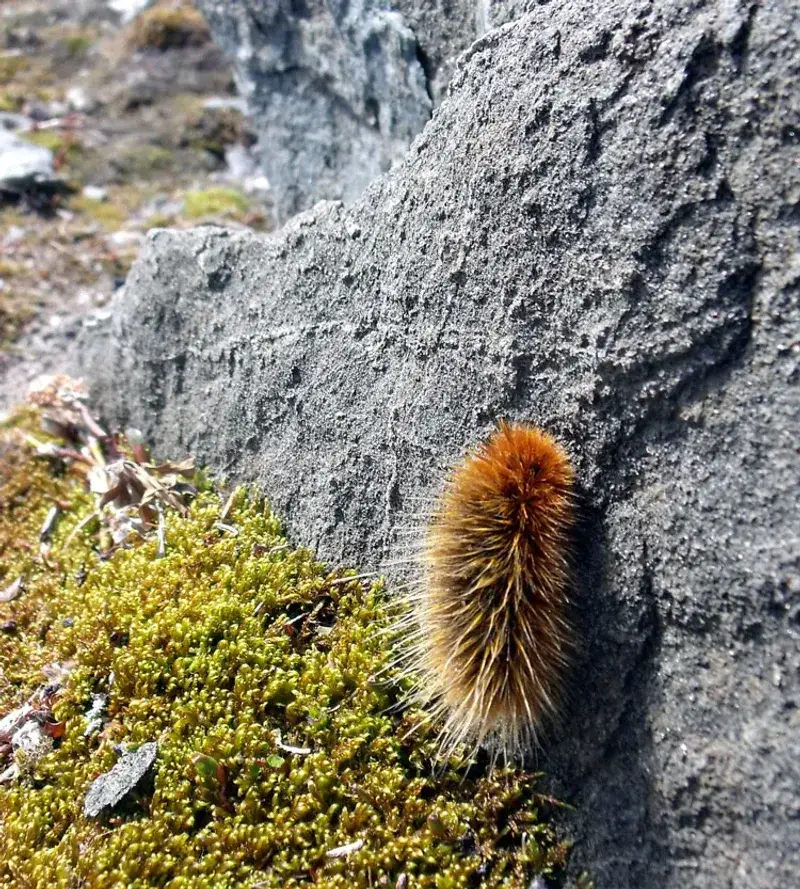
Woolly bears do not simply tough out the cold. As autumn deepens, they go through seasonal cold acclimation, and studies link this to protective compounds in the body, including glycerol.
These help the caterpillar cope when ice forms in its tissues.
The word to use is freeze tolerant, not freezeproof. Early work by Layne and Blakeley measured ice forming in some tissues and survival afterward under certain freezing conditions.
That is different from the whole animal turning to solid ice with no risk.
Laboratory results show both strength and limits. In a Journal of Experimental Biology study, cold-acclimated caterpillars survived a week at -20°C, but none survived -80°C.
Those are experimental conditions, not a forecast for the caterpillar in your yard.
Outcomes depend on temperature, how long the cold lasts, how well the caterpillar has acclimated, and how it thaws. Repeated freezing and thawing seems to be especially hard on them.
Marshall and Sinclair found that repeated freeze-thaw cycles increased mortality and tissue damage.
That does not mean every freeze or thaw is fatal. It means conditions matter, and a sheltered spot that buffers sudden swings gives a caterpillar better odds than an exposed one.
Should You Move One?
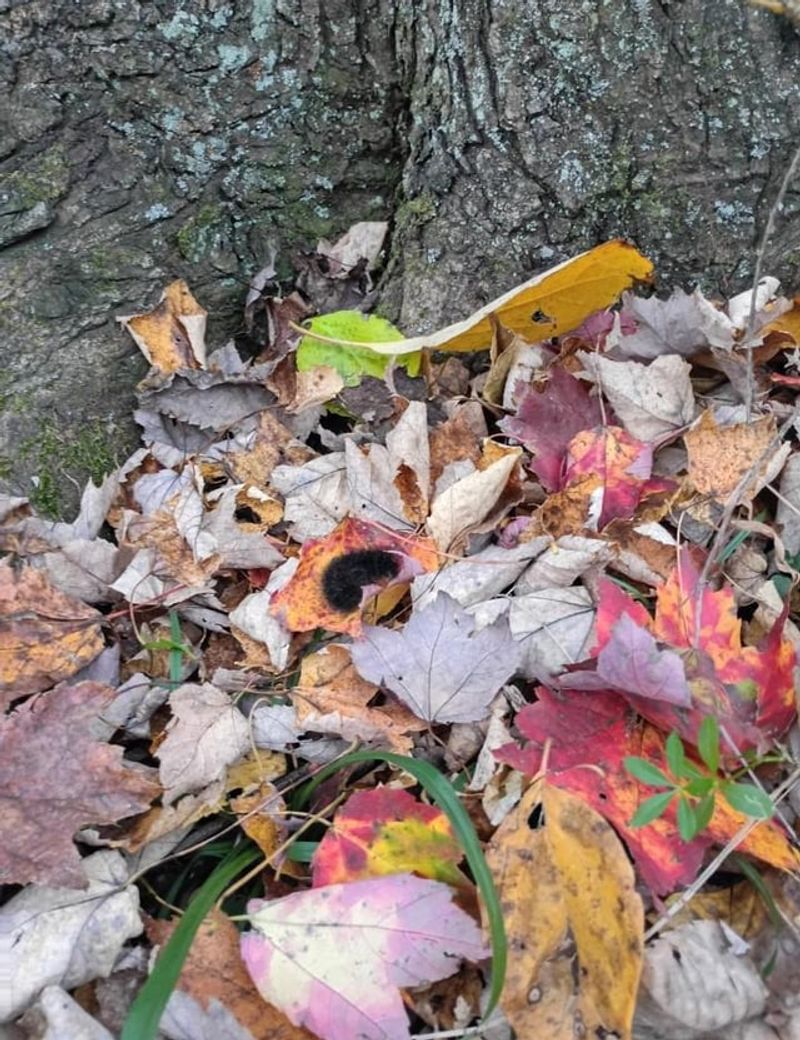
If the caterpillar is already tucked into leaf litter, under a log, or beside a rock, leave it there and keep that shelter intact. Delaware sources and the overwintering research both point to this kind of spot as normal winter habitat.
Moving it gains nothing and only adds disturbance.
Things change if it is in immediate danger, such as on a driveway, a walkway, or a spot about to be mowed or raked clear. A short move to nearby leaf litter or under a log is a reasonable precaution.
Keep it close, since the caterpillar already chose the general area.
Be honest about what we know. Research has not shown that moving a woolly bear kills it, and it has not established a tested rescue method.
Treat a short move as common sense, not a proven technique.
Wear gloves or use a leaf or stick to nudge it along. University of Missouri Extension says the bristles do not inject venom but can cause dermatitis in some people, so bare-handed handling is discouraged.
Skip the photo session, too. Handling and warming a sleeping caterpillar indoors can disturb it, so set it down gently and walk away.
Those Bands Don’t Forecast the Coming Winter
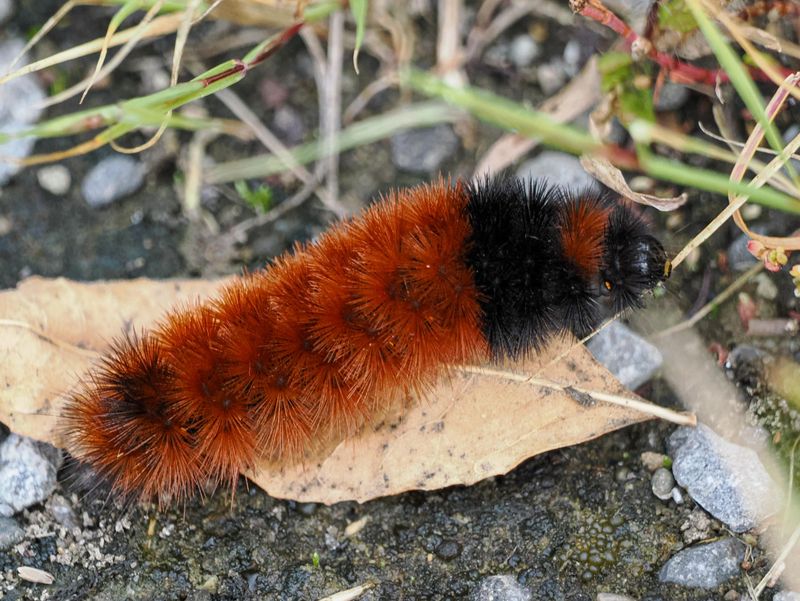
Many of us grew up hearing that a wide rusty band means a mild winter and a narrow one means a harsh one. It makes a fun story, but it is folklore.
The University of Delaware reports no studies connecting the markings to how severe the upcoming winter will be.
The bands tell a different story, which is about the caterpillar itself. Markings change with larval development, and Missouri Extension explains that the pattern shifts as the caterpillar molts.
A caterpillar that has grown through more molts can look different from a younger one.
So no stripe width should be read as a forecast. Two caterpillars in the same yard can look quite different, and neither is predicting anything about January.
Enjoy the folklore as a fall tradition if you like. Just do not let it decide whether to protect the leaves, because the survival biology works the same either way.
Protect the Shelter, Without Promising Survival
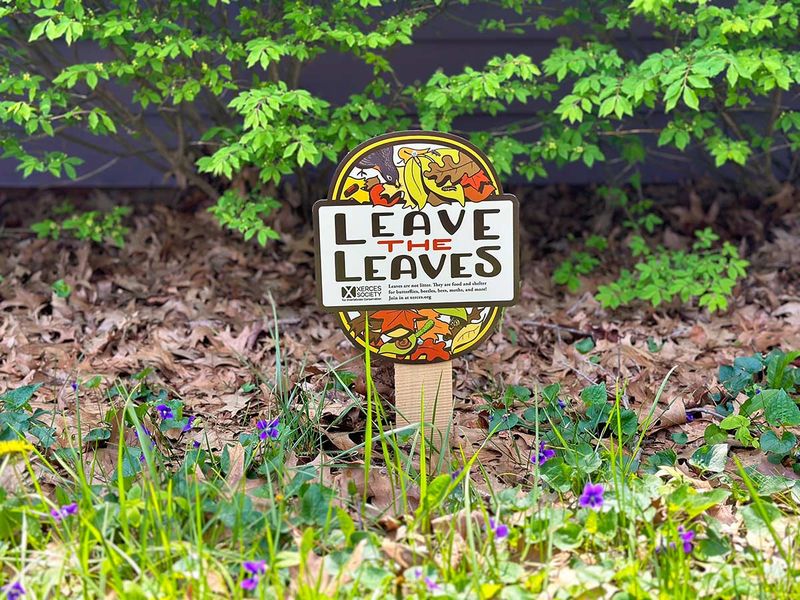
When a woolly bear is already tucked into a sheltered spot, the kindest move is to leave it and the leaves around it alone. Keep your hands off if you can, and gloves on if you cannot.
Leave-the-leaves guidance and Delaware’s own experts back that plan.
No shelter can promise a good outcome, since freeze tolerance has limits. A messy corner of the yard simply gives the caterpillar a fair chance, and come spring it may become a pale tiger moth.
Share this story