You walk out to your pecan tree and spot something strange poking up from the ground. Maybe it is a mushroom, maybe something lumpier, and you wonder if the tree is in trouble.
Pecan trees do have fungal partners, but plenty of other fungi turn up in yards too. Here is how to sort out what you might be looking at and what to do next.
A growth beneath a pecan is not an identification
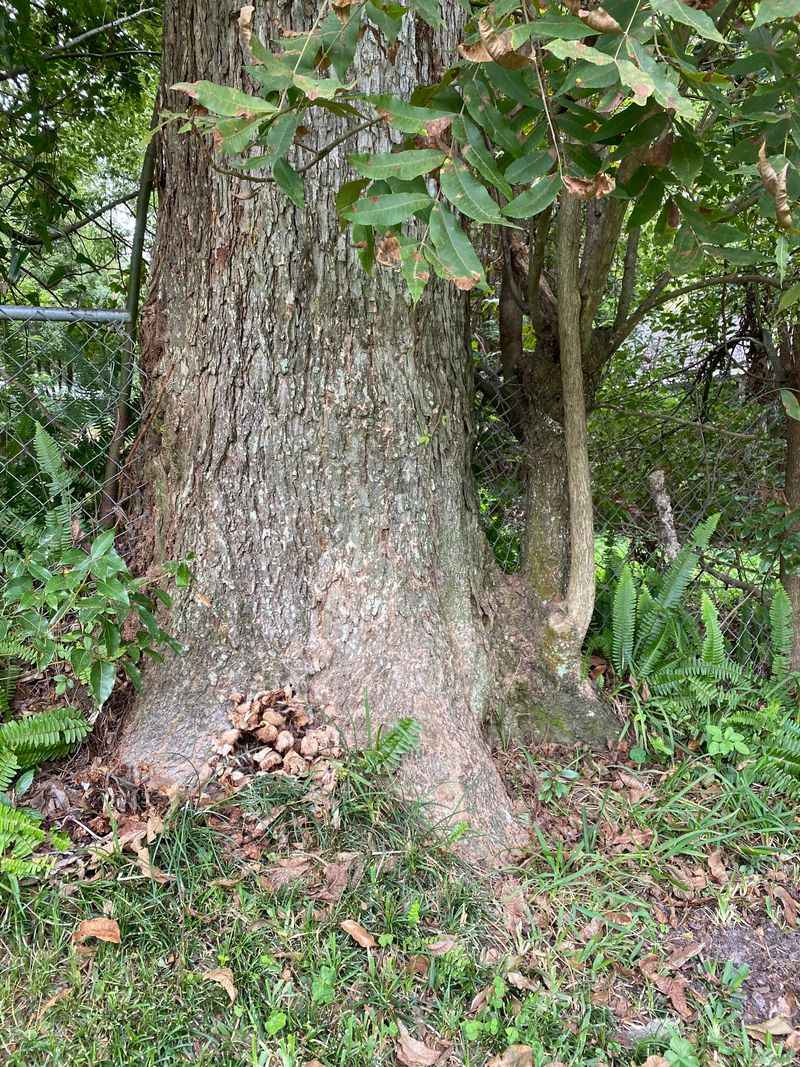
Plenty of people notice odd growths under their pecan trees, but nobody has shown a photo, a sample, or a detailed description of one particular growth that keeps returning in Louisiana. So the idea of a single recurring mystery plant or fungus is unconfirmed.
Being under a pecan tells you where something is growing, not what it is.
Louisiana yards are warm, damp, and full of organic material, which makes them friendly to many kinds of fungi. As LSU AgCenter notes in its look at odd mushrooms, fungi can take surprising shapes, and appearance alone can fool you.
One real candidate for a pecan-linked fungus is the pecan truffle, which UF/IFAS describes as living with pecan roots. But a visible growth is not automatically a truffle, and it could be something else entirely.
Two questions guide the rest of this article. First, what might the growth be?
Second, does where it sits say anything about the health of the tree? Without a specimen in hand, the honest answer is a set of possibilities and clues, not a verdict.
The pecan truffle grows out of sight
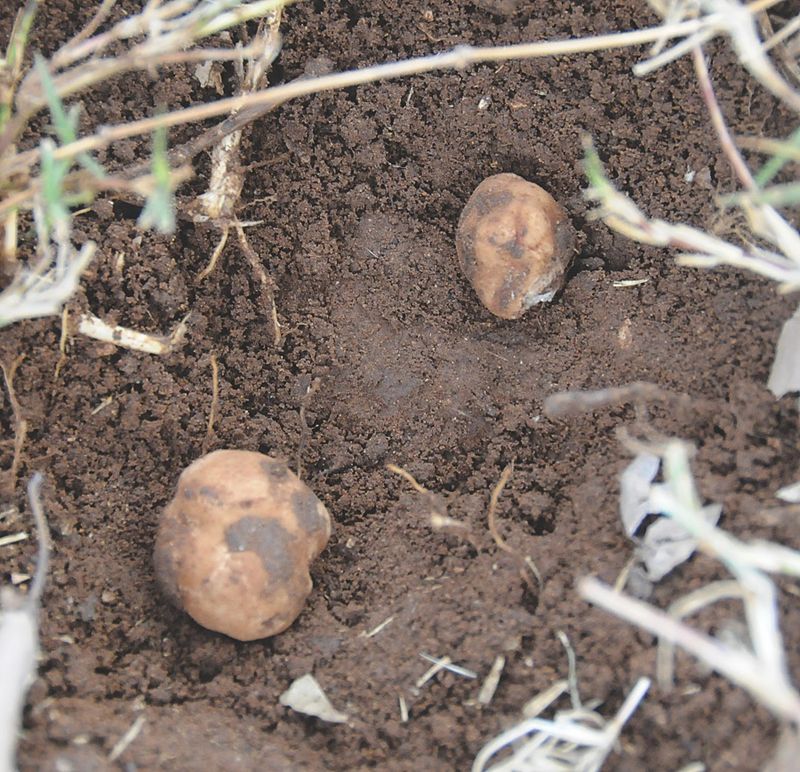
Hidden below the soil, a fungus called Tuber lyonii, the pecan truffle, may be quietly at work. According to UF/IFAS, it is native to eastern North America and forms its fruiting bodies underground, not on top of the lawn.
It also partners with the roots of pecans and some other trees.
That partnership is called mycorrhizal, meaning both sides gain something. The fungus is described as a root partner, not a disease of the tree.
That benefit applies to this identified fungus only, and it should not be assumed for every fungus found near a pecan.
Be careful with look-alikes. UF/IFAS notes that other truffle-like fungi live in pecan orchards, and telling them apart takes several clues, including the inside of the fruiting body and its microscopic spores.
A backyard guess will not settle it.
Moisture matters for fruiting. In Florida and Georgia, UF/IFAS reports that fruiting typically starts in late July, peaks in August and September, and can continue if the soil stays moist.
That is regional timing, not a confirmed Louisiana calendar, so treat it as a rough hint only.
Why lawn mushrooms appear after wet weather
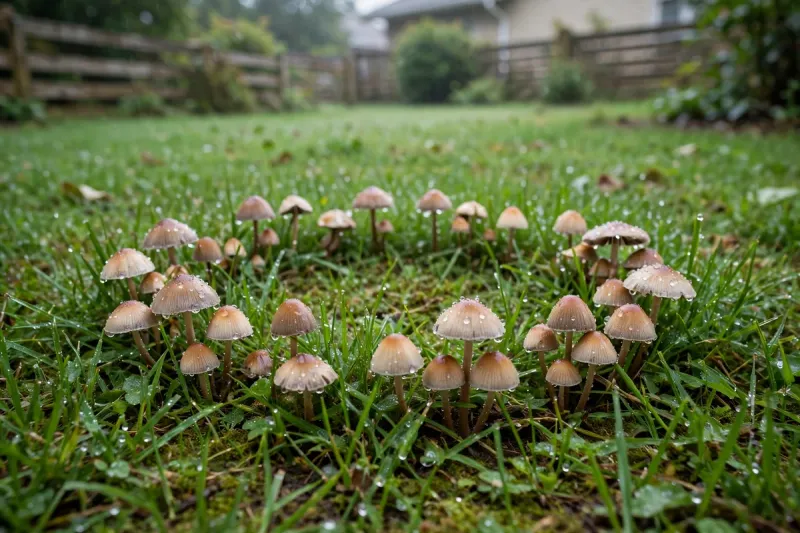
After a string of soggy, steamy days, mushrooms can pop up almost overnight. Most of the ones in lawns are decomposers, fungi that feed on dead material.
LSU AgCenter explains that they live on things like buried roots, old stumps, wood chips, and leaf litter.
The mushroom you see is just the fruiting body, a bit like an apple on a tree. The main fungus is a web of threads already living in the soil.
Warm, humid, rainy weather simply nudges it to produce the visible part.
That matters near a pecan. A mushroom in the grass close to the trunk may be feeding on an old buried root or a long-gone stump, even while the living tree is perfectly fine.
As University of Maryland Extension points out, being near a tree does not prove the tree is diseased.
So a ring of mushrooms after a storm is not a reason to panic. Think of it as a sign that the soil holds some decaying organic matter, which is perfectly ordinary in a yard.
Growth on the tree deserves closer attention
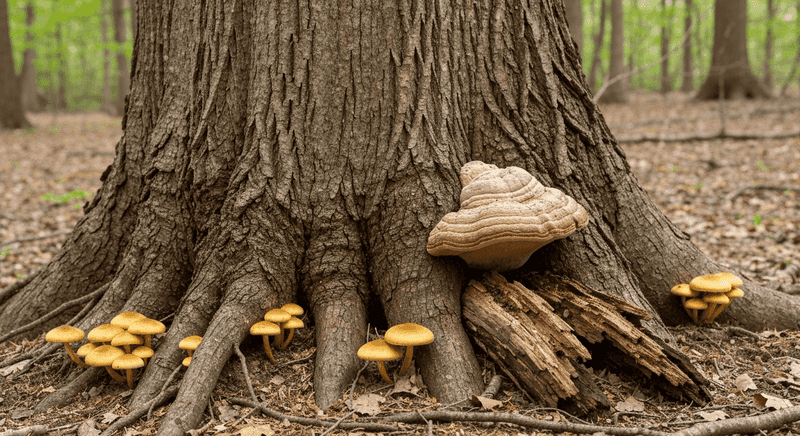
Where a fungus grows makes a big difference. Mushrooms in the surrounding lawn are one thing.
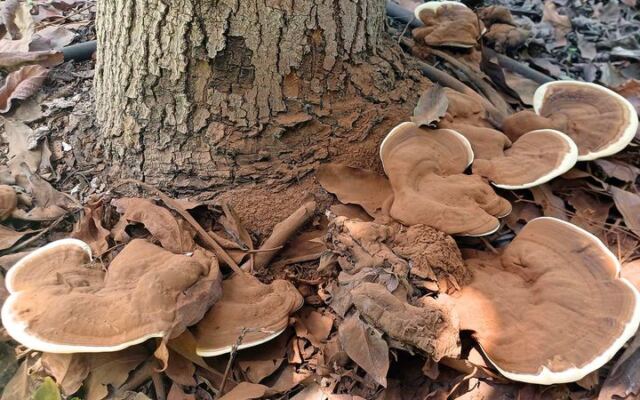
Mushrooms or shelf-like conks coming out of the trunk or a major limb are another.
According to LSU AgCenter’s pecan tree guide, growth like this can point to wood decay inside the tree, which can weaken its structure. Fungi that emerge from the trunk, major limbs, or surface roots are more likely to be tied to decay than ones in the nearby grass, a distinction also covered by University of Maryland Extension.
Still, nobody can diagnose a tree from a photo or a description alone. Rot can be small or extensive, and only a trained eye can judge how serious it is.
If you see growth on the tree itself, call a certified arborist for an assessment. Make that call sooner if the pecan stands close to your house, a play area, parked cars, or a driveway, since a failing limb could cause real damage.
Raking can tidy the lawn without removing the fungus
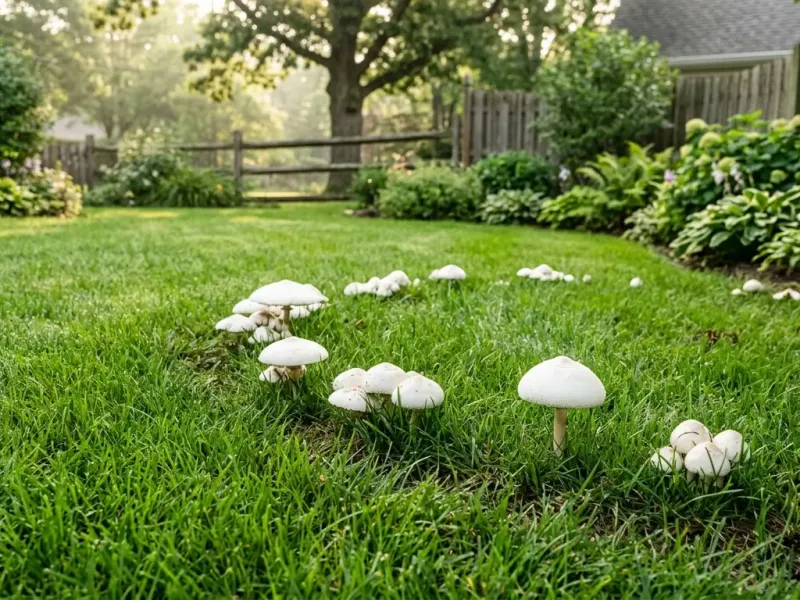
If lawn mushrooms bother you, the fix is simple. Rake them up or mow over them, and the lawn looks neat again.
LSU AgCenter treats these as practical options for ordinary lawn mushrooms.
Keep expectations realistic, though. Raking removes only the visible fruiting bodies.
The underground fungus stays put and may send up more mushrooms the next time the weather turns warm and wet.
Broad fungicide spraying is generally unnecessary for ordinary lawn mushrooms, so it should not be your default move. Mulch and wood debris feed decomposer fungi, a point that comes up in Oregon State University Extension’s mulching guide, so a thinner layer of organic material may mean fewer mushrooms.
Keep this advice for the lawn only. Fungi coming out of the tree itself belong in the arborist conversation, not the rake-and-mow routine.
Never eat a wild mushroom by guesswork
Whether a mushroom is harmless to a pecan tree tells you nothing about whether it is safe on a dinner plate. Plant impact and human toxicity are separate questions.
Where a mushroom grows, or how it seems to affect a tree, cannot tell you whether it is edible.
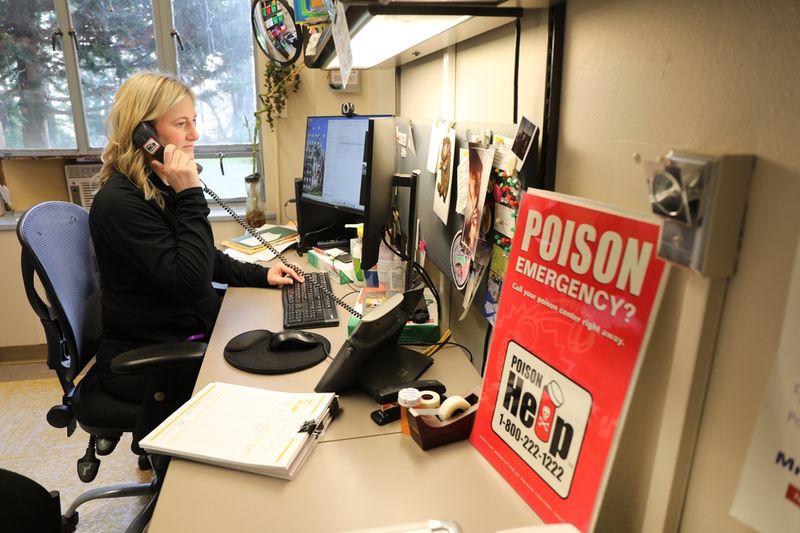
Photos and informal guesses are not good enough either. Poison Control warns that poisonous look-alikes exist and that cooking does not reliably make a poisonous mushroom safe.
Have an expert identify any wild mushroom before anyone eats it.
If a person has eaten a mushroom that is unknown, call Poison Control at 1-800-222-1222 right away.
A yard full of mysteries is more fun when you look, photograph, and leave the tasting to the experts.
Share this story