Get the latest garden guides in your inbox →
Gardening Latest
  • General Gardening
  • Lawn Care
  • Plant Care
  • Composting
  • Soil Health
  • Backyard
  • Garden Muse Magazine
  • General Gardening
  • Lawn Care
  • Plant Care
  • Composting
  • Soil Health
  • Backyard
  • Garden Muse Magazine
  • News
  • Gardening Calendar
  • Garden Structures
  • Vegetable Garden
  • Vertical Garden
  • Raised Beds
  • Hydroponics
  • General Equipment
  • Community Gardens
Garden Themes
  • Spiritual Garden
  • Hydroseeding
  • Seeding and Laying Sod
  • Artificial Grass
  • Lawn Care Equipment
  • Plants
  • Trees
  • Planting Tools
  • Composting Basics
  • Fertilizer
  • Alternative Growing Mediums
  • Front Yard
  • Backyard Activities
  • Landscaping
Gardening Latest

Explore by state

Which state is your garden in?

Currently viewing Florida

All states

Northeast

  • Connecticut —
  • Delaware 20
  • Maine —
  • Maryland 6
  • Massachusetts 22
  • New Hampshire —
  • New Jersey 6
  • New York 15
  • Pennsylvania 15
  • Rhode Island —
  • Vermont —

Southeast

  • Alabama 5
  • Arkansas —
  • Florida 6
  • Georgia 6
  • Kentucky 20
  • Louisiana 4
  • Mississippi —
  • North Carolina 4
  • South Carolina 19
  • Tennessee 2
  • Virginia 5
  • West Virginia —

Midwest

  • Illinois 4
  • Indiana 7
  • Iowa 19
  • Kansas —
  • Michigan 6
  • Minnesota 4
  • Missouri 4
  • Nebraska —
  • North Dakota —
  • Ohio 6
  • South Dakota —
  • Wisconsin 20

Southwest

  • Arizona 5
  • Colorado —
  • Nevada —
  • New Mexico —
  • Oklahoma —
  • Texas 4
  • Utah —

West

  • Alaska —
  • California 5
  • Hawaii —
  • Idaho —
  • Montana —
  • Oregon —
  • Washington —
  • Wyoming —

No state matches that search.

Site menu

Gardening Latest
  • General Gardening
    • News
    • Gardening Calendar
    • Garden Structures
    • Vegetable Garden
    • Vertical Garden
    • Raised Beds
    • Hydroponics
    • General Equipment
    • Community Gardens
    Garden Themes
    • Spiritual Garden
  • Lawn Care
    • Hydroseeding
    • Seeding and Laying Sod
    • Artificial Grass
    • Lawn Care Equipment
  • Plant Care
    • Plants
    • Trees
    • Planting Tools
  • Composting
    • Composting Basics
  • Soil Health
    • Fertilizer
    • Alternative Growing Mediums
  • Backyard
    • Front Yard
    • Backyard Activities
    • Landscaping
  • Garden Muse Magazine

Explore

  • About GardeningLatest.com
  • Contact Us

Get the latest from the garden

New guides on lawn care, plants and backyard projects, sent when they go up.

Subscribe →

Follow

  • Facebook
  • X
  • Pinterest
  • YouTube
Florida Gardening

The Mulch Mistake That Pulls Termites Right Up Against Your Florida Foundation

The mistake is piling mulch deep against your house, where it can hide termite activity and help termites reach…

MV

By Marisol Vega

November 22, 2026 · 6 min read

The Mulch Mistake That Pulls Termites Right Up Against Your Florida Foundation

The mistake is piling mulch deep against your house, where it can hide termite activity and help termites reach your walls. Mulch holds moisture, and a thick layer can cover the small clues you would otherwise spot.

In Florida, where termites are a fact of life, how you shape that mulch edge matters. A few simple changes can keep your walls in plain view.

At a glance

Where
Florida Gardening
Hardiness zone
9 20 to 30°F
Read
6 minutes
Published
November 22, 2026

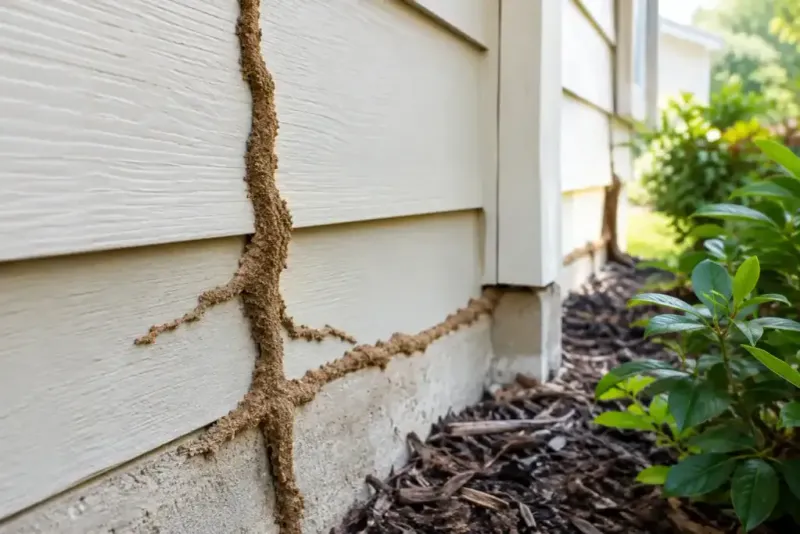
Mulch can conceal termite activity

Mulch can conceal termite activity
© Northern Beaches Pest Control Services

Picture a thick blanket of mulch stacked right up to your siding. Mulch holds moisture, and according to UF/IFAS guidance on termites and mulch, it can also hide mud tubes, the thin earthen tunnels termites build to travel.

If you cannot see the wall, you cannot see the tubes.

There is a second problem. If mulch covers soil that was treated for termites, it may span that treated area and give termites a way across the barrier.

That is a possible route, not a guaranteed one.

Here is the important distinction. Mulch can retain moisture, conceal tubes, and potentially bridge treated soil, but that does not prove mulch caused an infestation.

Termites do not appear because a bag of mulch landed in your yard.

UF/IFAS says termites brought in as stragglers in bagged mulch are a smaller concern than colonies already living on the property. Chipping and separation from the colony make it hard for those stragglers to survive.

Colonies already in the ground nearby are the bigger worry, and mulch placement can make them harder to detect.

The takeaway is that placement matters more than the mulch itself. UF/IFAS termite prevention advice points to hidden access and moisture as conditions worth fixing.

The next sections show how to do that without ripping out your landscaping.

Leave a visible gap below the siding
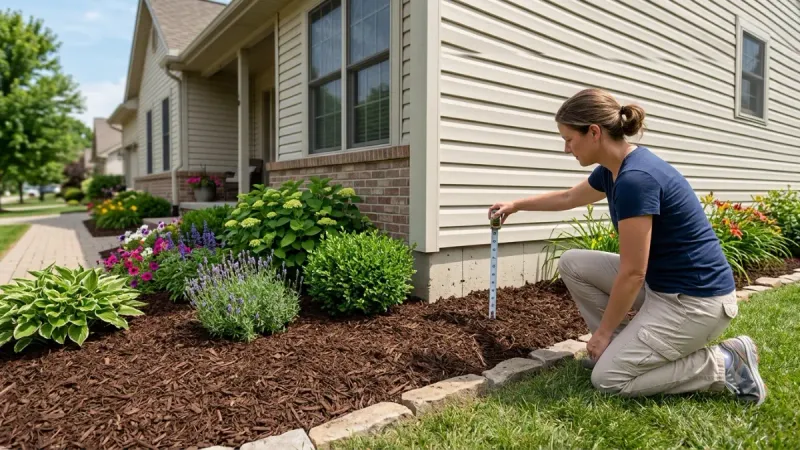
Leave a visible gap below the siding
© Gladewick

Think of the bottom edge of your siding as an inspection strip. UF/IFAS recommends keeping at least 6 inches between the soil or mulch and the bottom of the wall siding.

That space makes mud tubes and other warning signs far easier to spot.

Managing them lowers risk, though no single condition proves where an infestation came from.

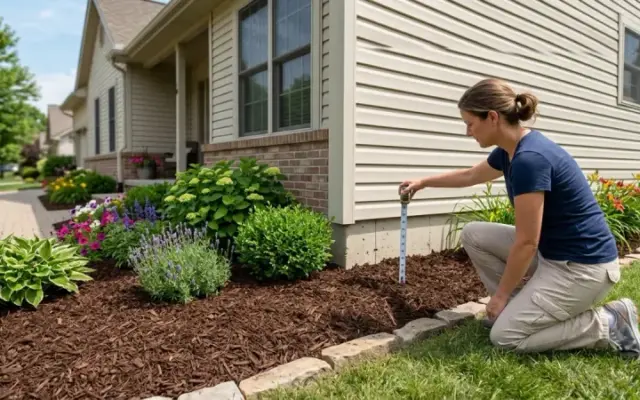
A quick check is simple. Hold a ruler against the wall at several spots, especially near planting beds, corners, and where pipes enter the house.

If mulch has crept up higher than 6 inches below the siding, rake it back.

Building rules are a separate topic. The 2023 Florida Residential Code, in section R318.7 of the Eighth Edition, addresses clearance between exterior wall coverings and final earth grade.

That is about the ground itself, while the UF/IFAS advice is about the soil or mulch line you maintain. The code also lists exceptions, so do not assume one rule fits every wall.

Code text changes. Florida’s 2026 edition is scheduled to take effect on December 31, 2026, according to Florida Building Commission update information.

The language cited here is from the 2023 edition, so verify the applicable code before relying on it, especially for new work or repairs.

Keep mulch shallow near the foundation
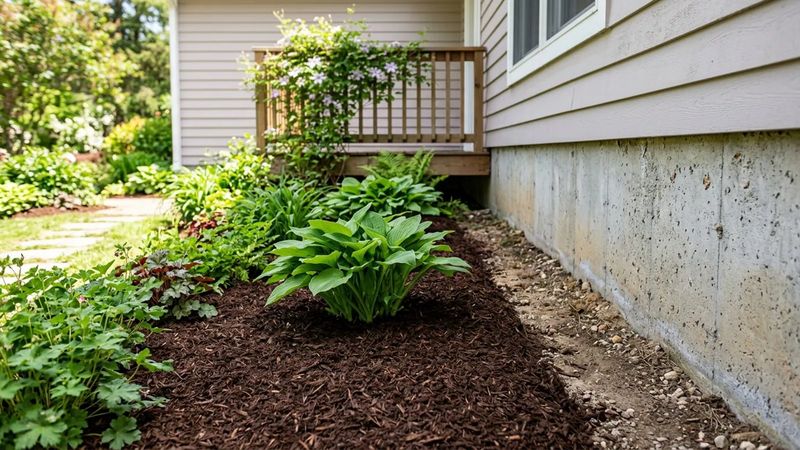
Keep mulch shallow near the foundation
© I’m Home

Depth is the next lever you control. UF/IFAS advises less than 2 inches of mulch within 12 inches of the foundation, as described in its guide to termites and mulch.

A thin layer there holds less moisture and hides less.

Farther out, the advice relaxes. Another UF/IFAS guide on landscaping methods to keep pests out of your home suggests 2 to 3 inches for plantings generally, and no more than 2 inches in that near-foundation zone.

So a bed can be fuller away from the wall and thinner beside it.

To fix a deep bed, grab a rake or hand trowel. Pull mulch away from the wall and thin the first foot to under 2 inches, then spread the extra across the outer part of the bed.

Check with a ruler pushed down to the soil.

You do not need to strip every bit of mulch near the house. The goal is a shallow, tidy edge that stays easy to see, not bare dirt.

Refresh it lightly rather than piling new layers on top of old.

Manage water and keep wood away
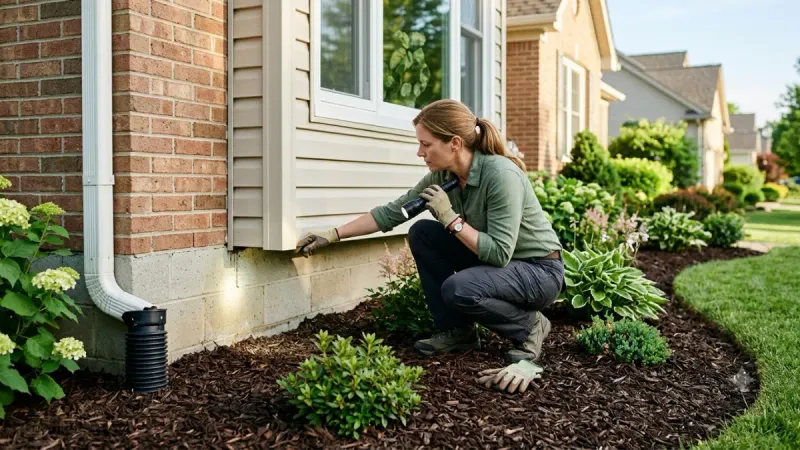
Manage water and keep wood away
© Gladewick

Moisture and wood are what make a foundation edge inviting. Managing them lowers risk, though no single condition proves where an infestation came from.

UF/IFAS termite guidance covers most of the steps below.

Start with water. Adjust sprinklers so they do not spray the wall, and watch for spots where water pools after rain along the foundation.

Send downspouts and air-conditioner drain lines well away from the house, and repair leaking pipes, spigots, and fittings.

Next, look at wood. Remove wood debris, scrap lumber, and stumps near the structure, and keep firewood stacked away from the house rather than leaning on a wall.

Do not bury wood scraps in the bed.

Skip wooden landscape timbers as edging along the house. UF/IFAS advises against them, since they put wood in direct contact with soil right where you want a clear view.

Stone, metal, or plastic edging is a simpler choice.

A monthly walk-around helps. Look for damp patches, clogged gutters, and new piles of debris.

Small fixes done early are easier than repairs later.

When to call a termite professional
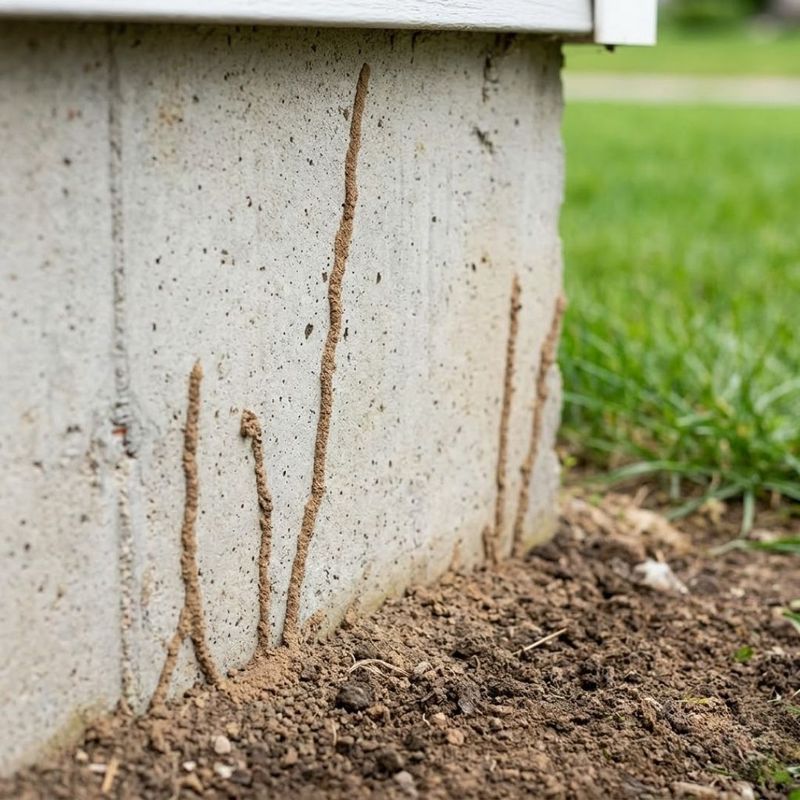
When to call a termite professional
© Knox Pest Control

Some situations are not a DIY job. If you spot mud tubes, discarded wings, or damaged wood, get an inspection from a qualified pest professional.

The same goes if you think a shovel, new planting bed, or regrading may have disturbed soil that was treated for termites.

Disturbed treated soil can leave gaps, and you cannot tell by looking whether protection is still intact. A professional can inspect, identify the species, and decide what treatment fits.

UF/IFAS also points homeowners toward professional help for active termite problems.

Structural treatments are tricky. EPA guidance on termites notes that structural termiticide applications often call for a trained professional, and that improper barrier treatments can contaminate homes or drinking-water wells and still fail to protect the structure.

Do not improvise with a pesticide as a quick fix. Any product must be used exactly as its label directs, and many are not meant for homeowners to apply around a foundation.

Take photos of what you find, leave the tubes in place for the inspector, and call.

Keep the edge shallow and easy to inspect
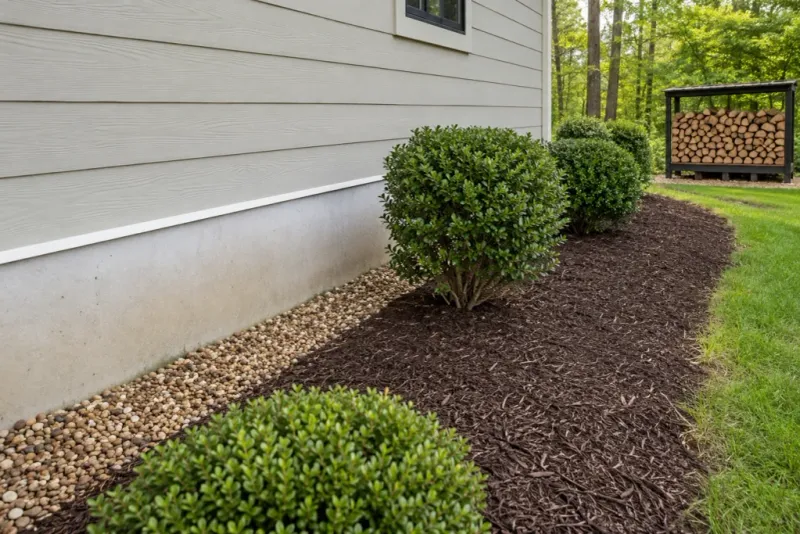
Keep the edge shallow and easy to inspect
© Northwest Exterminating

A good mulch edge is simple: a visible strip of wall, a thin layer beside the foundation, and dry ground with no wood piles nearby. Those habits, drawn from UF/IFAS mulch guidance and its termite prevention advice, cut down on hiding places and damp conditions.

They do not guarantee a termite-free home, and they do not show that mulch caused any infestation you find. They just make trouble easier to see.

Mulch is a window shade for your foundation, so keep it pulled back.

Share this story
MV

Written by

Marisol Vega

More from Marisol Vega →

About Gardening Latest

Gardening Latest provides in-depth guides to maintaining and enhancing your garden and backyard. Learn how to make the most of the space you have and create a beautiful garden.

More about us →

Latest stories

  • Delaware GardeningThat Red Fox Trotting Through Your Delaware Yard This Winter Is Actually on a Mission

    That Red Fox Trotting Through Your Delaware Yard This Winter Is Actually on a Mission

    3 min ago
  • South Carolina GardeningHere’s Where the Armadillos Go When They Suddenly Disappear From South Carolina Yards in Winter

    Here’s Where the Armadillos Go When They Suddenly Disappear From South Carolina Yards in Winter

    11 min ago
  • Kentucky GardeningSnow on Your Kentucky Lawn Shows Exactly Which Animals Visit Your Yard at Night

    Snow on Your Kentucky Lawn Shows Exactly Which Animals Visit Your Yard at Night

    17 min ago
  • Maryland GardeningThe Simple Sealing Fix Maryland Homeowners Use To Stop Stink Bugs Moving In For Winter

    The Simple Sealing Fix Maryland Homeowners Use To Stop Stink Bugs Moving In For Winter

    30 min ago
  • Iowa GardeningWhy an Opossum Shows Up Near Your Iowa Home in Winter, and What to Do

    Why an Opossum Shows Up Near Your Iowa Home in Winter, and What to Do

    36 min ago

Gardening by state

Stories for your state, and the hardiness zone most of it gardens in.

Keep exploring

Read next

All Florida Gardening →
Florida GardeningThe Florida Yard Cleanup That Keeps Black Racers From Hanging Around Your Back Door
Florida Gardening

The Florida Yard Cleanup That Keeps Black Racers From Hanging Around Your Back Door

3 hr ago
Florida Gardening8 Yard Habits That Quietly Invite Snakes Closer to Your Florida Home After Heavy Rain
Florida Gardening

8 Yard Habits That Quietly Invite Snakes Closer to Your Florida Home After Heavy Rain

6 hr ago
Florida GardeningGot Stung by a Saddleback Caterpillar in Your Florida Garden? Here’s What to Do Right Away
Florida Gardening

Got Stung by a Saddleback Caterpillar in Your Florida Garden? Here’s What to Do Right Away

Nov 13

More from Florida Gardening

  • Snow on Your Kentucky Lawn Shows Exactly Which Animals Visit Your Yard at Night

    17 min ago
  • The Simple Sealing Fix Maryland Homeowners Use To Stop Stink Bugs Moving In For Winter

    30 min ago
Back to top

Leave a response Cancel

Your email address stays private. Required fields are marked with an asterisk.

Gardening Latest

In-depth guides to maintaining and enhancing your garden and backyard: how to make the most of the space you have, and how to make it beautiful.

  • Facebook
  • X
  • Pinterest
  • YouTube

We may earn a portion of sales from products or services that are purchased through our site as part of our affiliate partnerships with retailers.

Explore

  • About GardeningLatest.com
  • Contact Us
  • Terms and Conditions
  • Privacy
  • Editorial Note:
  • FTC Disclosure

Newsletter

New garden guides and seasonal tips, straight to your inbox.

We’ll email you a link to confirm. Unsubscribe any time.

Almost there! Check your inbox and tap the link to confirm.

© 2026 Gardening Latest. All rights reserved.

Back to top