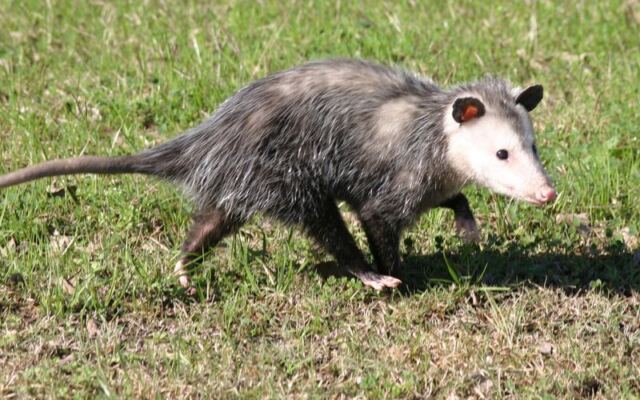
A possum in your Virginia yard is usually a good reason to stay calm and let it keep walking. Opossums eat a wide mix of foods, including insects, snails, slugs, and even mice.
They are not perfect pest-control workers, and they can cause trouble if your yard offers easy meals or shelter. Here is how to tell a harmless visit from a real problem, and what Virginia rules say about handling one.
A yard visit usually calls for observation, not alarm
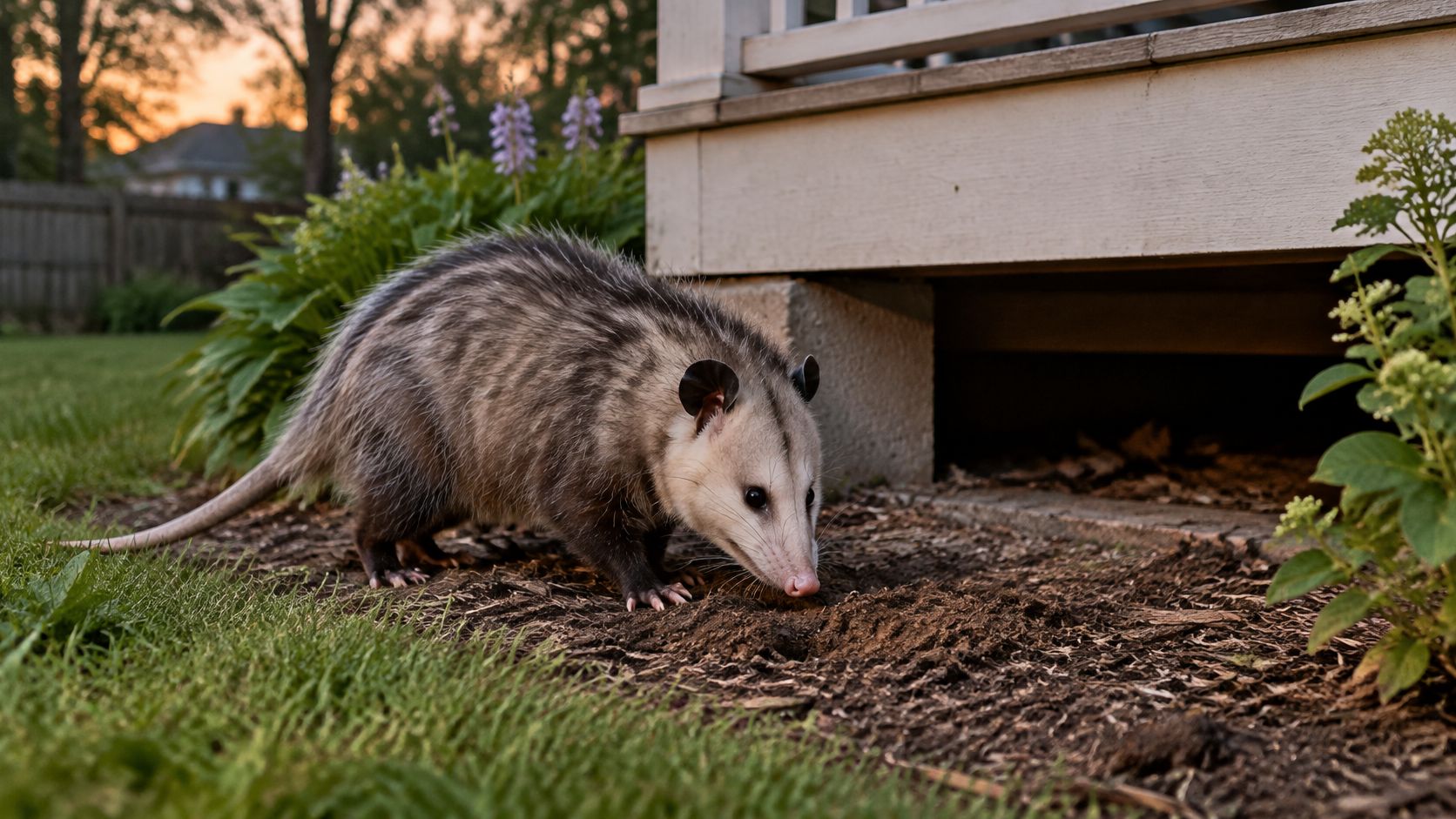
Spotting an opossum near your shed or flower beds does not mean you have a problem to solve. Most of the time, the animal is simply passing through on a nighttime search for food.
Your best first move is to watch from a distance and let it go on its way.
Opossums are nocturnal and opportunistic, which means they are active mostly after dark and eat whatever is easy to find. According to a North Carolina wildlife agency profile, their menu can include insects, snails, slugs, mice, rats, fruit, vegetation, and carrion.
That variety is why you may find one wandering through a garden, a compost area, or along a fence line.
Some of those foods are things many homeowners consider pests. Slugs chewing your hostas and mice near the woodpile are good examples.
Still, eating a few of them on a single night is very different from running a pest-control service. Nobody can promise that one opossum will thin out the pests in your particular yard.
Virginia’s wildlife agency also encourages people to think about the habitat they create, as described in its Habitat Gardening for Wildlife guide. A yard with cover, water, and food will draw wildlife of many kinds.
Seeing one is normal.
It helps to separate two situations. Tolerating a visitor means you notice it, keep pets inside at night, and move on.
Dealing with an ongoing conflict means the animal keeps coming back, raids food, or settles in somewhere it should not. The rest of this article helps you sort out which one you have.
Do opossums really eat enough ticks to matter?
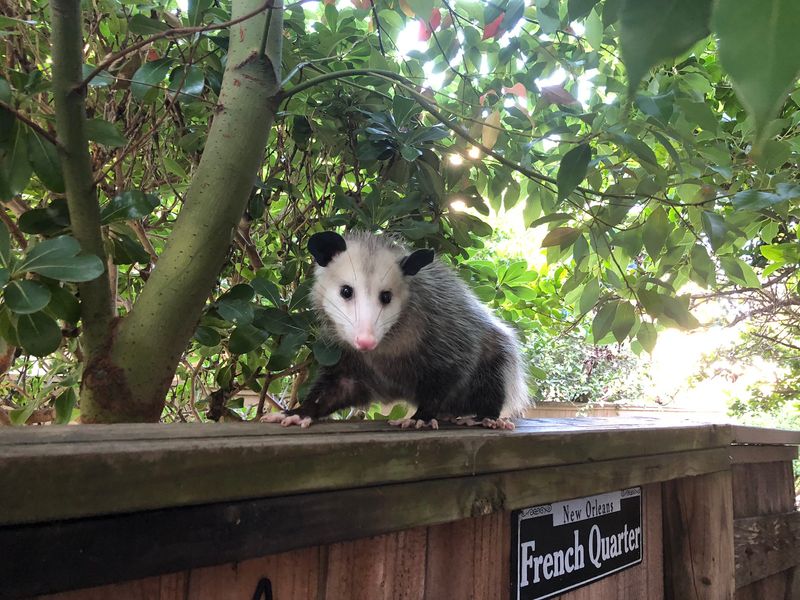
You may have heard that a single opossum eats thousands of ticks a year. That claim traces back to real research, but it is not a safe promise for your lawn.
The science actually tells two different stories.
In 2009, researchers ran a controlled experiment, described in a 2009 study on hosts as ecological traps. They exposed opossums to blacklegged tick larvae and found that many larvae were missing afterward.
The team inferred that the opossums had eaten them while grooming. The often-quoted figure of about 5,500 larvae per week came from combining those lab results with tick counts measured on animals in the field.
Then came a look at real, wild animals. A 2021 study of wild Virginia opossums searched the stomach contents of 32 animals.
It found no ticks and no tick parts.
These two studies used very different methods. One watched what happened to ticks placed on captive animals, and the other checked what wild animals had actually eaten.
Neither result proves that ticks are never eaten, and neither one measured what happens in a typical backyard.
So here is the practical meaning. An opossum might swallow a tick now and then, but nothing shows it will reliably reduce ticks in your yard or protect your family from Lyme disease.
Keep using proven habits, like checking yourselves and pets after time outdoors, instead of counting on a wild animal to do the work.
The same visitor can become a nuisance
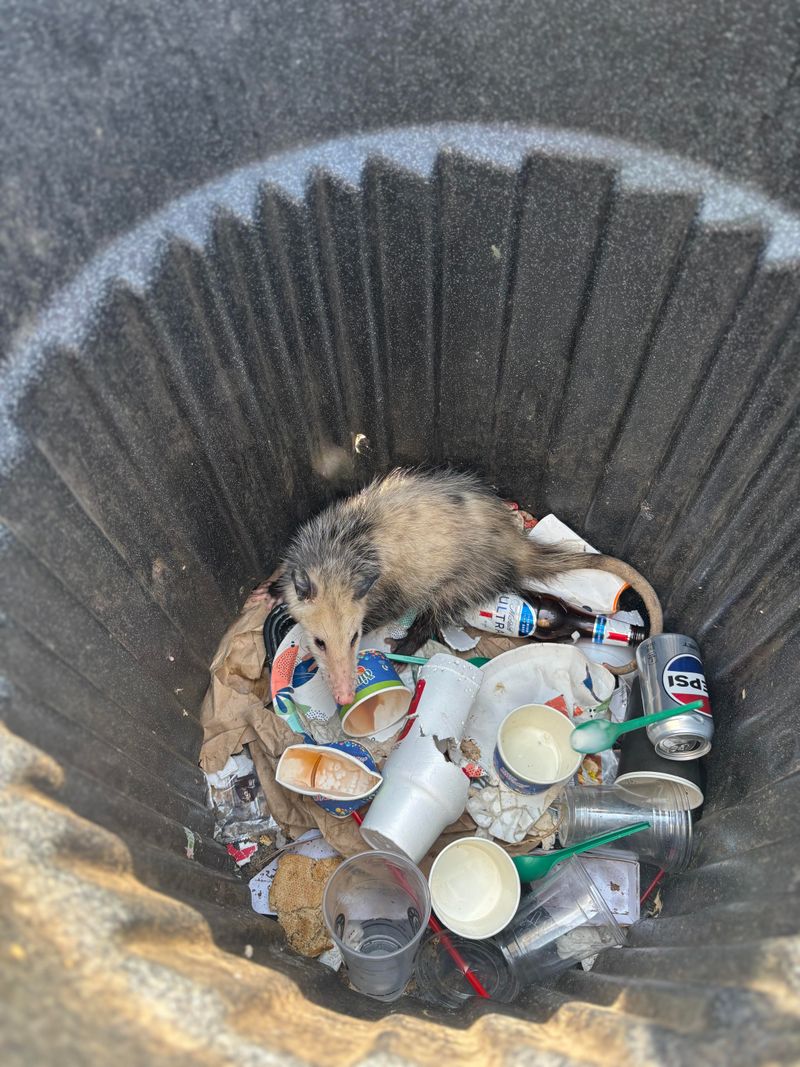
The trait that lets an opossum eat slugs also lets it eat your leftovers. Because it takes what is easy, it may investigate whatever your yard happens to offer.
That is where benefits and conflicts meet.
Wildlife agencies note that opossums may scavenge garbage and pet food. A North Carolina wildlife profile also lists eggs and young chickens among foods they may take.
If you keep a backyard coop, that detail matters more to you than any slug count.
Fruit and vegetation can be part of the menu too. Fallen apples, persimmons, or tender garden plants might draw an animal in.
The Fairfax County opossum page is a useful local reference for how these animals behave around homes.
None of this means damage is guaranteed. These are documented possibilities, and many opossums pass through without bothering anything.
A single sighting is not proof that your chickens or tomatoes are at risk.
The smart approach is to respond to what is actually happening. Are the trash lids getting knocked off?
Is pet food disappearing from the porch? Are eggs missing?
Matching your response to the real problem works better than reacting to the animal itself.
Remove the invitations before seeking removal

Walk your yard at dusk and look at it the way a hungry animal would. Most repeat visits come down to easy meals.
Take those away and many animals simply move on.
Virginia’s wildlife agency recommends securing food sources to prevent recurring conflicts, as outlined on its human-wildlife conflict page. Start with trash.
Use cans with tight, latching lids, or keep them in a garage until pickup morning.
Next, handle pet food. Feed dogs and cats during the day, and bring bowls inside before dark.
Do not set out food for wildlife on purpose, since that teaches animals to return.
Fallen fruit is another draw. Rake up apples, pears, and berries under trees, and tidy any compost that holds meat scraps or cooked food.
If you keep chickens, close the coop securely each evening, since opossums may eat eggs or young birds.
Be realistic about results. These steps lower the appeal of your property, but they cannot guarantee an opossum will leave or stay away forever.
Neighbors’ yards matter too.
Keep this advice separate from the situation where an animal is already living under a structure. That calls for a more careful plan, covered next.
A den beneath the house needs a careful exit plan
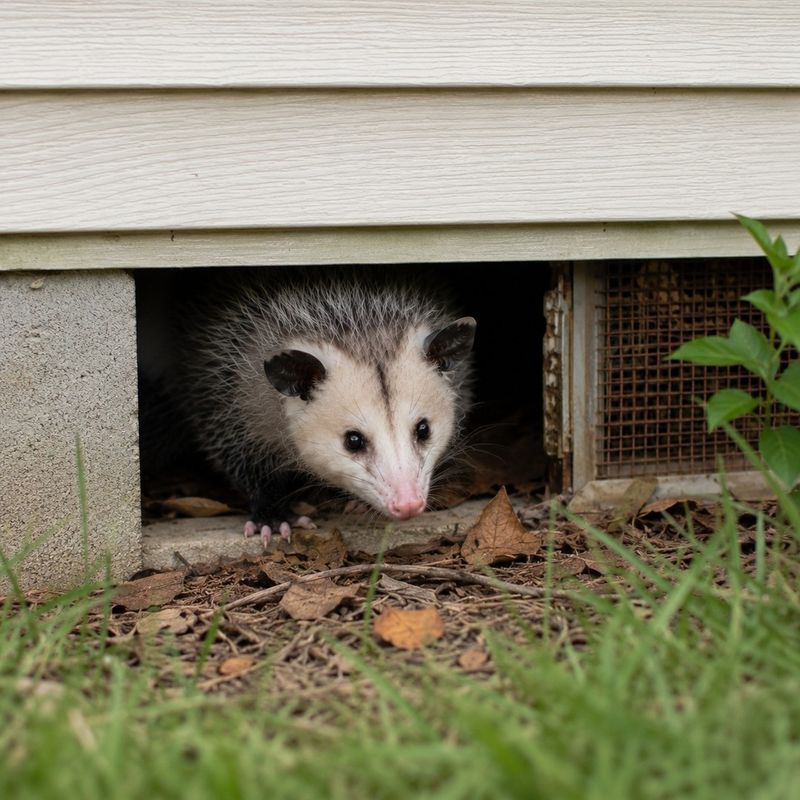
An opossum under your porch or deck is a different matter from one crossing the lawn. Now the animal may be using your property as shelter, and there could be young depending on it.
Rushing to fix the problem can make it worse.
Prevention is simple in principle. Virginia’s habitat gardening guidance points to screening foundation openings and repairing eaves to keep wildlife out of buildings.
Doing that before an animal moves in is smart maintenance.
Once an animal is already inside, the order of steps matters. Do not seal any opening until you have confirmed that the animal and any dependent young are gone.
Closing a hole too early can trap an adult or leave babies behind, which creates a far bigger problem.
Skip the urge to poke around under the structure or grab the animal. Handling wild animals is risky for you and for them.
Instead, use the state’s guidance: the DWR nuisance wildlife page directs people with live-animal problems to professionals and its helpline.
You can also look for a qualified provider through the DWR list of licensed trappers and wildlife control specialists. A professional can work out a safe exit plan and close the gap at the right time.
Virginia’s relocation rules limit do-it-yourself options
Many people picture a simple fix: catch the animal in a cage and drive it to a park. In Virginia, that plan runs into the rules.
Do not trap, transport, or release an opossum somewhere else on your own.
The state’s guidance says trapping wildlife and relocating it to another area is generally illegal, as explained on the DWR human-wildlife conflict page. That does not mean every form of removal is banned, and it does not mean you must tolerate a problem animal.
It means the options run through trained people.
The rules differ by who is doing the work. According to DWR’s provider guidance, licensed trappers cannot transport live animals away from the property.
Commercial Nuisance Animal Permit holders have separate authority, including transporting wildlife for humane dispatch under applicable conditions, and the text of 4VAC15-30-50 covers possession, transport, and release by authorized persons.
You may also see that Virginia has an opossum trapping season. The regulation lists a general season of November 15 through the last day of February, with exceptions that allow continuous trapping in incorporated cities and towns, in named counties, and on private land statewide with the landowner’s permission.
Those season rules do not authorize a homeowner to trap and relocate an opossum.
Because details vary by situation, contact DWR or a qualified wildlife provider before you act.
Know when to call for help
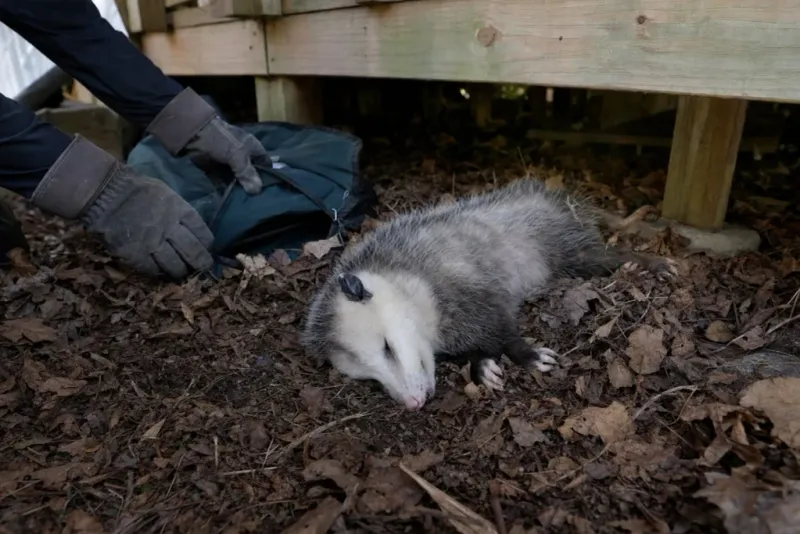
Most sightings need nothing more than a quick look and a closed door. Still, a few situations call for a phone call.
Never pick up, corner, or try to shoo an opossum with your hands.
Daytime activity alone does not prove an opossum is sick. Animals sometimes forage in daylight when they are hungry or disturbed from a den.
Look for other clues instead.
Opossums face a lower rabies risk than many mammals, but they can still get the disease. Virginia Department of Health rabies guidelines classify an opossum that is acting aggressively, appears ill, or is found dead as a suspected rabid animal.
Stay back and keep children and pets away.
If a person or pet may have been bitten, scratched, or otherwise exposed, contact your local health department or a veterinarian promptly. They can tell you what steps to take next, such as wound care or checking your pet’s vaccinations.
For ongoing conflicts, such as an animal denning near your home or repeated damage, use the DWR nuisance wildlife page or call its helpline at 1-855-571-9003. You can also find help through the DWR directory of licensed providers.
A calm call is enough, since not every sighting is an emergency.
Let a passing opossum pass
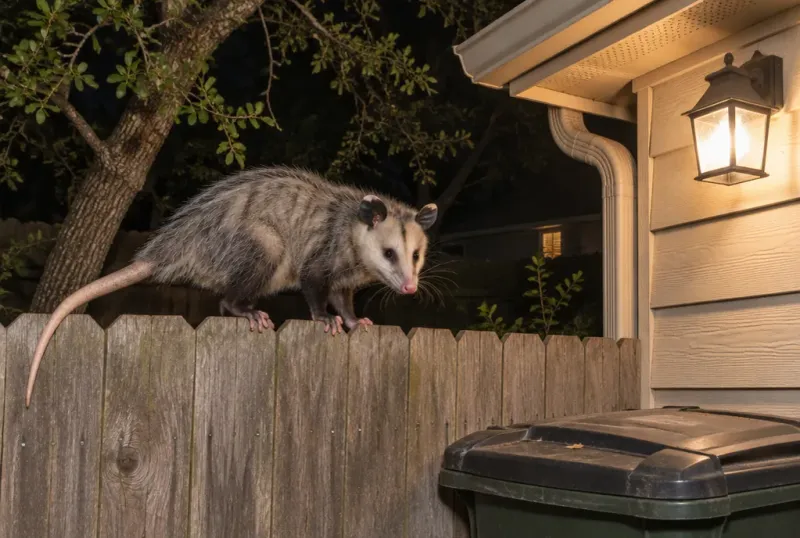
Here is a simple rule of thumb. If the visitor is not bothering anyone, leave it alone.
If visits turn into a pattern, remove the food and shelter that draw it in, and call a qualified professional for denning, safety worries, or stubborn trouble.
An opossum may eat some pests, as a wildlife agency profile shows, but lab findings and wild stomach-content results do not make it a substitute for tick prevention. Think of it as a quiet night shift worker you did not hire, and one you should not count on.
Share this story