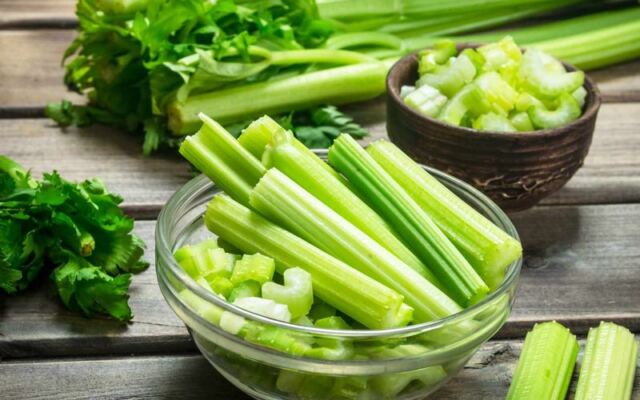
Celery sits in nearly every Louisiana kitchen, chopped into gumbo, jambalaya, and étouffée long before the pot gets hot. Lately, people have been asking whether crunching on it every day changes how the body feels.
It is a fair question, and the answer is more modest than the buzz suggests. Here is what celery really offers, what the research does and does not show, and how to enjoy it safely.
The holy trinity makes celery familiar, not medicinal
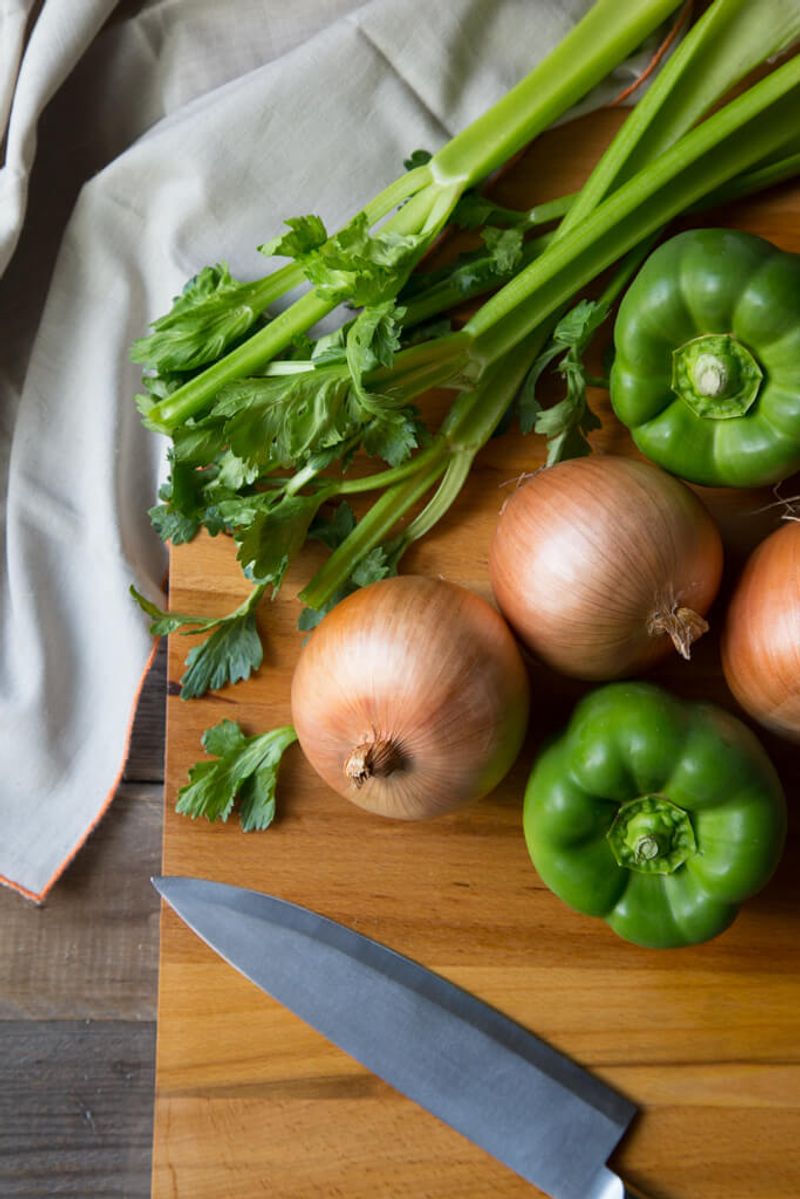
Ask a Louisiana cook where a pot of gumbo begins, and the answer usually involves a knife and three vegetables. LSU AgCenter identifies onion, celery, and bell pepper as the holy trinity of Louisiana cuisine.
Many home gardeners and shoppers across the state keep celery on hand for that reason.
That familiarity is a fact about culture and flavor. Celery earned its spot in the pot because it adds a fresh, slightly salty, savory backbone to the dish.
A food’s place in regional cooking does not show that eating it every day changes your health. Generations of good meals tell us celery tastes great in them.
They do not tell us it works like a remedy.
Two stalks offer a modest nutritional contribution
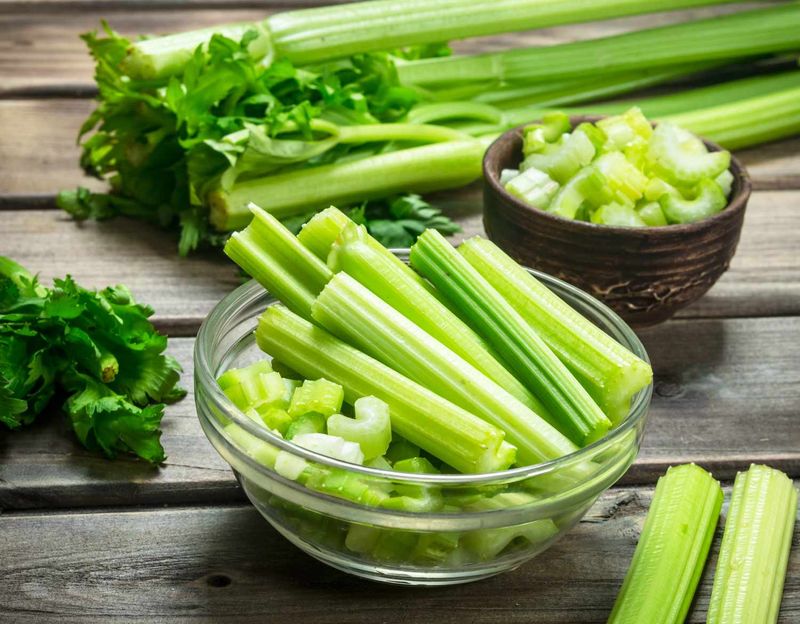
Here are the numbers. According to the FDA’s raw vegetable nutrition information, two medium raw stalks (110 g) provide about 15 calories, 2 grams of fiber, and 260 milligrams of potassium.
That makes celery a light, crunchy vegetable that adds a little fiber and a little potassium to a day of eating. It is a helpful snack or ingredient, especially when you want volume without many calories.
It is not a nutritional powerhouse, though. Two stalks will not cover your needs for vitamins, minerals, protein, or fiber, and no single vegetable does.
Celery is not nutritionally complete, and it is not uniquely health-promoting compared with many other vegetables.
Federal dietary guidance treats vegetables as a broad group. The Dietary Guidelines Advisory Committee report describes vegetable recommendations as a daily total across several groups.
Celery falls in the “other vegetables” category, and nothing requires you to eat it in particular.
If you like celery, it counts. If you do not, other vegetables can fill the same spot on your plate.
A daily serving does not promise a noticeable change
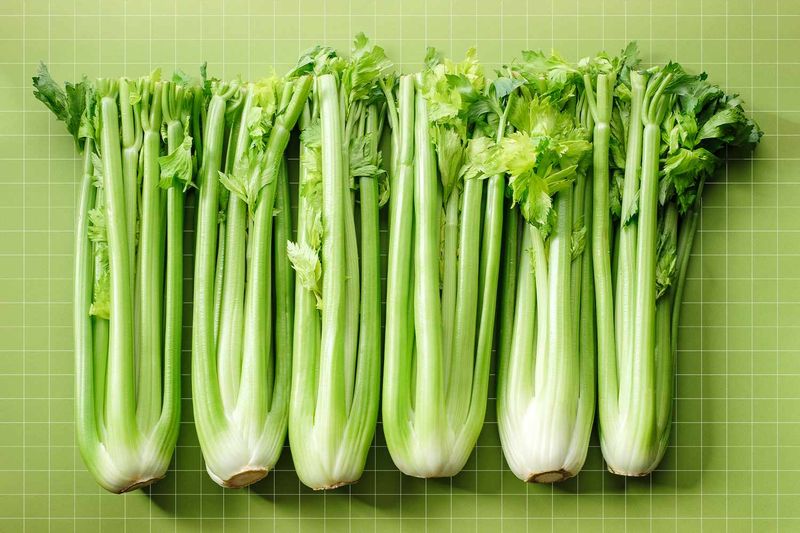
So, does a daily celery habit make a difference you can feel? The evidence does not show that eating ordinary celery stalks every day causes a predictable change in how people feel or function.
No reliable timeline, sensation, or personal outcome can be promised.
Part of the reason is simple. Health depends on the whole pattern of what you eat, how you move, how you sleep, and many other things.
The federal advisory committee’s report looks at overall dietary patterns rather than singling out one vegetable.
Research that tested celery in other forms is covered in the next section, and it did not test a plain daily serving of stalks. For now, one stalk a day is best seen as a small piece of a bigger picture.
If you start eating celery daily and notice changes, other parts of your routine may be involved too. Celery can be a pleasant habit without being a switch that changes your body.
The celery research has important limits
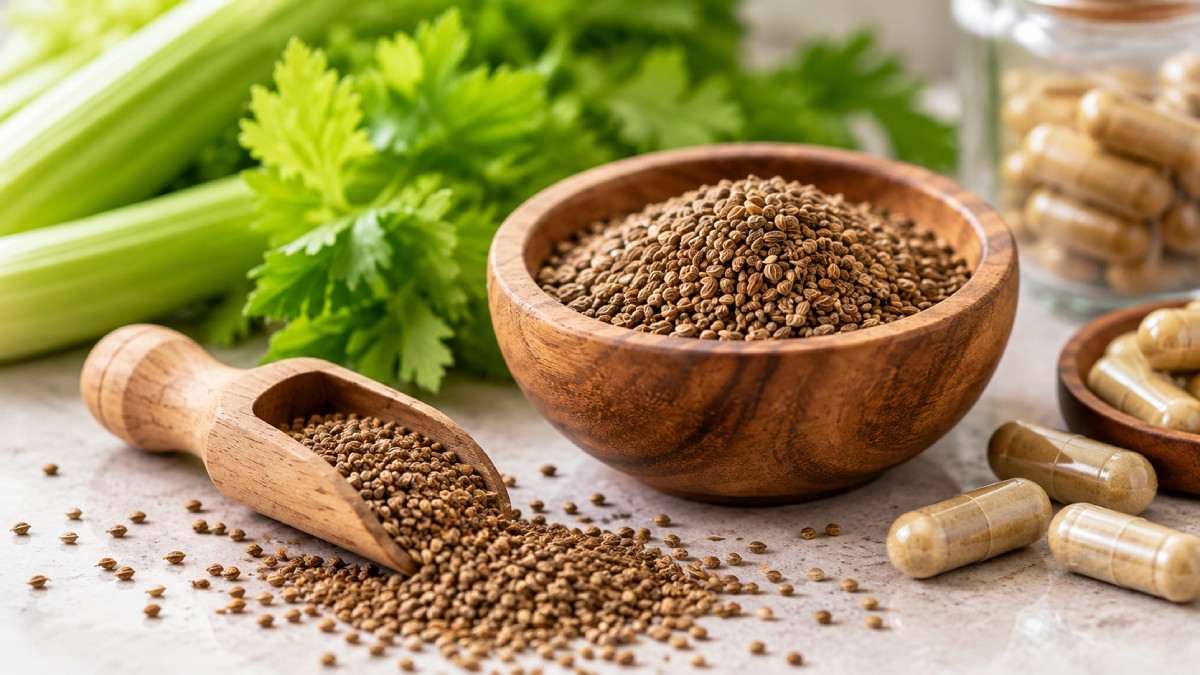
A 2025 systematic review and meta-analysis in Frontiers in Nutrition is the research people most often point to. It combined nine trials involving 511 adults, and it reported improvements in some blood pressure and metabolic measures.
That sounds promising, but the details matter. The adults had varied health conditions, and the celery interventions varied too.
They included preparations such as seed supplements and decoctions, not simply a daily serving of celery stalks.
The studies also differed a lot from one another. Researchers call this heterogeneity, and the review found substantial amounts of it for several outcomes.
When studies differ that much, the combined result is harder to trust.
So the findings are preliminary. They are a reason for scientists to look further, not proof that celery treats high blood pressure, high blood sugar, or cholesterol problems.
They also do not show that a customary daily serving of stalks would have the same effects. The authors themselves called for more high-quality trials before firm conclusions can be drawn.
They did not offer a recommended celery dose, and neither should anyone else at this point.
Stalks, juice, and supplements are different interventions

Whole stalks, juice, seed powders, extracts, and decoctions are not the same thing. Each delivers different amounts of different compounds, and results from one cannot be borrowed for another.
Much of the research in the 2025 review involved concentrated preparations rather than a plate of raw celery.
Juice is a good example. A researcher interviewed by Science Norway pointed out that much celery research uses extracts or concentrates, and that juicing removes much of the fiber.
Nothing reviewed here shows that celery juice has a special effect.
Then there are the popular claims. Celery is often called a negative-calorie food, but the Tufts Health and Nutrition Letter explains that it is low in calories yet still gives the body net energy.
The idea that daily celery detoxes the body, or reliably causes weight loss, is not established either. The body already has its own systems for clearing waste.
What celery does offer is simple: crunch, flavor, and few calories. That is a fine reason to eat it, with no extra promises attached.
Safe preparation and allergy awareness still matter
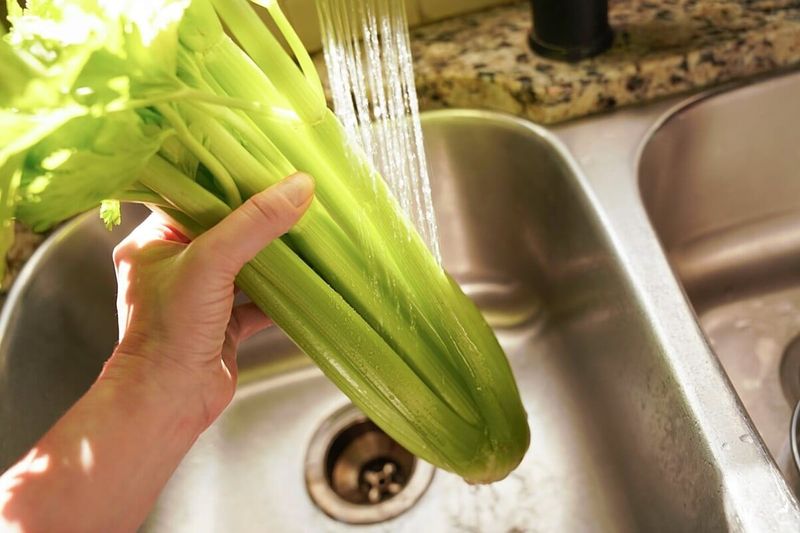
Raw celery is easy to eat, but it still needs careful handling. The FDA’s produce safety guidance says to wash produce thoroughly under running water before preparing or eating it.
Skip the soap, detergent, and commercial produce wash. Washing reduces bacteria but does not eliminate it, so rinsing is a good step rather than a guarantee.
In a kitchen full of chicken, sausage, and shrimp, keep celery away from raw meat and the knives, boards, and plates used for it. A separate cutting board for vegetables is an easy fix.
Allergy is the other caution. Celery is a confirmed food allergen, and a small clinical food-challenge study confirmed allergy in some people with a history of reactions.
If you suspect you are allergic to celery, do not keep eating it to see what happens. Talk with a doctor or allergist about safe testing.
Keep celery in varied meals, not as a prescription

Go ahead and enjoy celery. Slice it into a pot of étouffée, crunch it with a light dip, or toss it into a salad.
Raw or cooked, it works as one vegetable among many.
What goes around it matters. Celery in a dish often comes with salt, fat, and other ingredients, and those shape the whole meal.
The federal dietary-pattern report favors nutrient-dense vegetables prepared without added saturated fat or sodium, so credit or blame for a dish should not land on celery alone.
Aim for a mix of colors and kinds of vegetables across the week, with celery as one of them when you feel like it.
A useful food and a proven daily treatment are two different things. Celery is the first, and that is plenty for something that has been holding gumbo together for generations.
Share this story