When the lakes freeze and the snow piles up, plenty of Minnesota birds pack up and fly south. A tough little crew stays behind, though, and they spend every cold day hunting for enough food to survive the night.
A well-stocked feeder can make a real difference for them, and it brings bright color and busy action right outside your window. Here are seven hardy year-round neighbors and the snacks that will keep them coming back.
1. Black-capped Chickadee
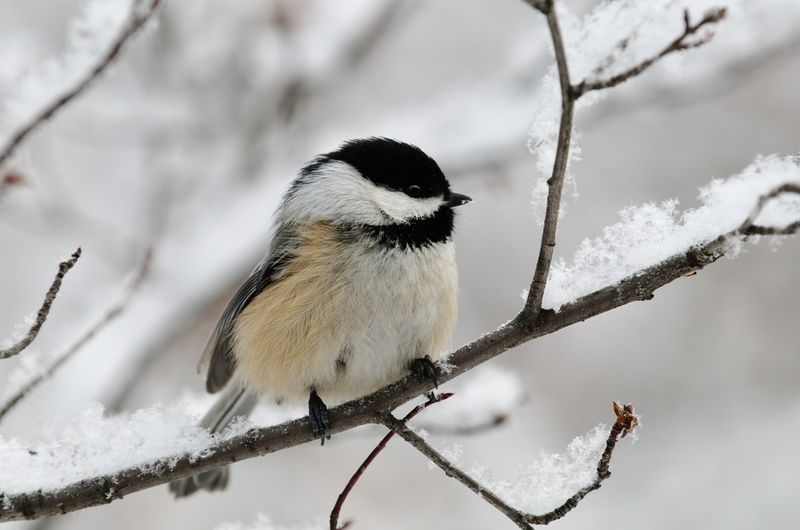
Picture a bird smaller than your fist sleeping outside on a night when it hits twenty below. Black-capped chickadees do exactly that, and they pull it off by lowering their body temperature and shivering all night long.
Every morning, they wake up hungry and ready to raid your feeder.
Black oil sunflower seeds are their top pick because the thin shells crack easily and the seeds are packed with fat. You will notice a chickadee grabs one seed, zips to a nearby branch, and hammers it open against the bark.
Then it comes right back for another.
Fun fact: chickadees hide thousands of seeds in fall and can remember where most of them are. Their brains actually grow new cells each autumn to help store those memories.
Offer suet and shelled peanuts too, and you may even coax one to eat from your hand.
2. Northern Cardinal
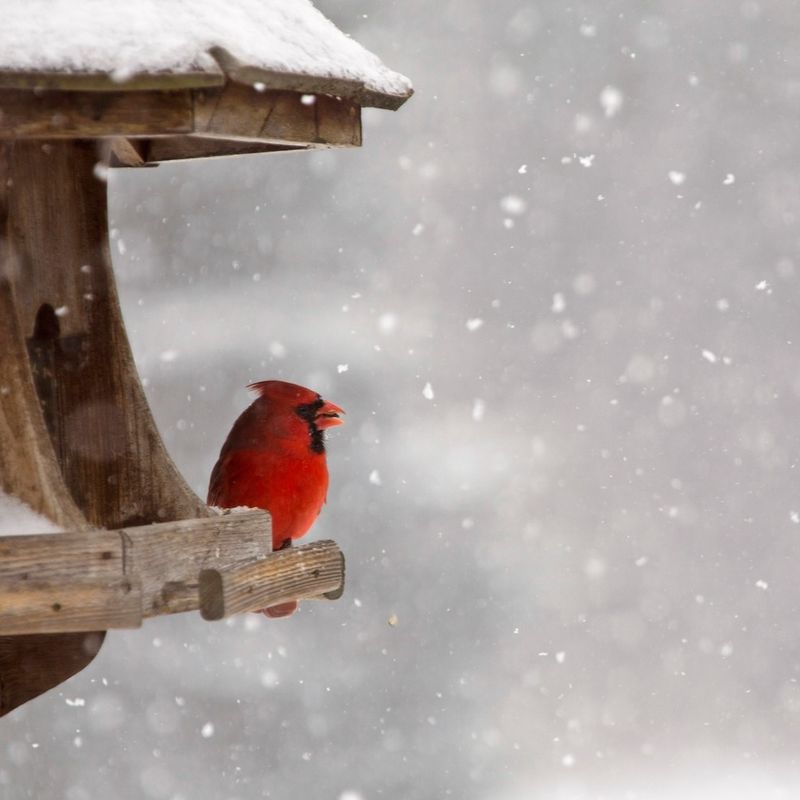
Nothing beats a flash of scarlet against fresh snow. Northern cardinals used to be rare in Minnesota, but over the last century they have spread north, helped along by backyard feeders and shrubby suburban yards.
Cardinals have thick, cone-shaped beaks built for crushing hard seeds. Safflower seed is a smart choice, since cardinals love it and many squirrels and grackles leave it alone.
Sunflower seeds and cracked corn work well too.
Because cardinals are a bit shy and heavy-bodied, they prefer wide platform feeders or open hopper feeders over skinny tubes. They often visit at dawn and dusk, so keep an eye out during those quiet hours.
Planting dense shrubs or evergreens nearby gives them a safe spot to hide between bites.
3. Downy Woodpecker
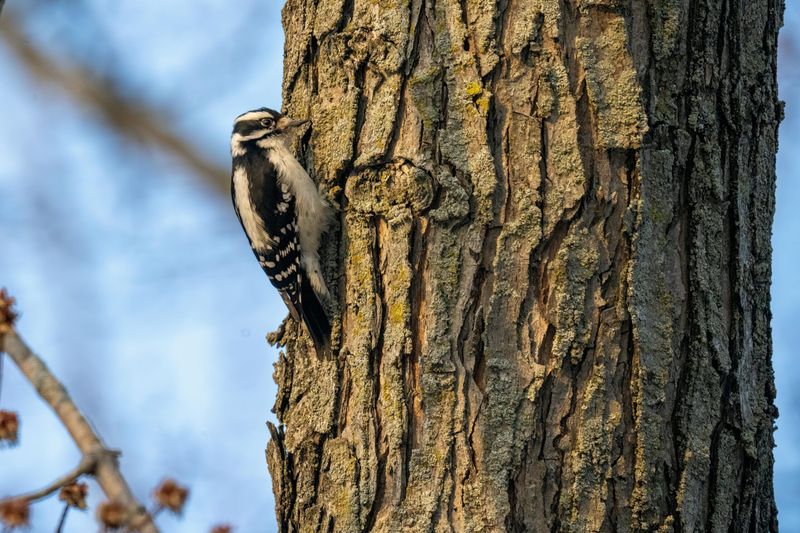
Tap, tap, tap. If you hear a soft drumming in the trees, there is a good chance it is a downy woodpecker, the smallest woodpecker in North America.
It is about the size of a sparrow but has the attitude of a much bigger bird.
Suet is the golden ticket here. These blocks of fat give downies the energy they need to stay warm, and a simple wire suet cage lets them cling and feed just like they would on a tree trunk.
They will also nibble peanuts and sunflower hearts.
Males have a small red patch on the back of their heads, while females do not. Downies often travel with chickadees and nuthatches in winter, forming little mixed flocks that watch for danger together.
4. White-breasted Nuthatch
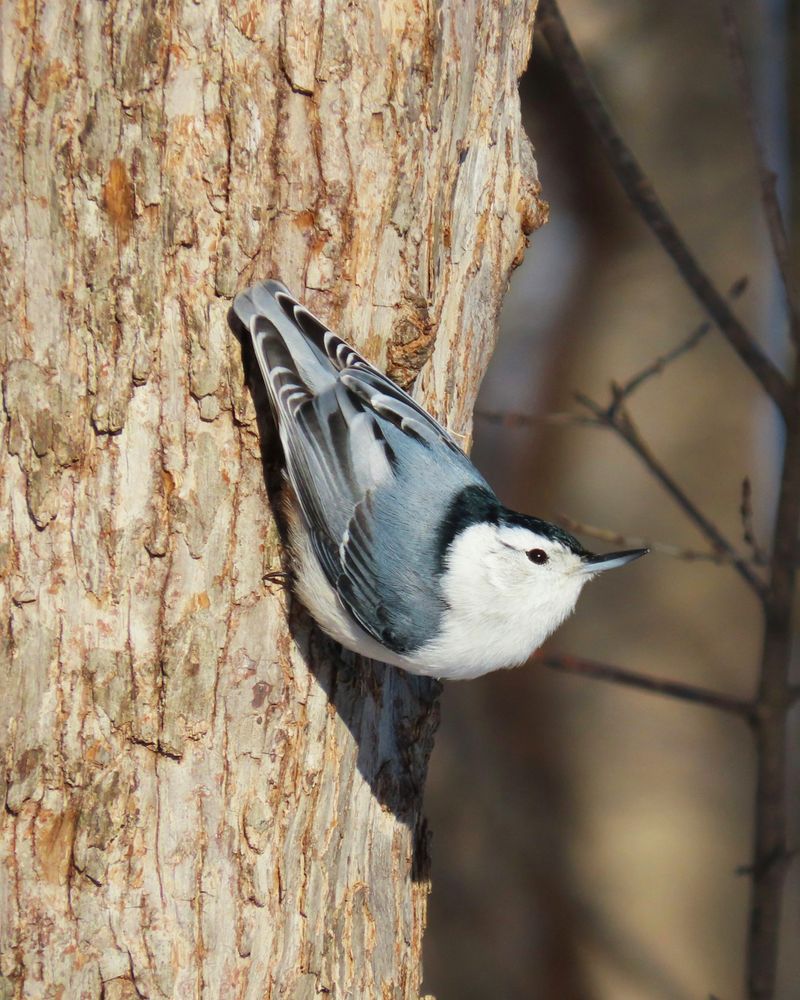
Most birds climb up trees. The white-breasted nuthatch laughs at that rule and scoots down tree trunks headfirst, poking into cracks that other birds miss.
Watching one feels a little like watching a tiny acrobat.
Their name comes from an old habit of wedging nuts into bark and hacking them open, almost like using a hatchet. At your feeder, they go wild for shelled peanuts, sunflower seeds, and suet.
Listen for a nasal yank-yank call, which sounds like a toy horn. Nuthatches usually live in pairs all year and defend the same patch of woods.
If one pair finds your yard, they may stick with you for years.
5. Blue Jay
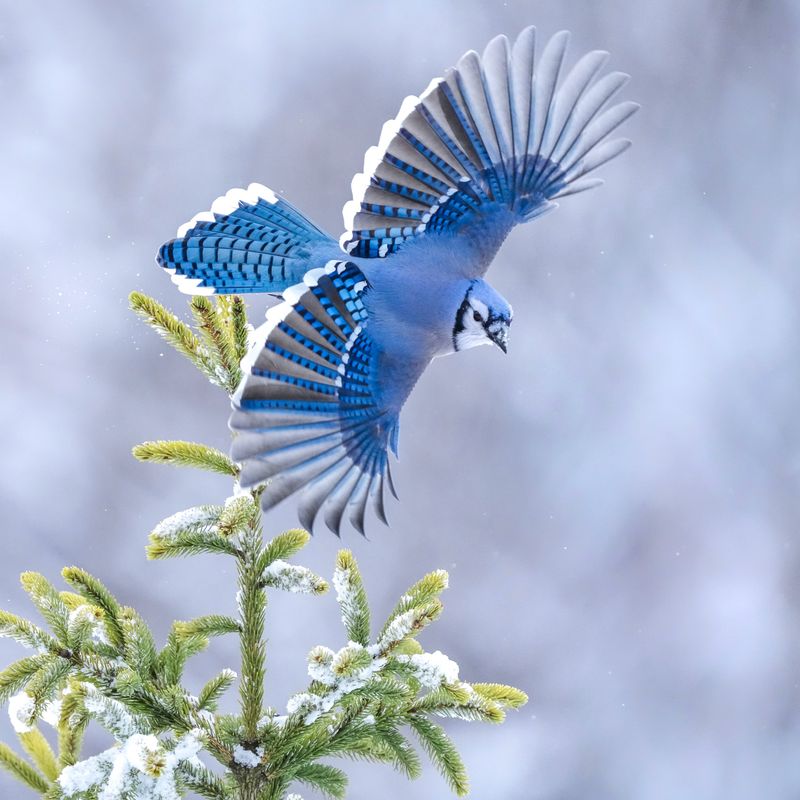
Loud, flashy, and a little bossy, the blue jay is the class clown of the winter feeder. One will swoop in screaming, scatter the smaller birds, and leave with a mouthful of food before anyone knows what happened.
Blue jays can carry several seeds at once in a special pouch in their throat. Whole peanuts in the shell are a favorite, and they will also take sunflower seeds, cracked corn, and acorns.
A tray feeder gives them room to land.
Here is a sneaky trick: blue jays can copy the scream of a red-tailed hawk. Scientists think they may use it to scare other birds away from food.
Annoying? Maybe.
Clever? Absolutely.
6. American Goldfinch
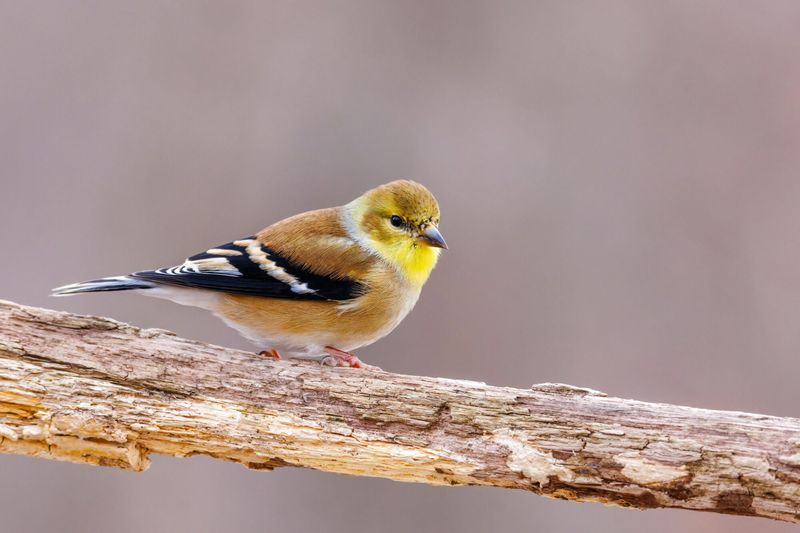
Wait, where did all the yellow go? In summer, male American goldfinches glow like lemons, but by winter they swap to a soft olive-brown coat.
Many people do not even realize the same birds are still around.
Goldfinches have tiny, pointed bills perfect for picking at small seeds. Nyjer seed, sometimes called thistle, in a mesh sock or special tube feeder is their favorite.
They also love sunflower hearts, which have no shells to fuss with.
These birds often show up in noisy flocks of a dozen or more. Keep feeders full and dry, since nyjer spoils if it gets wet.
Come spring, you get a front-row seat as the males slowly turn gold again.
7. Dark-eyed Junco
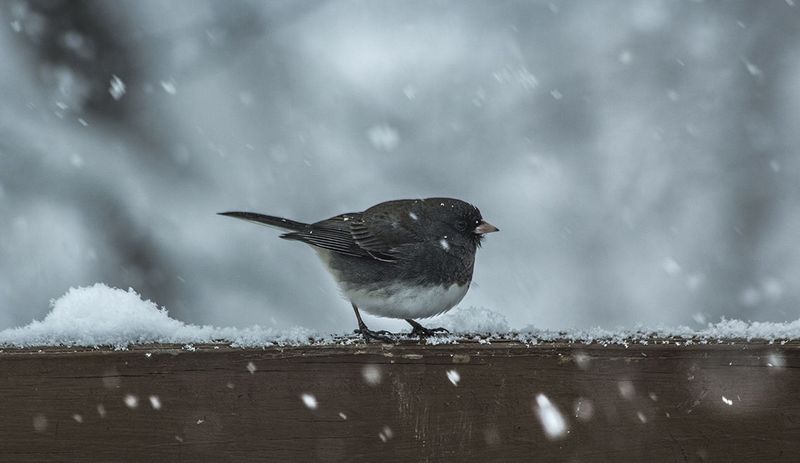
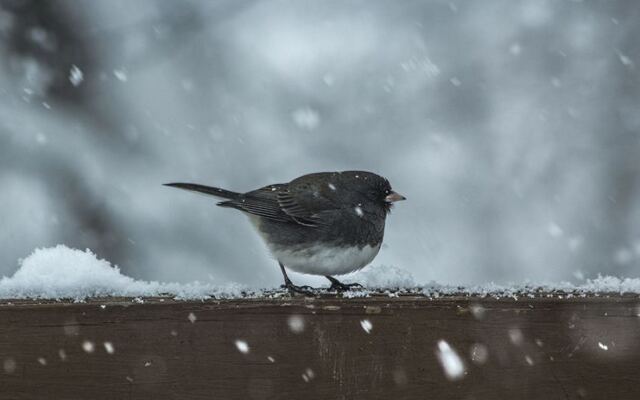
Old-timers called them snowbirds, because juncos seem to arrive right as the first flakes fall. Many breed farther north in Canada and treat Minnesota as their winter vacation spot.
Cold to us feels balmy to them.
Juncos are ground feeders, so you will usually see them hopping under your feeders and picking up dropped seeds. Scatter white millet, cracked corn, or a seed mix on the ground or on a low platform.
They will happily clean up whatever the other birds spill.
Look for their slate-gray backs, white bellies, and pale pink beaks. When they fly, white feathers flash on the sides of their tails.
A brush pile nearby gives them a cozy spot to hide from hawks and wind.
Share this story