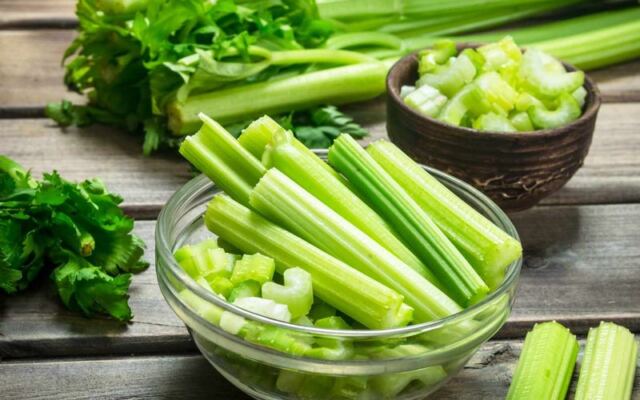
Eat celery every day and your body gets a crunchy, low-calorie vegetable with a little fiber and potassium. That is the real story, and it is a useful one.
Celery has plenty of big health claims attached to it, from detoxing to fast weight loss. Here is what the numbers and the research actually say, whether you grow it in a cool spring bed or grab it at the store.
What a serving of celery adds
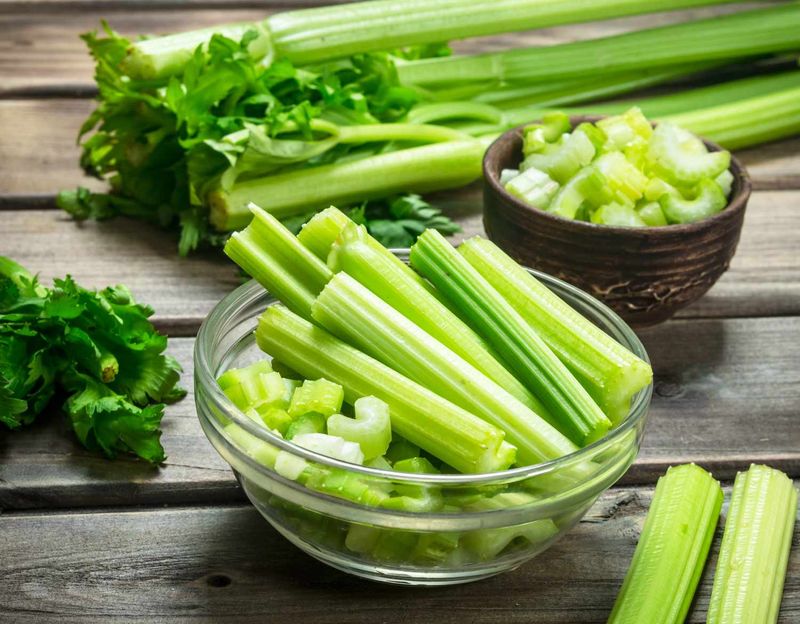
Two medium raw celery stalks weigh about 110 grams. According to the FDA’s nutrition table for raw vegetables, that portion has about 15 calories, 2 grams of fiber, 115 milligrams of sodium, and 260 milligrams of potassium.
Those numbers tell you what celery is: a light, watery-tasting crunch that adds volume to a plate without adding many calories. The fiber is modest, so celery is a helpful addition rather than a fiber solution.
And it is not sodium-free, though the amount in two stalks is small.
What celery does for you depends on how much you eat and what else is on your plate. A few stalks alongside a sandwich play a different role than celery eaten in place of a heavier snack, or celery piled into a soup with many other vegetables.
Nothing about these numbers promises a special or predictable change in your body.
Think of it as one more way to get a vegetable into your day. If you like the taste and the snap, it is an easy habit to keep.
If you pair it with peanut butter, cheese, or dip, remember that the extras bring their own calories and sodium, and the celery itself stays the light part of the snack.
Eating it daily simply makes that small contribution add up across the week. It will not replace a varied diet with other vegetables, fruits, beans, and whole grains, which bring different nutrients and more fiber.
Celery works best as a team player in that mix.
Whole celery keeps more of its fiber

Juice and whole stalks are not the same food. Juicing commonly removes the pulp, which means some of the fiber found in the whole vegetable is lost, as University of Maryland Extension explains.
Keep the scale in mind, though. The FDA table lists only 2 grams of fiber for two medium stalks, so even whole celery is a small fiber source.
Losing some of that in a glass of juice is not a disaster, but it does mean juice gives you less of the part that chewing and bulk provide.
That does not make celery juice worthless. It still comes from a vegetable, and different juices and methods leave different amounts of fiber behind, so it is wrong to say they are all the same.
The point is simply that the form changes what you get.
If fiber is your goal, whole celery is the better pick. Slice it into salads, stir it into soups, or keep sticks in the fridge for snacking.
If you enjoy juice, treat it as a drink you like and not as a way to meet your fiber needs.
Either way, other foods will do most of the heavy lifting for fiber. Beans, oats, berries, and whole grains carry far more per serving than a couple of celery stalks.
What the blood-pressure research does and does not show

Celery and blood pressure get a lot of attention online. A 2025 systematic review and meta-analysis pooled 10 randomized trials with 511 participants and reported possible improvements in blood pressure and some other measures.
The authors also pointed out substantial variation across the studies, small sample sizes, and a need for better trials. Just as important, the review combined many celery preparations, not only fresh stalks.
So it is an early signal, not proof that a daily serving of celery stalks lowers blood pressure.
Form matters here. A small 2022 trial looked at celery seed extract taken as a supplement by people with hypertension.
A concentrated extract is a very different thing from the stalk in your crisper drawer, so those findings should not be carried over to everyday celery.
Neither study shows that celery can stand in for prescribed treatment. If you take blood pressure medication, keep taking it as directed, and talk with your doctor before changing anything or starting a supplement.
Celery can still be part of a heart-friendly eating pattern as one of many vegetables. Just do not count on it to move your numbers by itself.
Detox and negative-calorie claims are not supported

Few vegetable claims travel as far as the idea that celery or celery juice flushes toxins from your body. The National Center for Complementary and Integrative Health says in its guidance on detoxes and cleanses that there is no compelling evidence that detox diets eliminate toxins or help manage weight.
It also notes possible risks from restrictive diets and some unpasteurized juices.
So detox benefits are not established for celery or celery juice. Your liver and kidneys already handle waste, and no single vegetable has been shown to speed that up.
Then there is the negative-calorie myth, the idea that chewing celery burns more calories than it contains. A small study in the Proceedings of the Nutrition Society measured energy use in 15 healthy women after they ate 100 grams of celery.
The researchers concluded it did not create a negative energy balance.
With only 15 participants, the study cannot settle the question for everyone. But it does undercut the popular claim, and nothing here shows that celery causes weight loss.
What celery can do is take up space on the plate for very few calories. That may help some people build lighter meals, but it is a modest tool, not a shortcut.
When warfarin use or allergy symptoms matter
For most people celery is an easy food, but two situations call for extra attention. The first is warfarin, a blood thinner.
Celery contains vitamin K, as shown in University Hospitals nutrition data, and vitamin K can affect how warfarin works.
The advice from the NIH Office of Dietary Supplements is to keep your vitamin K intake consistent. It is not to avoid every food that contains it.
If you plan a major diet change, such as eating celery or other greens every day when you did not before, talk with your care team first.
The second situation is allergy. Some people with pollen allergies react to raw celery through pollen-food allergy syndrome.
The American College of Allergy, Asthma & Immunology describes symptoms such as itching or scratchiness in the mouth.
If that happens after raw celery, bring it up with an allergist. Do not shrug off reactions that go beyond the mouth, such as swelling, trouble breathing, or symptoms elsewhere in the body, because those can be more serious and need prompt medical attention.
These are not reasons to fear celery. They are good reasons to pay attention to how your own body responds and to involve your care team when something is off.
Wash celery under running water
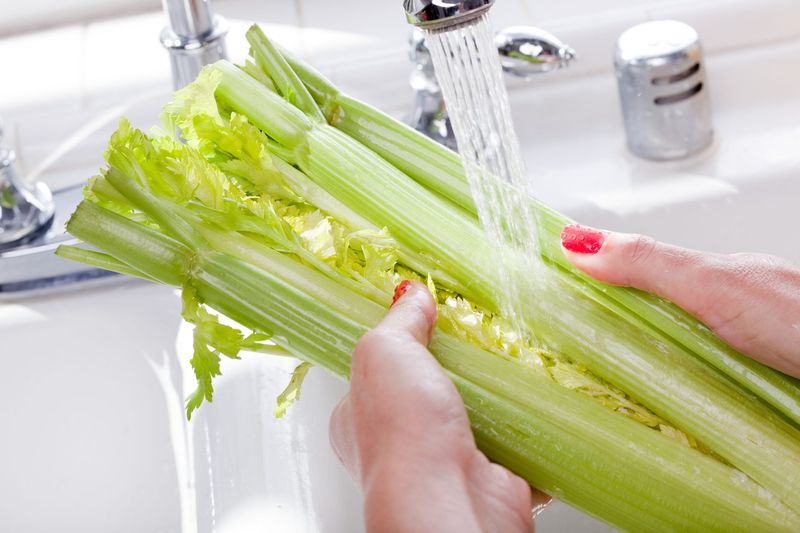
Celery grows in soil, so a good rinse matters. The CDC says in its fruit and vegetable safety guidance to wash produce under running water before eating, cutting, or cooking it.
That goes for celery from the grocery store and for stalks pulled from a home garden bed. Rinsing before you cut keeps anything on the surface from being carried into the inside of the stalks by your knife.
Skip the soap and the bleach. Produce should not be washed with either one, since they are not meant to be eaten.
Plain running water is the supported method, so keep it simple. Rinse each stalk, then use it as you planned, raw in a snack or cooked in a dish.
Treat celery as an everyday vegetable
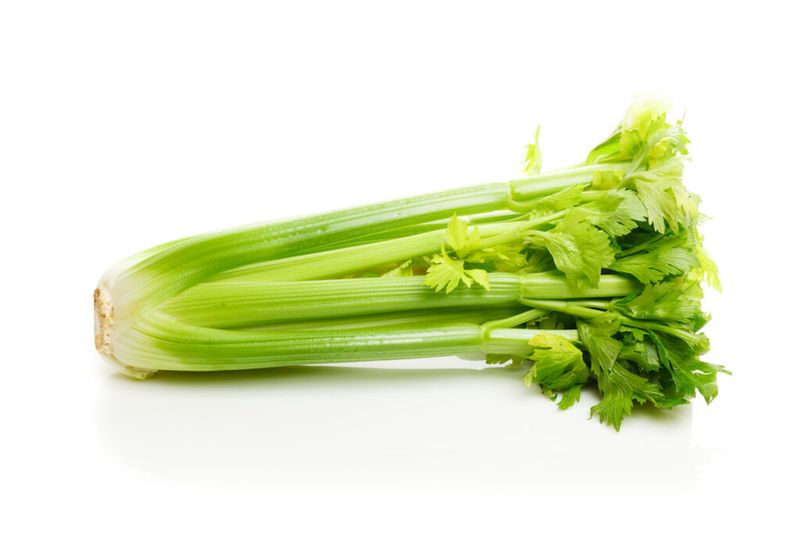
Celery is a handy, low-calorie addition to meals and snacks, with about 15 calories and 2 grams of fiber in two medium stalks. Pick the form and amount that fit your meals, and skip the promises of detox, guaranteed weight loss, or a treatment effect.
A plain vegetable that you actually enjoy eating beats a miracle that never arrives.
Share this story