That huge, buzzing wasp patrolling your yard looks like trouble, but it is most likely a native Virginia insect that hunts cicadas and mostly keeps to itself. Its size and loud flight make many people panic, yet it is generally docile.
A few details about how it lives can help you tell it apart from wasps that really do need a different plan. Here is how to spot it, live alongside it, and know when to step back.
A large wasp near soil may be a cicada killer
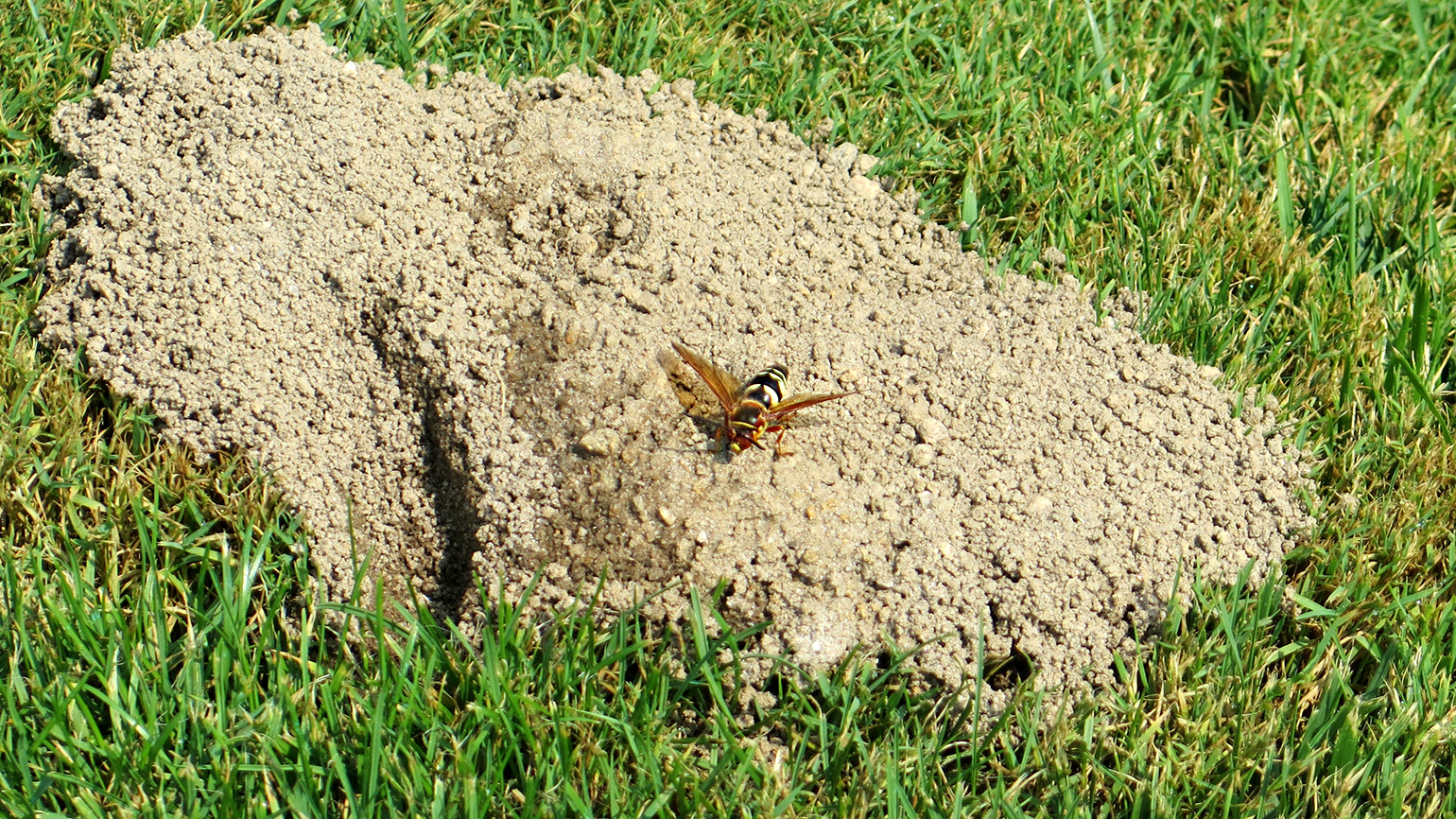
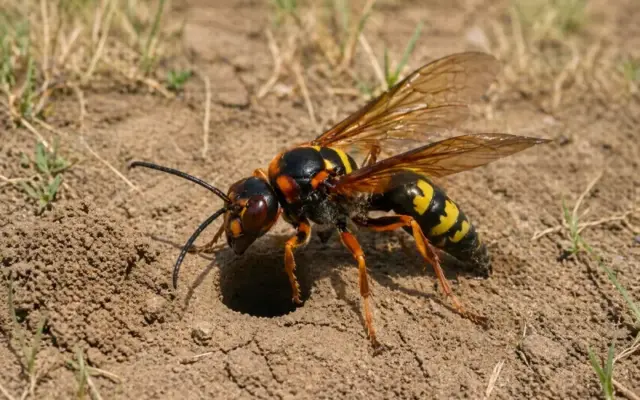
Spotted a wasp the size of your thumb hovering over bare ground? In Virginia, the eastern cicada killer is a plausible match.
Virginia Tech describes it as a large wasp that can reach about 1.5 inches, with black and gold markings on the abdomen.
Size and color are only starting points. Plenty of other insects wear yellow and black, and a big wasp is not automatically a cicada killer.
Treat it as a good guess until something else backs it up.
Nest clues can help. A small mound of loose soil with a U-shaped entrance tunnel is often linked to cicada killer burrows, especially in sunny, well-drained spots such as thin lawn, bare patches, or the edge of a flower bed.
Still, a mound is a clue and not proof. Other insects and animals also dig in soil.
Behavior adds another piece. Cicada killers tend to fly low over the ground, with males darting around and checking out anything that moves.
They do not form big, buzzing swarms around a papery nest.
If you can, take a photo from a comfortable distance. Note where the insect was, what it was doing, and whether you saw a burrow.
Those details make identification much easier. Virginia Cooperative Extension notes that suspect wasps and hornets can be sent for identification, so you do not have to guess.
Females hunt cicadas to provision underground nests
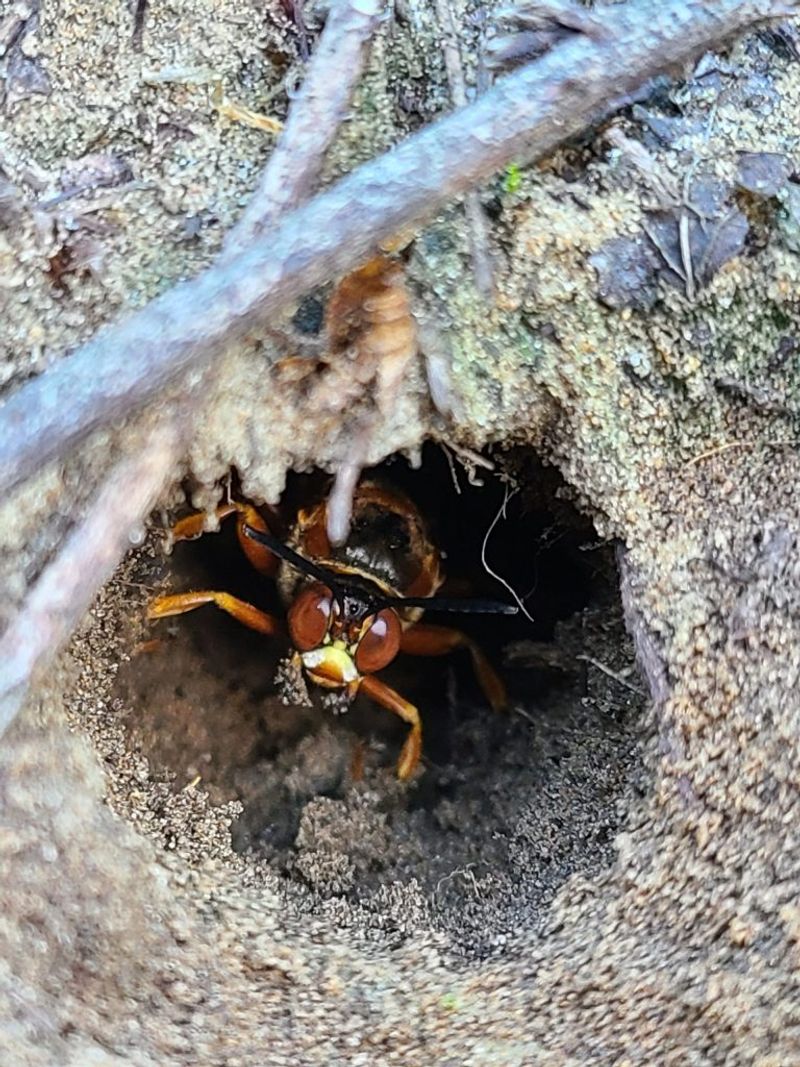
Behind the scary look is a very focused mom. Female cicada killers dig tunnels in soil, then stock underground nest cells with cicadas they have paralyzed.
Each cicada becomes food for a wasp larva that hatches below ground.
This nesting habit explains why you see them where you do. They favor sunny, loose, well-drained soil, so thin turf, bare patches, and dry bed edges can look inviting.
You might notice small piles of dirt, a wasp lugging a heavy cicada, or a few burrows clustered in one warm spot.
Adult wasps themselves feed mainly on nectar, so they are not hunting for their own meals when they grab cicadas. The cicadas are for the babies.
Here is a point that surprises many gardeners. According to Virginia Tech, cicada killers do not feed on or nest in garden plants.
Your tomatoes, shrubs, and perennials are not on the menu or the real estate list.
If you see a wasp near a flower, it may simply be sipping nectar. If you see soil mounds, the wasp is using the ground, not damaging what grows on it.
Any bare spots you see are more likely a sign that the turf was already thin.
Its benefit is limited to hunting cicadas
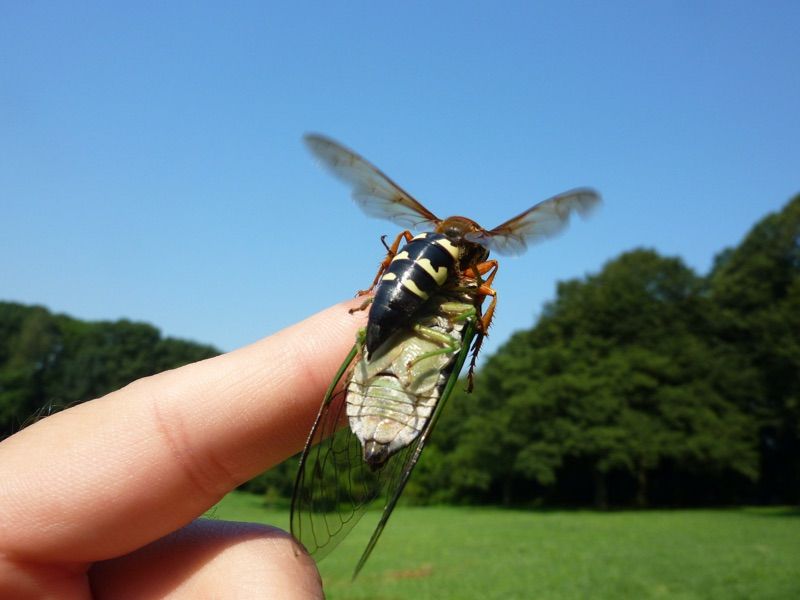
Calling this wasp a friend deserves a careful explanation. Its job is specific: females capture cicadas to feed their young.
Cicadas are loud, and some people do not enjoy them, but they are also a natural part of Virginia summers.
That is the full extent of the benefit we can point to. Nothing in the sources shows that cicada killers keep vegetable gardens or flower beds free of common pests.
Claims that they protect your garden or eat aphids and caterpillars go further than the facts allow.
So think of the wasp as a native predator doing its own work. It is part of the local food web, and its presence is not a sign that your plants are being guarded.
You would not rely on it in place of good gardening habits.
There is a practical upside to keeping expectations realistic. If pests are chewing your plants, look for the real culprit and choose a fix that matches it.
If a big wasp is simply cruising your lawn in midsummer, you can appreciate it for what it is without crediting it with jobs it does not do.
Hunting cicadas is a modest role, but it is a genuine one, and it is enough reason to pause before reaching for the spray.
Males cannot sting, but females can
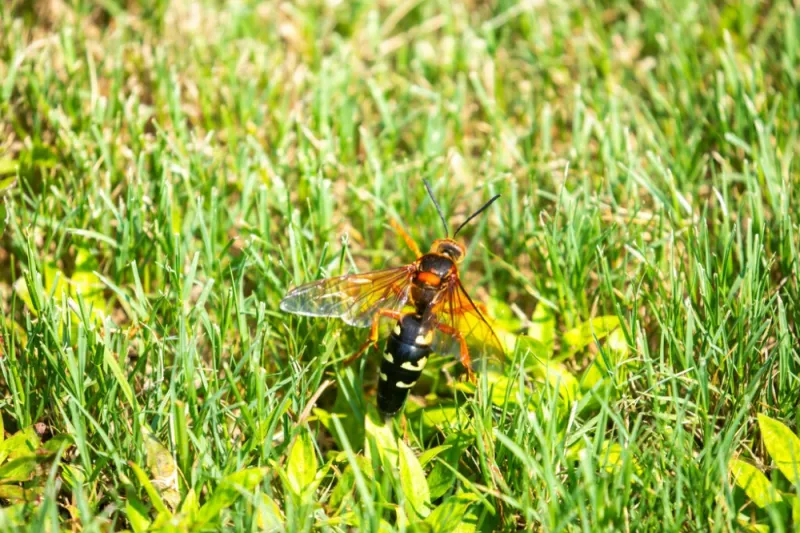
Walk across a yard with cicada killers, and a male may zip right up to your face. It looks alarming, but he is just inspecting anything that moves.
Males cannot sting, so this buzzing is bluff and curiosity.
Females are a different story, though not a dramatic one. Cicada killers are generally docile, and Virginia Tech notes that females can sting if they are handled or if their tunnel is seriously disturbed.
Calling them harmless would be going too far, and so would saying they never sting.
Because they are solitary, each female looks after her own burrow. There is no shared nest to defend, and no crowd of wasps that rushes out together.
The simple rule is to give them space. Do not swat at them, grab them, or poke at a burrow to see what happens.
Keep kids and pets from stomping or digging in the nesting patch while the wasps are active.
Extension guidance from the University of Maryland takes the same calm approach. Most trouble comes from people disturbing the wasps, not from the wasps seeking out people.
Yellowjackets call for a different decision
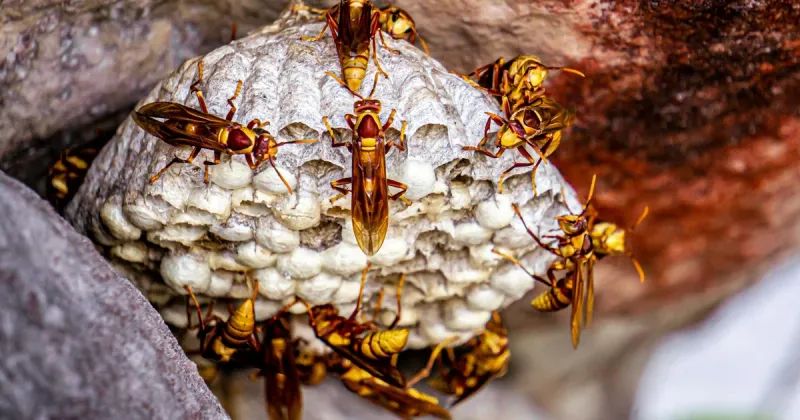
Not every striped wasp deserves the same patience. Yellowjackets are social wasps that live in colonies, defend their nests, and can sting repeatedly.
Cicada killers work alone and are far less likely to react.
Yellowjackets do have a useful side. Virginia Cooperative Extension notes that they prey on plant-feeding insects.
That does not make a nest by your back door a good idea, so location matters a lot.
This is why identification comes first. A wasp that looks scary might be a calm cicada killer, or it might be something that will defend a nest if you walk too close.
Treating them the same way could lead you to ignore a real hazard or to worry about a harmless-looking visitor.
If you are unsure, do not creep closer for a better look, and never handle the insect. Extension notes that suspect wasps and hornets can be reported to your local Cooperative Extension office.
You can also use Virginia Tech’s insect identification service, which accepts digital requests. A clear photo taken from a safe distance is often enough to get started.
Leave most cicada-killer burrows alone
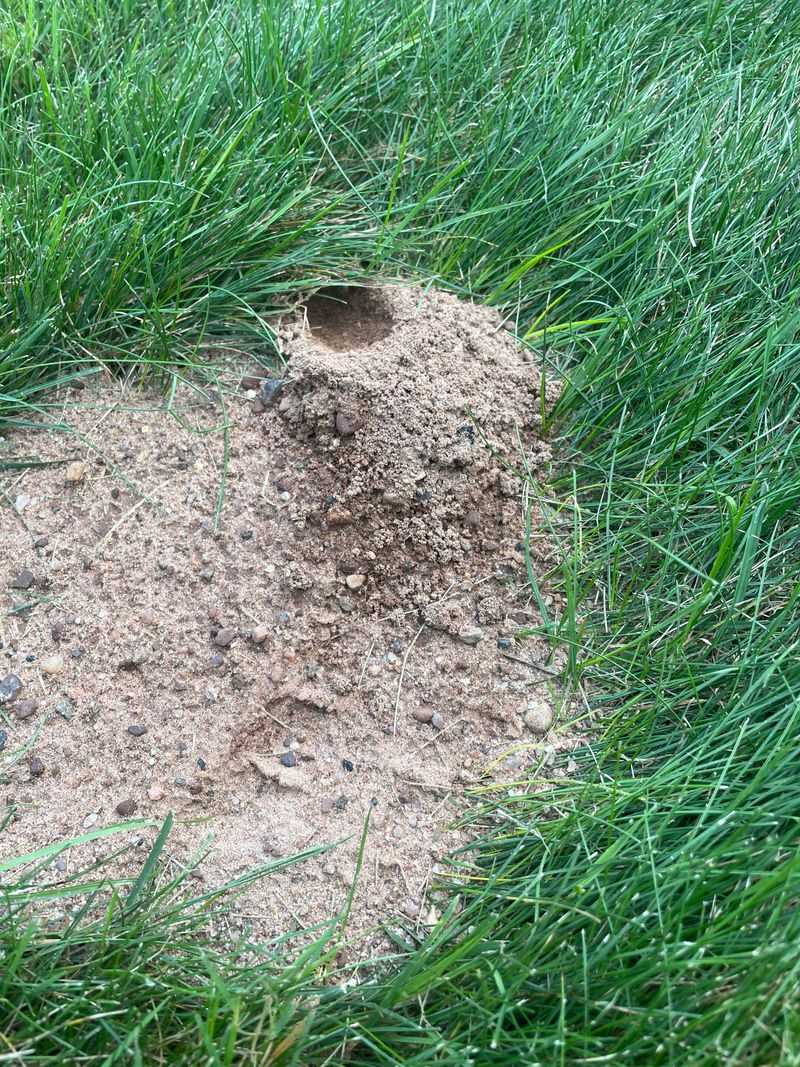
Once you have identified a cicada killer, the usual best move is to leave it alone. The wasps are active for only part of the summer, and the burrows are not harming your plants.
By late summer they are typically gone.
That said, a burrow can be a real nuisance. Virginia Tech points out that burrows can bother people in frequently used areas or affect turf playability.
There is no universal number of burrows that makes control necessary, so it comes down to how you use the space.
If you want to discourage digging, try gentle steps first. University of Maryland Extension suggests these options:
Overseed thin lawn areas so the grass fills in. Temporarily water the nesting area, since the wasps prefer dry soil.
Cover exposed soil in ornamental beds with mulch or groundcover.
Insecticide is a last resort, not the starting point. If you ever consider it, follow the label directions closely and get expert identification or professional advice first.
The sequence is simple. Identify the insect, avoid disturbing the burrow, and pick the least disruptive response that fits the spot.
A burrow in a quiet corner needs nothing, while one in a play area may call for a few lawn fixes.
Know when a sting needs emergency care
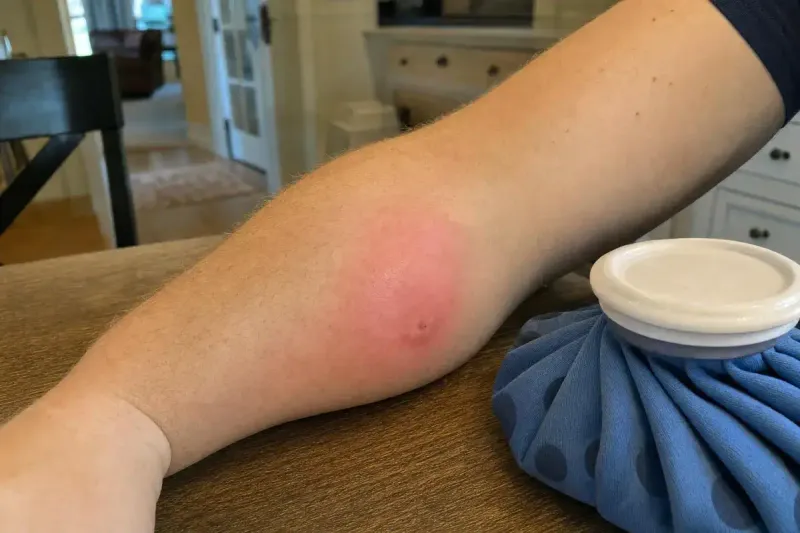
Most encounters with cicada killers never involve a sting, and most stings are not severe. Still, some people have serious allergic reactions, so it pays to know the warning signs.
If someone has trouble breathing or swelling of the throat after a sting, call 911 right away. MedlinePlus lists these as signs of a severe allergic reaction that need emergency care.
Do not wait to see if symptoms pass.
Anyone who has been prescribed epinephrine should use it as directed and then get emergency help.
Prevention helps too. As Virginia Tech advises, avoid disturbing burrows, and keep your distance from wasps you cannot name.
If you are still unsure what you saw, send a photo to the Virginia Tech insect identification lab. A big wasp is much easier to live with once you know its name.
Share this story