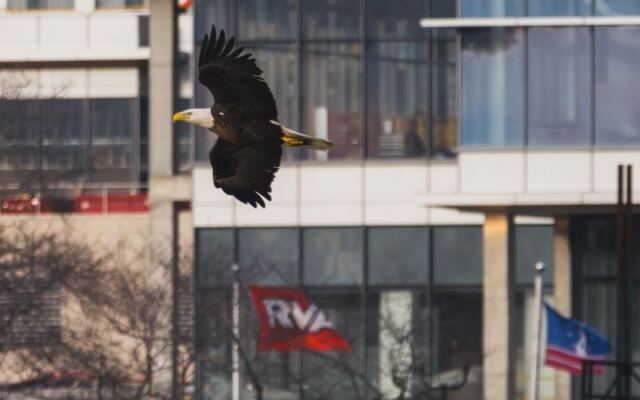
A bald eagle circling over your Florida yard is not random, because eagles spend their time in the air for real reasons like hunting, soaring, and moving across their range. Seeing one up close can feel exciting, and a little worrying if you have a small pet or a pond.
The sky-high view tells you less than you might think, though. Here is what the circling can and cannot show, and what simple steps make sense.
What circling can and can’t tell you
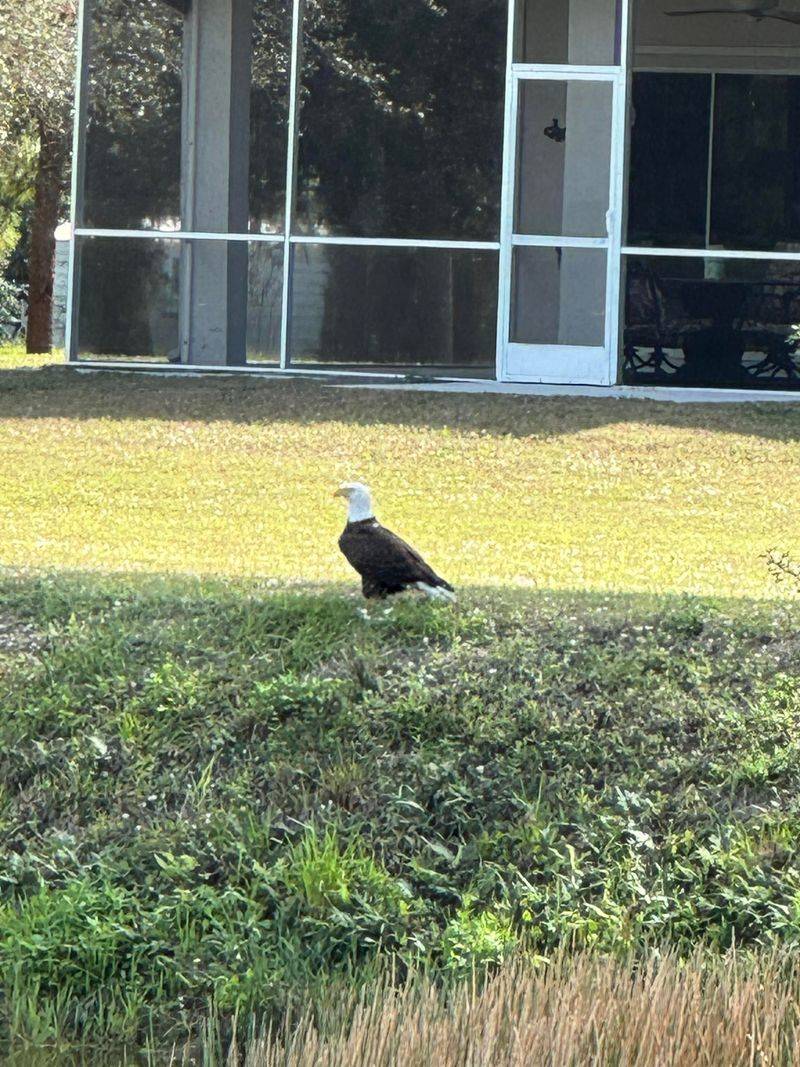
Bald eagles hunt from soaring flight, so a bird gliding in wide loops above your yard may be scanning the ground and water below for prey. It may also simply be moving through the area, riding warm air on its way somewhere else.
U.S. Fish and Wildlife Service species information describes eagles as hunters that take prey from the air as well as from perches.
Here is the catch. Circling is something you observe, not an answer about what the bird is thinking.
A loop over your property cannot tell you the eagle’s motive, and it does not prove your yard is the target of anything. The same flight pattern could come from a bird hunting, a bird soaring for the pleasure of free lift, or a bird passing through.
That does not mean the sighting is meaningless. It means we should treat it like a clue that needs company.
Food, water, and the time of year can add context, and the sections ahead look at each one in turn.
Think of it like seeing a car idle at the end of your street. You might guess a reason, but without more information you would not know whether the driver was lost, waiting, or just stopping to check a map.
Florida Fish and Wildlife Conservation Commission biology notes help fill in that background, such as what Florida eagles eat and where they forage, without pinning down one bird’s reasons.
So the useful approach is simple. Notice what is nearby, keep the context in mind, and avoid jumping to a conclusion that the sky alone cannot support.
Fish and other prey may be part of the picture
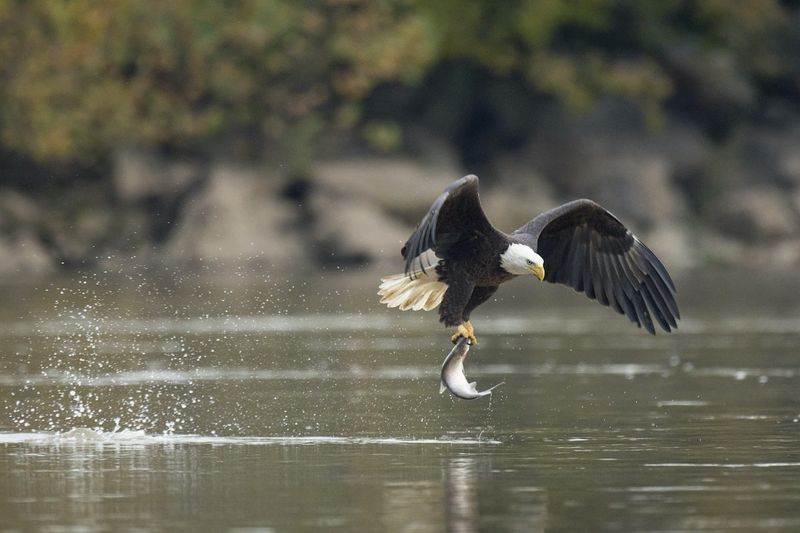
Ask what a bald eagle eats and the answer is wide. Fish are a staple, but the diet also includes birds, small animals, and carrion, which means animals that are already dead.
USFWS describes this range of foods, along with hunting from soaring flight and from perches.
Because eagles can scan from high up, a bird overhead may be looking at the ground below. Florida eagles also forage in shallow fresh or salt water, according to FWC’s bald eagle biology page.
Lakes, canals, retention ponds, and coastal flats all fit that picture.
So prey could be one reason an eagle shows up near homes. A neighborhood with water, mature trees, and open sky offers plenty of places to look for a meal.
Even a yard near a roadside ditch or a dead fish on a shoreline might draw interest.
Still, a wide menu does not point to a particular target. You cannot tell from the loops whether the eagle is watching a fish, a waterbird, a bit of carrion, or nothing at all.
The bird might also pass over dozens of yards on the same trip without stopping.
A practical way to use this knowledge is to look around. If your property sits near open water or a place where wildlife gathers, prey is a reasonable piece of context.
If it does not, that is fine too, because eagles cover a lot of ground.
Florida’s nesting season adds context
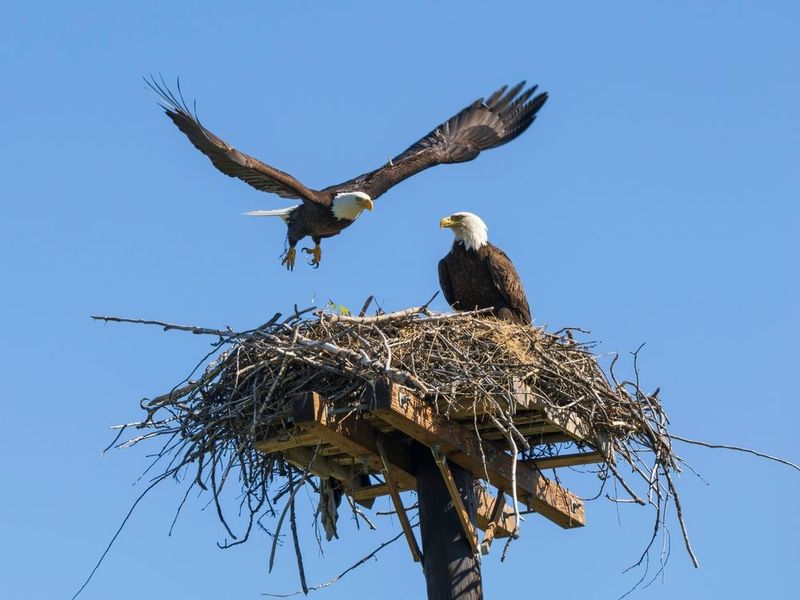
Florida’s bald eagle nesting season, as defined by FWC, runs from October 1 through May 15. Eagles may begin building or repairing nests in late September or early October, and egg-laying dates vary from bird to bird.
You can read more in FWC’s biology overview.
If you spot a circling eagle during those months, a nesting territory in the neighborhood becomes a reasonable thing to keep in mind. Eagles often use the same general area for years, and a pair may be active in tall trees near water.
That makes the season useful background.
But background is all it is. The season is a management period set for protecting nests, not a statement that every eagle you see is nesting.
A bird passing over in January might be a local breeder, a young bird, or a visitor from elsewhere.
So it would be a stretch to say the circling is courtship, nest defense, or nest building. Nothing about a loop in the sky shows that, and it does not show a nest is on your property either.
What you can do is stay aware. If you ever notice a large stick nest in a tall tree nearby, treat it with respect and keep your distance.
The sections ahead explain what that looks like in practice.
A backyard pond can offer prey, but not a guarantee
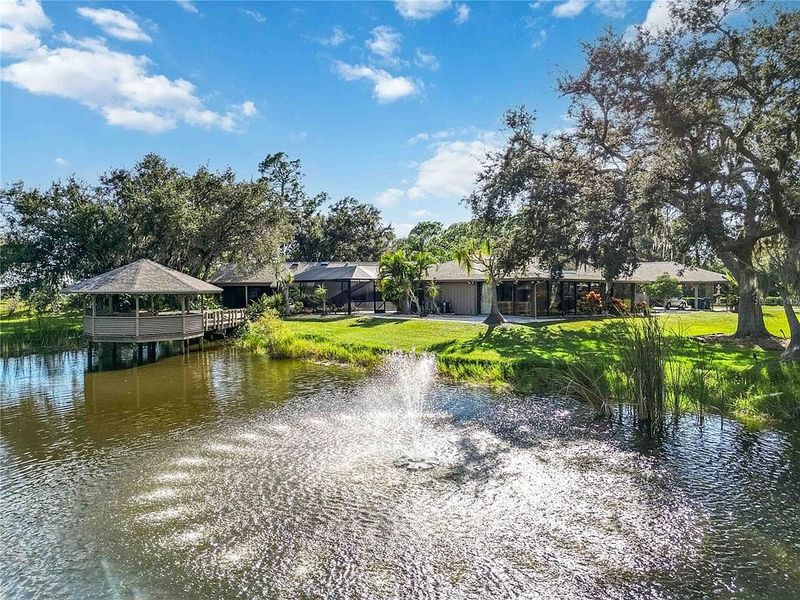
Shallow water and fish can make a pond a possible foraging opportunity. FWC notes that how good an area is for eagles depends partly on how plentiful and how reachable prey is, and on features like shallow water.
Those details are in the FWC biology page.
For pond owners, that sounds like a worry, but the bigger picture is calming. In its pond management guidance, FWC says the effects of eagles and ospreys catching large fish in Florida ponds are insignificant.
That is a general assessment of fish populations in ponds.
It is not a promise about every pond. A small ornamental pool with a few bright fish is a different setup from a large recreational pond, and one fish lost is still one fish lost.
The guidance cannot predict what will happen at your pond or to any single fish.
It also does not mean a pond will draw eagles. Some ponds see no eagle at all, and others get an occasional visit from birds that were already passing by.
If you care about your fish, think about how reachable they are. Deeper areas, plants, or covered spots can give fish places to hide, though no setup is guaranteed.
Otherwise, enjoy the visit as a bit of wildlife in your neighborhood.
Supervise small pets without assuming they are targets
Bald eagles can take small animals, and that is part of their documented diet according to USFWS. For people with a tiny dog, a kitten, or a pet rabbit, that fact can raise a fair question.
Here is the calm answer. An eagle circling overhead is not evidence that it has picked out a pet.
Nothing about the flight shows an attack is likely, and most eagle flyovers pass without any incident.
If the sighting still makes you uneasy, a small, low-cost step is to supervise little pets while they are outside. Stay nearby during playtime, and keep an eye on the sky now and then.
That is a sensible habit and does not require changing your whole routine.
Supervision also keeps pets safe from plenty of other hazards, like cars, other animals, and heat. So it is a step with benefits beyond eagles.
You do not need to keep pets inside or treat every bird overhead as a threat. Let proportion guide you, and pay attention to what you actually see rather than what you fear.
Give eagles and nests room
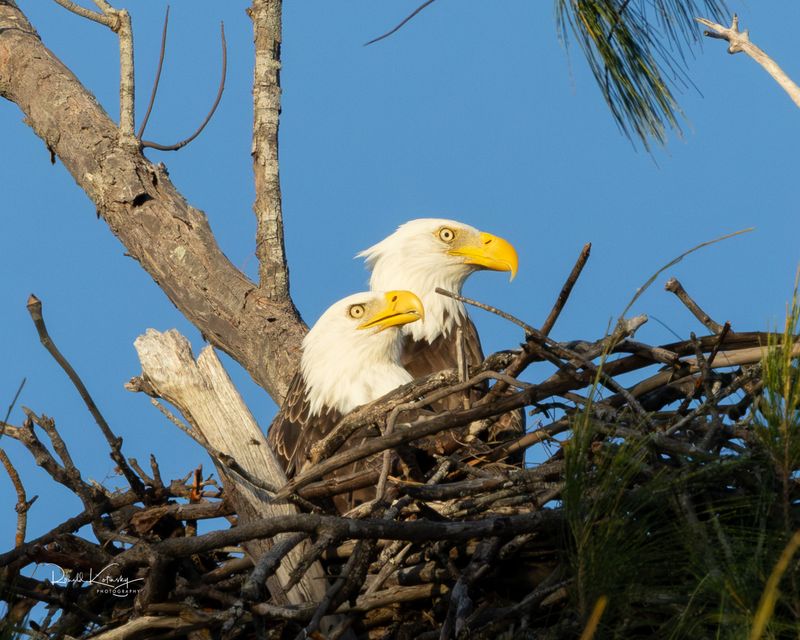
Bald eagles remain protected under federal laws and Florida’s eagle rule, which is described on FWC’s bald eagle profile. That protection applies to the birds and to their nests.
It is a good reason to enjoy eagles from afar.
The federal rules use the idea of disturbance. According to USFWS eagle disturbance information, that means conduct that causes, or is likely to cause, injury, that substantially interferes with normal breeding, feeding, or sheltering, or that leads to nest abandonment.
In everyday terms, do not approach an eagle or a nest. Do not chase a bird, try to trap it, or harm it in any way, and never use poison.
If you think a nest is near your home, watch from a distance and let the birds go about their business.
Drones deserve a special mention. FWC’s guidance in its bald eagle FAQs advises against flying a drone within 1,000 feet of a bald eagle nest during nesting season.
That distance is longer than three football fields.
If you have questions about a nest near you, FWC is the place to turn. Giving eagles room costs you very little, and it helps these birds raise their young.
Keep the sighting in perspective
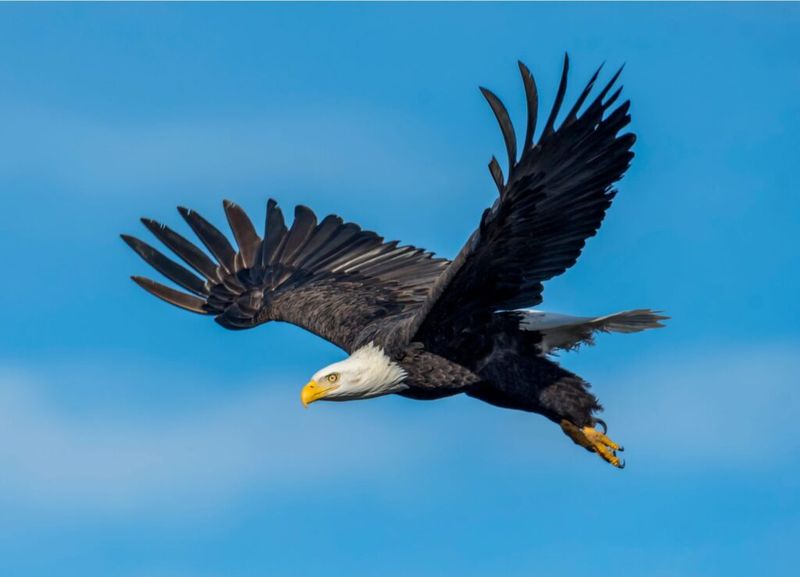
A bald eagle overhead may be soaring, scanning for prey, or moving through the area, and the circling itself does not tell those apart. FWC biology information and USFWS species details give helpful background, but not a verdict on one bird.
If you are concerned, supervise small pets outside and give eagles and nests plenty of space.
Mostly, you are watching one of Florida’s great raptors do what it does, and that is worth a look.
Share this story