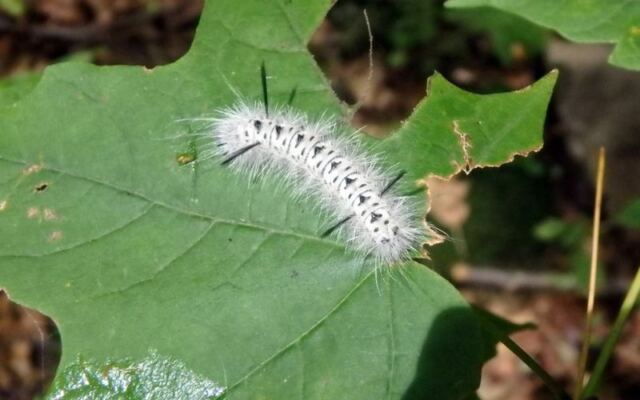
If a fuzzy white caterpillar with black tufts brushes your skin, the itchy or burning rash that follows usually comes from tiny loose hairs, and quick first aid can help. The steps are simple: use a tool to move the caterpillar, lift hairs with tape, wash gently, and cool the skin with wrapped ice.
Some situations, like hairs in an eye or breathing trouble, need medical help instead. Here is what to do, in order, the next time one lands on you in the yard.
How the hairs can irritate skin
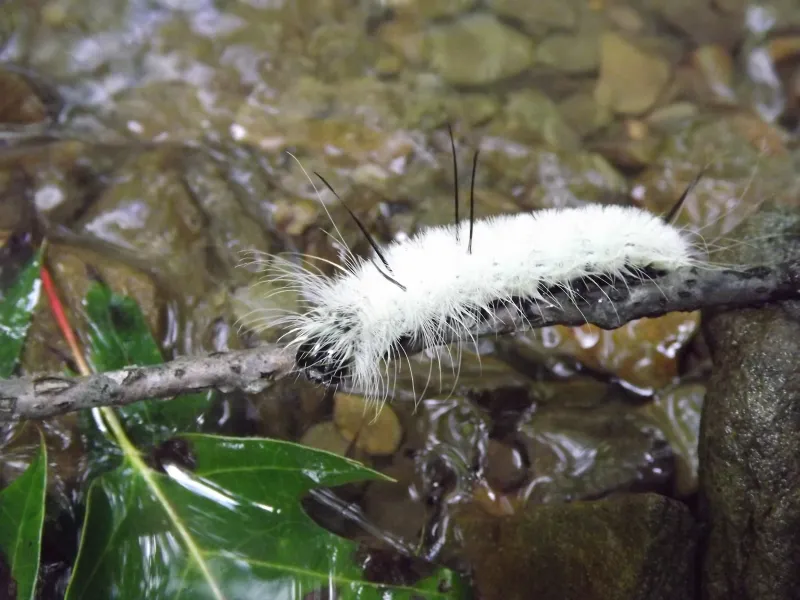
The hickory tussock caterpillar, Lophocampa caryae, is covered in soft-looking white and black hairs. Those hairs can detach, and UMass Extension notes that touching the caterpillar or its cocoon can leave hairs on the skin, where they may irritate it.
People often say these caterpillars “sting,” but that is shorthand. The problem comes from loose hairs lodging in skin, not from a stinger that injects venom the way a bee or wasp does.
That difference matters because the first-aid steps focus on removing hairs rather than treating a venom injection.
Timing gives helpful context. Mature caterpillars may be present from July through September, and in fall they may wander across landscapes, looking for places to settle in.
That does not mean every sighting or every encounter happens in those months.
It also does not tell us how many Michigan gardeners run into them. Seasonal presence is documented, but how often people are exposed is not established.
According to Penn State Extension, contact generally leads to a localized rash and itching, which is why a calm, step-by-step response makes sense.
Move the caterpillar without touching it
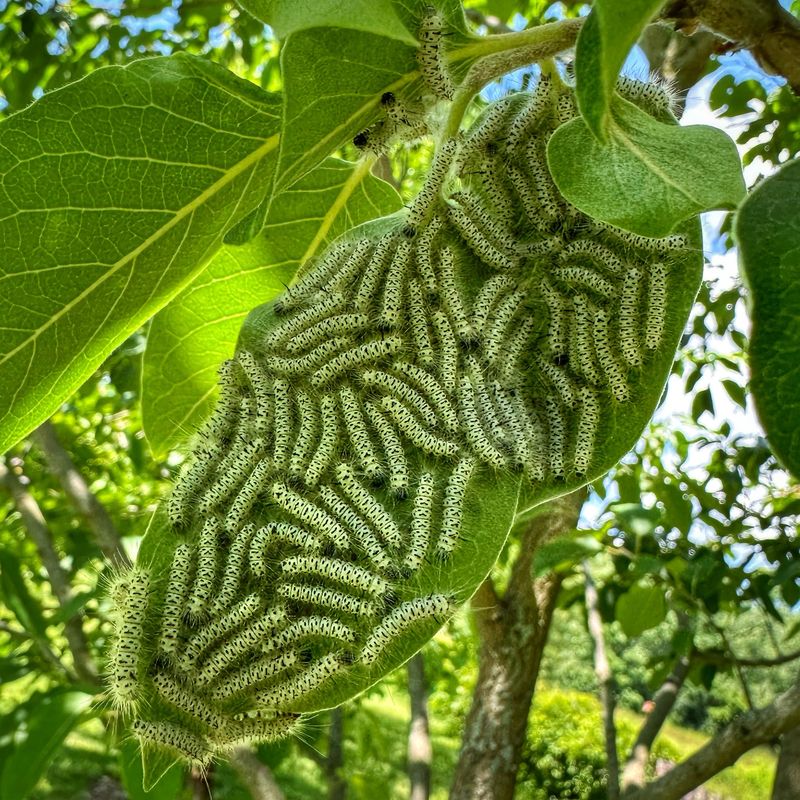
Stopping further contact comes first. If a caterpillar is still on your arm, shirt, or a family member, lift it off with a tool such as a stick, a folded piece of paper, or tweezers, as poison control guidance advises, instead of using bare fingers.
Resist the urge to swat or brush it away with your hand. Doing that can press more hairs into your skin and spread them across your palm and fingers.
You also do not need to pick one up to figure out what it is. A photo taken from a short distance works well, and you can compare it with extension identification pages later.
Keep children and pets back while you deal with it.
Once the caterpillar is gone, move to a spot where you can see your skin clearly. The tape and washing steps come next, and they go best when you are not rushed.
Lift hairs with tape, then wash

Hairs left on the skin keep irritating it, so lift them before anything else. Press a piece of sticky tape gently onto the affected area, then peel it away.
Repeat with fresh pieces, as poison control guidance describes.
Use light pressure. Pressing and lifting is the goal, not dragging the tape back and forth.
After the tape, wash the area with soap and water. Pat dry with a clean towel rather than scrubbing.
Do not rub the skin at any point. Rubbing can push hairs deeper and make the itch and burn worse.
This sequence is only for hairs on skin. If anything may have reached an eye, tape and soap are not the answer, and the medical help section below explains what to do instead.
Also check places hairs may hide, like a collar, waistband, or the backs of your hands, and change clothes if they touched the caterpillar.
Cool the area and ease itching carefully
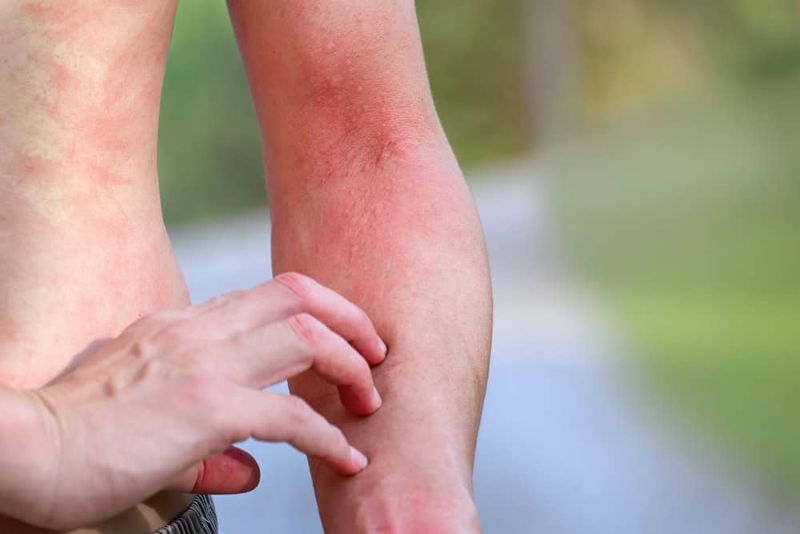
After the hairs are lifted and the skin is washed, cooling can take the edge off the burn. MedlinePlus advises wrapped ice for 10 minutes on and 10 minutes off.
Wrap the ice in a cloth or towel first. Never place ice directly on the skin, since that can cause its own injury.
For itching, poison control guidance lists an antihistamine or hydrocortisone cream as possible options. Follow the directions on the product label, and ask a pharmacist, clinician, or Poison Control for advice that fits your situation, especially for children or if you take other medicines.
These comfort measures are not a stand-in for urgent care. If severe symptoms appear, such as trouble breathing, stop home treatment and get help right away.
Know when to get medical help
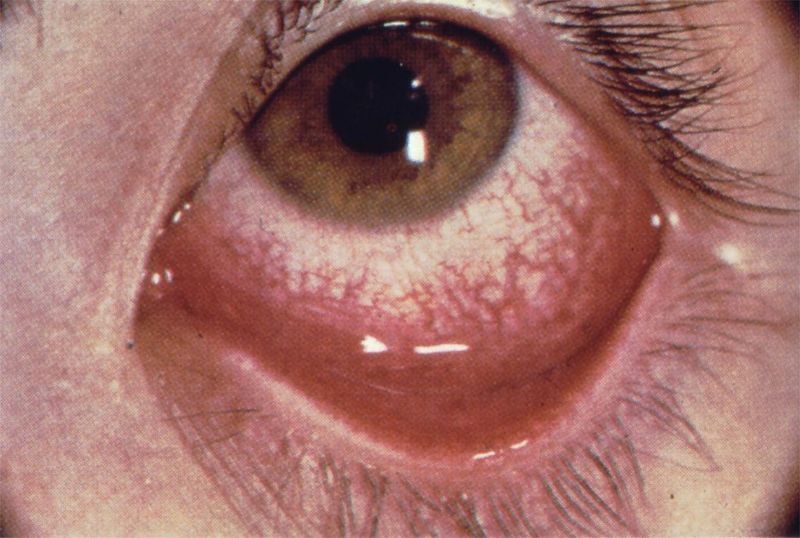
Most skin-only contact stays a skin problem, but a few situations call for different handling. If hairs may have gotten into an eye, rinse it promptly with water and get medical advice.
Do not treat it like a routine skin rash, and do not rub the eye.
If you breathe in caterpillar hairs, seek medical advice. MedlinePlus advises medical care after inhaling them, even if you feel fine at first.
If hairs may have entered the mouth or been swallowed, contact Poison Control at 1-800-222-1222 or a clinician. They can give advice that fits the exact situation, including the person’s age and symptoms.
Call 911 for trouble breathing, collapse, or seizure. These are not typical results of a hickory tussock caterpillar encounter, but they are emergencies if they happen, and home treatment should never delay urgent care.
Poison control resources, including this caterpillar guidance, also encourage individualized advice when you are unsure. Calling to ask is always reasonable.
Watch how the skin reaction changes
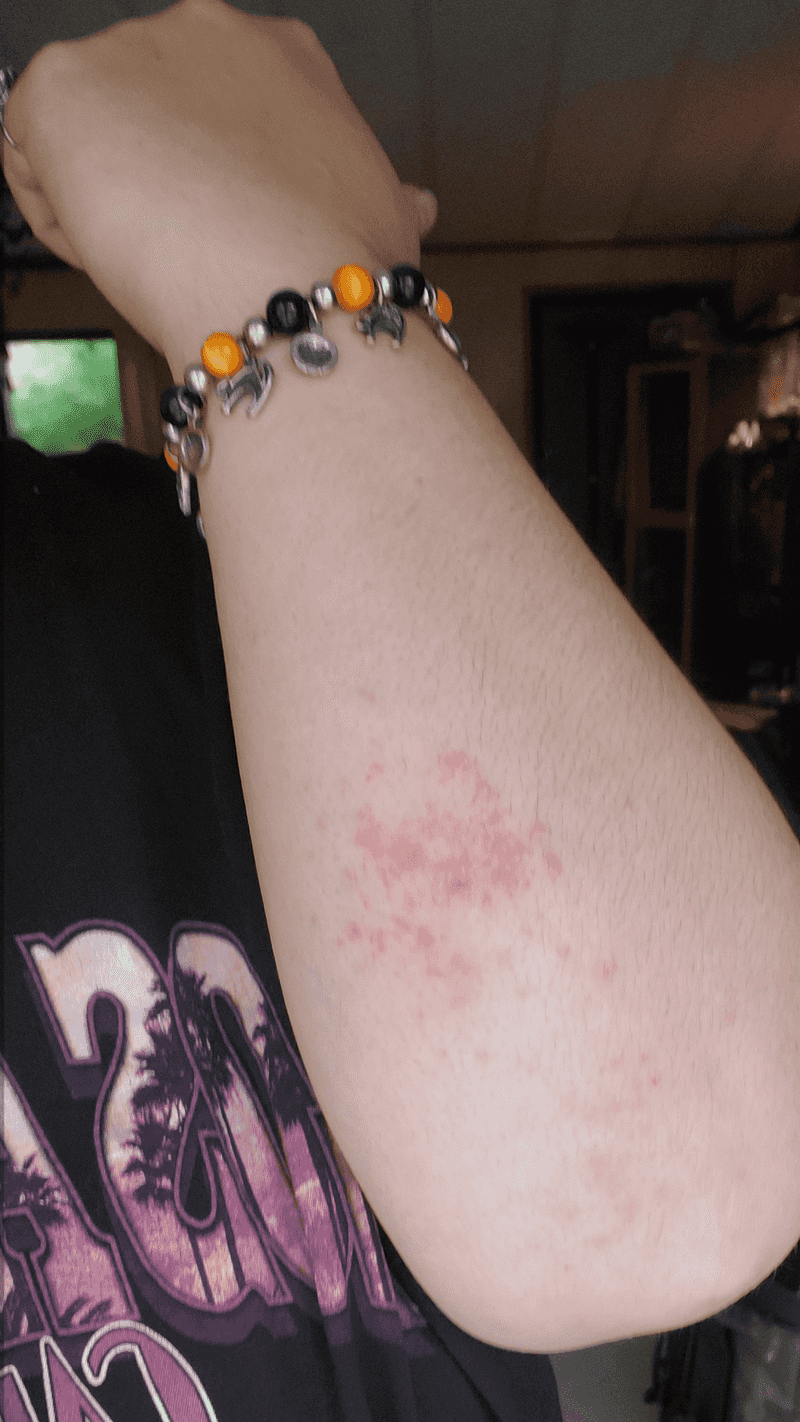
A localized rash and itching are the usual skin reaction, according to Penn State Extension. Many people see it improve within up to 48 hours, though that is a general expectation, not a guarantee for every person or exposure.
Keep an eye on the area over the next day or two. A spot that slowly calms down fits the typical pattern.
Get medical advice if symptoms persist, worsen, or seem unusual for a simple rash. Spreading redness, growing discomfort, or anything that just feels wrong are good reasons to check in with a clinician.
For case-specific guidance, U.S. Poison Control is available at 1-800-222-1222.
Their staff can help sort out whether home care is enough.
Try not to compare this caterpillar with unrelated species. Severe poisoning syndromes linked to other caterpillars are a different matter, and the usual outcome here is skin irritation.
Still, poison control information recognizes that rare severe reactions can occur with caterpillars generally, so serious symptoms deserve attention.
Cover up for yard work

Raking leaves or trimming shrubs in late summer and fall puts your hands and forearms close to where caterpillars crawl. Gloves and long sleeves can reduce contact, as Ask Extension guidance suggests, though they are no guarantee against exposure.
Gloves do not make it safe to pick a caterpillar up. Keep using a tool to move one, and take a quick look at your sleeves and cuffs before heading inside.
The timing helps you plan. UMass Extension describes mature caterpillars as possibly present from July through September and wandering in landscapes in fall.
That is a reason for a little care, not a sign that encounters are common in Michigan.
Keep a roll of tape near the garden gloves. A glance at your arms and a quick tape check can turn a surprise into a small chore, and no one needs to be nervous about their own backyard.
Share this story