Get the latest garden guides in your inbox →
Gardening Latest
  • General Gardening
  • Lawn Care
  • Plant Care
  • Composting
  • Soil Health
  • Backyard
  • Garden Muse Magazine
  • General Gardening
  • Lawn Care
  • Plant Care
  • Composting
  • Soil Health
  • Backyard
  • Garden Muse Magazine
  • News
  • Gardening Calendar
  • Garden Structures
  • Vegetable Garden
  • Vertical Garden
  • Raised Beds
  • Hydroponics
  • General Equipment
  • Community Gardens
Garden Themes
  • Spiritual Garden
  • Hydroseeding
  • Seeding and Laying Sod
  • Artificial Grass
  • Lawn Care Equipment
  • Plants
  • Trees
  • Planting Tools
  • Composting Basics
  • Fertilizer
  • Alternative Growing Mediums
  • Front Yard
  • Backyard Activities
  • Landscaping
Gardening Latest

Explore by state

Which state is your garden in?

Currently viewing Virginia

All states

Northeast

  • Connecticut —
  • Delaware 28
  • Maine —
  • Maryland 15
  • Massachusetts 31
  • New Hampshire —
  • New Jersey 15
  • New York 24
  • Pennsylvania 24
  • Rhode Island —
  • Vermont —

Southeast

  • Alabama 14
  • Arkansas —
  • Florida 14
  • Georgia 15
  • Kentucky 28
  • Louisiana 13
  • Mississippi —
  • North Carolina 13
  • South Carolina 27
  • Tennessee 11
  • Virginia 14
  • West Virginia —

Midwest

  • Illinois 13
  • Indiana 16
  • Iowa 28
  • Kansas —
  • Michigan 15
  • Minnesota 13
  • Missouri 13
  • Nebraska —
  • North Dakota —
  • Ohio 15
  • South Dakota —
  • Wisconsin 29

Southwest

  • Arizona 14
  • Colorado —
  • Nevada —
  • New Mexico —
  • Oklahoma —
  • Texas 13
  • Utah —

West

  • Alaska —
  • California 14
  • Hawaii —
  • Idaho —
  • Montana —
  • Oregon —
  • Washington —
  • Wyoming —

No state matches that search.

Site menu

Gardening Latest
  • General Gardening
    • News
    • Gardening Calendar
    • Garden Structures
    • Vegetable Garden
    • Vertical Garden
    • Raised Beds
    • Hydroponics
    • General Equipment
    • Community Gardens
    Garden Themes
    • Spiritual Garden
  • Lawn Care
    • Hydroseeding
    • Seeding and Laying Sod
    • Artificial Grass
    • Lawn Care Equipment
  • Plant Care
    • Plants
    • Trees
    • Planting Tools
  • Composting
    • Composting Basics
  • Soil Health
    • Fertilizer
    • Alternative Growing Mediums
  • Backyard
    • Front Yard
    • Backyard Activities
    • Landscaping
  • Garden Muse Magazine

Explore

  • About GardeningLatest.com
  • Contact Us

Get the latest from the garden

New guides on lawn care, plants and backyard projects, sent when they go up.

Subscribe →

Follow

  • Facebook
  • X
  • Pinterest
  • YouTube
Virginia Gardening

Here’s Exactly When To Put The Mower Away For Good In Virginia This Year

Here is the plain answer: put the mower away when your grass stops growing and goes dormant, not on a set date…

CW

By Caroline Whitfield

November 25, 2026 · 6 min read

Here’s Exactly When To Put The Mower Away For Good In Virginia This Year
Here's Exactly When To Put The Mower Away For Good In Virginia This Year

Here is the plain answer: put the mower away when your grass stops growing and goes dormant, not on a set date. Virginia lawn guidance gives no single final-mow day and no soil-temperature number for it.

Your grass type and how fast it is still growing tell you far more. Read on to learn how to check your own lawn before winter.

At a glance

Where
Virginia Gardening
Hardiness zone
7 0 to 10°F
Read
6 minutes
Published
November 25, 2026

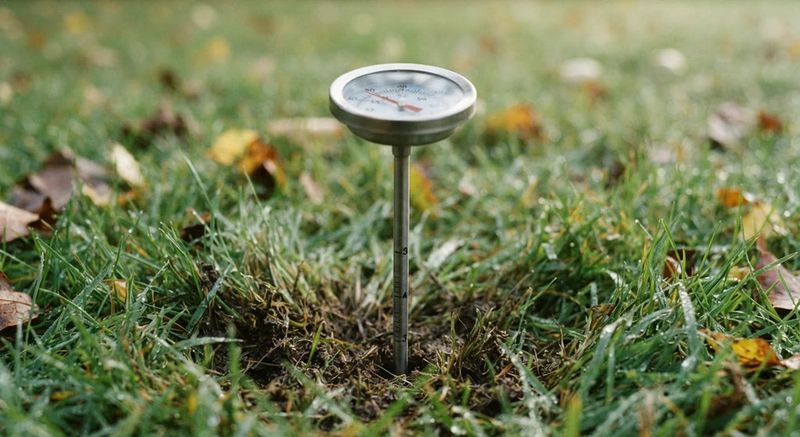
Virginia guidance gives no soil-temperature mowing trigger
Virginia guidance gives no soil-temperature mowing trigger
© Root Revive Direct

The reviewed Virginia Extension mowing guidance supplies no soil-temperature threshold for the final mow. It also does not set one date that fits every Virginia lawn.

If you hoped for a magic number or a calendar day, the guidance simply does not offer one.

Soil temperature does matter for some lawn jobs, so it is not irrelevant. The finding here is narrow: the sources reviewed do not tie soil temperature to the last cut.

Virginia Cooperative Extension’s maintenance calendar for cool-season turfgrasses mentions a 50°F threshold, but that applies to treating actively growing cool-season weeds, not to mowing.

Other states show the same pattern. Minnesota Extension uses about 50°F soil temperature in its spring lawn care advice for overseeding, which is a different task entirely.

A number that works for seeding or weed control does not turn into a stop-mowing signal.

So what should you use instead? Virginia’s fall lawn care guidance points to mowing at the grass’s recommended height and taking off no more than one-third of the blade at a time.

The practical question each week is simple: has the lawn grown enough to need a cut? If yes, mow.

If it has stopped growing, you are likely done.

Virginia lawns follow different seasonal rhythms
Virginia lawns follow different seasonal rhythms
© Farmers’ Almanac

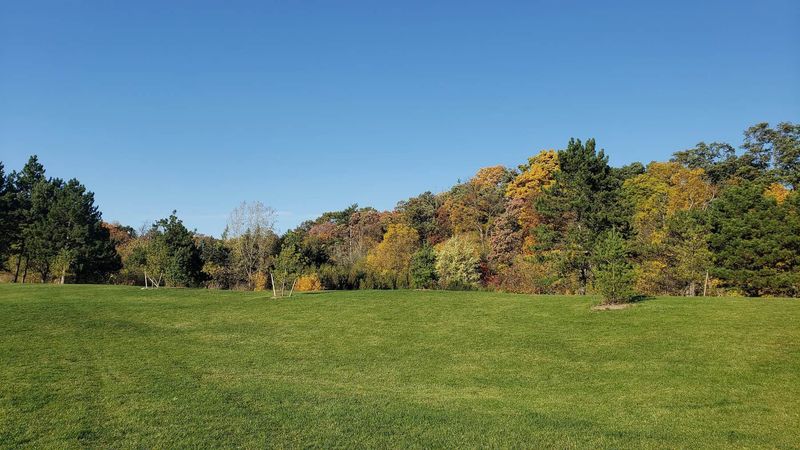
Virginia sits in the transition zone, where both cool-season and warm-season grasses are grown. That is a big reason no single statewide instruction works.

Your neighbor’s lawn may follow a completely different calendar than yours.

For tall fescue, Virginia Tech’s Master Gardener handbook chapter on lawns gives about 3 to 4 inches as the recommended mowing height.

According to Virginia Tech’s guide to selecting turfgrass for Virginia, cool-season grasses such as tall fescue do best in spring and fall. Warm-season grasses such as bermudagrass and zoysiagrass grow mainly from mid-spring through mid-fall and go dormant after repeated frosts.

Location and site conditions matter too. Virginia is not one uniform climate, and shade, soil, and local weather all change how a lawn behaves.

A sunny lawn in the south may keep growing differently from a shaded one in the mountains.

Before you apply any seasonal or height advice, find out what you are growing. Look at old seed bags, ask the company that installed the lawn, or check your Extension office for help with identification.

A tan lawn in November might be a healthy dormant zoysiagrass, or it might be a struggling fescue, and the right response differs.

Use active growth to decide whether another cut is due
Use active growth to decide whether another cut is due
© Colonial Classics

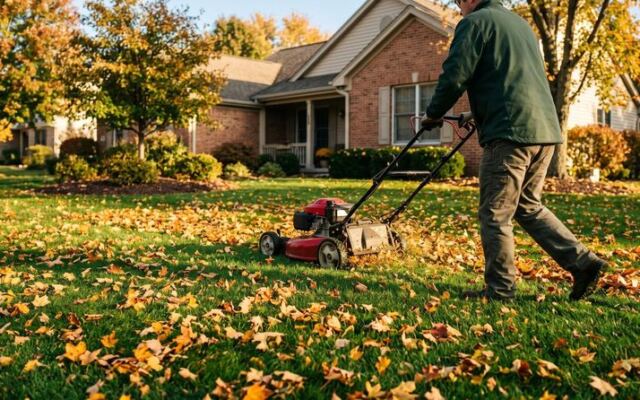
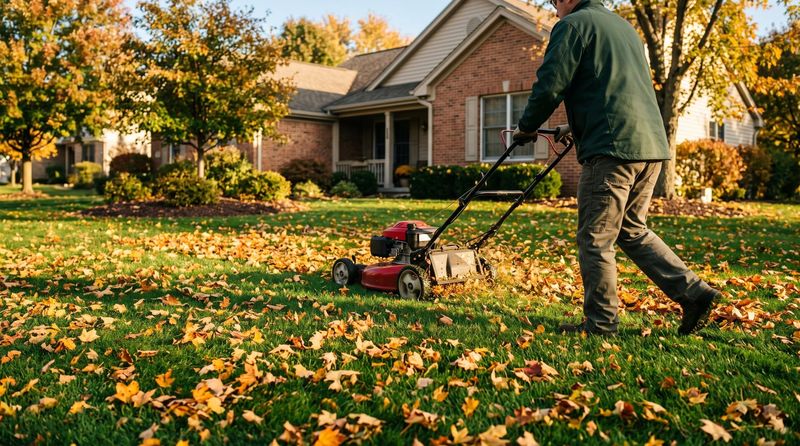
Forget the calendar for a moment and look at the grass. If the lawn is actively growing, keep mowing as needed.

That rule comes from growth, not from a temperature reading or a date.

A University of Minnesota Extension guide on mowing practices for healthy lawns gives the same growth-based advice. Its timing of generally around the end of October is Minnesota-specific, so it is not a Virginia recommendation.

Virginia winters and falls run milder in many places.

Here is a simple check. Measure your grass a few days after the last mow.

If it has climbed enough that a cut would remove a meaningful part of the blade, without breaking the one-third limit described in Virginia’s fall lawn care guidance, another mow is reasonable.

If the grass looks about the same height as it did last week, it is probably slowing down. Leaves piling up are not a reason to mow, and neither is a neighbor’s mower running.

Let the grass itself make the call.

Keep the cut suited to the grass
Keep the cut suited to the grass
© Lawn Panther

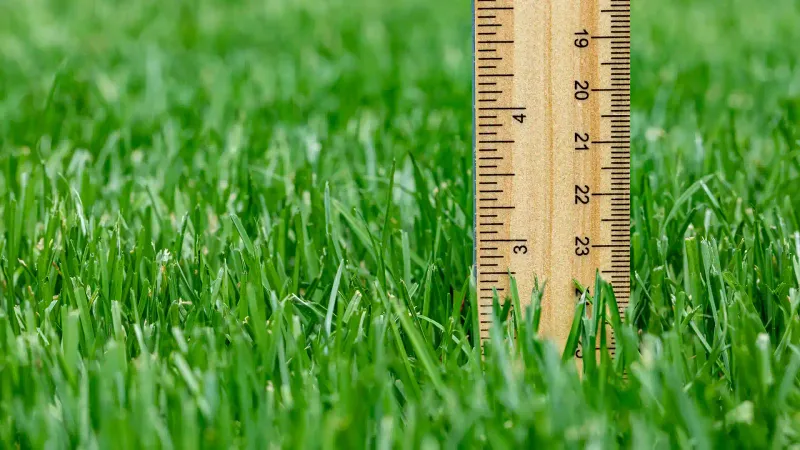
Once you know your grass type, set the mower to match it. For tall fescue, Virginia Tech’s Master Gardener handbook chapter on lawns gives about 3 to 4 inches as the recommended mowing height.

That range is tall fescue guidance, not a rule for every Virginia lawn.

Whatever the height, remove no more than one-third of the blade in a single cut. Virginia’s fall lawn care publication backs this up.

If the grass got ahead of you, cut it in stages over a few days.

Avoid cutting very short for winter. A scalped lawn is stressed, and short cuts do not make the grass safer in cold weather.

Advice about the final cut varies by region. University of Maryland Extension says that, for its listed turf types, the last mow before dormancy can be about half an inch higher.

Illinois Extension says the final cut can be slightly shorter, while warning against scalping and overly tall grass.

Those are regional views, and they point in different directions. No single higher or lower final-cut adjustment is a Virginia requirement, so stick with your grass’s normal height.

Dormancy—not the first frost—ends routine mowing
Dormancy—not the first frost—ends routine mowing
© ZoysiaPlug.com

A light frost on a November morning does not mean the season is over. Cool-season grasses can keep growing in mild weather, so a tall fescue lawn may still need a cut after the first frost.

The first frost is not a universal stop sign.

Warm-season grasses behave differently. Virginia Tech’s turfgrass selection guide explains that bermudagrass and zoysiagrass go dormant after repeated frost events.

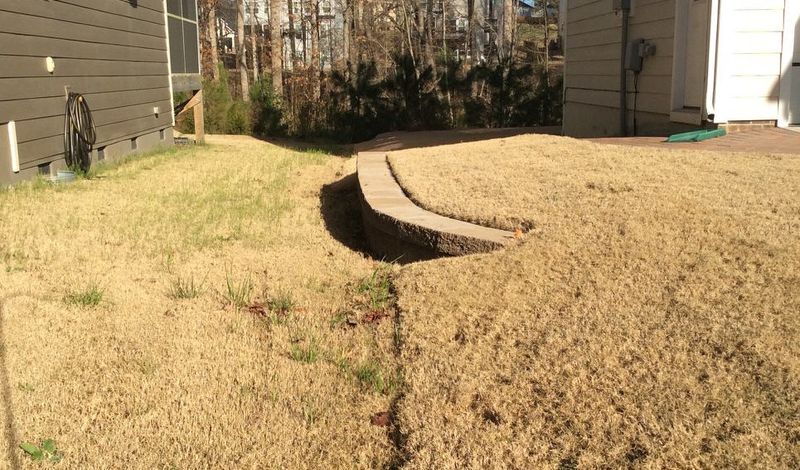
Once they turn tan and stop growing, there is nothing left to trim.

That brings us to the key point: when turf is dormant and not growing, a routine cut is unnecessary. University of Maryland Extension gives this advice in its lawn maintenance calendar, and it fits Virginia’s warm-season pattern as well.

A practical clue is the grass blade itself. If the lawn is brown and brittle after several hard frosts, and measuring shows no height gain, the mower can rest.

If a mild stretch returns and green fescue shoots up, check again before you store the machine.

Make the decision from your lawn’s condition

Make the decision from your lawn’s condition
© Homes and Gardens

Here is the short process. First, identify your grass.

Second, check whether it is still growing enough to need a cut. Third, mow only when the lawn is dry.

When you do mow, use the grass’s appropriate height and follow the one-third rule from Virginia’s fall lawn care guidance. Skip wet grass, as Maryland Extension advises.

If you are unsure of your turf type, Virginia Tech’s turfgrass guide can help you sort it out.

Once the lawn is dormant, do not force a routine cut. The mower is done when the grass is.

Share this story
CW

Written by

Caroline Whitfield

More from Caroline Whitfield →

About Gardening Latest

Gardening Latest provides in-depth guides to maintaining and enhancing your garden and backyard. Learn how to make the most of the space you have and create a beautiful garden.

More about us →

Latest stories

  • Maryland GardeningMaryland Backyards May Shelter a Small Mammal With Toxic Saliva

    Maryland Backyards May Shelter a Small Mammal With Toxic Saliva

    2 min ago
  • Iowa GardeningSpotted a Big White Owl Perched on Your Iowa Fence Post? Here’s Why It Came South

    Spotted a Big White Owl Perched on Your Iowa Fence Post? Here’s Why It Came South

    8 min ago
  • New Jersey GardeningHere’s How New Jersey Gardeners Should Treat a Saddleback Caterpillar Sting the Moment It Happens

    Here’s How New Jersey Gardeners Should Treat a Saddleback Caterpillar Sting the Moment It Happens

    21 min ago
  • North Carolina GardeningCoyotes Are Howling Outside North Carolina Homes After Dark This Season, and There’s a Reason

    Coyotes Are Howling Outside North Carolina Homes After Dark This Season, and There’s a Reason

    27 min ago
  • Michigan GardeningRed Foxes Get Busier in Michigan Yards During Winter, and Here’s What They’re Actually Doing

    Red Foxes Get Busier in Michigan Yards During Winter, and Here’s What They’re Actually Doing

    32 min ago

Gardening by state

Stories for your state, and the hardiness zone most of it gardens in.

Keep exploring

Read next

All Virginia Gardening →
Virginia GardeningThat Bloodcurdling Scream Outside Your Virginia Window At Night Isn’t What You Think
Virginia Gardening

That Bloodcurdling Scream Outside Your Virginia Window At Night Isn’t What You Think

2 hr ago
Virginia Gardening9 Protected Animals Virginia Homeowners Aren’t Allowed To Remove On Their Own
Virginia Gardening

9 Protected Animals Virginia Homeowners Aren’t Allowed To Remove On Their Own

6 hr ago
Virginia GardeningFound A Baby Animal In Your Virginia Yard? These Are Illegal To Keep
Virginia Gardening

Found A Baby Animal In Your Virginia Yard? These Are Illegal To Keep

9 hr ago

More from Virginia Gardening

  • Found A Possum In Your Virginia Yard? Here’s Why You’ll Want It To Stay

    Nov 23
  • Why Virginia Homes Fill Up With Stink Bugs Every Fall And How To Seal Them Out

    Nov 22
Back to top

Leave a response Cancel

Your email address stays private. Required fields are marked with an asterisk.

Gardening Latest

In-depth guides to maintaining and enhancing your garden and backyard: how to make the most of the space you have, and how to make it beautiful.

  • Facebook
  • X
  • Pinterest
  • YouTube

We may earn a portion of sales from products or services that are purchased through our site as part of our affiliate partnerships with retailers.

Explore

  • About GardeningLatest.com
  • Contact Us
  • Terms and Conditions
  • Privacy
  • Editorial Note:
  • FTC Disclosure

Newsletter

New garden guides and seasonal tips, straight to your inbox.

We’ll email you a link to confirm. Unsubscribe any time.

Almost there! Check your inbox and tap the link to confirm.

© 2026 Gardening Latest. All rights reserved.

Back to top