Get the latest garden guides in your inbox →
Gardening Latest
  • General Gardening
  • Lawn Care
  • Plant Care
  • Composting
  • Soil Health
  • Backyard
  • Garden Muse Magazine
  • General Gardening
  • Lawn Care
  • Plant Care
  • Composting
  • Soil Health
  • Backyard
  • Garden Muse Magazine
  • News
  • Gardening Calendar
  • Garden Structures
  • Vegetable Garden
  • Vertical Garden
  • Raised Beds
  • Hydroponics
  • General Equipment
  • Community Gardens
Garden Themes
  • Spiritual Garden
  • Hydroseeding
  • Seeding and Laying Sod
  • Artificial Grass
  • Lawn Care Equipment
  • Plants
  • Trees
  • Planting Tools
  • Composting Basics
  • Fertilizer
  • Alternative Growing Mediums
  • Front Yard
  • Backyard Activities
  • Landscaping
Gardening Latest

Explore by state

Which state is your garden in?

Currently viewing Missouri

All states

Northeast

  • Connecticut —
  • Delaware 35
  • Maine —
  • Maryland 21
  • Massachusetts 37
  • New Hampshire —
  • New Jersey 21
  • New York 30
  • Pennsylvania 30
  • Rhode Island —
  • Vermont —

Southeast

  • Alabama 20
  • Arkansas —
  • Florida 21
  • Georgia 21
  • Kentucky 35
  • Louisiana 19
  • Mississippi —
  • North Carolina 19
  • South Carolina 34
  • Tennessee 17
  • Virginia 20
  • West Virginia —

Midwest

  • Illinois 19
  • Indiana 22
  • Iowa 34
  • Kansas —
  • Michigan 21
  • Minnesota 19
  • Missouri 19
  • Nebraska —
  • North Dakota —
  • Ohio 21
  • South Dakota —
  • Wisconsin 35

Southwest

  • Arizona 20
  • Colorado —
  • Nevada —
  • New Mexico —
  • Oklahoma —
  • Texas 19
  • Utah —

West

  • Alaska —
  • California 20
  • Hawaii —
  • Idaho —
  • Montana —
  • Oregon —
  • Washington —
  • Wyoming —

No state matches that search.

Site menu

Gardening Latest
  • General Gardening
    • News
    • Gardening Calendar
    • Garden Structures
    • Vegetable Garden
    • Vertical Garden
    • Raised Beds
    • Hydroponics
    • General Equipment
    • Community Gardens
    Garden Themes
    • Spiritual Garden
  • Lawn Care
    • Hydroseeding
    • Seeding and Laying Sod
    • Artificial Grass
    • Lawn Care Equipment
  • Plant Care
    • Plants
    • Trees
    • Planting Tools
  • Composting
    • Composting Basics
  • Soil Health
    • Fertilizer
    • Alternative Growing Mediums
  • Backyard
    • Front Yard
    • Backyard Activities
    • Landscaping
  • Garden Muse Magazine

Explore

  • About GardeningLatest.com
  • Contact Us

Get the latest from the garden

New guides on lawn care, plants and backyard projects, sent when they go up.

Subscribe →

Follow

  • Facebook
  • X
  • Pinterest
  • YouTube
Missouri Gardening

Missouri Gardens Hide Brown Recluses, Copperheads, And A Few Rattlesnakes, So Here’s What Each One Looks Like

Missouri gardens are full of tomatoes, butterflies, and birdsong, but a few of the creatures hiding in the mulch can…

CR

By Clayton Reeves

November 26, 2026 · 5 min read

Missouri Gardens Hide Brown Recluses, Copperheads, And A Few Rattlesnakes, So Here’s What Each One Looks Like
Missouri Gardens Hide Brown Recluses, Copperheads, And A Few Rattlesnakes, So Here's What Each One Looks Like

Missouri gardens are full of tomatoes, butterflies, and birdsong, but a few of the creatures hiding in the mulch can actually hurt you. Brown recluse spiders, copperheads, and a handful of rattlesnake species all call the Show-Me State home, and many of them like the same shady, cluttered spots that gardeners do.

Knowing what each one looks like helps you stay calm, avoid a painful bite, and leave the harmless critters alone. Here is a simple field guide to the ones worth watching for.

At a glance

Where
Missouri Gardening
Hardiness zone
6 −10 to 0°F
Read
5 minutes
Published
November 26, 2026

1. Brown Recluse Spider

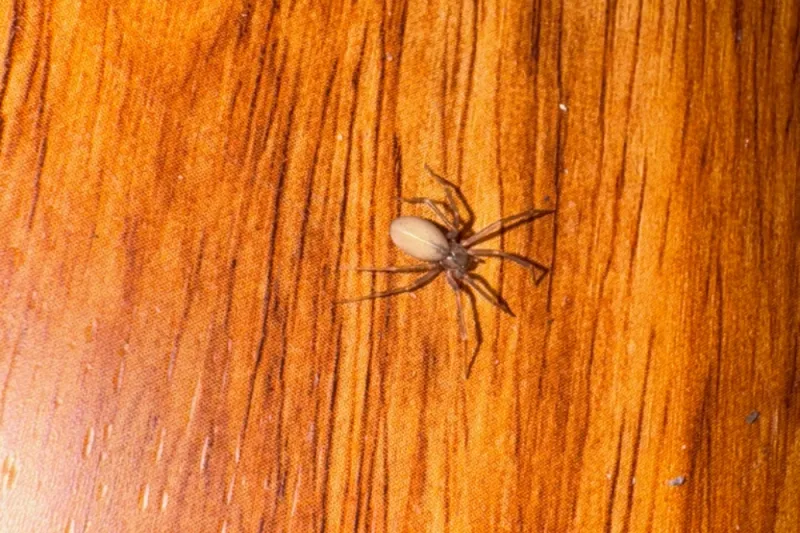
Brown Recluse Spider
© Insectio

Picture a spider about the size of a quarter with its legs stretched out, tan to light brown, and completely plain except for one mark. That mark is a darker brown violin shape on the front body section, with the neck of the violin pointing toward the rear.

Folks in Missouri often call it the fiddleback for that reason.

The best clue is actually the eyes. Most spiders have eight, but the brown recluse has six arranged in three pairs, like a tiny triangle.

Its legs are long and smooth with no stripes, spines, or bands.

In the garden, recluses hide in woodpiles, stacked flowerpots, old gloves, and boxes in the shed. Bites are uncommon and usually happen when one gets pressed against skin, so shake out gloves and boots before slipping them on.

2. Copperhead
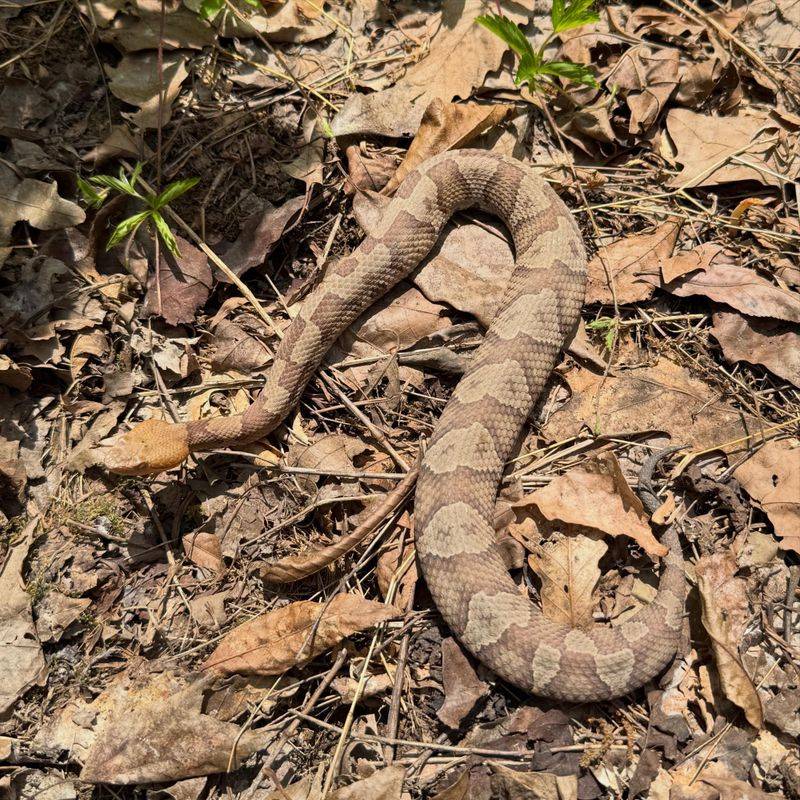
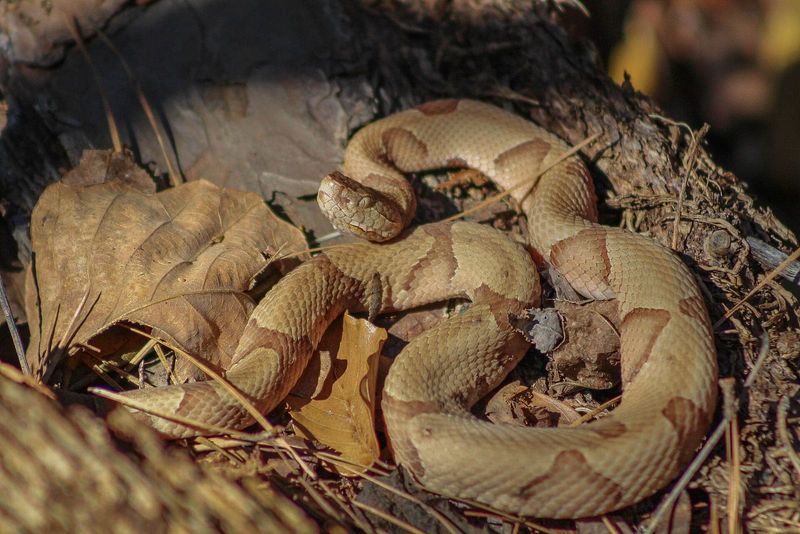
Copperhead
© adventure_gavon

Ask any Missouri gardener which snake they bump into most, and copperhead will be the answer nearly every time. It is the most common venomous snake in the state, and it is a master of hiding in leaf litter.

Look for a thick body, usually two to three feet long, with a coppery or rusty head. The body has dark chestnut crossbands shaped like hourglasses or Hershey Kisses when seen from the side, wide at the bottom and narrow on top.

The eastern massasauga is endangered in the state and survives only in a few wet prairies and marshes, mainly in the north.

Young copperheads have a bright yellow or green tail tip they wiggle to lure frogs.

Copperheads love mulch beds, rock walls, and brush piles. They tend to freeze rather than flee, which is why people step near them.

Wear sturdy shoes and use a rake to move leaves instead of bare hands.

3. Timber Rattlesnake
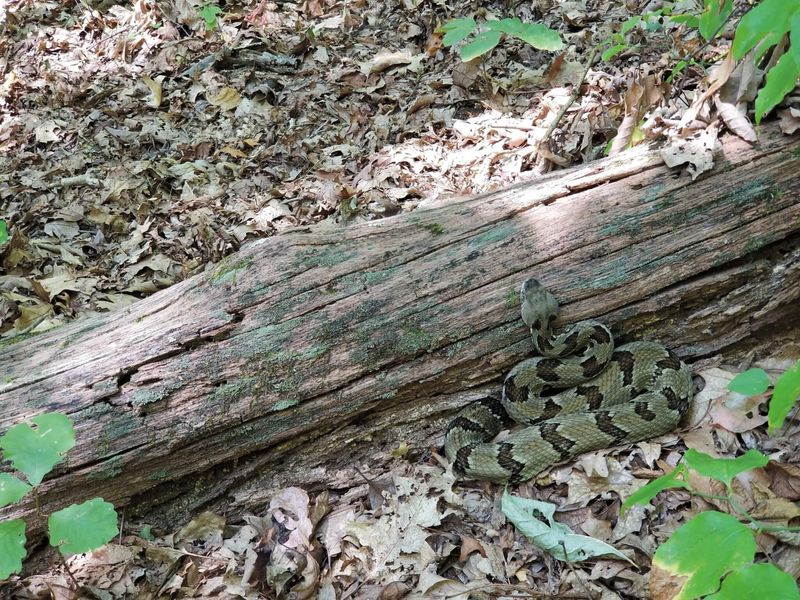
Timber Rattlesnake
© Wonderful West Virginia Magazine

Big, heavy, and surprisingly calm, the timber rattlesnake is the largest venomous snake in Missouri. Adults can top four feet, though seeing one near a home is rare.

The pattern is easy to spot once you know it. Dark, jagged bands shaped like sideways Vs or chevrons cross a yellow, tan, or gray body, and the tail is solid velvety black ending in a rattle.

Many have a rusty stripe down the back.

Timber rattlers stick mostly to rocky, forested hills in the Ozarks and along river bluffs. If your garden borders woods, keep wood stacks off the ground and give any rattling sound plenty of space.

These snakes would much rather sit still than strike.

4. Pygmy Rattlesnake
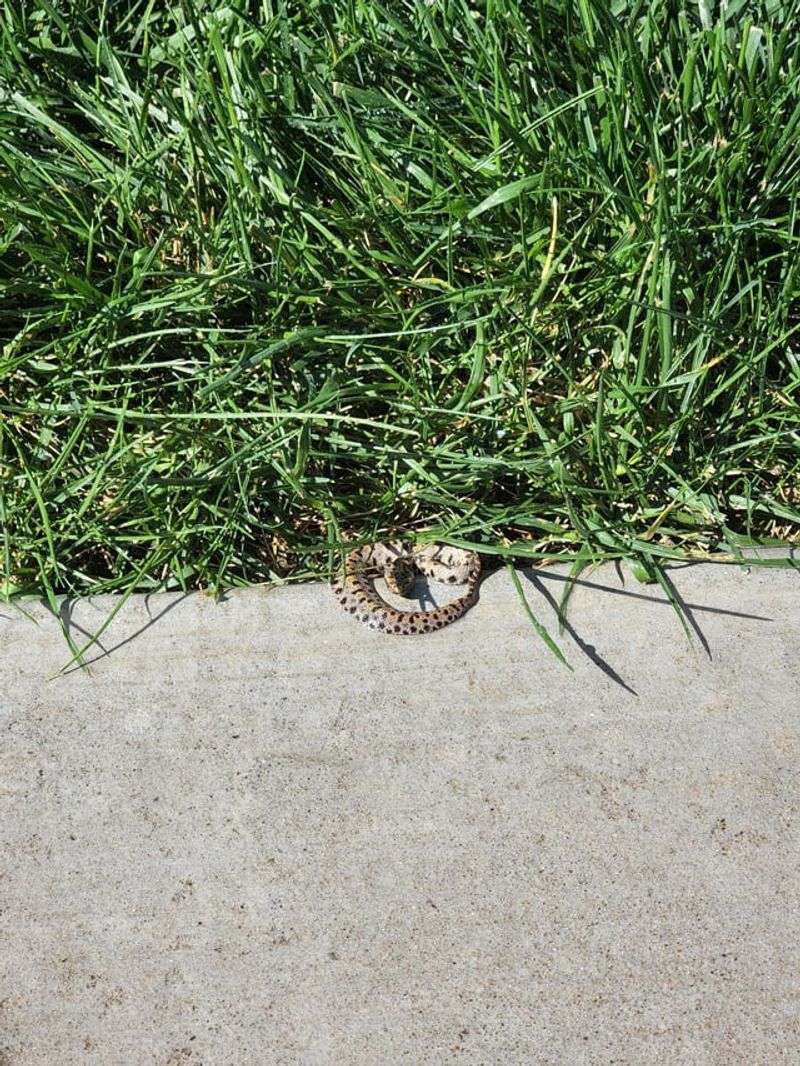
Pygmy Rattlesnake
© Reddit

Tiny but feisty, the western pygmy rattlesnake rarely grows past 20 inches. You might hear it before you see it, except its rattle is so small it sounds like a buzzing insect.

The body is gray with dark round blotches running down the back and a thin orange or reddish stripe along the spine. Small spots line the sides, and the head has large plate-like scales on top.

Its little rattle is easy to miss.

In Missouri, pygmies live mainly in rocky glades of the southern Ozarks. They rarely show up in town gardens, but rural homesteads near glades should stay alert.

A bite hurts a lot, though it is seldom life-threatening with medical care.

5. Massasauga Rattlesnake
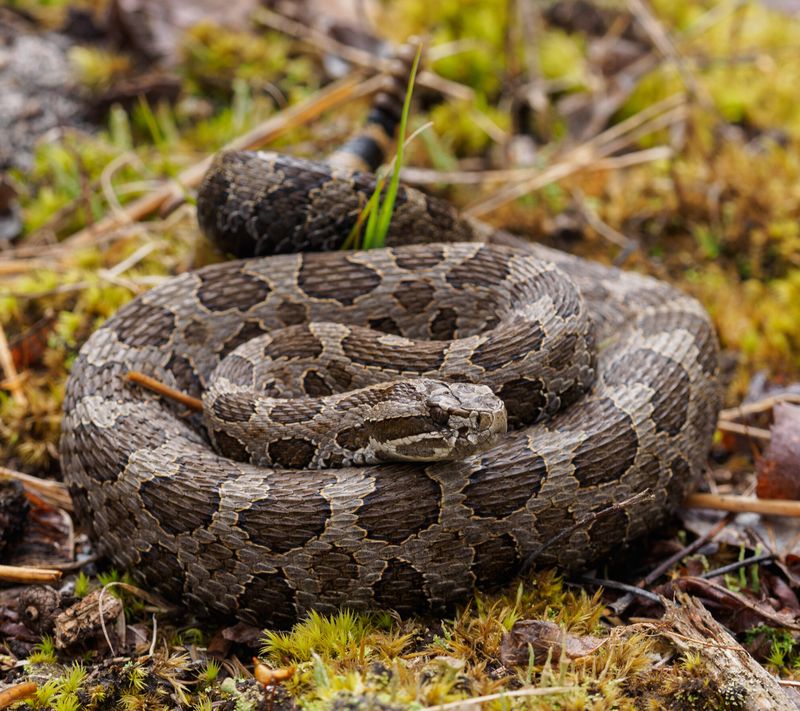
Massasauga Rattlesnake
© Wiley Online Library

Here is a snake most Missourians will never meet. The eastern massasauga is endangered in the state and survives only in a few wet prairies and marshes, mainly in the north.

It is a stout, medium snake around two feet long, gray or light brown with large dark brown blotches down its back. Rows of smaller spots run along its sides, and its head has the same big scales as the pygmy.

The tail ends in a small rattle.

Spotting one is a rare event worth reporting to the Missouri Department of Conservation. Admire it from a distance, snap a photo, and let it move on.

Every one counts for this struggling species.

6. Harmless Look-Alikes
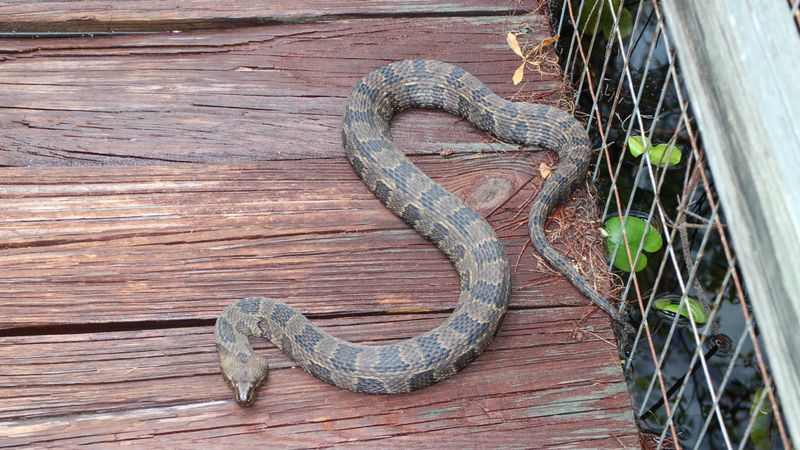
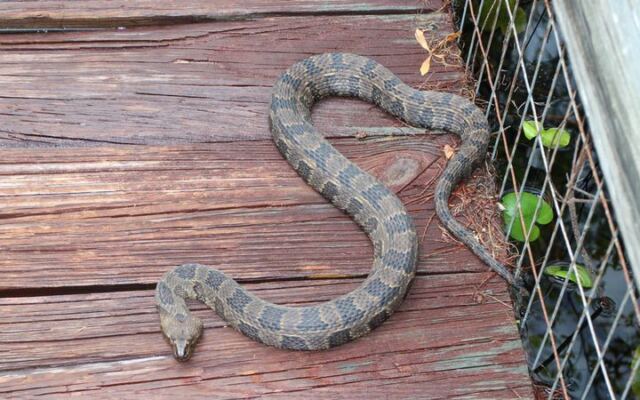
Harmless Look-Alikes
© Cool Green Science – The Nature Conservancy

Plenty of copperhead sightings turn out to be something else entirely. Missouri has dozens of harmless snakes, and a few wear patterns that fool almost everyone.

Northern water snakes near ponds have dark bands, but those bands are wide on top and narrow on the sides, the opposite of a copperhead. Young rat snakes and prairie kingsnakes have blotchy patterns too.

Even the friendly hognose flattens its neck and hisses like a cobra before playing dead.

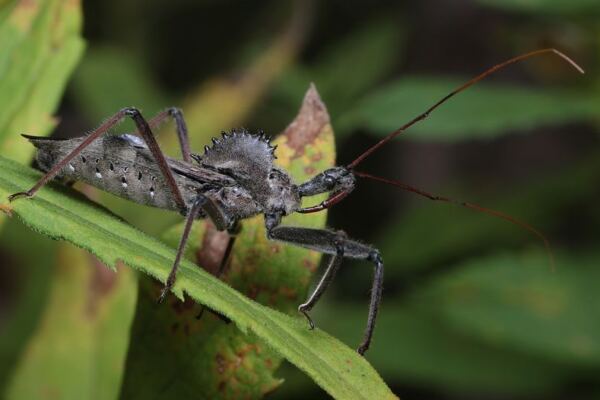
For spiders, wolf spiders and cellar spiders often get blamed as recluses. Wolf spiders are hairy with stripes, while recluses are smooth and plain.

A safe rule: if you are not sure, back off and leave it be. Most of these helpers eat rodents and pests in your garden.

7. Garden Safety Habits
Garden Safety Habits
© MyWild

Smart habits beat fear every single time. A few small changes make your yard much less inviting to spiders and venomous snakes.

Keep grass mowed, raise woodpiles off the ground, and clear brush piles near paths. Wear leather gloves and closed shoes while weeding, and carry a flashlight on warm summer evenings when copperheads hunt.

Store gloves and shoes indoors or in sealed bins.

If someone gets bitten, stay calm, keep the bitten area still, and head to a doctor or call 911. Skip ice, cutting, or sucking out venom, since those old tricks do more harm.

A quick photo from a safe distance can help doctors too.

Share this story
CR

Written by

Clayton Reeves

More from Clayton Reeves →

About Gardening Latest

Gardening Latest provides in-depth guides to maintaining and enhancing your garden and backyard. Learn how to make the most of the space you have and create a beautiful garden.

More about us →

Latest stories

  • Delaware GardeningThat Green Caterpillar With a Brown Saddle Stings Hard in Delaware Gardens, and Here’s What to Do First

    That Green Caterpillar With a Brown Saddle Stings Hard in Delaware Gardens, and Here’s What to Do First

    3 min ago
  • South Carolina GardeningBlack Vultures Roosting on Your South Carolina Roof This Winter Are Tearing Up More Than Shingles

    Black Vultures Roosting on Your South Carolina Roof This Winter Are Tearing Up More Than Shingles

    11 min ago
  • Kentucky GardeningWhy Kentucky Deer Are Rubbing the Bark Off Your Young Trees, and How to Stop the Damage Before Spring

    Why Kentucky Deer Are Rubbing the Bark Off Your Young Trees, and How to Stop the Damage Before Spring

    17 min ago
  • Florida GardeningFlorida Is Full of Harmless Critters That Look Venomous, and These 7 Send People Running

    Florida Is Full of Harmless Critters That Look Venomous, and These 7 Send People Running

    23 min ago
  • Maryland GardeningThere’s an Invasive Tree Moving Through Maryland Neighborhoods, and Hand-Pulling Can’t Keep Pace

    There’s an Invasive Tree Moving Through Maryland Neighborhoods, and Hand-Pulling Can’t Keep Pace

    30 min ago

Gardening by state

Stories for your state, and the hardiness zone most of it gardens in.

Keep exploring

Read next

All Missouri Gardening →
Missouri GardeningYellow Jackets Nesting Near Your Missouri Home? This Is What You Should Do First
Missouri Gardening

Yellow Jackets Nesting Near Your Missouri Home? This Is What You Should Do First

17 hr ago
Missouri GardeningPlenty of Missouri Gardeners Run From These 7 Venomous-Looking Critters That Are Actually Harmless
Missouri Gardening

Plenty of Missouri Gardeners Run From These 7 Venomous-Looking Critters That Are Actually Harmless

19 hr ago
Missouri GardeningHere’s What Those Little Ant Hills in Your Missouri Lawn After a Storm Actually Mean
Missouri Gardening

Here’s What Those Little Ant Hills in Your Missouri Lawn After a Storm Actually Mean

23 hr ago

More from Missouri Gardening

  • Here’s Who Actually Pays When Storm Winds Drop Your Neighbor’s Tree in Your Missouri Yard

    Nov 24
  • Missouri’s Venomous Critters Hide Closer Than You Think, And Fall Draws Them Into Yards

    Nov 24
Back to top

Leave a response Cancel

Your email address stays private. Required fields are marked with an asterisk.

Gardening Latest

In-depth guides to maintaining and enhancing your garden and backyard: how to make the most of the space you have, and how to make it beautiful.

  • Facebook
  • X
  • Pinterest
  • YouTube

We may earn a portion of sales from products or services that are purchased through our site as part of our affiliate partnerships with retailers.

Explore

  • About GardeningLatest.com
  • Contact Us
  • Terms and Conditions
  • Privacy
  • Editorial Note:
  • FTC Disclosure

Newsletter

New garden guides and seasonal tips, straight to your inbox.

We’ll email you a link to confirm. Unsubscribe any time.

Almost there! Check your inbox and tap the link to confirm.

© 2026 Gardening Latest. All rights reserved.

Back to top