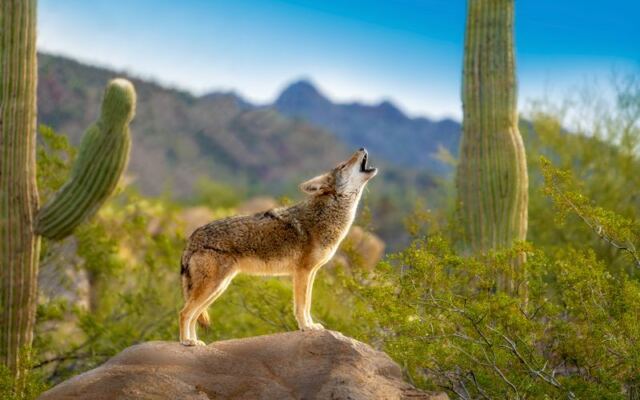
Those yips and howls after dark are coyotes talking to each other, and the time of year shapes how much they talk. In late November, some of the calling may tie into fall movements of young coyotes and a season when coyotes tend to respond more to calls.
A sudden chorus outside your window can feel eerie, especially if you live near a wash or open desert. Knowing what the sounds can and cannot tell you makes the night a lot less mysterious.
What coyote calls can communicate
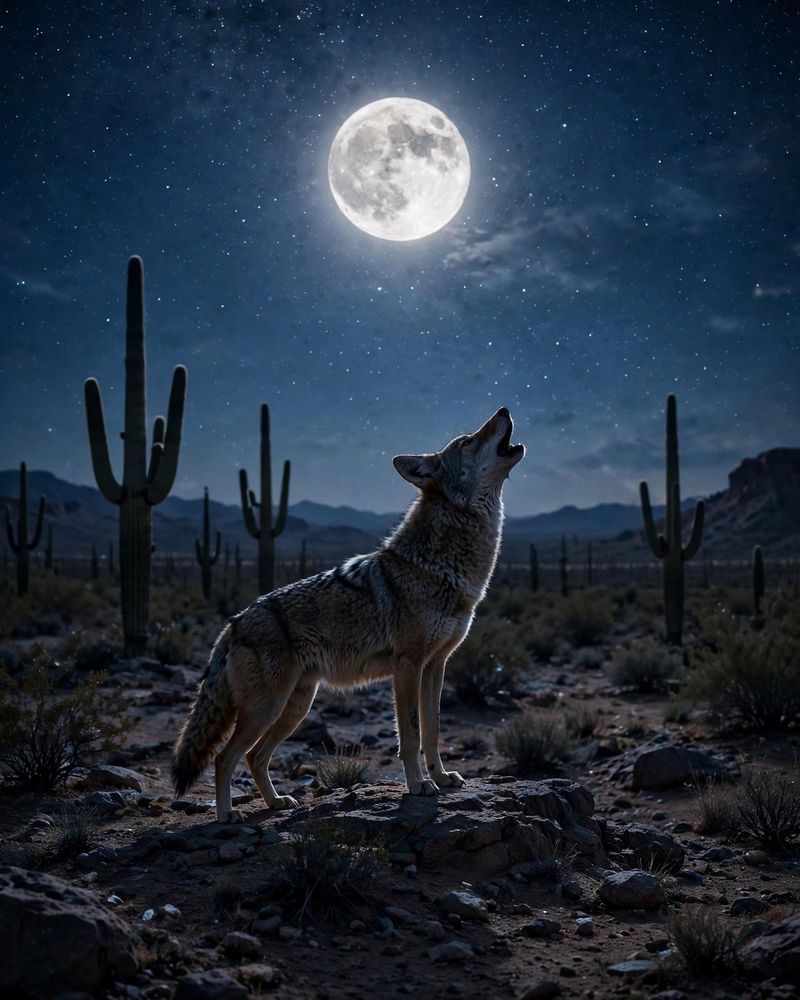
Few sounds carry across the desert like a coyote chorus. It is easy to hear it as one dramatic noise, but coyotes actually have a whole set of sounds.
Howling sessions can include yips, barks, whines, and howls, all woven together.
According to USDA wildlife damage management guidance, howling is a way for coyotes to communicate their location. A howl may draw answers from other coyotes, and it may help mark out an occupied home range.
In plain terms, a call can work like a signal that says, someone is here.
That is about as far as the science goes. Those broad jobs are not a translation key.
You cannot listen to a particular burst of yips and say it means a warning, a celebration, or a plan. Coyotes may be keeping in touch with family members, answering a neighbor, or simply announcing their spot, and from your back patio there is no way to tell which.
Why it feels so loud and sudden is partly the setting. Sound travels well over open desert at night, and a few animals can fill the air with overlapping voices.
Hearing that sound does not tell you the animals are close, and it does not mean anything is wrong.
Still, the time of year can add useful background. Coyotes are not equally vocal all year, and late fall brings its own pattern, which is where the next section picks up.
Late fall is one part of the seasonal picture
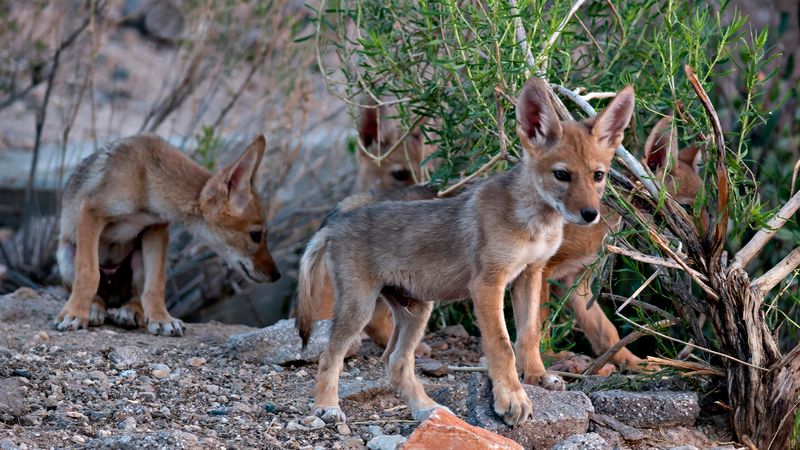
Late November sits in the cooler stretch between Arizona’s hot summer and its winter. Coyotes here usually breed in February, according to Arizona Game and Fish.
So a chorus you hear in November is not evidence of courtship or breeding.
Fall does bring something else to consider. Young coyotes may leave the area where they were born in late summer or fall, a process called dispersal.
The USDA notes that some juveniles stay in loose family groups into the next breeding season, so the picture is not tidy. Dispersal is one possible backdrop for fall sounds, not a diagnosis of what any group outside your home is doing.
Researchers have also looked at when coyotes answer calls most. A study in Wildlife Biology reviewed earlier work from the western and southwestern United States.
It reports greater vocal responsiveness in February and March, around pair formation and breeding, and also in August and November.
That is evidence of seasonal variation. It does not prove that every coyote howls more in those months, or that they all do it for the same reason.
Different animals can be calling for different reasons on the same night.
So think of the season as weather rather than a script. It helps explain why the desert might sound busier in late fall, but it cannot tell you whether the coyotes near your wash are young travelers, a family, or neighbors trading calls.
A chorus cannot tell you how many coyotes are there
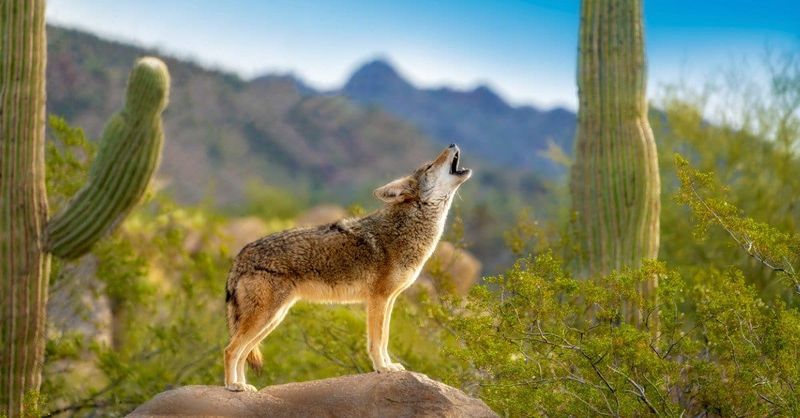
When yips and howls pile on top of each other, a pair can sound like a crowd. Our ears tend to treat each overlapping voice as another animal.
Researchers have tested exactly that.
In a 2017 study in Human-Wildlife Interactions, 427 listeners heard recordings of one to four coyotes. On average, they overestimated the number by nearly twofold.
The recordings came from captive coyotes in southern Texas, so the exact result should not be assumed to fit every listener, location, or desert wash. The lesson is simple: a chorus is a poor way to count animals.
The same goes for other popular stories. Nothing in the sources supports reading a chorus as an announcement of a kill.
The USDA account describes calls as communicating location and home range, and a Massachusetts wildlife agency likewise says coyotes howl mainly to communicate with other coyotes.
A chorus is not proof of a nearby den, either. Arizona’s denning season follows the usual February breeding period, so a November chorus is no sign of one.
As for the moon, the Texas research mentioned one study that found howling was not linked to moonlight intensity, and another that found more group howling on less-moonlit nights. Moonlight does not explain the calls.
What you can take from a loud night is modest. Coyotes are somewhere within earshot, and probably fewer than it sounds like.
Coyotes live in desert scrub and near neighborhoods
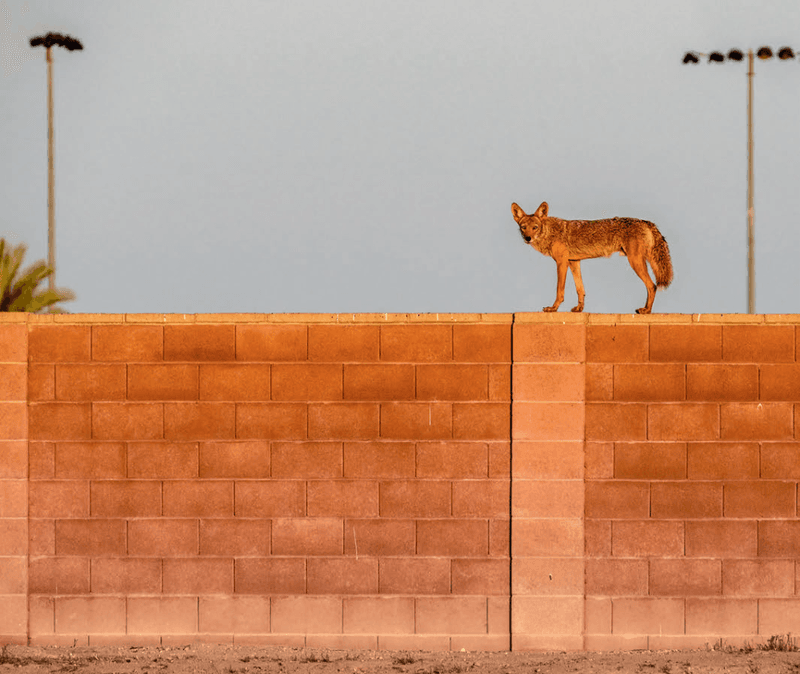
If you live beside a wash or open space, coyotes are likely neighbors of a sort. Arizona Game and Fish reports that coyotes occur in desert scrub as well as in cities and suburbs.
Hearing them near a desert-edge neighborhood is not surprising.
Hearing is not the same as seeing, though. A call tells you that coyotes are somewhere in range of your ears.
It does not show that one is in your yard, on your street, or heading toward anyone.
Keeping the risk in proportion helps the night feel calmer. Arizona Game and Fish says encounters with coyotes range from harmless sightings to attacks, and its safety guidance treats a coyote approaching a person, or acting aggressively, as the point to act and report.
Howling by itself does not fall into that category. A chorus from the far side of the wash is ordinary desert background.
A coyote walking toward a person or showing aggression is a different situation, and the last section covers what to do.
In between those two is where most nights sit. You hear animals, you stay inside or keep an eye on pets, and the sound fades.
Make your yard less inviting
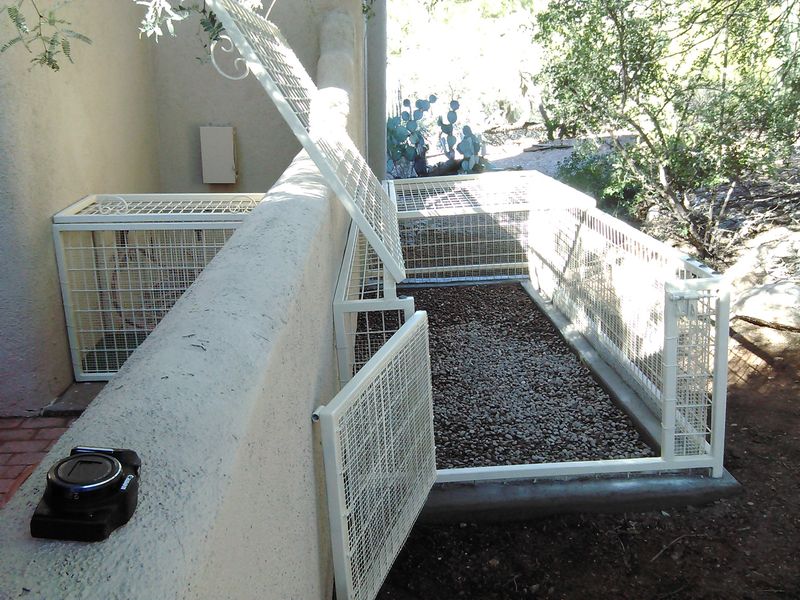
A few habits make a yard far less interesting to wildlife. Think of them as routine upkeep, not a response to a particular visitor.
Hearing a chorus does not mean a coyote has entered your property.
Arizona Game and Fish offers tips to avoid conflicts with coyotes. The first is never to feed coyotes, on purpose or by accident.
Animals that learn people provide food can lose their natural wariness.
Next, secure the things that smell like a meal. Keep garbage in sealed containers, put away pet food, and take water bowls in at night.
Feed pets indoors when you can, so nothing tempting sits on the patio.
Finally, stay with your pets outdoors, especially at dusk and dawn. Small unattended pets may be vulnerable, so a leash or a quick walk to the door with them is a sensible habit.
None of this requires panic. A tidy yard and a pet that stays close are simple steps that work whether the desert is loud or quiet.
If a coyote approaches, make yourself heard
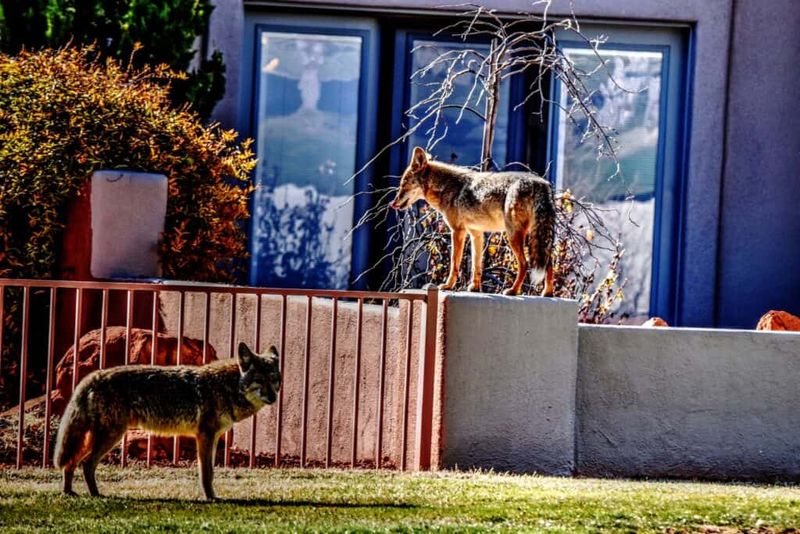
Most people will never need this advice, but it helps to have a plan. If a coyote approaches you, Arizona Game and Fish says to make loud noises, keep eye contact, and make yourself look larger.
Do not run. Do not approach, chase, or corner the animal either, and use any deterrence only from a safe distance.
Know when to call for help. Dial 911 if a coyote is approaching a person or has bitten someone.
If a coyote is acting aggressively toward people, report it to the department’s 24-hour Communications Center at 623-236-7201.
Those situations are very different from a chorus after dark. A coyote approaching or acting aggressively toward a person is a reason to act.
Howling alone is not an emergency.
Seasonal context also has limits. Research on seasonal vocal responsiveness shows that coyotes respond more at certain times of year, and fall dispersal may be part of the story in late November.
It still cannot decode a particular chorus, count the animals, or tell you how close they are.
So next time the yipping starts, you can listen the way you might to desert wind. It is a sign that the wild neighbors are home, and your best response is a tidy yard and an unhurried ear.
Share this story