Snow piled against your Iowa shrubs can hide rabbit damage until the melt shows you what happened. Long stretches of snow cover raise the risk, because hungry rabbits and tunneling voles chew bark on young trees and shrubs.
Not every plant gets hit, and a few simple steps can protect the ones that matter most. Here is how to spot the trouble, choose what to guard, and put up barriers before the next snowfall.
What snow can hide through winter
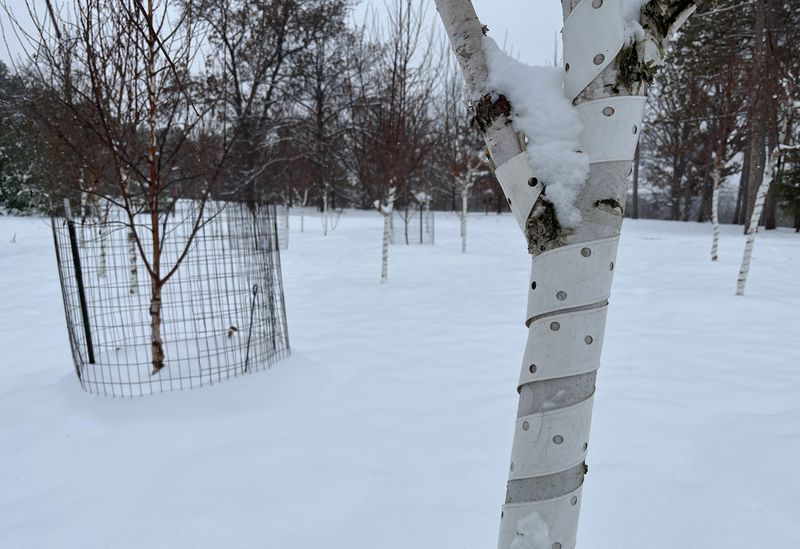
Snow looks quiet and harmless, but it changes how animals reach your plants. Iowa State Extension says rabbit browsing on trees and shrubs is most severe in winters with extended snow cover.
A deep drift lifts a rabbit higher, so it can nibble branches that would be out of reach on bare ground.
Rabbit browsing damage may be concealed by snow and become visible after it melts. A girdled stem or a clipped branch tucked behind a snowbank is easy to miss while you are shoveling or looking out the window.
Once the drifts shrink in March or April, the injuries show up all at once.
Snow cover raises the risk, but it does not prove that a particular shrub was damaged. Damage varies with how long the snow stays, how much other food is around, how many animals live nearby, and which plants you grow.
Some winters pass with little trouble at all.
Rabbits and voles work in different places. Rabbits browse above the snow surface, while meadow voles travel and feed beneath the snow, often gnawing bark close to the ground.
That is why a plant can look fine from above and still be chewed at its base.
Knowing this helps you act now instead of guessing in spring. A little planning before the next storm costs far less than replacing a favorite tree.
How to read the signs after snowmelt
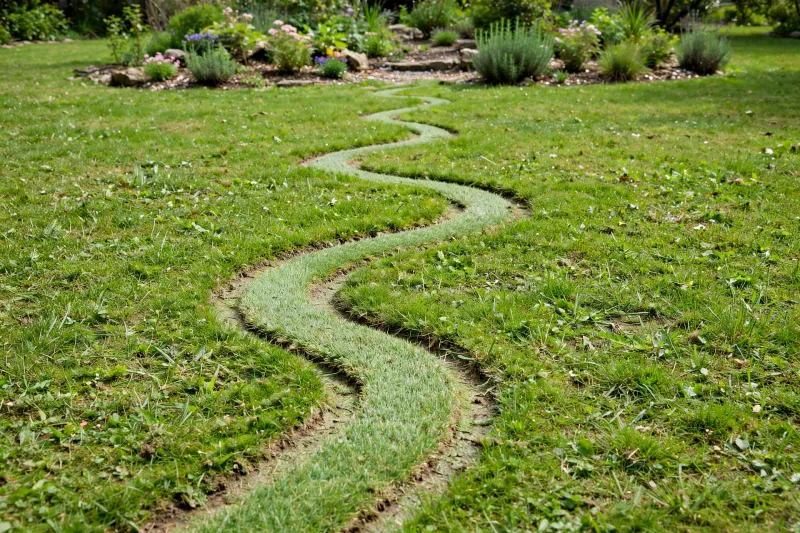
When the snow pulls back, take a slow walk around your young trees and shrubs. Start with the branches.
Rabbits often leave clean, angled cuts on twigs, and their gnaw marks tend to be larger and more uniform than those of other small animals.
Next, crouch down and look at the base of each plant. Voles gnaw near the ground, and their marks are typically small and irregular.
You may also see narrow, winding runways in the lawn leading toward the plant.
Bark injury alone does not tell you who did it. Penn State Extension notes that other animals can cause similar girdling, so check for accompanying clues.
Look for tracks, droppings, and runways near the damage before you decide which animal was responsible.
Height gives another hint. Damage that sits well above the ground, in the range a rabbit could reach standing on old snow, points one way.
Chewing hugging the soil line points the other way.
Write down what you find, or snap a few photos. Those notes will guide which barrier you build next fall, and they will help you tell a bad winter from an ordinary one.
Which plants to protect first
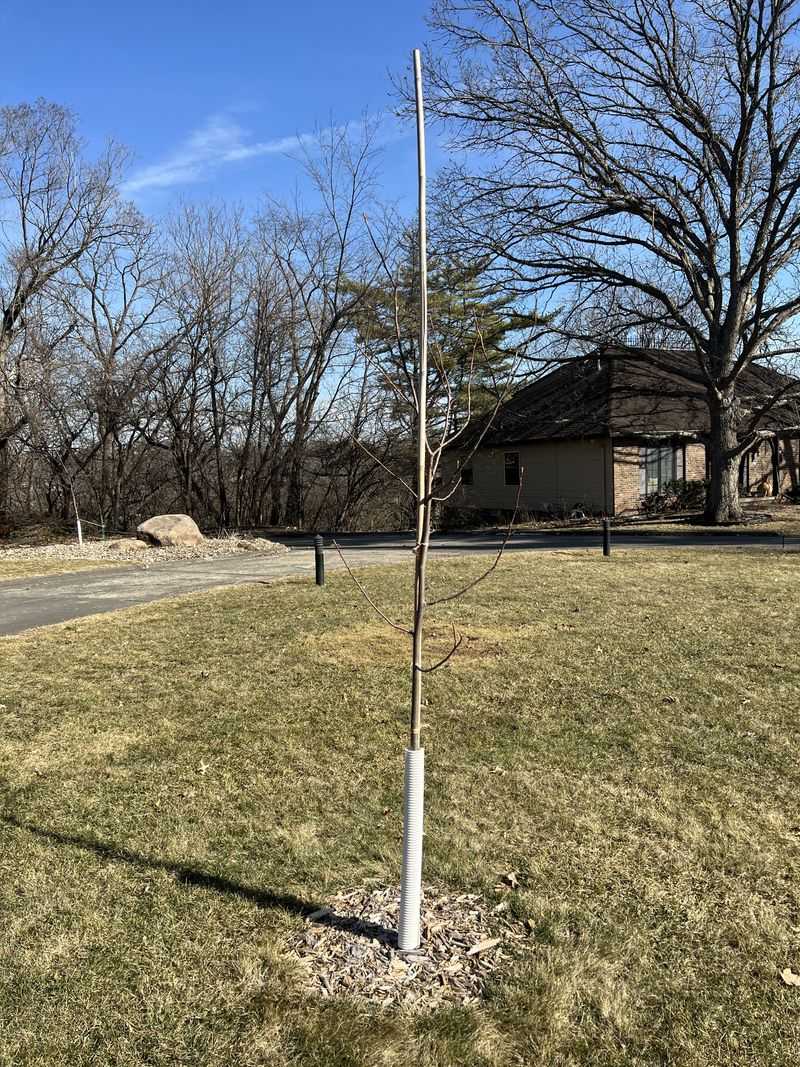
You do not need to wrap every plant in the yard. Begin with the youngest and most valuable ones, since thin bark on small stems is the easiest to strip.
Priority rises when snow cover is extended and natural food is scarce.
Iowa State lists crabapple, apple, pear, redbud, serviceberry, roses, and raspberries as plants commonly affected by rabbit browsing. If you grow any of these, put them near the top of your list.
They are examples, not a complete roster.
Many small trees and shrubs can be vulnerable when food runs short. A newly planted maple or a thin-barked fruit tree may be just as tempting as anything on the list.
Treat the list as a starting point and look at what you actually have.
Risk also depends on your site. A shrub beside a brush pile or thick cover may see more visits than one in an open, mowed yard.
Winters differ too, and Iowa State describes greater damage in winters with extended snow cover, not every winter.
A simple ranking works well. Guard young trees first, then prized shrubs, then everything else as time and supplies allow.
Build a barrier against both animals
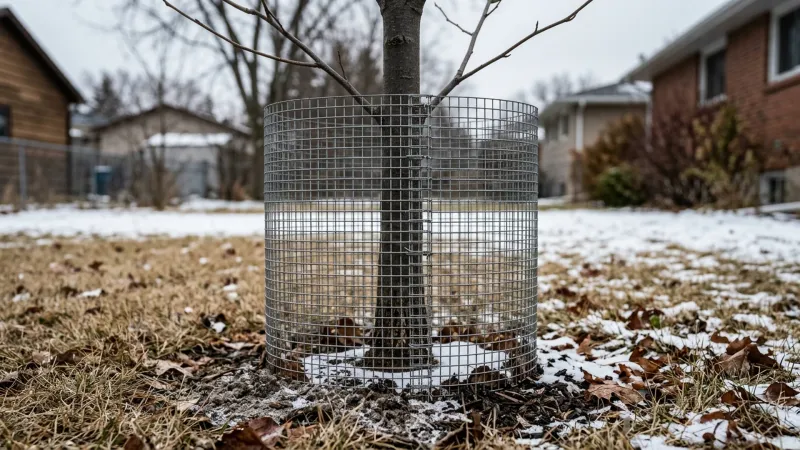
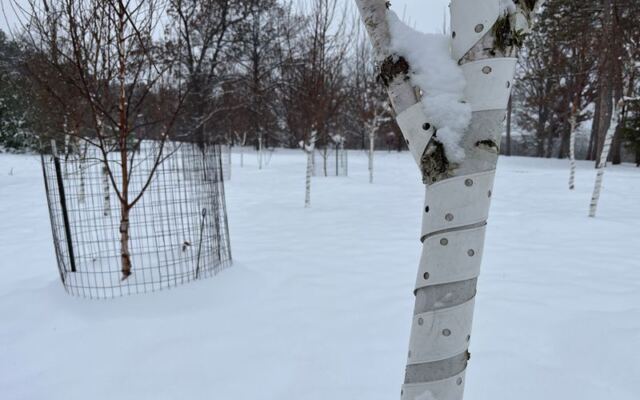
Physical barriers are the more dependable choice in the sources, and the recipe is simple. Iowa State recommends cylinders of 1/4-inch hardware cloth around young trees and shrubs.
Bury the bottom 2 to 3 inches so voles cannot tunnel underneath.
Height is the second half of the job. For rabbits, the barrier must rise above the expected snow level, and University of Minnesota Extension specifies 18 to 24 inches above that level.
Think about where drifts pile up on your property, not just how deep the snow is today.
Each animal finds a different way around a weak design. A tall fence with a gap at the ground may still let voles slip in at the base.
A low trunk guard may leave branches above a snowbank open to rabbits.
Shrubs need a little extra thought. Protect the stems and the lower branches, not just one trunk, by circling the whole plant with cloth or fencing.
Leave enough room around the stems that the guard does not touch them.
Set the barriers up before the ground freezes hard if you can. If snow is already falling, a quick cylinder and a few stakes still beat leaving the plant bare.
Keep guards effective through winter
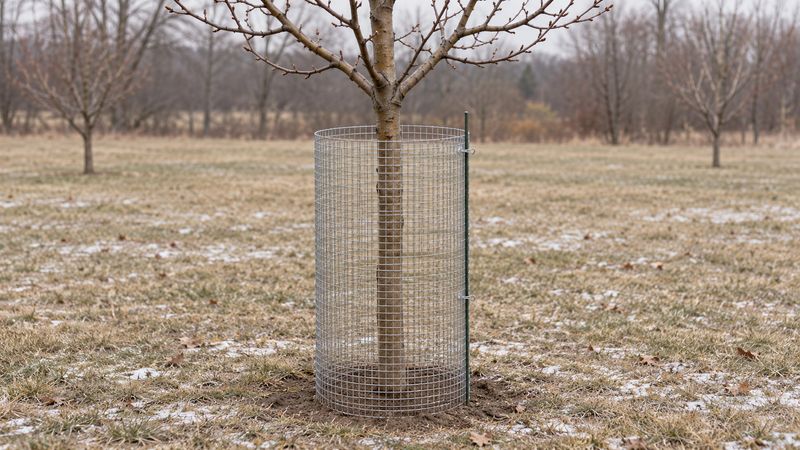
Putting up a guard is only half the work. After each snowfall, take a quick lap and see whether drifts have buried the top edge or shifted the cloth.
If the snow has climbed higher than the guard, a rabbit can step right over it.
Check the ground edge too. Gaps where soil has settled or frozen chunks have pushed the cloth up give voles an entrance.
Press the bottom back into place and add soil or stakes where needed, since Iowa State advises closing gaps at the ground and checking protection periodically.
Look at the plant itself as well. A guard should not press tightly against growing stems or rub and damage them.
If a stem has grown snug against the cloth, loosen or widen the cylinder.
Repellents deserve realistic expectations. Iowa State notes they may be less effective in winter and need reapplication after precipitation, so treat them as a minor extra at best.
They are not a dependable stand-in for a physical barrier.
Skip poison bait. Iowa State warns that baits pose risks to pets and children, and a well-built guard solves the problem without that worry.
As Minnesota guidance on winter protection also stresses, upkeep after storms keeps the barrier doing its job.
Remove guards and assess damage in spring
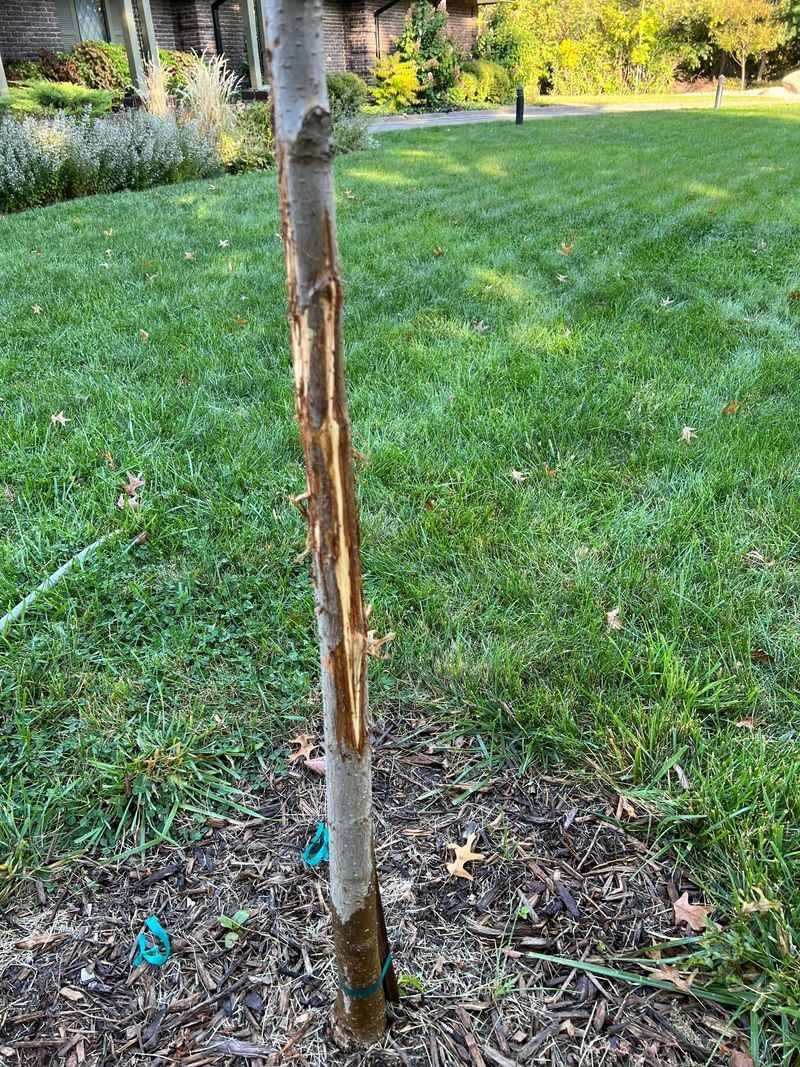
Once the snow is gone and the risk of winter browsing has passed, the guards can come off. Iowa State says to remove seasonal fencing and guards, typically in April.
Store them dry so they are ready for next season.
Removal day is also inspection day. Run your eyes and hands over each trunk and stem, looking for chewed bark, clipped twigs, and any ring of bare wood.
Photos help if you need to compare a plant again in a few weeks.
Damage you find now is a different job from the protection you set up before winter. A guard installed ahead of time keeps animals out.
Wound wraps, paints, and dressings do not restore bark or repair severe girdling, so skip them.
Recovery depends on how much bark is gone. Iowa State explains that fully girdled trees generally should be replaced, while partially girdled trees may survive.
Many deciduous shrubs can produce new shoots, so wait to see what leafs out before pulling anything.
Spring is a reasonable time to decide, not to panic. Plants often tell you more by June than they do in March.
Share this story