Stay away from the nest, keep your family and pets away too, and do not poke at it or try to knock it down. Then ask one simple question: do people or pets use the area around it?
The answer helps you decide whether to leave the nest alone or call a licensed pest-control professional. A little calm planning can keep a stinging problem from turning into a painful one.
Create distance before you decide what to do
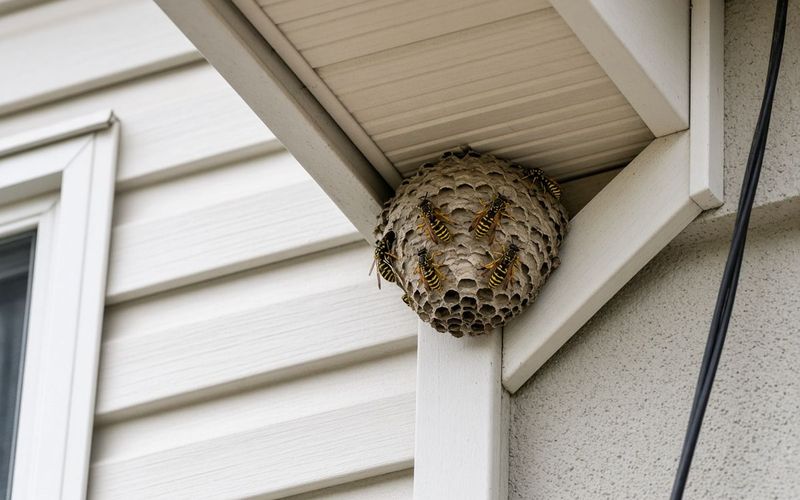
Start by stepping back. Do not walk up to look closer, do not poke at the hole or the nest, and do not spray, hose, or mow near it.
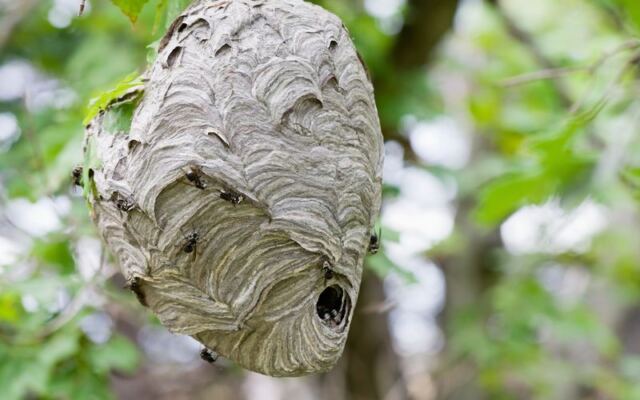
Wasps defend their nest hard, and vibration, noise, and sudden movement can set them off.
Next, move children and pets away from the spot. A temporary barrier, a closed gate, or a simple rule to stay out of that corner of the yard can help while you figure out your next step.
There is no magic buffer distance that works for every yard, so the goal is to keep everyone from wandering into the area at all.
If wasps are buzzing around you, walk away calmly. Swatting or flailing at foraging wasps makes them more likely to sting, so move off and let them lose interest.
Illinois Extension guidance points out that colonies grow through spring and summer, and late in the season they can be large and foragers become easier to notice as natural food runs short.
Giving the nest room costs you nothing and keeps your options open. It also gives you time to look from a distance and decide whether the nest is a real problem or just a passing nuisance.
You can also check integrated pest management advice on social wasps for background on why these insects react so strongly when their nest is threatened.
A ground opening does not confirm a yellowjacket nest
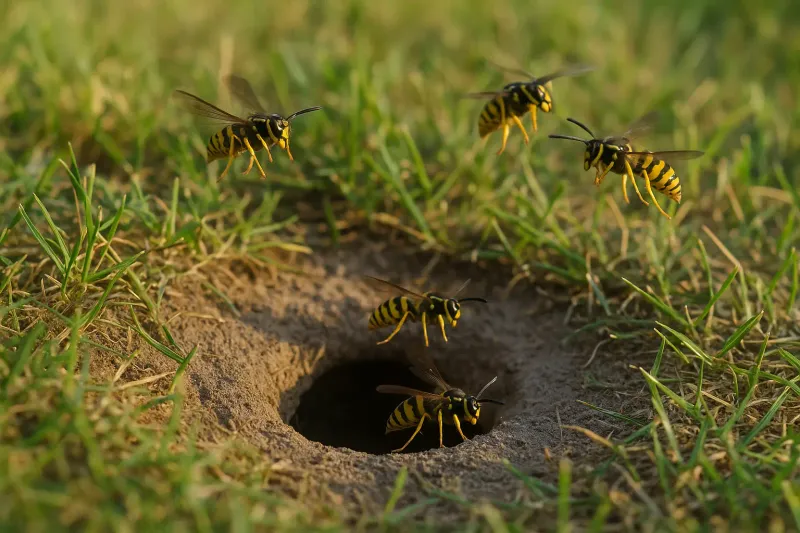
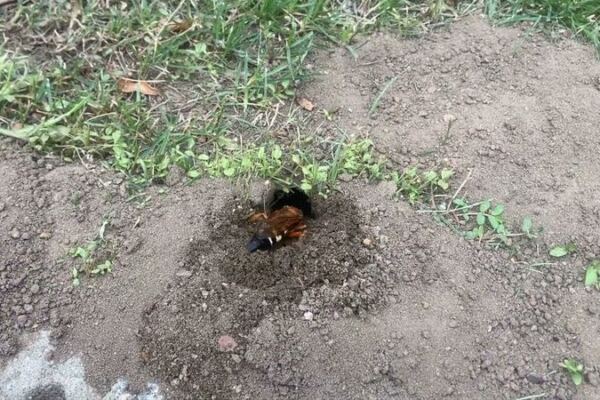
Seeing wasps go in and out of a hole in the ground is a good reason to be careful. It is not proof that you have yellowjackets.
Treat repeated activity at one opening as a possible nest and leave it undisturbed.
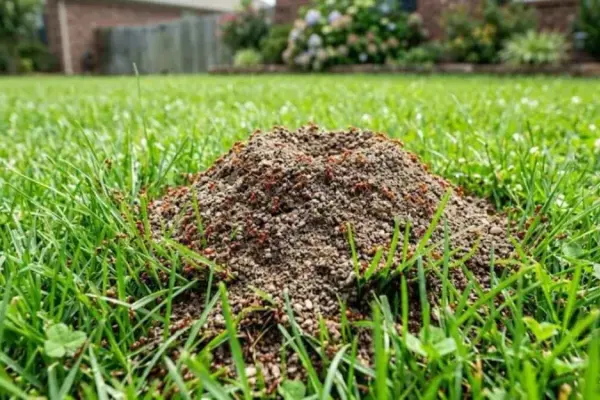
Other wasps dig burrows in soil too. The Illinois Department of Public Health notes that yellowjackets often nest underground but may also use cavities, and cicada killers are one example of a wasp that makes ground burrows.
Yellowjackets are wasps, not bees, though people often mix them up with honeybees and other insects.
That also means you should not assume every nest is in the dirt. Yellowjackets can build in wall voids, attics, and crawlspaces.
A steady stream of wasps entering a small gap in siding or a foundation vent may point to a hidden colony.
Keep your identification simple and based on what you can see from far away. Notice where the wasps go, how many there are, and what time of day they are busiest.
Skip any urge to investigate by tapping, covering, or shining a light into the hole. A photo taken from a distance can help a professional or your local Extension office sort out what you are seeing, and University of Illinois safety guidance also stresses that different bees and wasps do not all pose the same risk.
Not every nest near a home needs removal
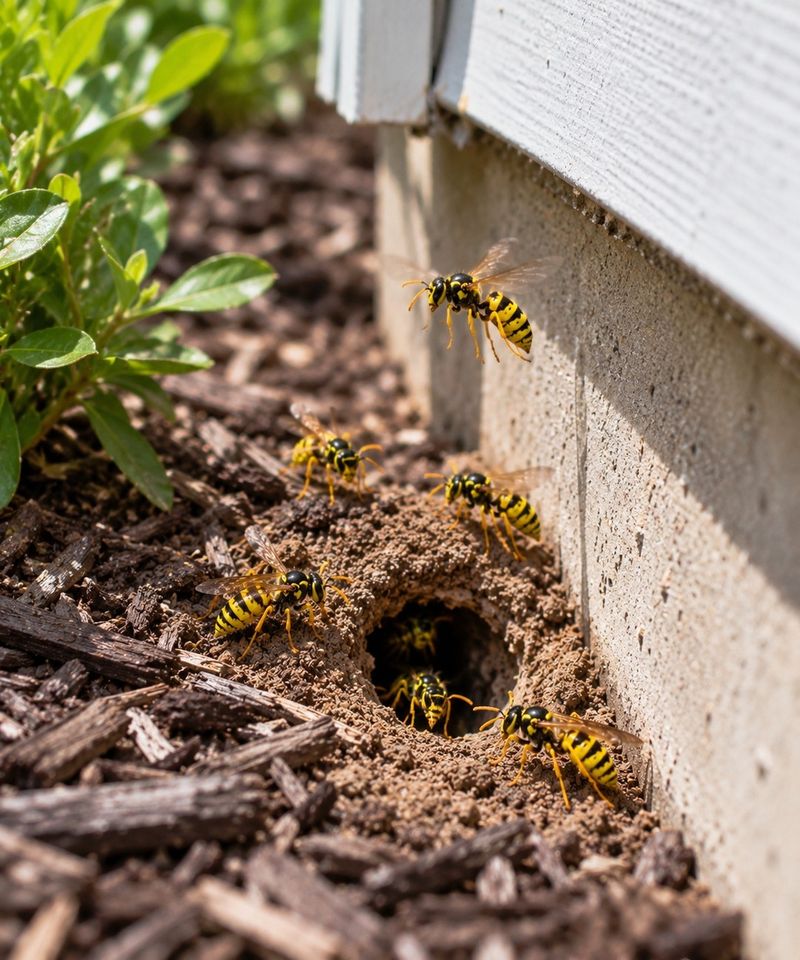
Being close to the house does not automatically mean a nest has to go. The better question is how people and pets use the space around it.
A nest tucked behind a shed or along an unused back fence is a very different situation from one beside the front walk or the kids’ play area.
According to Illinois Extension, an out-of-the-way nest can be left alone, while a nest where people or pets often go may call for treatment. Think about mowing routes, garden beds, doorways, grill areas, and the path to the trash cans.
Timing matters too. Colonies are small in spring and keep growing through summer, so a nest you barely notice in June can feel crowded by September.
Foraging wasps also become bolder when natural food gets scarce.
Whatever you decide, you can cut down on run-ins with foragers. Cover food and drinks when you eat outside, keep trash cans closed tightly, and pick up ripe or fallen fruit.
Integrated pest management guidance lists these habits because yellowjackets are strongly drawn to sweet drinks, meat, and garbage.
If you decide the nest sits in a spot you can simply avoid, mark the area in your mind and keep everyone out of it. If you cannot avoid it, move on to the next section.
When is a professional the safer choice?
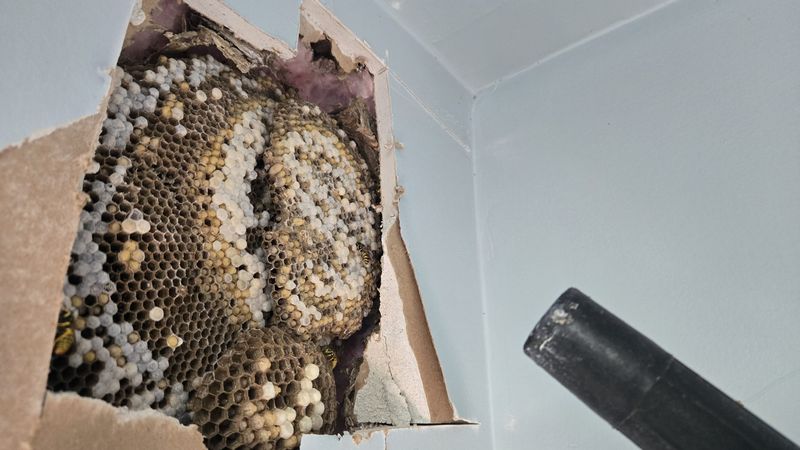
Some situations are best left to a licensed pest-control professional. Nests inside walls, attics, or other hard-to-reach cavities top the list, because you cannot see the size of the colony or reach it safely.
Nests beside a doorway, deck, or play space are another good reason to call.
Allergy risk is a third. If anyone who might be stung has a known insect sting allergy, the American College of Allergy, Asthma & Immunology explains why stings can be dangerous for them, and keeping that person away from any nest is only the start.
Do not plug a wall hole to solve the problem. Illinois Extension warns that sealing the entrance of an active nest in a wall can send wasps chewing their way into the living space instead.
You also do not have to be brave about it. Illinois Extension says that if you are uncomfortable treating a nest yourself, hiring a professional is a sound choice.
When you call, describe where you see the wasps, how long they have been active, and whether anyone in the household has a sting allergy. That helps the company plan a safe visit.
DIY treatment depends on the label—not a workaround
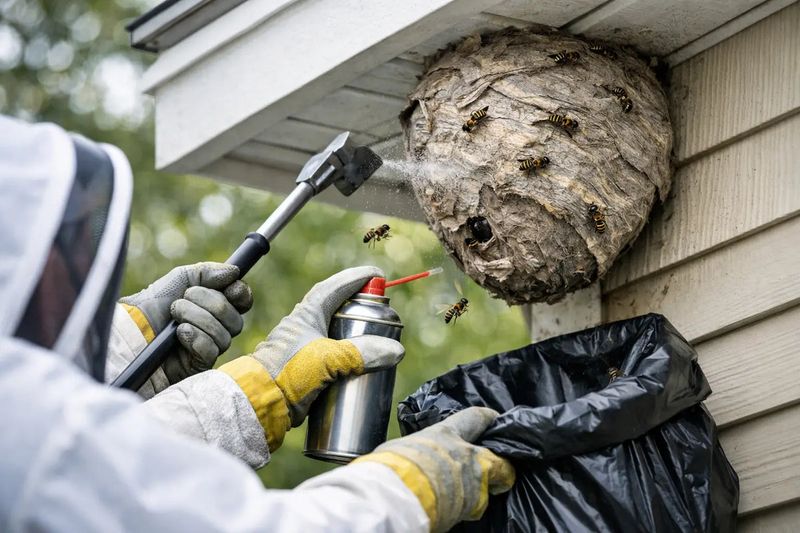
Some homeowners choose to treat a nest themselves. If you go that route, the rule is simple: use an approved pesticide and follow that exact product’s label and warnings.
Illinois Extension ties treatment to approved products used as directed.
Directions vary from one product to the next, so do not carry over steps you read about for a different spray, dust, or foam. The label tells you where the product can be used, what protective gear to wear, and what precautions apply.
The EPA’s pest control advice also urges people to read and follow label directions and warnings every time.
No single product, amount, or method works safely for every nest, so this article does not name one. If the label does not fit your situation, such as a nest inside a wall, that is a sign to hire a professional.
Skip the folk remedies. Pouring gasoline or kerosene on a nest or setting it on fire is dangerous.
Penn State Extension warns that fire can spread and cause injury or property damage. An angry colony, flammable liquid, and a panicked retreat are a bad mix.
A serious sting reaction needs immediate medical care

Most stings hurt and then fade, but some people react far more strongly. Know the warning signs before you ever need them.
According to the American College of Allergy, Asthma & Immunology, signs of a serious allergic reaction include trouble breathing, swelling of the throat or tongue, and symptoms that spread beyond the sting site.
If any of these happen, use epinephrine right away if it is available, and get immediate medical attention. Call 911 even if the person starts to feel better after the injection.
Do not wait to see whether symptoms pass.
Move the person away from the wasps first if you can do it safely, so no one else gets stung. Then stay with them until help arrives.
People who already carry epinephrine should keep it close whenever they are near a known nest.
What happens to an out-of-the-way nest in cold weather
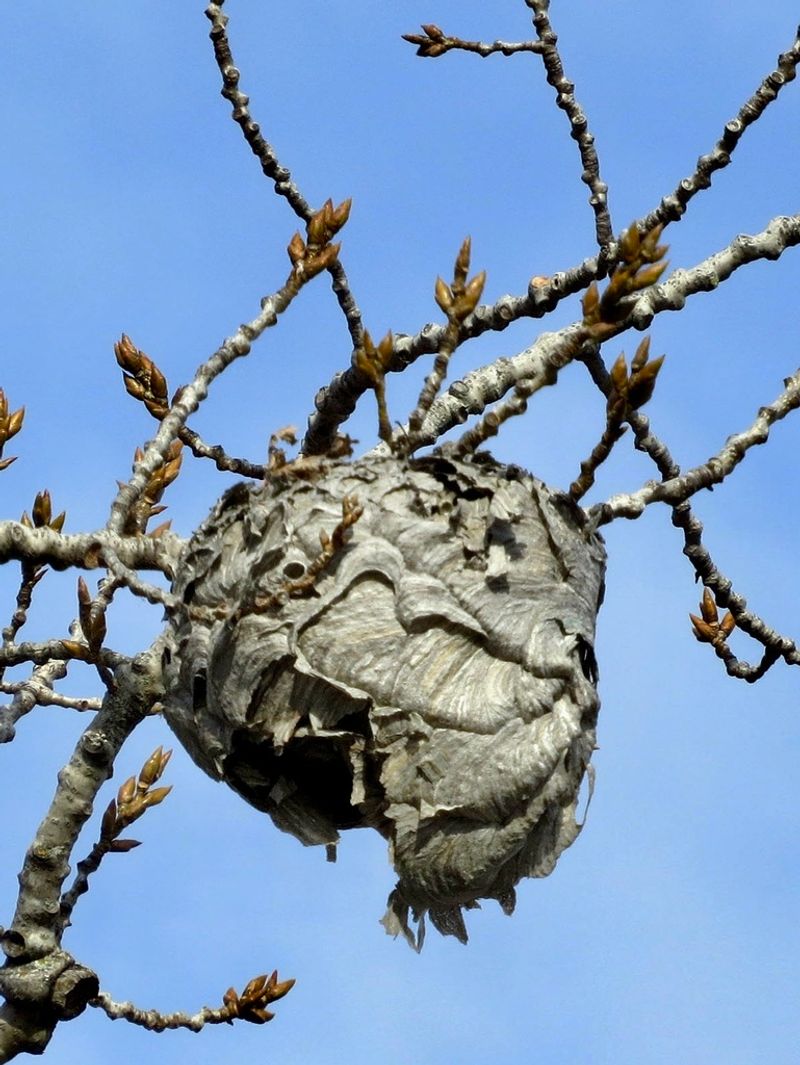
If your nest is truly out of the way, cold weather may solve the problem. Illinois Extension reports that workers die after five to seven days of temperatures below 45°F.
Its guidance also explains that new queens overwinter somewhere else, and the old nest is not reused.
That means an empty nest after a hard cold stretch does not need to be treated as a threat for next spring. A new colony starts from scratch in a new spot.
Waiting for frost is only a fit for nests that no one has to walk, mow, or play near. If people or pets must pass by, the risk is there every day until the cold arrives, and late summer is when colonies are largest and foragers most bothersome.
In that case, the earlier sections on professional help still apply.
A nest you can ignore is a nest you can outlast. One you cannot avoid is one to hand to a pro.
Share this story