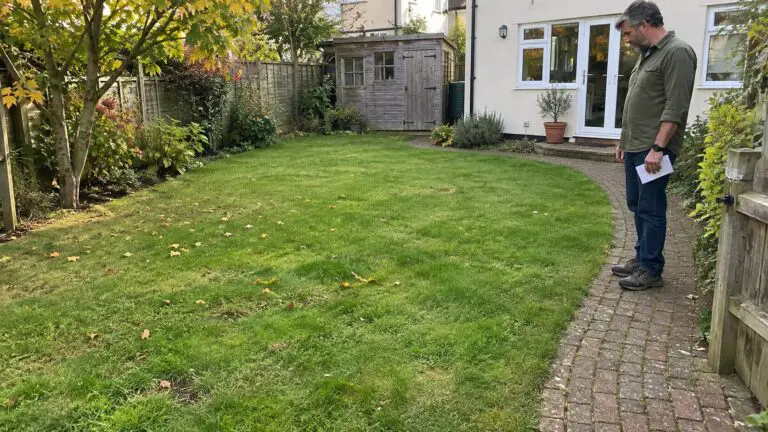
Knowing after overseeding when to cut the grass could be the difference between having a beautiful lawn or destroying all of your good work. The problem is that there isn’t a definitive timescale as it depends on numerous factors such as the variety, species, ground preparation, and weather, all of which affect the length of time it takes for your seed to grow.
Walking on overseeded areas before the seeds have established themselves, to mow the existing grass, could damage them. You shouldn’t even think of cutting before you see the new grass shoots appearing. As a general ‘rule of thumb’, you will probably be able to cut the existing grass after about two to four weeks. The actual point, after overseeding when to cut the grass, is best decided by sight and strength of the grass growth to ensure it is established, rather than by a set timescale.
How Long to Wait to Mow After Overseeding
Much actually depends on your preparation. If you are going to oversee it is best to plan out the project over the winter as grass variety, climate, and time of year will all have a bearing on how fast the new grass will germinate.
This is because, after overseeding, you need to provide the seeds with the time and the proper environmental conditions in order for them to thrive. They could need up to a month of warm conditions and good watering to establish themselves enough for you to start mowing.
So, when should you mow your grass after overseeding?

It’s going to depend on whether you’re overseeding warm-season or cool-season grasses.[1] Both these varieties grow at different rates under different conditions and this will have a considerable bearing on when you can mow your grass after overseeding.
When should you mow your grass after overseeding with cool-season grasses?
If you’re overseeding cool-season grasses, such as Kentucky bluegrass, they’re going to grow more slowly in the summer, so you’re going to want to mow your existing grass right before you begin overseeding. Therefore, cool-season grasses are usually best for overseeding in early spring or fall when they can germinate in around two weeks but can take longer in summer.
As it is not advisable to walk on overseeded areas, you won’t be able to mow again until the seed has germinated. Thus if you are planting cool-season grasses in summer they will take longer to germinate hence planning is key. You should be able, in spring or fall, to resume mowing the existing grass in around two to three weeks, enough time for the new grass to be robust enough to take footfall.
When should you mow your grass after overseeding with warm-season grasses?
When it comes to warm-season grasses they tend to grow more quickly than cool-season grasses. Bermuda grass can germinate in as little as seven days under the right conditions, warm with plenty of direct sunlight. The drawback of warm-season grasses is that they are usually less robust, with cool-season grasses being considered higher quality grasses.
If you are overseeding in the summer then you are likely to use warm-season grasses. Again, even though you are likely to be able to walk on the overseeded areas more quickly than cool-season grasses it is good practice to mow your existing grass just prior to overseeding.
You are then likely to be able to resume mowing of the existing grass in around two weeks.
Best Mowing Technique After Overseeding
Just because you can now look to mow the existing grass, the way you cut it becomes important. Although the overseeded area is now robust enough to walk on doesn’t mean that it is strong enough yet to be able to withstand an aggressive mowing technique.
The most effective way to cut the grass after overseeding is to make sure that you don’t strip off too much of the top layer of the grass. This means that you should aim to mow the grass no lower than half its height.
The reason why this is important is that the grassroots are still fragile and if you strip away too much of the top layers of grass you run the risk of damaging the grassroots. If you do damage the grassroots then the grass may die out completely.
When mowing a lawn for the first time after an overseeding, the following practices must be kept in mind to prevent causing any harm to the grass.
It is important to note that when you mow fresh grass or seedlings for the first time, it puts them under stress. You need to have time and patience after overseeding and not only choose the right moment to resume mowing but to do so carefully following the following best practices,.
Ensure your mower has sharp blades. It is essential when mowing again that your blades are sharp. Generally, it is advisable to have your blades sharpened after around 20-25hrs of grass cutting. This can usually be done at most hardware shops or garden centers, and it’s worthwhile since blunt mower blades will cut grass unevenly and have an impact on growth.
Do not cut a damp lawn! The grass is at its most fragile when wet so you shouldn’t attempt to cut your newly overseeded grass until it has dried out.
Do not overcut your grass: Grass should never be trimmed more than one-third of its length at a time. The more aggressive you are cutting the more damage can be caused. If the grass is particularly long then it is advisable to cut it with several passes over a few days.
How often should I mow my grass after overseeding?
This really depends on how long it takes for the grass to start growing back. It’s also worth noting that there is no fixed rule regarding how often you should mow your grass after seeding. Rather it’s a case of looking at the current state of the grass and making a judgment call.
Different grasses tend to be maintained at different heights. Cool-season grasses such as Kentucky bluegrass and fescue, for example, need a grass height of 2.5 to 4 inches to be at their best. Warm-season grasses such as Bermuda grass are kept slightly shorter. These fescues are just 2 to 3 inches tall when they first sprout
Soybean and Bermuda are the two finest examples of seasonal grasses in this category. These grasses are maintained at just 2 to 3 inches.
Summary: After Overseeding when To Cut the Grass
As we have seen there is no definitive answer as to after overseeding and when to cut the grass. The reality is patience and judgment are needed.
After overseeding It is unlikely that you will cut the grass again for around two to three weeks. Yes, in some cases you could probably do it after two weeks but in doing so you increase the chances of damaging the new grass.
Key to having the most control as to when to first cut your grass after overseeding is planning. Choose the right type of grass for your circumstances; cut the existing grass right before preparation, prepare the ground properly by aerating, scarifying, and top dressing.
Notes:
[1] University of Nebraska-Lincoln: Cool and Warm Season Grasses
Share this story