A skinny tree shoots up along your fence, and a few weeks later a whole cluster of look-alike sprouts appears across the yard. In Indiana, one possible culprit is tree-of-heaven, an invasive tree that grows fast and comes back stubbornly when people try to yank it out.
Pulling can work on tiny seedlings, but it often fails on shoots tied to an older root system. Before you grab a shovel or a saw, it pays to know what you are really looking at and what to do about it.
How tree-of-heaven spreads in Indiana
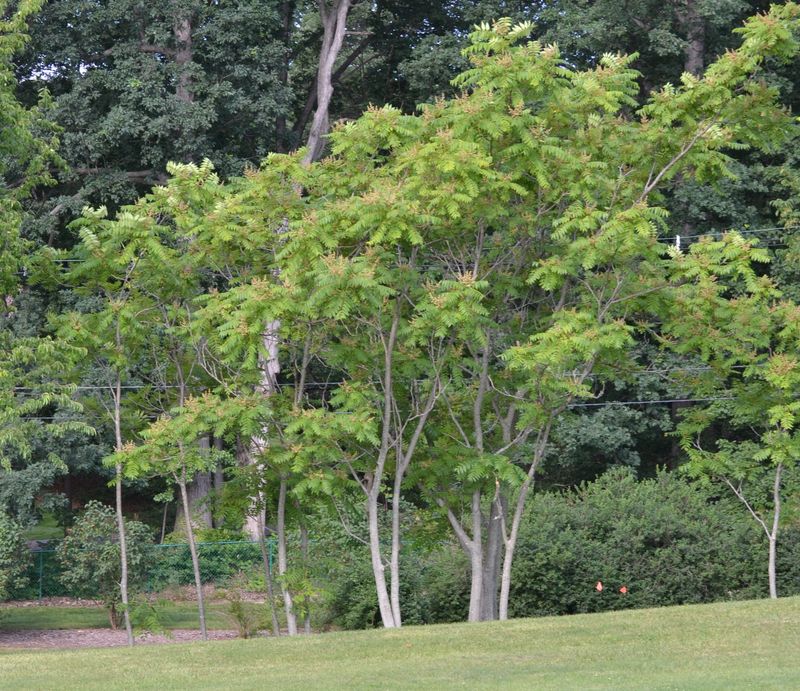
A fast-growing tree or a patch of crowded shoots could be tree-of-heaven, Ailanthus altissima, but those signs alone do not prove it. Plenty of plants sprout quickly in sunny, disturbed soil.
Treat tree-of-heaven as one possible answer, then confirm it before you act.
Indiana takes this species seriously. The state lists it as a prohibited invasive plant, and the Indiana Invasive Species Council plant list also includes it among the plants of concern.
Purdue Extension describes it as a serious invasive threat, which is why it keeps showing up in management advice.
The tree spreads in two main ways. It produces abundant seeds that travel on the wind, and Purdue’s invasive plant guide notes that it grows quickly, especially in disturbed places such as vacant lots, fence lines, and construction edges.
It can also send up shoots from established roots or from a cut stump, which is why a single tree can turn into a grove.
Here is the honest picture. The sources reviewed establish that the tree is invasive, grows rapidly, and has strong ways of spreading.
They do not measure a recent surge across Indiana neighborhoods, so the headline’s sense of urgency is best read as a reason to look closely, not a reason to panic.
The state also asks people to report suspected invasive plants through the Indiana DNR invasive plants page. The rest of this article walks through a practical order of operations: identify the plant, sort seedlings from root shoots, pick a method that fits, protect yourself, and keep watching the spot.
Check the leaves before you remove a plant
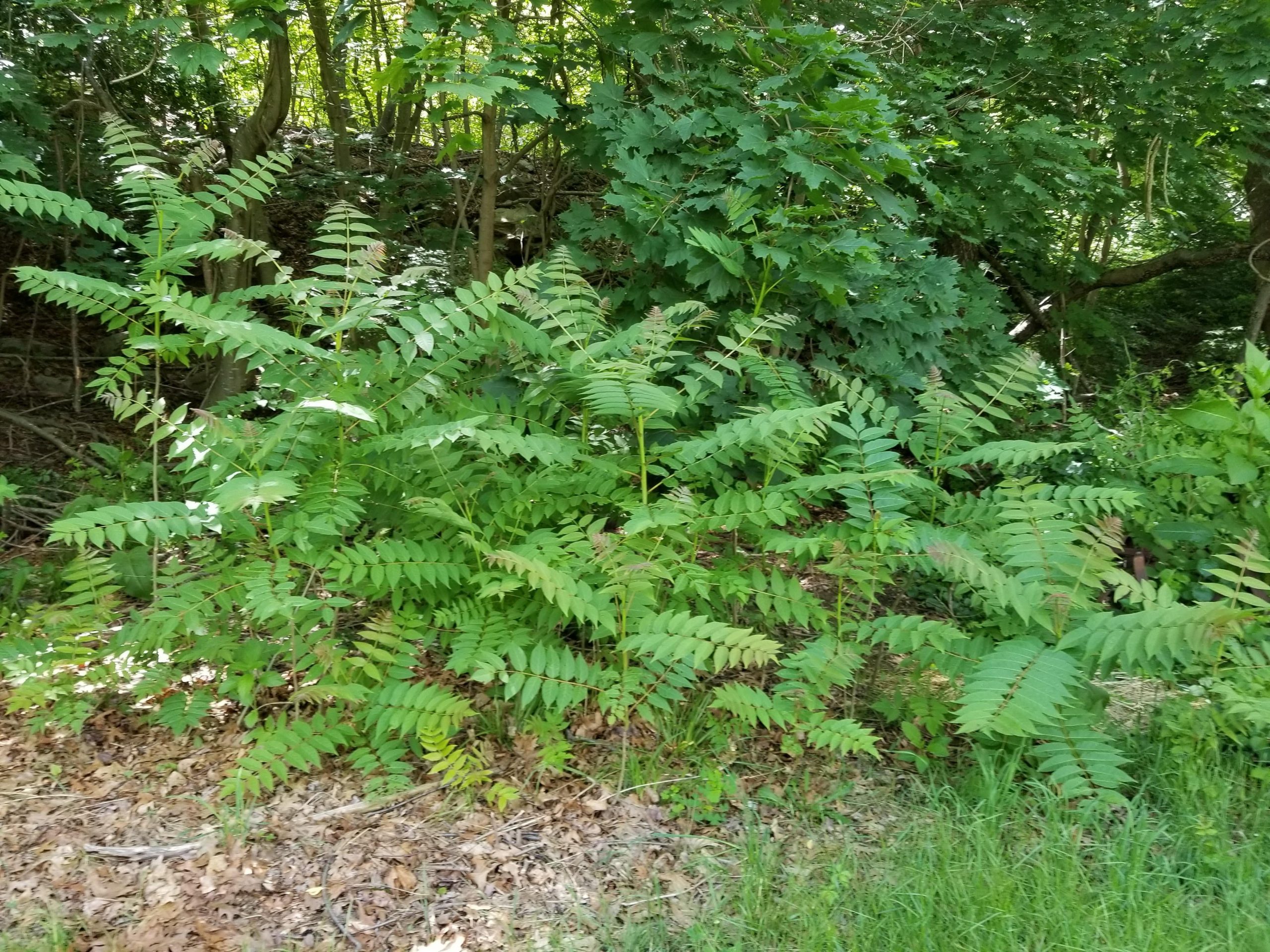
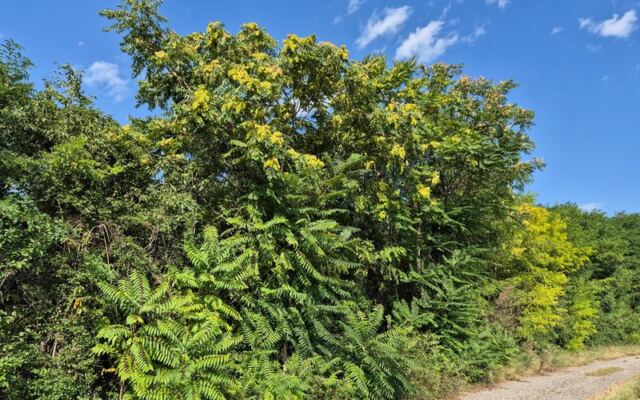
Leaves are your best clue. Tree-of-heaven has long compound leaves made of many leaflets along a central stem, and those leaflets are mostly smooth along the edges.
Near the base of each leaflet, look for one or two distinctive glandular teeth, a small bump-like notch that many look-alikes lack.
The Virginia Cooperative Extension profile describes these features and is a good place to compare photos with what is growing in your yard. Check several leaves, not just one, since young plants can vary.
Mistakes are easy to make. Native sumacs and black walnut also have long compound leaves, and removing a native tree by accident would be a real loss.
Penn State’s guide to tree-of-heaven native look-alikes shows side-by-side differences worth studying before you decide anything.
A few practical checks can help. Look at whether leaflet edges are mostly smooth or clearly toothed all the way along, since sumac leaflets are usually toothed along most of the edge.
Notice whether the plant has a strong, unpleasant odor when a leaf is crushed, a trait often mentioned with tree-of-heaven.
Remember that rapid growth and clustered shoots are not proof of anything. If you are unsure after comparing leaves, take clear photos and ask your county extension office or a certified arborist.
Verify the species first, and only then pull, cut, or treat.
Pull young seedlings, not established root shoots
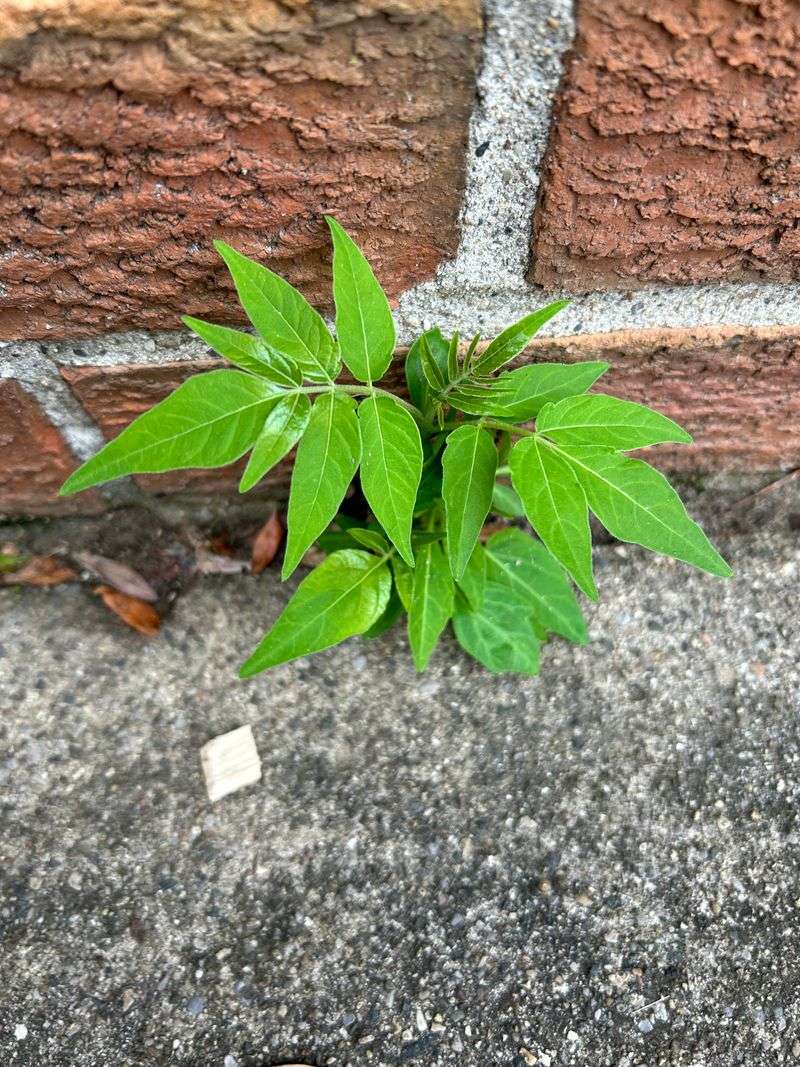
Not every small stem is a seedling. A true seedling started from a seed and has its own small root.
A root sucker is a shoot that rises from the root system of an older tree, and it is still plugged into that bigger network.
You can often tell them apart by digging gently beside the stem. A seedling usually comes with a short taproot that ends.
A sucker follows a horizontal root that runs off toward a larger plant, sometimes several feet away.
Hand-pulling can work on young seedlings when the soil is moist and the entire root comes out. After rain is a good time, and loosening the soil with a trowel helps you get the whole root.
Penn State Extension’s tree-of-heaven guide makes this point, but it also warns that root suckers are nearly impossible to pull by hand.
The trouble with suckers is that small root fragments left in the ground may regrow. Yanking one up can snap the root and leave behind exactly the pieces that sprout again.
That is how people end up feeling like pulling never works.
So the rule is conditional. Pull only if you have confirmed the plant is tree-of-heaven and you are confident it is a seedling with an intact root.
If the stem is attached to a long root or sits near a mature tree, skip the tug-of-war and plan a different approach.
Cutting alone can leave roots ready to resprout
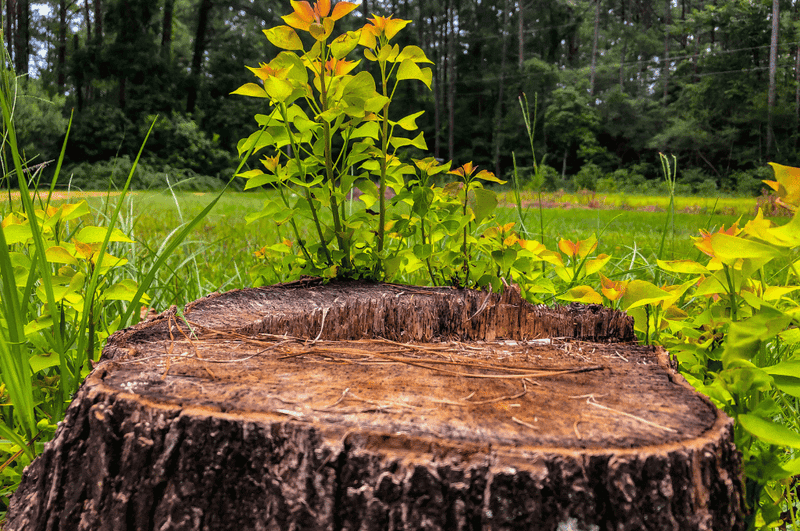
Sawing down a tree feels decisive, yet the roots beneath it are still alive. According to Penn State Extension’s tree-of-heaven overview, an established tree can resprout from the stump and roots after cutting.
Mowing has the same limit: it removes the top growth but leaves the underground parts.
That does not mean cutting is always a mistake, and it does not mean cutting always makes the spread worse. It means cutting alone is not dependable control.
If you remove a trunk and then walk away, you may see a ring of new stems the next season.
Think of the visible tree as only part of the plant. The root system stores energy and can fuel a new flush of shoots.
A planned approach looks at the whole plant, not just what shows above the soil.
Here is a simple example. Say a homeowner cuts a ten-foot tree in March, and by June a dozen shoots stand around the stump.
Those are not new trees from scratch, they are the old plant answering the cut.
If you do cut, treat it as one step and not the finish line. Decide ahead of time what you will do about the stump and the roots, and plan to check the spot regularly.
No single method guarantees eradication, so a plan with follow-up beats a quick removal.
Match treatment to the tree and the site
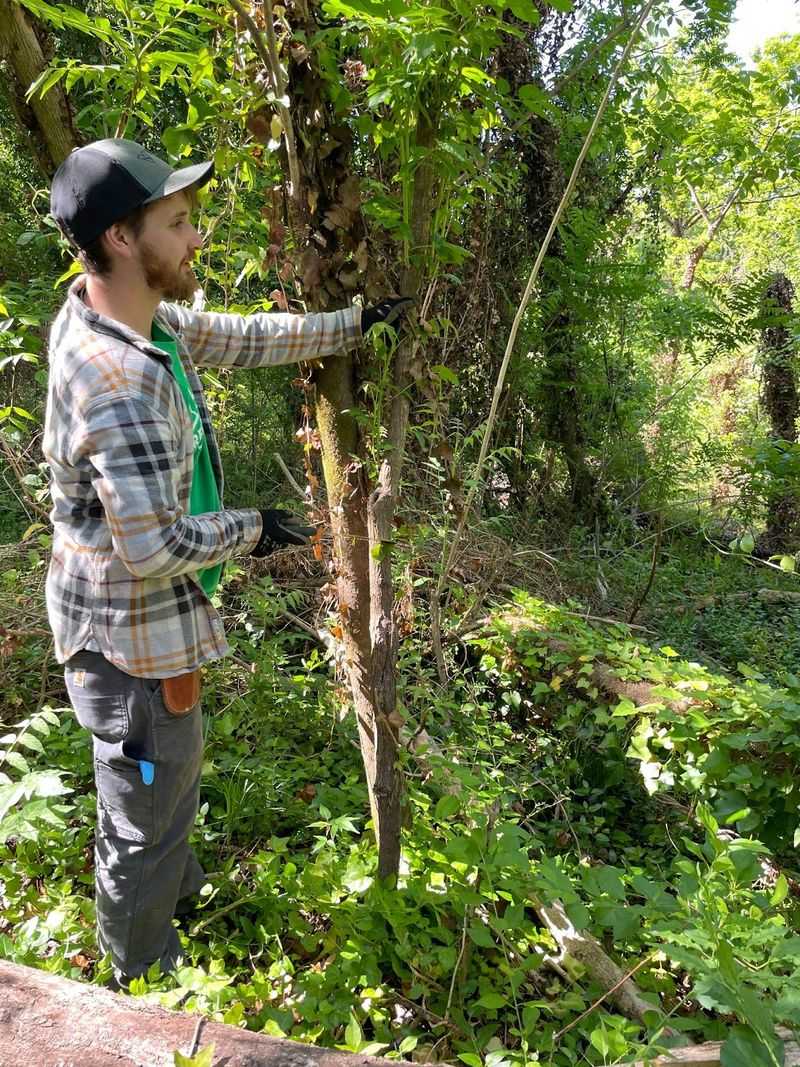
For established trees, university and government guidance generally favors carefully timed systemic herbicide treatment over cutting alone. Systemic products move into the plant and reach the roots, which is where the resprouting power lives.
That is the main reason experts lean on this approach for big, well-rooted trees.
Timing matters, but it is not one date for everyone. Penn State Extension’s tree-of-heaven guidance discusses targeting the roots in mid- to late summer.
The best method and moment still depend on the tree, the site, and the product you use.
Methods differ in how the product gets into the plant, such as applying to bark, treating a cut surface, or injecting the trunk. The Washington State Noxious Weed Control Board describes several options and stresses that treatment should be tailored.
Because those are examples from other places, check what applies in Indiana.
The product label is your rulebook. It tells you which plants and sites the product is approved for, how much to use, and what protective gear to wear.
Following it protects you, your neighbors, and nearby plants you want to keep.
Local help is worth seeking. Your county Purdue Extension office can point you to Indiana-specific advice.
Consider hiring a licensed professional if the tree is large, close to a house, near power lines, or surrounded by valuable plants, since a falling limb or stray spray can cause bigger problems than the weed itself.
Protect yourself and watch for new growth
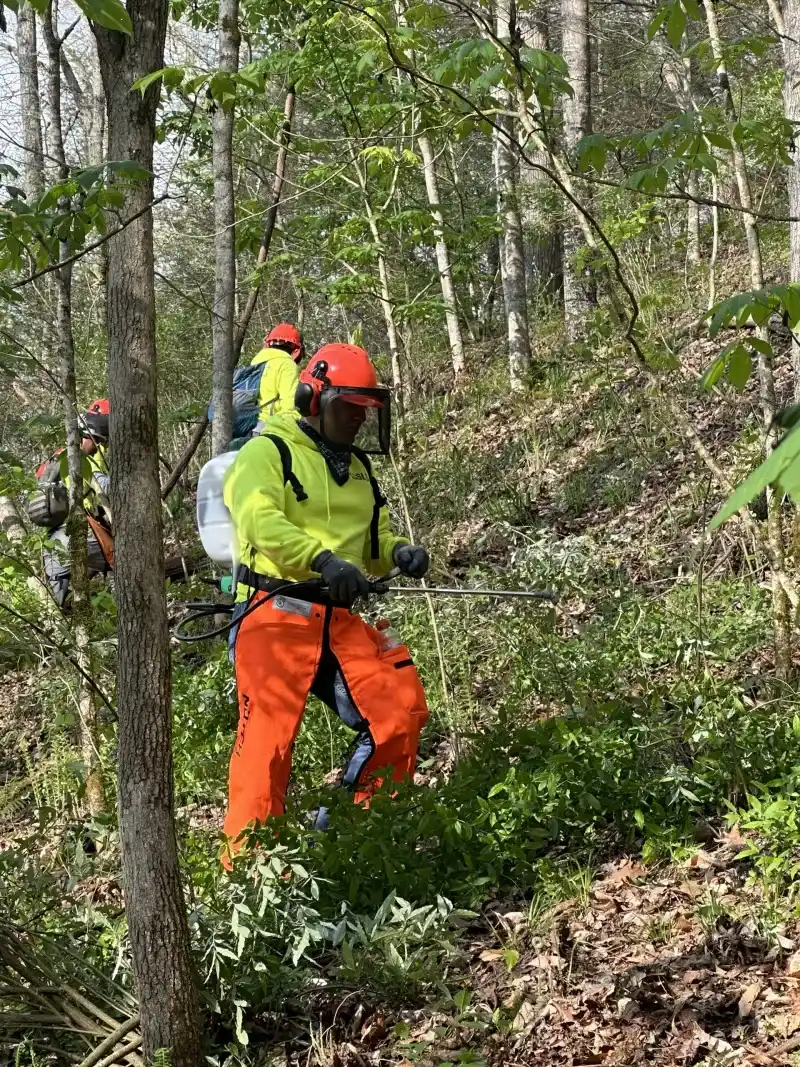
Wear gloves and long sleeves when you handle this plant, and keep sap away from cuts or broken skin. Skin irritation has been reported after contact, so a little protection goes a long way.
Wash up with soap and water after the job, and clean your tools too.
You may have read scarier claims. A 2005 report in the Annals of Internal Medicine, a case of myocarditis linked to Chinese sumac, described heart inflammation after sap exposure.
It is a rare case report and does not show that ordinary contact commonly causes heart problems.
Penn State’s Ask Extension answer on health concerns takes a similar cautious view. Sensible habits, not fear, are the goal.
If you develop a rash or feel unwell after handling it, contact a health professional.
The work does not end when the tree is gone. The Washington State Noxious Weed Control Board advises monitoring treated areas for resprouts and new seedlings over multiple years.
One removal or treatment should not be treated as guaranteed eradication.
A simple routine helps. Walk the area every few weeks in the growing season, look for compound leaves close to the old stump, and deal with small seedlings early while the roots are still easy to pull.
Keeping notes or dated photos shows you whether the patch is shrinking.
Know what Indiana’s plant restrictions cover
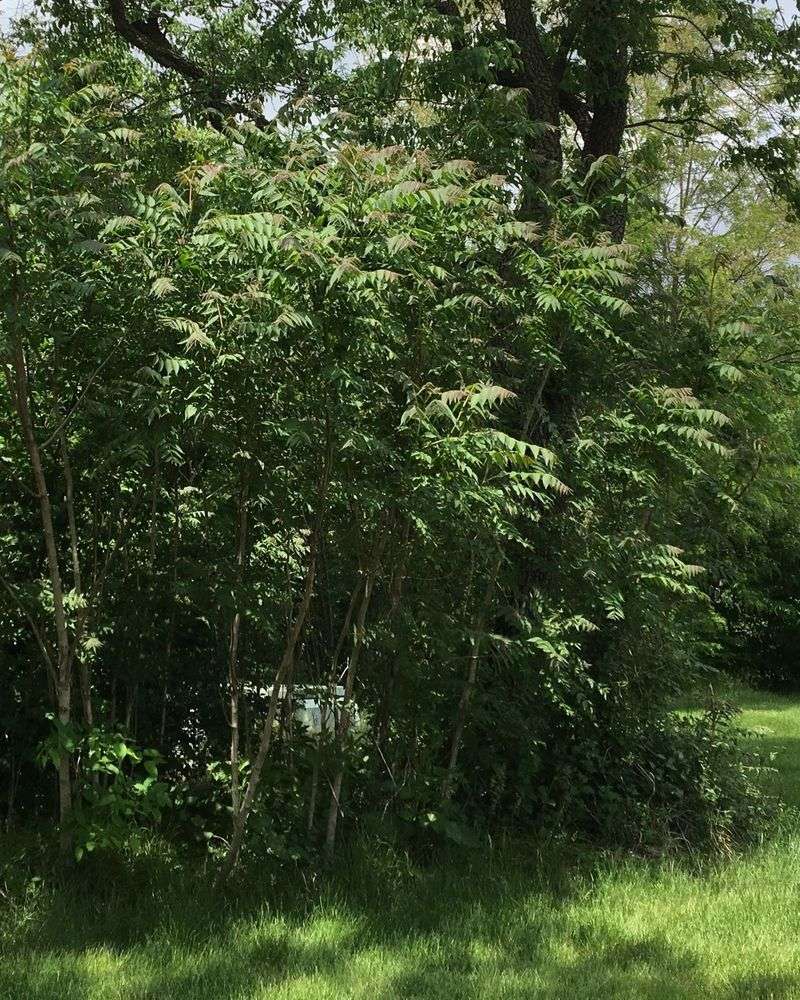
Indiana lists tree-of-heaven as a prohibited invasive terrestrial plant. Under the state rule, 312 IAC 18-3-25, activities such as selling, distributing, transporting, or introducing these plants are restricted, subject to exceptions.
In plain terms, it is aimed at moving and spreading the plant, such as through nursery sales or hauling it somewhere new.
The Indiana DNR page also invites people to report suspected invasive plants. If you find a large patch in a public space or a spot that worries you, that is a reasonable place to start.
What the material cited here does not say is that homeowners must eradicate every tree on private property. If you have one in your yard, the choice about what to do is generally yours, though acting is wise because of how the tree spreads.
Check current state rules or ask your local extension office if you are planning something like a large cleanup, a sale of the property, or hauling debris.
Sources such as Penn State Extension and the Washington State Noxious Weed Control Board are useful for methods, but they are not Indiana law, so use them for practical guidance only.
Confirm the plant first, then plan for years of follow-up. A tree that looks gone often is not, so the patient yard watcher wins.
Share this story