Most people in Louisiana know to watch out for cottonmouths near the water, but they are not the only dangerous snakes that can show up in a backyard. The state is home to seven venomous species, and some of them look a lot like harmless snakes.
Knowing which is which can keep your family and pets safe, and it can also save the lives of helpful snakes that eat rats and mice. Here is a simple guide to spotting each one.
1. Cottonmouth (Water Moccasin)
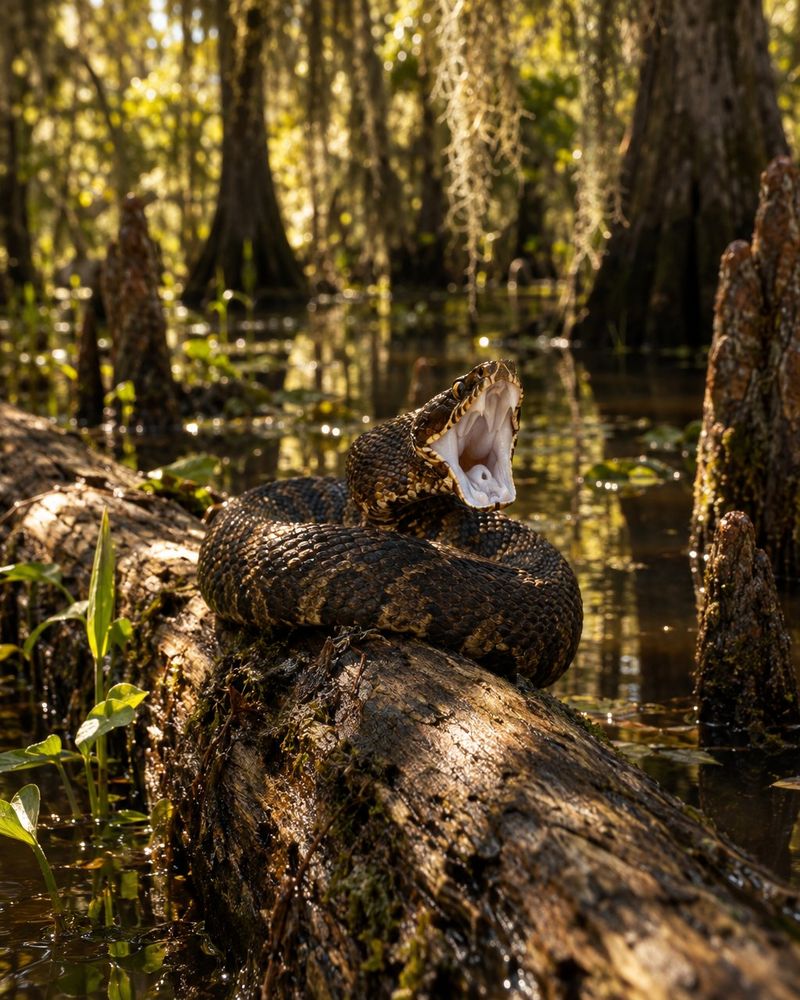
Picture a fat, dark snake sitting on a bayou bank with its mouth gaping open like a white cotton ball. That pose is the cottonmouth’s famous warning, and it is the reason for the name.
Adults are heavy-bodied and often look nearly solid brown, olive, or black. Young ones are a different story, with bold crossbands and a bright yellow tail tip they wiggle to lure frogs.
Look for a blocky head, a dark stripe running through the eye, and eyes with cat-like pupils.
Around homes, cottonmouths hang out near ponds, ditches, drainage canals, and wet spots after heavy rain. Many harmless water snakes get killed because people mistake them for this one.
A quick tip: cottonmouths tend to float high on the water’s surface, while water snakes usually swim with just the head showing.
2. Southern Copperhead
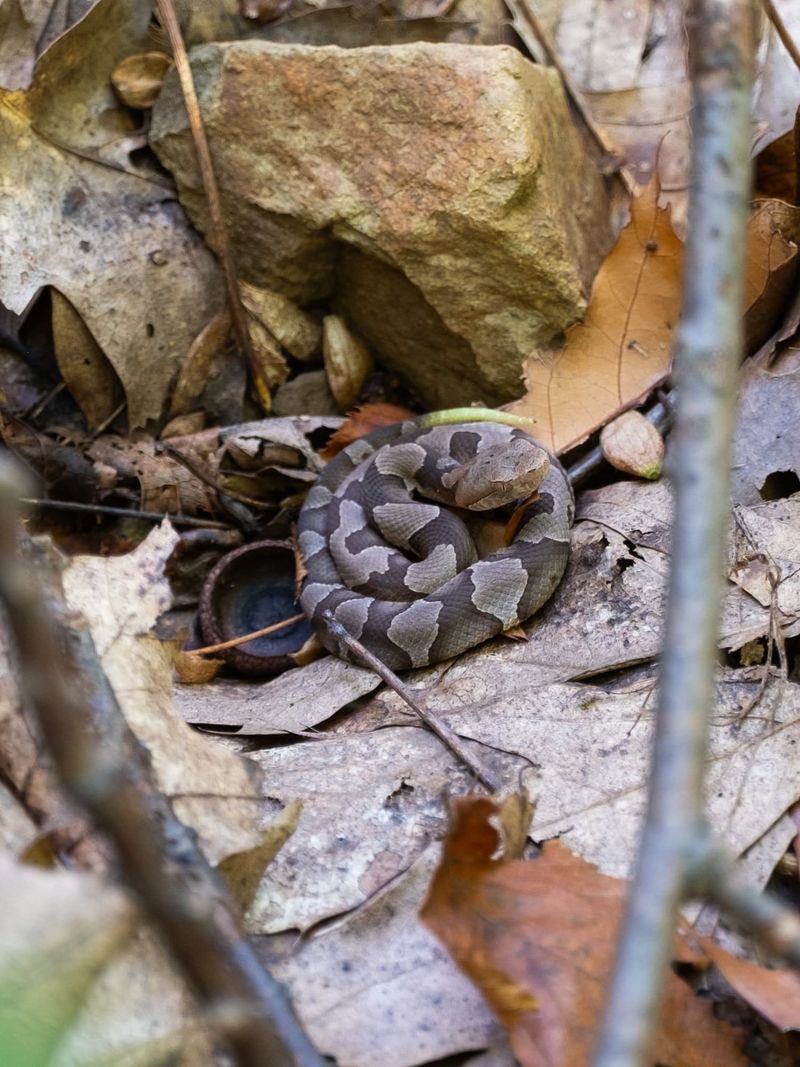
Ever raked a pile of leaves and wondered what might be hiding underneath? In much of Louisiana, the answer could be a copperhead.
Its pattern is the giveaway. Copper and tan bands shaped like hourglasses, wide on the sides and narrow on the back, wrap the body.
Some folks say the markings look like Hershey’s Kisses when viewed from the side.
Copperheads love woodpiles, flower beds, brush, and the edges of wooded lots. They usually freeze instead of fleeing, which is why most bites happen when someone steps on or grabs one by accident.
Wearing gloves and boots during yard work goes a long way.
3. Timber Rattlesnake (Canebrake)
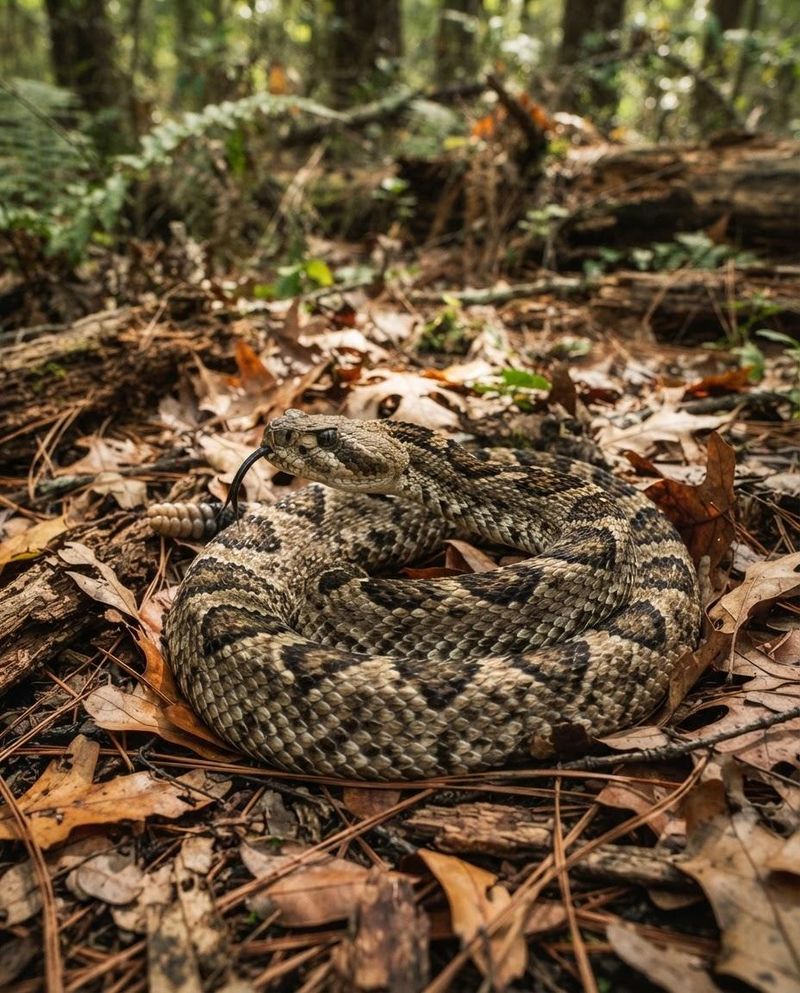
Locals call it the canebrake rattler, and it is one of the biggest snakes you could meet in Louisiana. Some reach over five feet long.
The body is pale gray, pinkish, or tan with dark zigzag bands shaped like chevrons. A rusty stripe often runs down the middle of the back.
The tail is solid black, ending in that unmistakable rattle.
Surprisingly, canebrakes are fairly calm and often stay perfectly still to avoid notice. They prefer forests, river bottoms, and overgrown fields, but homes built near woods sometimes get a visit.
If you hear a buzz, back away slowly and give it room.
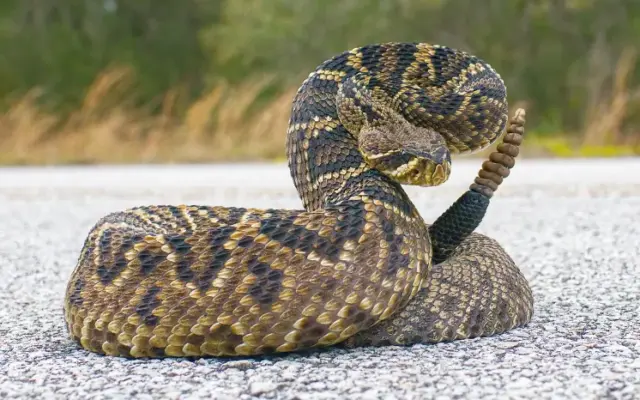
4. Eastern Diamondback Rattlesnake
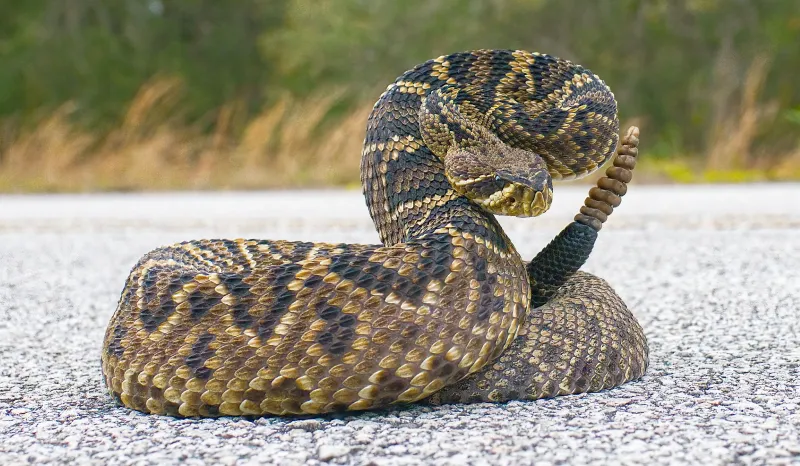
Here is a fun fact: the eastern diamondback is the heaviest venomous snake in North America. In Louisiana, though, it is very rare and found only in the far southeastern corner of the state.
Its pattern is gorgeous and easy to name. Dark diamonds outlined in cream or yellow run down its back, and two light lines slant across each side of the face.
Diamondbacks like dry pine flatwoods and sandy areas, and they have become scarce due to habitat loss. Spotting one is a special event.
Admire it from a distance and call a wildlife professional if it is near the house.
5. Pygmy Rattlesnake
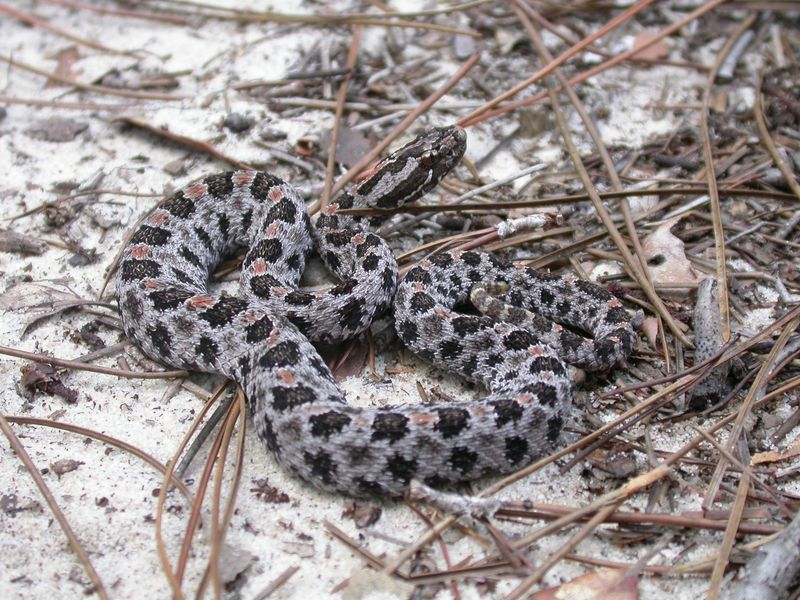
Small does not mean harmless. The pygmy rattlesnake usually stays under two feet long, yet it carries real venom.
Its rattle is so tiny that it sounds like a buzzing insect, and many people never hear it at all. Look instead for a gray body covered in dark round blotches, often with a reddish or orange stripe down the back.
These little snakes turn up in pine straw, garden beds, and near water. Bites are painful but rarely deadly for adults.
Kids and pets are at greater risk, so teach little ones to never poke at a small gray snake.
6. Texas Coral Snake
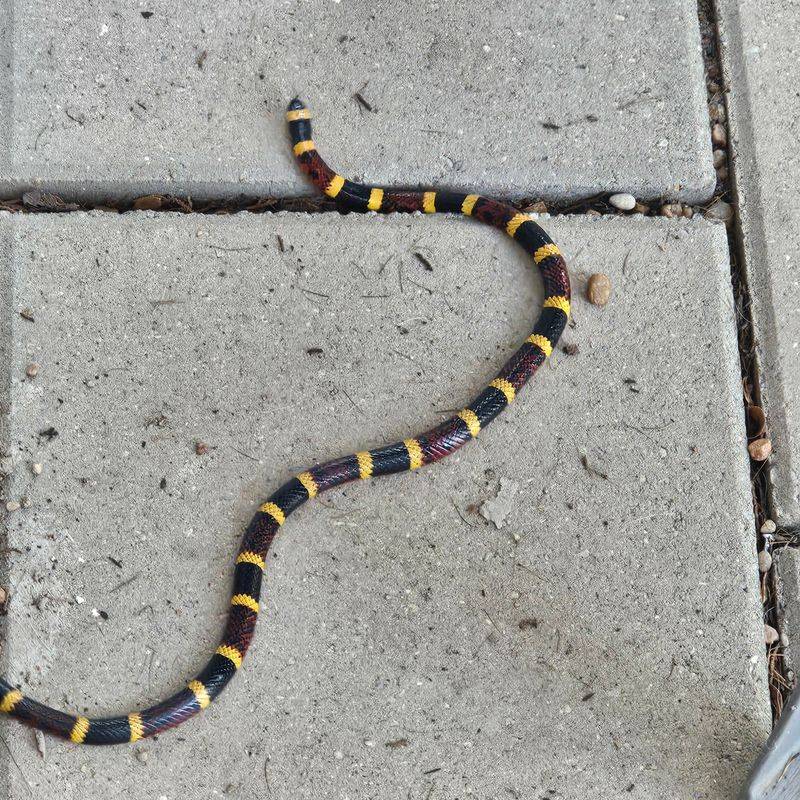
“Red touches yellow, kills a fellow. Red touches black, friend of Jack.” Generations of kids have learned that rhyme, and in Louisiana it works well.
The coral snake is thin and shiny, with wide red and black bands separated by narrow yellow rings. Its snout is black, and its head is small and rounded.
Look-alikes such as the scarlet kingsnake have red bands touching black instead.
Coral snakes spend most of their time hidden in leaf litter and loose soil. They are shy and rarely bite, but their venom attacks the nervous system.
Any bite needs a hospital visit right away, even if it seems minor.
7. Harmless Look-Alikes
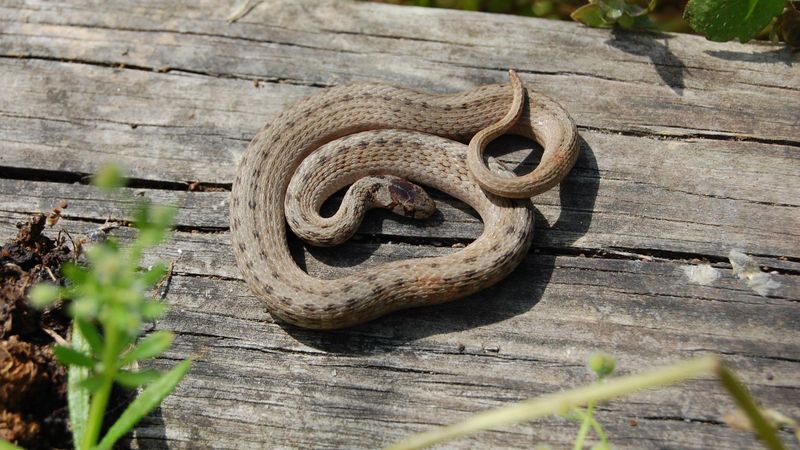
Honestly, the snake in your yard is far more likely to be harmless than dangerous. Louisiana has dozens of nonvenomous species, and many get blamed for crimes they did not commit.
Water snakes are the most common mix-up with cottonmouths. Rat snakes and hognose snakes get mistaken for copperheads or rattlers, and the hognose even flattens its neck and plays dead.
A kingsnake might look scary, yet it actually eats venomous snakes.
When in doubt, keep your distance and snap a photo. Local wildlife groups and extension offices can help with identification.
Leaving harmless snakes alone means fewer rodents and pests around your home.
Share this story