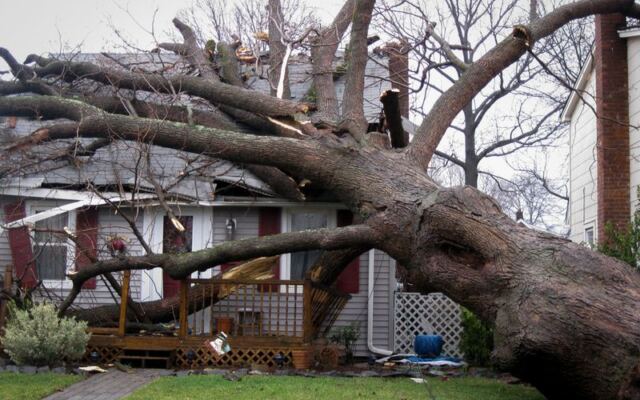
In most cases, your own insurance company is the first place to turn when a neighbor’s healthy tree crashes onto your house or fence. The neighbor usually does not pay just because the tree grew on their land.
That can change if the tree was dead or weak and the owner should have seen the danger. Paying for repairs and paying to haul the tree away are two different questions, and sorting them out early can save you stress and money.
Your insurer generally handles repairs from a healthy tree
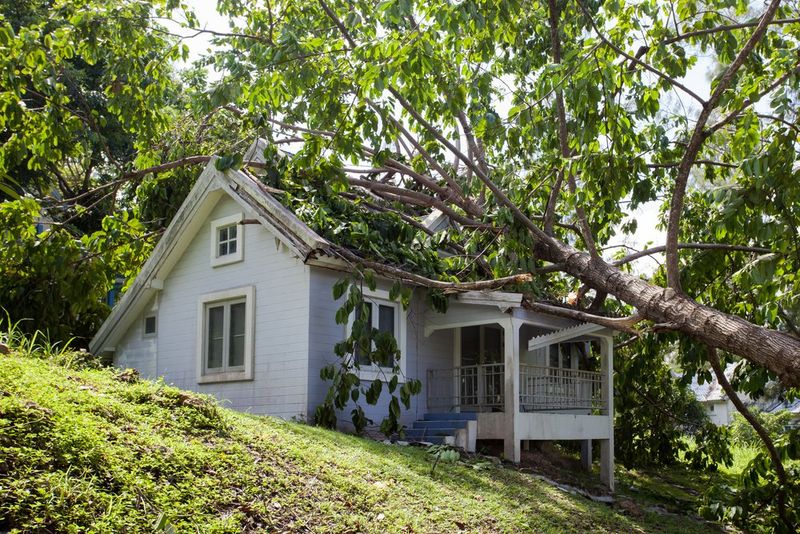
Picture the morning after the storm. A big limb or a whole trunk from next door is lying across your roof or fence, and your first thought is that the neighbor must owe you.
Louisiana Department of Insurance guidance, found in its Post-Disaster Insurance Guide, points the other way for the usual case. When a neighbor’s healthy tree falls, the homeowner’s own insurer generally handles the repairs.
The reason is simple. A tree standing on someone’s land does not automatically make that person responsible for what happens when a hurricane knocks it down.
Wind strong enough to topple a sound tree is treated very differently from a tree that was rotting and waiting to fall.
That is why the tree’s former location, by itself, does not decide who pays the repair bill. Saying the neighbor automatically pays because the tree stood on their property is an unsafe shortcut.
Keep in mind that this is general consumer guidance. It is not a final decision on your individual claim, and your policy language and the facts of your situation still matter.
Some situations can shift responsibility toward the neighbor, especially when the tree was already dead or weakened. The next section explains what those facts look like.
When can a neighbor be liable?
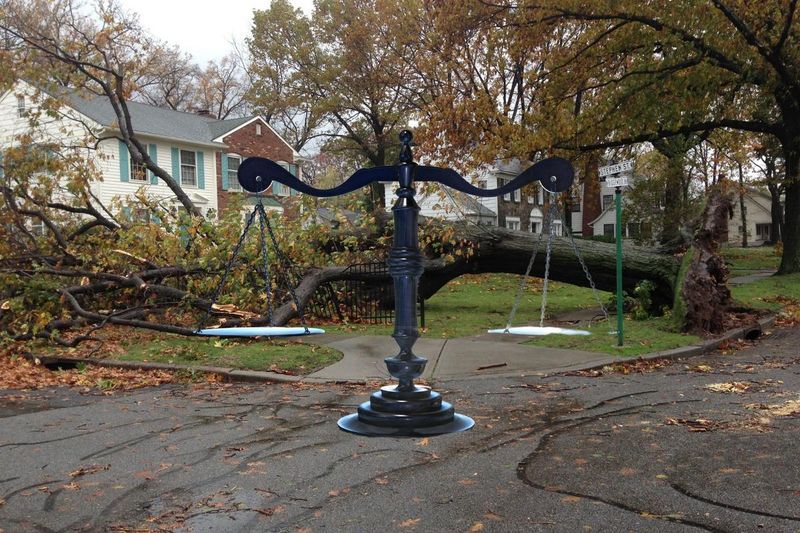
A neighbor may be liable, but the bar is higher than most people expect. Under Louisiana Civil Code article 2317.1, the person bringing the claim must link the damage to the tree’s ruin, vice, or defect.
In plain words, the damage must trace back to something wrong with the tree.
The claimant must also show that the owner or custodian knew or should have known about that defect. On top of that, reasonable care must have been able to prevent the damage, and the owner must have failed to use that care.
All of these pieces matter, and missing one can weaken a claim.
This lines up with the Department of Insurance guidance on dead or weakened trees. If a tree was visibly dying, leaning, or decayed and the owner should have noticed, the picture can look different from a healthy tree that simply lost to the wind.
A hurricane alone neither proves nor defeats neighbor liability. What counts is the tree’s condition before the storm, what the owner knew or reasonably should have known, and whether sensible care could have prevented the harm.
One more caution: how the tree looks after it fell does not by itself show what caused the damage or what the owner knew beforehand. A hollow trunk on the ground may tell part of a story, but old photos, prior complaints, or tree-service records can say more.
Outcomes depend on the specific facts.
The fallen tree raises a separate cleanup question
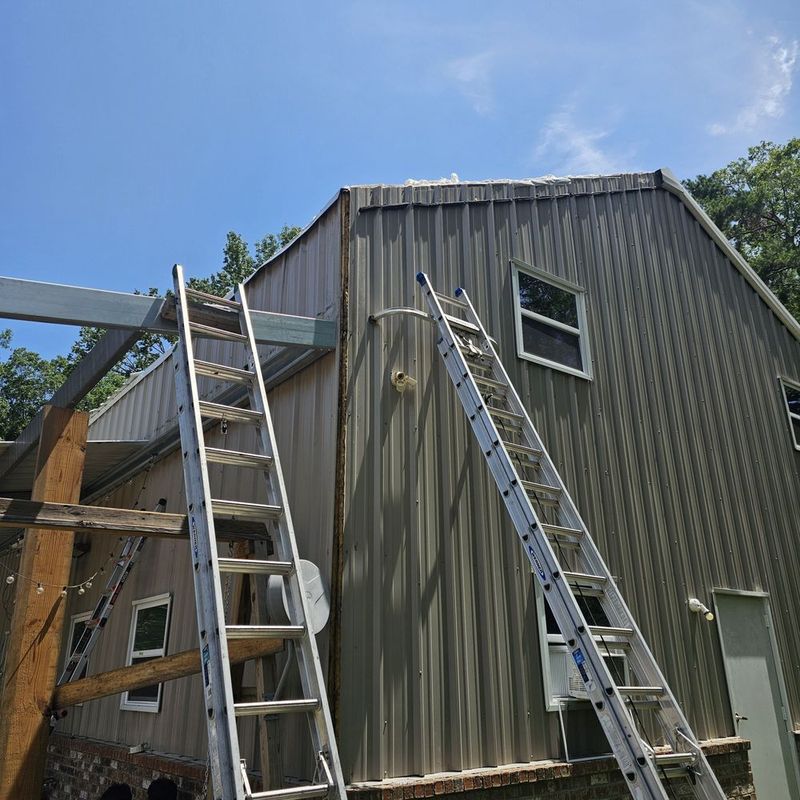
Fixing a smashed roof and hauling off the tree that smashed it are not always the same problem. The Louisiana case Allen v.
Simon shows why. It dealt with a tree that a hurricane left on a neighbor’s property.
The appellate court held that the hurricane did not itself divest the owner of ownership of the tree. It also held that the hurricane did not justify simply leaving the tree on the neighbor’s property.
The court reversed the earlier judgment and remanded the case.
Read the decision narrowly. It does not set a universal rule about who must pay to remove every fallen tree, and it does not tell insurers how to handle claims.
It does not settle every cleanup, liability, or insurance dispute.
What it does show is that removal can be treated as its own question. The storm may explain why the tree fell, yet that does not automatically end the owner’s connection to the tree afterward.
Responsibility for cleanup can depend on the circumstances, the damage, and the policy.
What your policy may cover when a tree falls
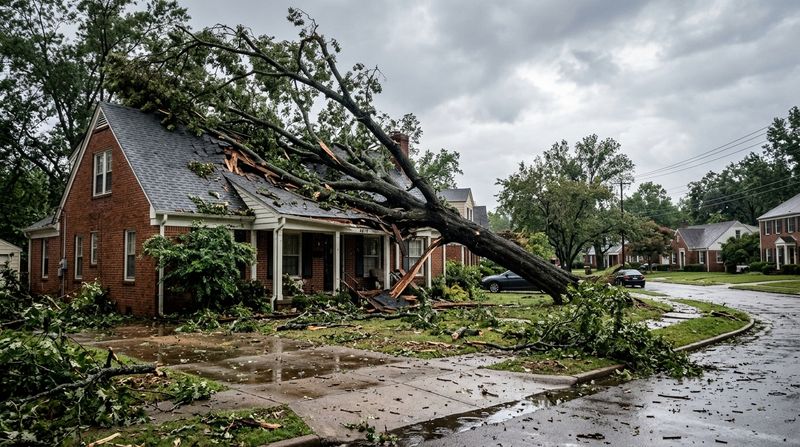
Whether your insurer pays to remove a tree depends on your policy and on what the tree hit. According to the Department of Insurance’s tree guidance, removal is usually covered when a tree damages the insured dwelling.
Removal may also be covered when a tree damages a fence.
A tree that simply lands in the yard is a different story. The same guidance indicates that a tree merely down in the yard, or one blocking a driveway, can be treated differently.
Removal of debris that caused no insured damage may not be covered the way removal of a tree that hit your house would be.
So the three situations are worth keeping apart. One is repairing damaged property.
Another is removing a tree that damaged insured property. The third is removing a tree or debris that caused no insured damage.
Before you assume anything, read your policy and call your insurer. Ask about removal limits, exclusions, and your deductible.
Ask specifically whether a separate hurricane deductible applies, because it can change how much you receive.
No guide can promise a result. Policy terms vary, and two neighbors with similar trees can end up with different outcomes.
Document the damage before cleanup
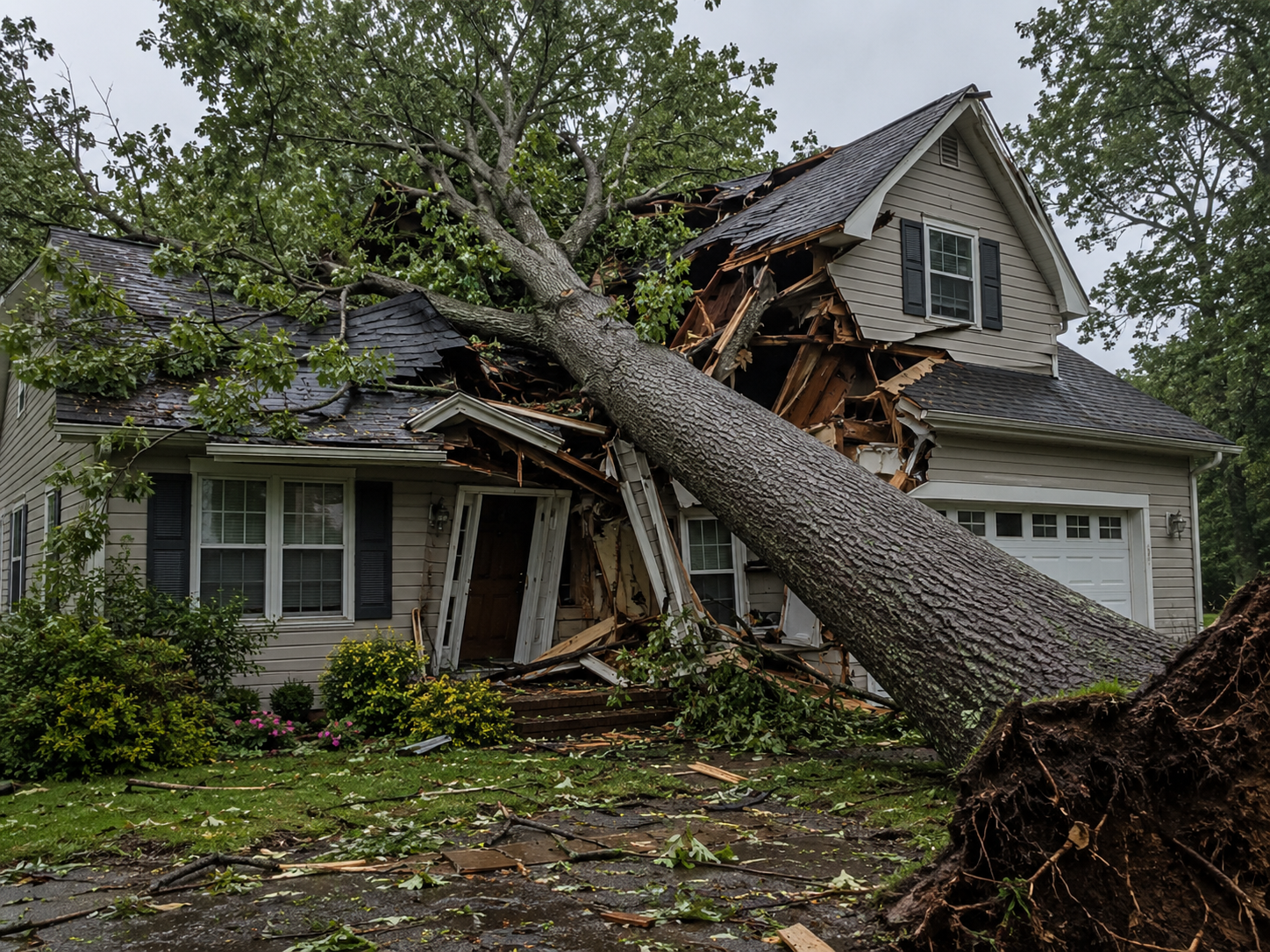
Before anyone drags a branch away, take pictures. The Department of Insurance’s storm recovery guidance recommends photographing or videoing damage before cleanup.
Wide shots show the whole scene, and close-ups capture the roof, fence, siding, or whatever else was hit.
Next, make only the temporary repairs needed to prevent further damage. A tarp over a hole or boards over a broken window are examples.
Keep every receipt, since those costs may be part of your claim.
Then contact your insurer and start the claim. Writing down the date, the claim number, and the name of the person you spoke with makes later follow-up easier.
Photos are also useful if a question about the neighbor’s tree comes up later. Pictures of the trunk, the roots, and the spot where it broke can help show its condition.
Stay at a safe distance while you take them.
Good records support a claim, but they do not guarantee coverage and they do not decide legal liability. Think of them as preserving the facts while the claims process begins.
Stay clear of wires and dangerous tree work
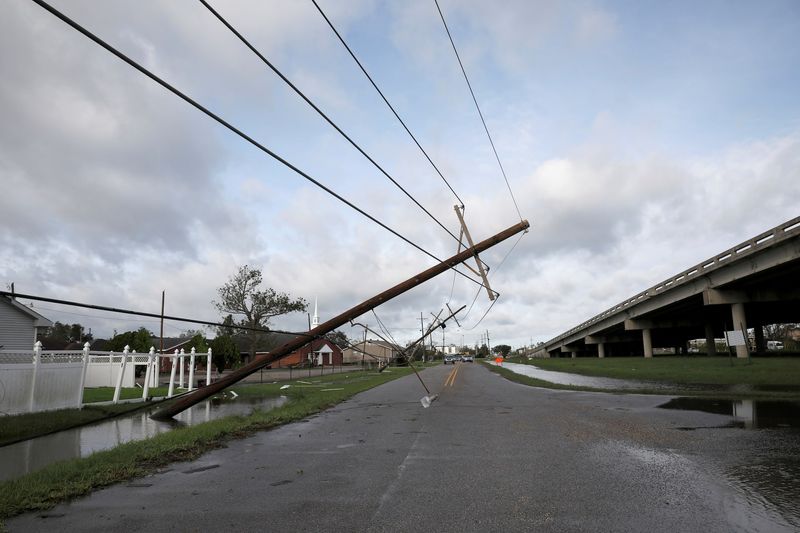
Some jobs are not worth the risk, and anything involving power lines tops the list. OSHA’s guidance on downed electrical wires warns that lines can remain energized.
They can also energize nearby trees, fences, and other objects.
That means you should never approach a downed wire. You should also never cut a tree that is tangled with one, even if the tree looks like it is just resting on the ground.
If wires are involved, keep people and pets back and call the utility company.
Overhead work carries its own dangers. LSU AgCenter advice is to leave large hanging limbs and overhead chainsaw work to a professional arborist.
A cracked limb can drop without warning.
Skipping the do-it-yourself approach also protects your claim. Waiting for a qualified professional costs time, but injuries and new damage cost far more.
Keep the repair bill and cleanup bill separate
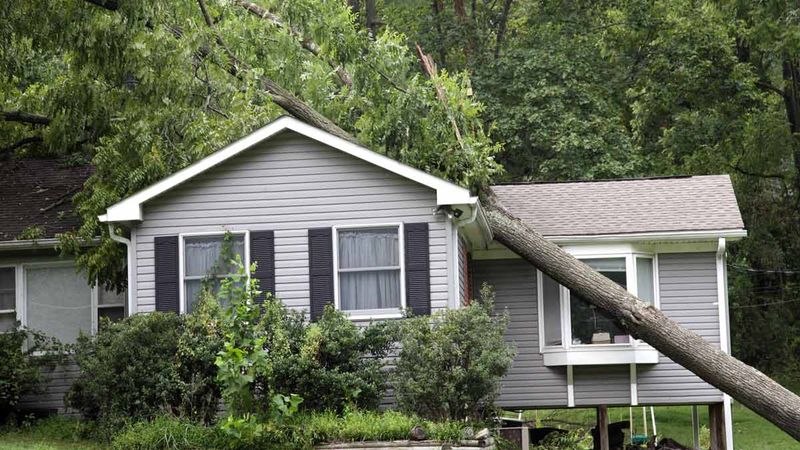
Think of two bills. Your insurer generally starts the repair claim, as the Department of Insurance guide explains.
Neighbor liability depends on evidence of a tree defect and the owner’s conduct, and cleanup needs its own look, as Allen v. Simon suggests.
Check your policy, call your insurer, and let the facts guide the next step. Results will vary.
A storm may bring down a tree in a minute, but who pays is decided on paper.
Share this story