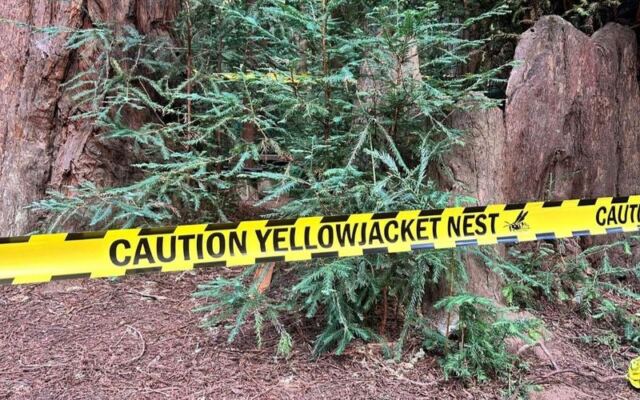
Keep people and pets away from the nest, and do not poke, block, or disturb it. If the nest sits where you walk, play, or work every day, or if it is inside a building, call a licensed pest professional or check with your local mosquito and vector control district.
If everyone can easily stay clear of a nest far from daily activity, leaving it alone may be a reasonable choice. Here is how to sort out which situation you are in and what to do next.
First make sure it is a yellowjacket nest
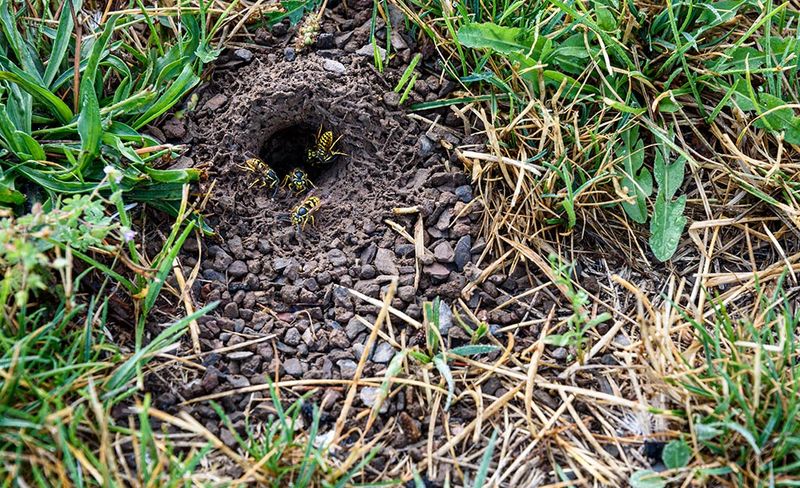
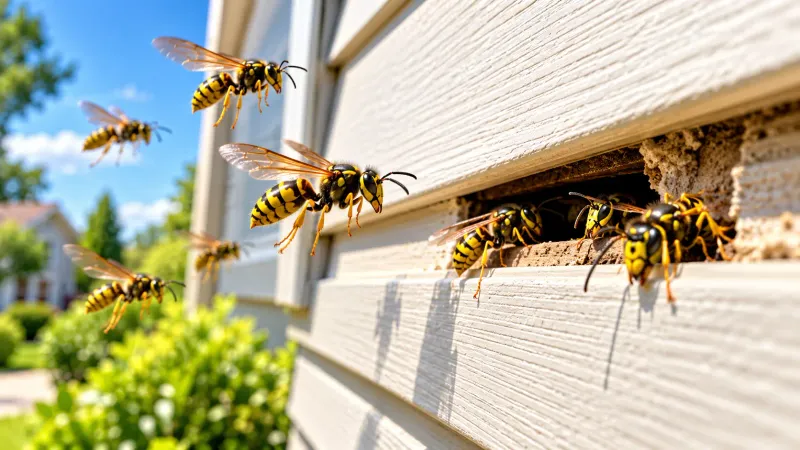
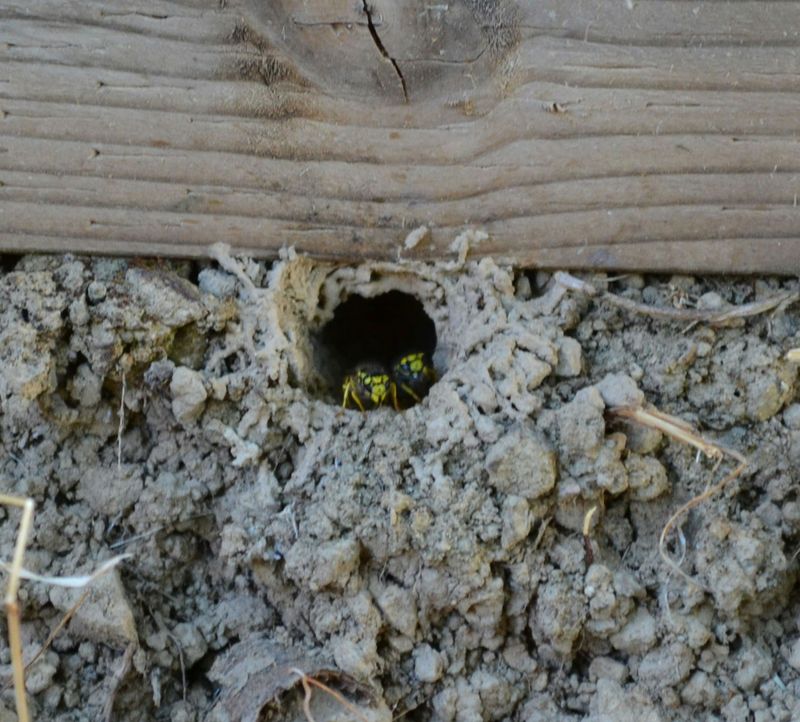
Start by watching, from far away. Wasps flying again and again to and from one spot, such as a small hole in the ground or a crack in a wall, often mean a nest is there.
Spotting that steady traffic is usually the first sign homeowners get.
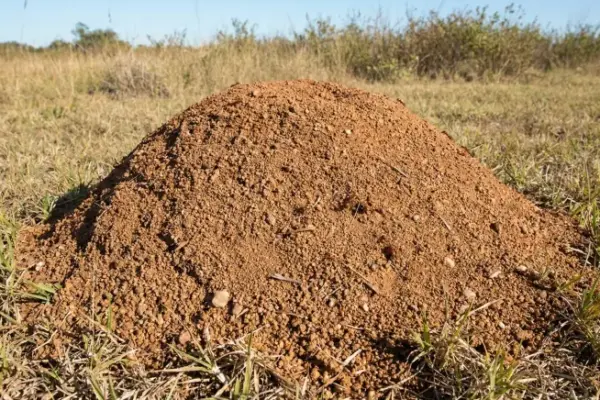
Yellowjackets commonly nest underground, and they also build inside wall and ceiling cavities, according to UC Statewide IPM Program guidance. Because the nest is hidden, you may only see the entrance and the workers coming and going.
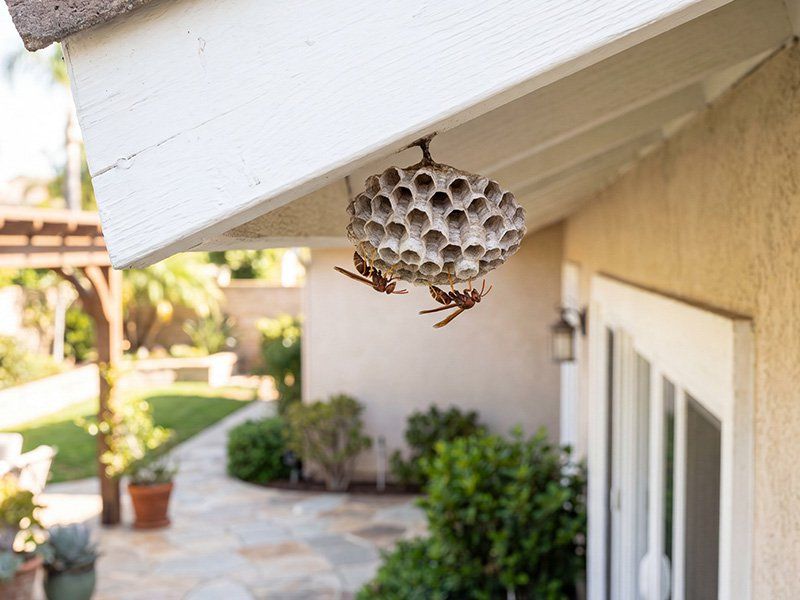
A nest hanging in the open is a different story. Exposed, open-comb nests under eaves may be paper-wasp nests rather than yellowjacket nests.
Paper wasps are generally less defensive, and the way you manage them differs, as the California Department of Pesticide Regulation wasp infographic explains.
Resist the urge to get closer for a better look. Observe only from a safe distance, and keep children and pets inside while you do.
If you cannot tell what kind of nest it is, that is fine. Write down where it is, what the entrance looks like, and when the wasps are most active, then pass those details along to a professional instead of approaching.
Keep people and pets away
Once you suspect a nest, the first move is simple: give it space. Tell everyone in the household where it is, and keep dogs, cats, and kids out of that area.
Leashing pets near the spot and closing a gate or setting up a cone-free route around it can help.
Yellowjackets defend their nests, and the defense can be fast and intense, as UC IPM explains. Vibration from a mower, a trimmer, or footsteps close to a ground nest can set them off, so skip yard work around the area.
Do not poke the nest, dig it up, spray it, or block the entrance. Each of those can trigger an angry response, and wasps flying around an entrance may stay active for a while afterward.
There is a big difference between watching and inspecting. Watching from across the yard, perhaps through a window, is safe and useful.
Walking up to peek at the entrance, or tossing something at it to see what happens, is inspecting, and it is how many stings happen. If you need to know more, let a professional do the close work.
Decide whether the nest can stay
The question is not how many feet the nest is from the house. The better question is whether people and pets can reliably avoid it.
There is no universal safe distance from a nest, so judge it by your daily routine.
A nest in a far corner of the yard, away from paths and play areas, may be fine to leave alone. Social wasps also prey on pest insects, and UC IPM even suggests encouraging them in areas with little human or animal activity, as noted in its yellowjacket guidance.
A nest near a doorway, walkway, play area, pet space, or any spot you must use is another matter. If you cannot avoid the area, plan to get help.
You may be tempted to wait for winter. Colonies usually last just one season, but some can survive for several years in very mild winters, including coastal California south of San Francisco.
Do not count on every nest disappearing on its own.
A quick test can help: picture a week of normal life. If the mail carrier, a child, the dog, or you will pass by the nest, it probably needs attention.
Find help that handles your nest type
If the nest threatens an area you have to use, reach out to a licensed pest professional. You can also check whether your local mosquito and vector control district handles your type of nest.
UC IPM lists professional help as the safest route.
District services depend on local rules and nest type, so never assume a district will treat any nest. The Contra Costa district, for example, treats ground nests but not nests in structures.
The Marin/Sonoma district lists similar limits.
Those two are only examples. Your area may have different rules, and a district may ask you to find and mark a ground nest yourself.
Marking should be done from a safe distance, so ask what they want before you go near it.
Before relying on district service, call or check the website and confirm that your nest type and address qualify. Have your notes ready: where the entrance is, how busy it looks, and who uses the nearby space.
If the district cannot help, a licensed pest company is your next call.
Get professional help for a nest inside a building
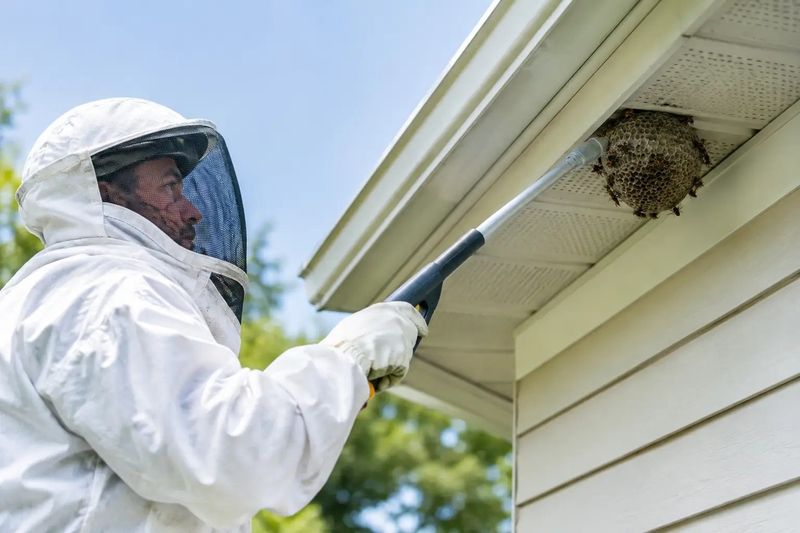
Wasps coming and going from a wall, ceiling, or attic is its own situation. The nest may be hidden and out of reach, which makes it a job for someone trained and equipped for it, as UC IPM notes.
Many people think the quick fix is to plug the hole. Please do not.
An active entrance should not be sealed, because trapped wasps may enter the building or find another route. Virginia Cooperative Extension warns that yellowjackets in wall voids may chew another path into living space.
Leave the opening alone until the colony is confirmed inactive and the situation has been addressed by a professional.
Meanwhile, keep an eye on interior walls and ceilings for wasps appearing indoors, stains, or buzzing sounds, and keep that room closed off if possible. Tell the pest company what you have seen, including where the outside entrance is.
Also remember that some local districts do not treat nests inside structures, so a licensed pest company is often the right first call.
Reduce food attractants while you wait
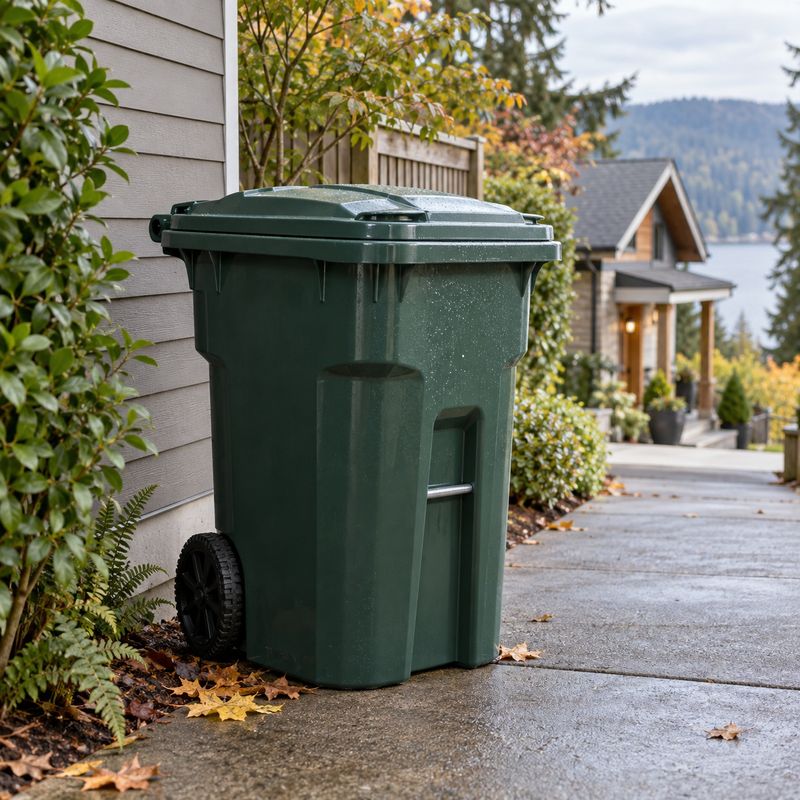
Waiting for help can take days, and a few small habits make your yard less appealing in the meantime. They will not remove a nest, but they can cut down on wasps hanging around your meals.
Keep outdoor food and drinks covered, and bring pet food inside after feeding. Wipe up spills, especially sweet drinks and fruit juice.
Use garbage cans with tight lids, and rinse recycling before it goes outside. These steps are recommended in UC IPM Quick Tips.
Traps are a more limited tool. They may reduce some foraging workers locally, but they do not reliably eliminate a colony, and common lures attract some species more than others, according to UC IPM’s yellowjacket page.
If you use one, place it well away from people and from the active nest, so you are not drawing wasps toward the places you use. The California Department of Pesticide Regulation also stresses preventing access to food as part of wasp management.
Avoid risky do-it-yourself treatments
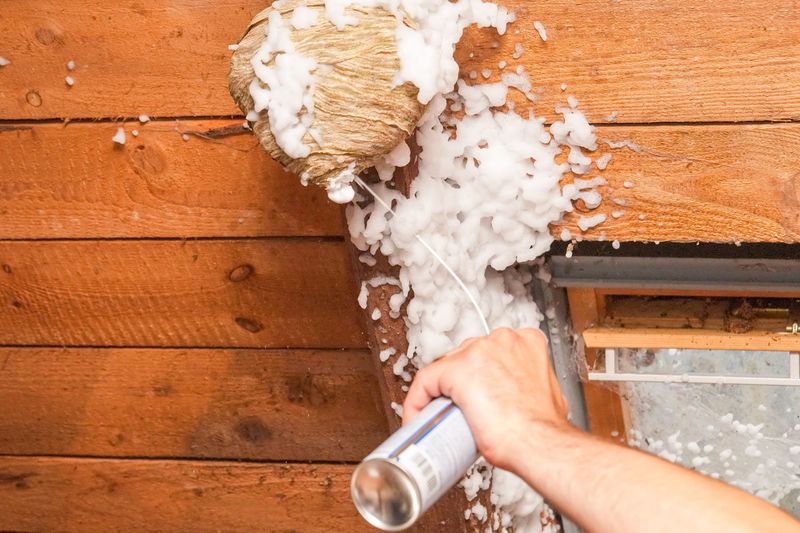
Plenty of online advice sounds confident and is dangerous. Spraying at night, for example, does not make you safe.
Nighttime does not eliminate sting risk, and UC IPM warns that wasps may still emerge and sting during or after treatment, and agitated wasps may linger around the entrance, per its yellowjacket guidance.
Some shortcuts are far worse. Gasoline, fire, and smoke can start fires and injure people, and burying a ground nest does not work as a home treatment.
Virginia Cooperative Extension advises against these methods. Blocking an active entrance is also a bad idea, since wasps can find another way out, sometimes into your home.
If anyone uses a pesticide, the product must be labeled for the intended use and applied according to its label. Federal law prohibits use inconsistent with the label, as the EPA’s labeling Q&A explains.
That is why a licensed professional is often the better choice. They know the products, the protective gear, and the right way to handle a nest without turning a bad situation into an emergency.
Recognize when a sting is an emergency
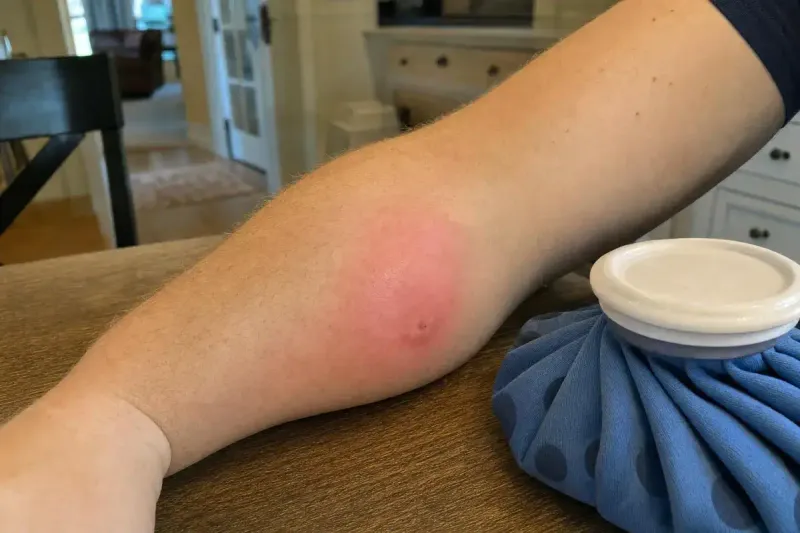
Most stings hurt for a while and then settle. Even so, outcomes vary.
Some people have severe allergic reactions, and many stings at once can cause complications, as described by UC IPM on bee and wasp stings. A mild reaction once does not guarantee the next one will be mild.
Get immediate medical care for trouble breathing, swelling of the throat or tongue, dizziness, or other signs of a severe allergic reaction. Multiple stings also deserve medical attention.
If you or someone in your home has a known severe sting allergy, follow the emergency plan prescribed by your doctor. The American College of Allergy, Asthma & Immunology advises using prescribed epinephrine and calling 911 at the first sign of anaphylaxis.
This article cannot tell you how any one person will react, so when in doubt, ask a medical professional. A nest is a problem you can fix later.
A reaction that closes the airway cannot wait.
Share this story