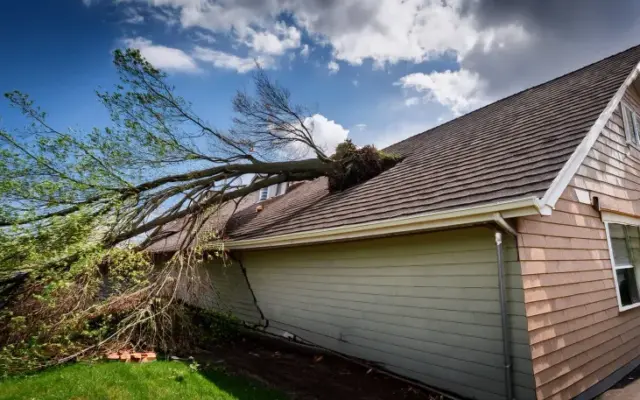
In Pennsylvania, a neighbor is not automatically on the hook just because the fallen tree grew on their land. What matters most is whether the neighbor was careless about a danger they could have spotted.
If that can’t be shown, you may end up arranging and paying for the cleanup yourself, though your own insurance might help with some damage. Here is how to sort out the likely path without losing your footing.
The tree’s origin does not settle who pays
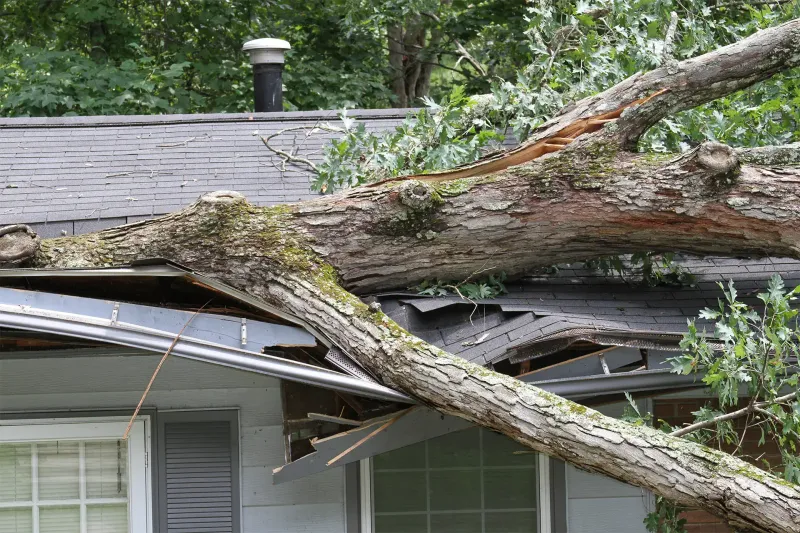
Owning the tree does not, by itself, make a neighbor responsible. Pennsylvania’s 2025 Municipal Deskbook explains that liability turns on tort law, and that an apparently healthy tree falling in a storm is unlikely to create liability for its owner.
The key question is negligence. A neighbor may be responsible if the facts show they failed to use reasonable care about a dangerous condition.
Barker v. Brown, a Pennsylvania Superior Court case about a tree falling onto neighboring private property, is the main example courts look to.
It helps to separate two issues. One is who may owe money for damage the tree caused.
The other is who has to get the trunk out of your yard.
If negligence is not established, the homeowner whose yard holds the debris may need to arrange and pay for removal. That is a practical possibility that follows from how negligence works, not a blanket statute that assigns every fallen tree to the property where it landed.
No one can promise how your situation will turn out. The details of the tree, the neighbor, and the weather all matter.
What could the tree owner reasonably have known?
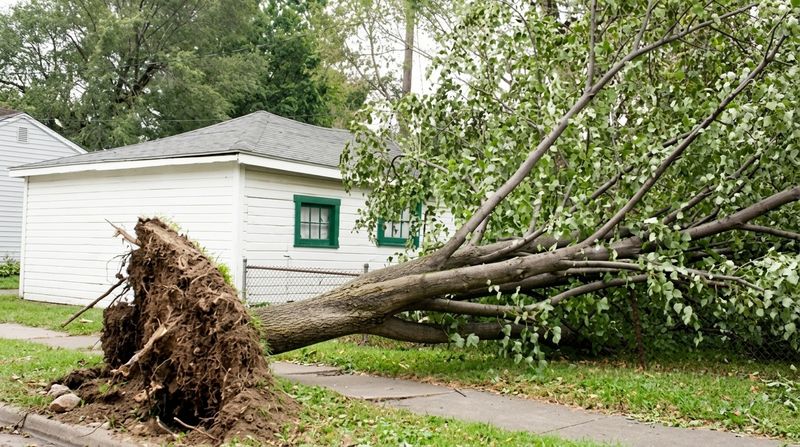
Courts ask what a careful owner would have noticed. Under Barker, an owner of a tree in or near a developed residential area may be liable if reasonable care would have revealed a dangerous defect and allowed the owner to fix or address it.
A visual inspection is part of that standard.
That is not a set inspection schedule, and it does not require every owner to hire a professional arborist. It simply asks whether the problem could have been seen and handled.
A storm may explain why a tree fell, but it does not automatically excuse the owner. The tree’s condition, what was reasonably knowable beforehand, and the circumstances can all matter.
At the same time, a tree that looked healthy and went down in a violent storm is unlikely to lead to owner liability, as the Municipal Deskbook notes.
You may have heard about Harris v. Felouzis, decided in February 2025.
That case involved a large tree on a steep hillside above a busy public highway, and the majority treated the dangerous condition and foreseeability as questions for a jury in that setting.
It was not a strict liability ruling, and it expressly distinguished Barker’s neighbor-property facts. It does not create an automatic rule for an ordinary tree that lands in a neighbor’s yard.
Evidence can help establish notice and condition
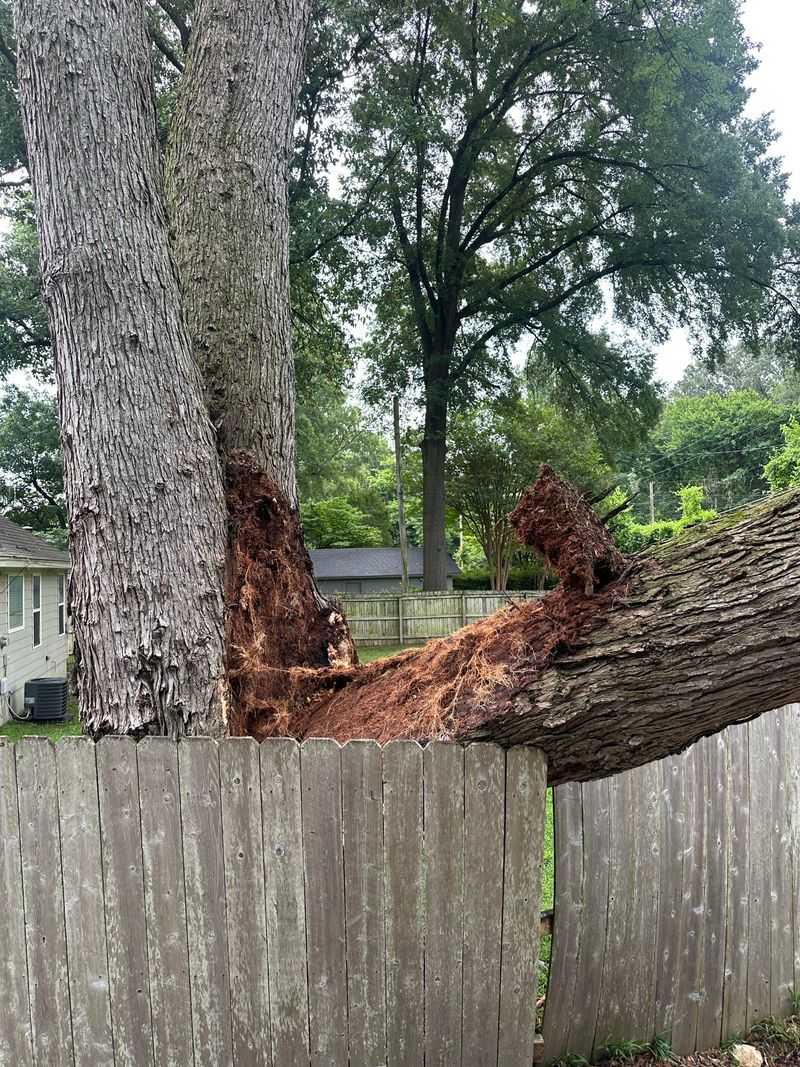
Good records can make a big difference later. Under Barker’s approach, the issues are whether a defect was visible and whether the owner knew or reasonably should have known about it.
Photos are a strong place to start. Take pictures of the stump, the broken trunk, and any visible decay, rot, cracks, fungus, or earlier damage.
Older photos that show the tree’s condition before the fall, such as pictures taken for other reasons, may also help.
Written warnings can matter too. If you or anyone else ever sent the neighbor a letter, email, or text about a leaning, dead, or damaged tree, keep a copy along with the date.
Where it makes sense, a qualified arborist can assess the remains and explain whether signs of decay were likely visible. That is a choice, not a requirement, and it may cost money.
Think of all of this as potentially useful evidence. It can help clarify what happened, but it does not guarantee that anyone will be found liable.
Make the scene safe before handling the tree
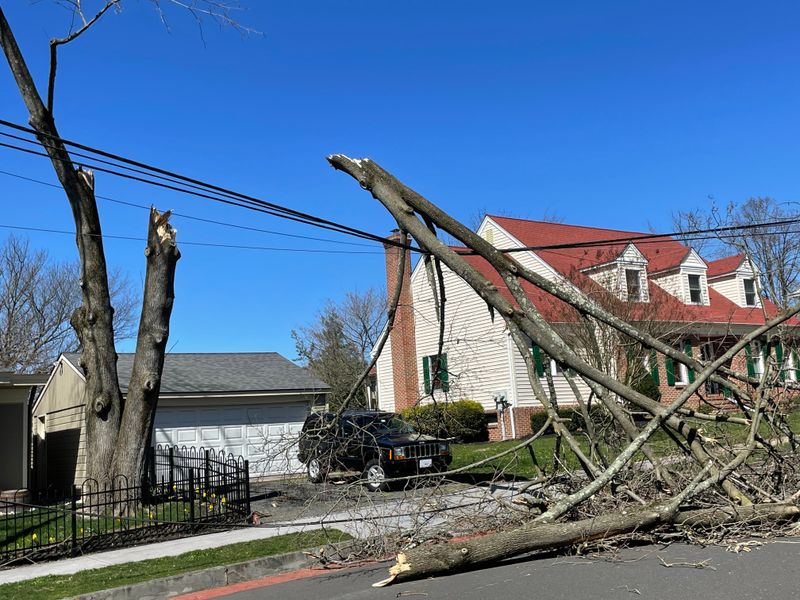
Safety comes ahead of any argument about blame. The Pennsylvania Public Utility Commission has storm safety guidance that says not to approach downed power lines and not to remove limbs from power lines.
If a line is down or the situation is otherwise hazardous, call 911 and then the utility. Keep children and pets well away from the area.
Trees that are damaged by storms can be dangerous in ways that are easy to miss. Penn State Extension warns that storm-damaged trees and hanging limbs can shift unpredictably.
Do not try to cut or pull down a hanging, bent, or unstable limb yourself. For dangerous removal work, hire a qualified professional such as a certified arborist.
Take photos from a safe distance before anything is moved, so your records show how things looked right after the fall.
Will your insurance pay for the damage or the debris?
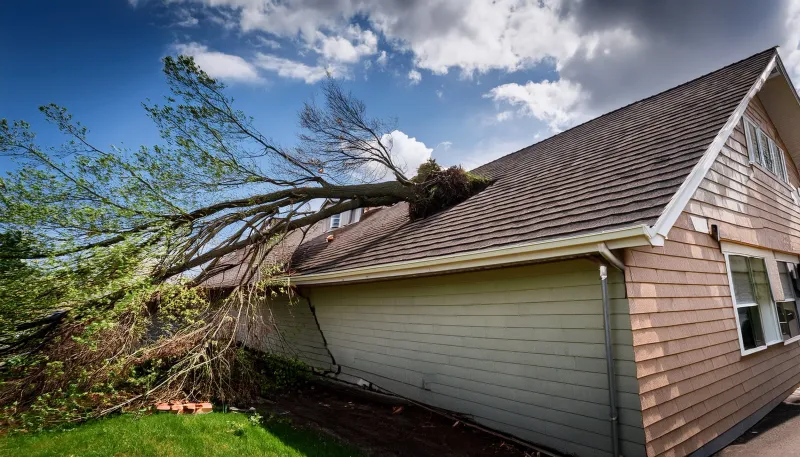
A claim against your neighbor and a claim on your own policy are two separate paths. Your homeowners insurance may cover certain damage whoever owned the tree, subject to the terms of your policy.
According to the Insurance Information Institute, standard coverage generally applies when a fallen tree damages an insured structure, such as your house or a fence or shed that your policy covers. Debris removal is often limited, and it may not be covered if the tree only lands in the yard.
Coverage and removal limits can depend on whether an insured structure was damaged, whether access was blocked, and the specific policy. Some policies offer limited help when a tree blocks a driveway or an accessibility ramp.
Insurance will not necessarily pay just because the tree came from someone else’s land.
Read your policy and call your insurer promptly. The Pennsylvania Insurance Department advises photographing or videoing damage before cleanup and saving receipts.
It also suggests avoiding permanent repairs until the insurer approves them. Do not delay urgent steps needed to protect people or prevent more damage, such as covering a hole in the roof.
A road hazard may involve different local rules

Not every fallen tree is a private matter. When a tree or its debris sits on or over a road, or otherwise creates a public-safety hazard, different rules may apply.
The 2025 Municipal Deskbook notes that road maintenance responsibilities vary. It also says local authorities may require abutting owners to remove trees or obstructions that create traffic hazards.
That means the guidance for a tree lying in a backyard should not be applied automatically to a tree across a street, sidewalk, or driveway entrance. Whether the road belongs to the state, county, or township can change who handles the problem.
If traffic is at risk, call 911 first. After that, contact the relevant local authority, such as your township or borough office, to find out who is responsible and what you may be asked to do.
Start with safety, evidence, and your policy
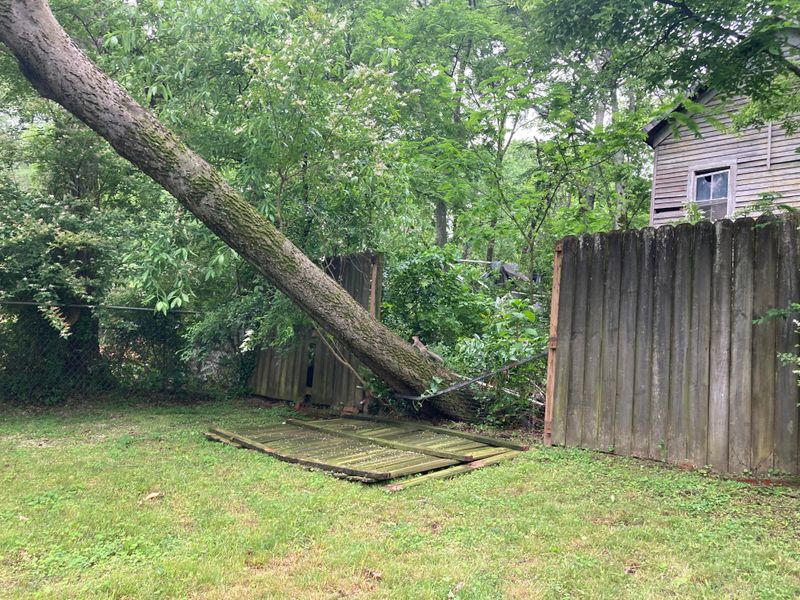
Begin by keeping everyone away from hazards, then photograph the scene and gather anything that shows the tree’s condition. Next, read your policy and call your insurer.
Tree ownership alone does not decide liability under Pennsylvania’s negligence framework. The tree’s condition and what could reasonably have been known may matter, while insurance terms vary.
Do not assume either your neighbor or your policy will cover the bill. The best outcome often starts with careful notes and a polite conversation.
Share this story