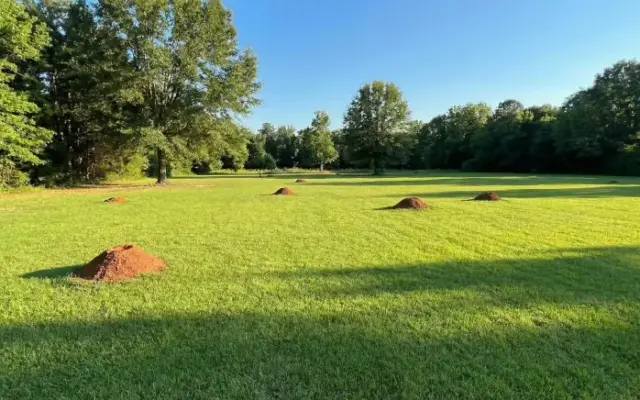
A fresh pile of soil in your lawn after rain tells you one thing: something has been moving dirt up from below, and ants are a likely suspect. Some ant species rebuild or reshape their nest entrances after wet weather, so a new mound can be a sign of that busy work.
But the pile alone cannot tell you whether the nest flooded, whether your grass is in trouble, or even which insect made it. Knowing what the mound can and cannot say helps you decide if you need to do anything at all.
What a fresh soil pile can tell you

Ants live in underground colonies, and they push soil up and out as they dig and tidy their tunnels. That means a fresh pile can point to excavation or upkeep near a nest entrance.
Given enough time and the right conditions, that soil can build into a visible mound in the lawn.
That is about as far as the pile can take you. It is a clue, not a full story.
It does not tell you that the nest flooded, that the ants are hurting your grass, or that a dozen more mounds are about to pop up across the yard.
Wet spring weather can happen at the same time as more visible mound activity, which is part of why people connect the two. Iowa State Extension guidance on ant mounds treats mounds as something to evaluate, not an automatic emergency.
Soft, rain-dampened soil is simply easier to move and easier to notice.
Purdue Extension says ants can actually help turf by controlling some insect pests, and that treating a lawn for ants is rarely advisable. Purdue’s ant publication is a good starting point if you want the Indiana-based view.
So the first step is not a spray or a shovel. It is simply figuring out what made the pile, then asking whether it causes any real trouble.
The next sections walk through how to do both.
Some ants reshape entrances after rain
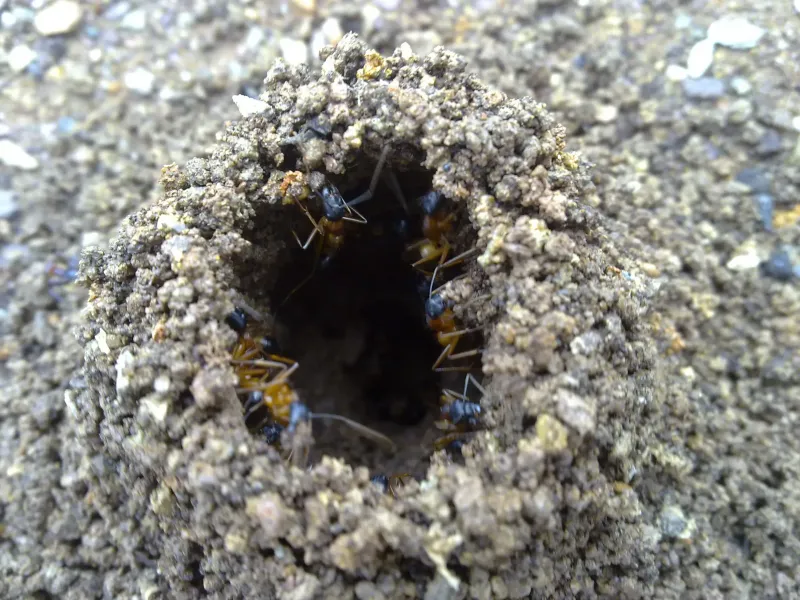
Scientists have documented ants rebuilding or reshaping their nest entrances after rain, but only in particular species and places. In one study, a tropical Indian ant built up its nest entrances after mild rain.
That peer-reviewed study of an Indian ant found the change followed water around the entrance.
Water placed directly inside the nest did not cause the same significant response. So even in that species, a raised entrance was not a simple sign of a flooded nest.
A second study looked at five ant species in a South American floodplain. The floodplain research recorded levee building after heavy rains in those species.
These findings are evidence about the species and settings studied. They do not prove that Indiana lawn ants behave the same way, and they cannot explain why one particular mound showed up in your yard.
A fair reading is that some ants respond to rain. It would be a stretch to say ants build mounds because they predict rain, since nothing in this research shows weather forecasting.
And a fresh pile by itself cannot establish that a nest flooded.
If you want a practical takeaway, treat a post-rain mound as a loose hint about ant activity and keep looking for other clues.
A mound does not mean ants are eating the grass
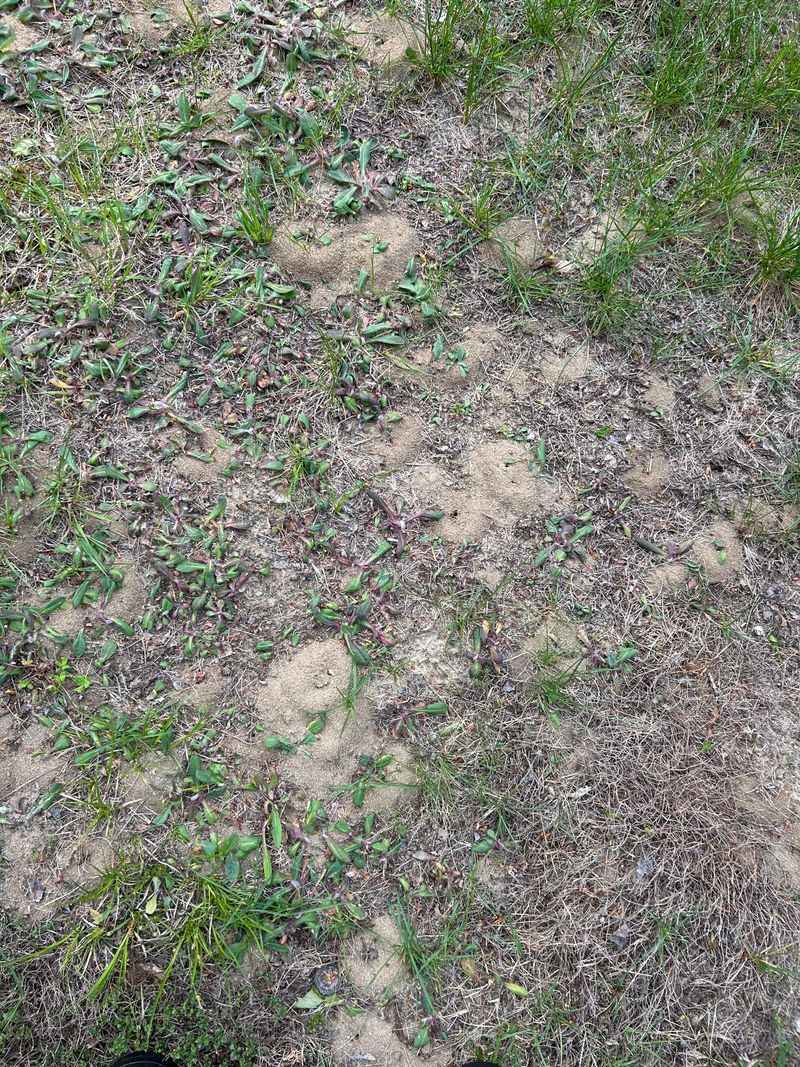
Plenty of homeowners assume an ant hill means the lawn is being chewed up. That is not what the extension sources describe.
A mound shows that soil is being moved, not that anyone is feeding on your turf.
Minnesota Extension says lawn-nesting cornfield ants and field ants do not feed on or injure grass. Its ant guide adds that larger mounds can still get in the way of mowing.
Purdue goes a step further. It notes that ants can benefit turf by controlling some insect pests, which is one reason lawn treatment is rarely advised, as Purdue Extension explains.
It helps to keep two questions apart. One is whether the grass is damaged.
The other is whether the mound is a nuisance.
If you see brown patches, thinning turf, or wilting, look for other causes before blaming ants. A mound next to healthy grass tells a different story than a mound in the middle of a dying patch.
On the other hand, a raised pile can nick a mower blade or leave a bumpy cut. That is a real annoyance even when the grass underneath is fine, and it is worth taking seriously on its own terms.
Other insects can leave similar soil piles
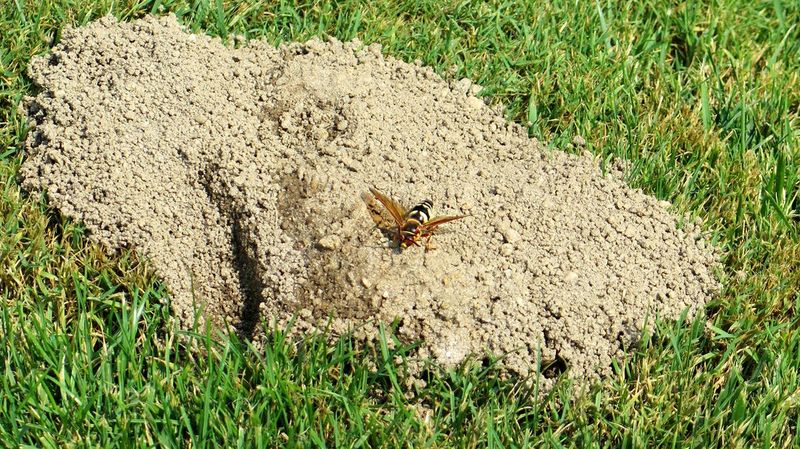
Soil piles in a lawn do not all come from ants. Shape and size can offer hints, but they are clues, not proof of which insect did the digging.
According to University of Minnesota Extension’s lawn holes page, small conical piles around small holes can be cornfield ants. Larger mounds with multiple holes can be field ants.
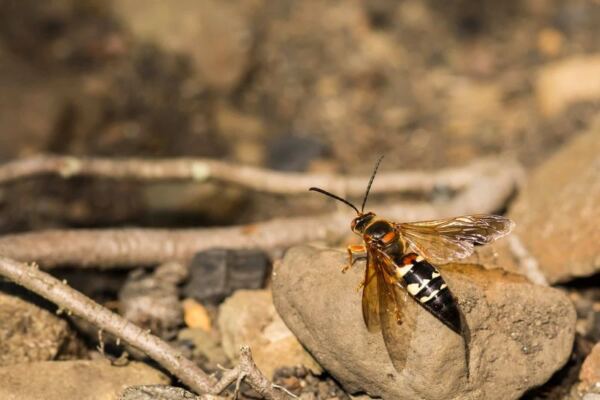
A different picture shows up with a cicada killer. Its burrow can be roughly 2 inches across, with a mound of soil off to one side instead of a neat cone around the hole.
At a glance, that pile can look a lot like an ant mound.
Here are a few things worth checking:
How big is the hole? Is the soil centered around it or pushed to one side?
Is there one opening or several? Do you see small ants coming and going, or larger flying insects hovering nearby?
Even with those answers, stay cautious. Weather, soil type, and the age of the mound can change how a pile looks.
If you cannot tell what you have, take a clear photo and ask your local extension office for help rather than guessing.
Decide whether the mound is causing a problem
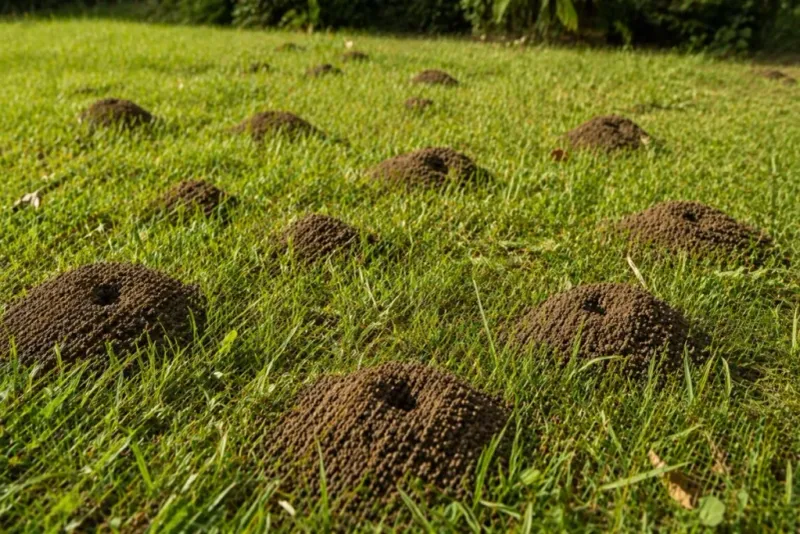
Once you have a rough idea what made the pile, the useful question is simple: is it actually causing trouble? A mound existing is not a reason to act on its own.
Two practical triggers stand out. One is a mound that rises above the grass and interferes with mowing.
The other is ants disturbing a plant, such as around the base of a flower or vegetable. Iowa State’s guidance frames the decision around those kinds of real problems.
If the pile is small and sits flat in the lawn, tolerating it is reasonable. It may disappear on its own after the next mowing or heavy rain.
Purdue’s view supports that patience. Its ant publication says ants can be beneficial and that lawn treatment is rarely advisable.
A simple check can help. Walk the mowing path, look for bumps that catch the blade, and watch nearby plants for signs of ants at work.
If nothing interferes, you can leave it alone and look again in a week or two.
Choose a response that fits the nuisance
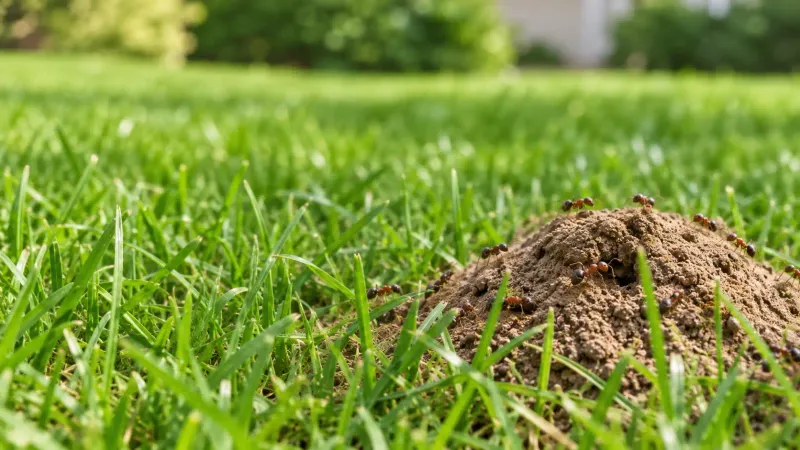
If a mound does cause a real nuisance, start with the gentlest fix. Iowa State suggests raking or washing loose soil flat when a mound rises above the grass.
The Iowa State advice is a practical first move that needs no chemicals.
If you are weighing control, identify the ant first. Then use only a product labeled for ant control in lawns, and follow the label directions closely.
Purdue Extension calls for labeled products, and broad or unsuitable treatments can add needless exposure and harm.
That is also why routine pesticide use, generic pesticides, and pouring boiling water are poor choices. They are not matched to the ant or the site.
An unfamiliar ant deserves extra care. Do not handle or provoke it, and ask for local identification help instead.
Minnesota Extension’s ant page offers similar advice for ants you cannot place.
Do not assume imported fire ants from how a mound looks. USDA APHIS lists states with known infestations, and Indiana is not on that list.
That describes known infestations and does not rule out every unusual ant, so your local extension office is the right call when something seems off.
Use the pile as a clue, then check the source
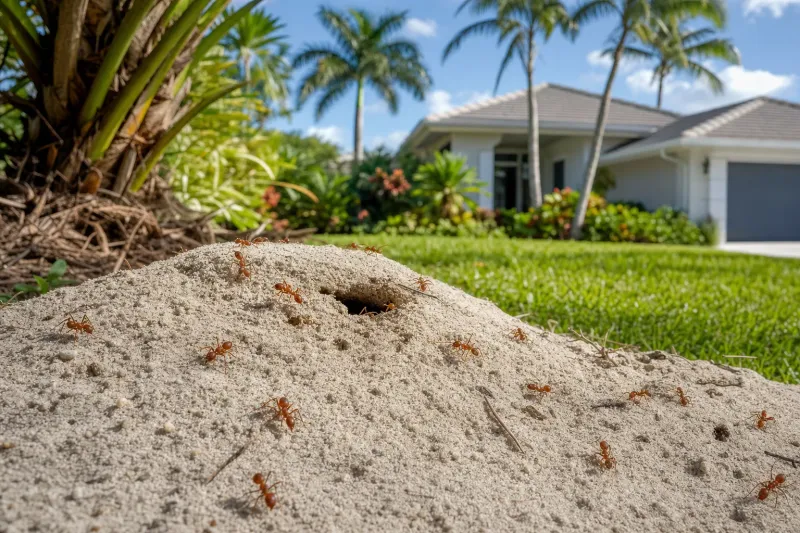
A fresh pile is a good reason to look closer, but it cannot diagnose flooding, lawn damage, or the insect by itself. Identify what made it, ask whether it truly gets in your way, and pick a response that matches the problem.
Often, as Purdue Extension suggests, that means doing very little.
When a mound does need attention, Iowa State’s raking approach is a calm place to begin.
Sometimes the smartest move on a damp morning is to notice the dirt, take a photo, and let the lawn tell you more.
Share this story