Puss caterpillars look like tiny bits of fluff, but they are venomous, and brushing against one can cause severe pain. Many Delaware yard workers wonder what stinging, hairy caterpillars might be waiting in the leaves they rake.
The full story is more specific than the headline suggests, and knowing the details can keep your hands safe. Here is what is known, what is not, and what to do if you get stung.
What the regional evidence can tell us
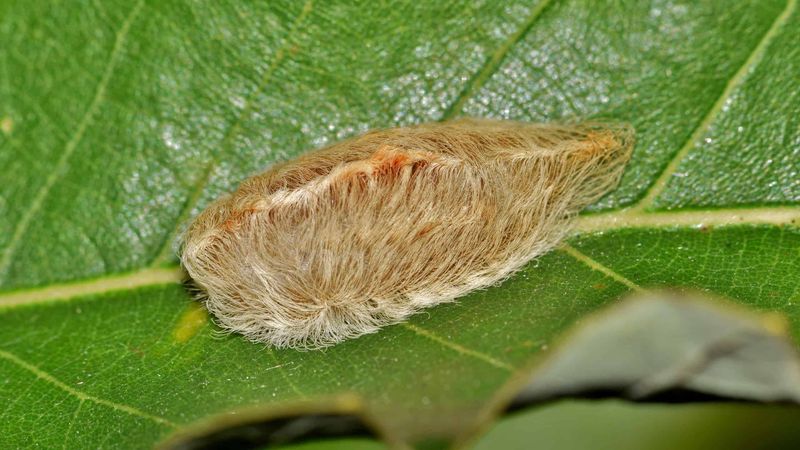
Puss caterpillars are venomous, and their spines can cause severe pain. That is the part of the headline that holds up, so it makes sense to treat any unfamiliar fuzzy caterpillar with care.
The rest depends on where you live. A peer-reviewed distribution study estimates the species’ range along the Atlantic coastal plain from New Jersey south.
That range reaches toward Delaware, but a range map is not the same as a record of how often people meet the caterpillar in their yards.
The study sorted its data into regions. Its Mid-Atlantic category combines Delaware with five other states: New Jersey, Pennsylvania, Maryland, Virginia, and West Virginia.
For that whole group, it counted only four larval observations of this species.
Four sightings across six states is too small a sample to show that Delaware residents run into these caterpillars often. It is also too small to show when they would appear locally.
The study did report a September peak for larvae, but that peak comes from the Southeast, not from the Mid-Atlantic, where the data were too thin to estimate a season.
In plain terms, nobody can say that late fall is puss caterpillar season in Delaware. Thin data does not prove the species is absent, either.
It simply means the safest plan is to be careful with any hairy caterpillar you do not know, in any season.
A soft-looking coat can conceal venomous spines
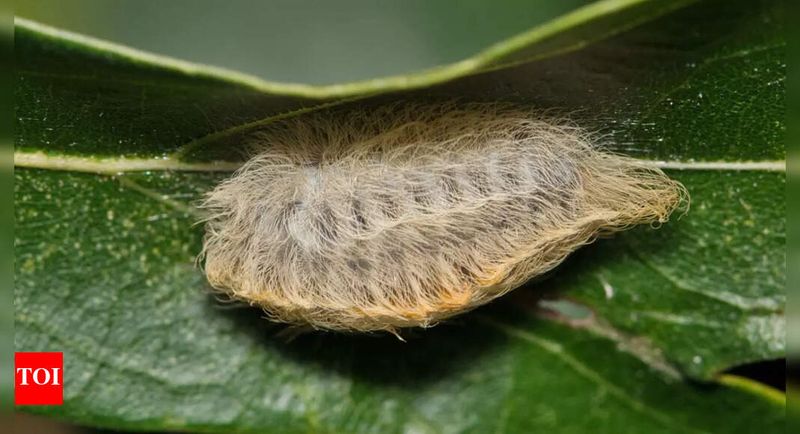
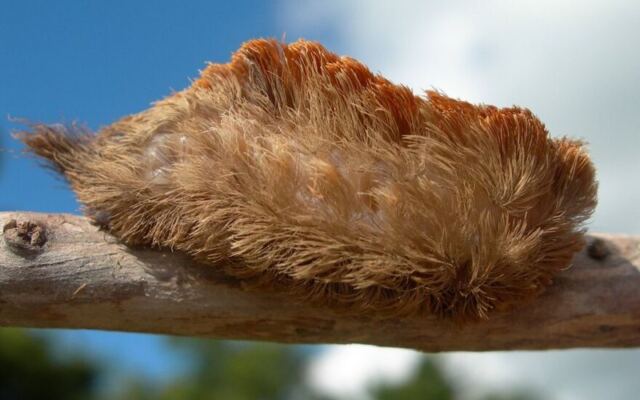
Picture a tiny tan or grayish pet with a fluffy coat, and you have the look of a puss caterpillar. It is the larva of the southern flannel moth, Megalopyge opercularis.
Butterflies and Moths of North America describes it as a furry caterpillar that feeds on trees and shrubs, including oaks.
The soft look is misleading. Venomous spines are concealed among the longer, silky hairs, so a light touch can deliver venom.
A PNAS study of asp caterpillars explores how those spines produce such painful stings.
Eating oak leaves is not the same as hiding in fallen ones. A caterpillar that feeds on an oak tree during the growing season has not been shown to shelter in the leaf pile beneath it.
Leaf-litter overwintering is a different story, covered later in this article.
Appearance is a clue, not proof. Many caterpillars are fuzzy, and only some are venomous, so you cannot confirm a species just by looking.
Poison Control advises against handling caterpillars you do not know.
If you spot one on a leaf, a fence, or a garden tool, leave it where it is. Wear gloves for yard work, and shake out tools before picking them up.
Why contact can cause intense pain
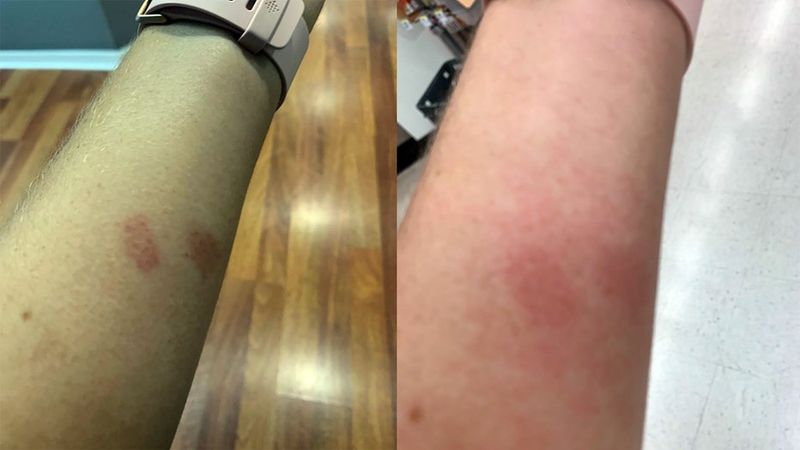
Reports after puss caterpillar contact describe rapid, intense pain. Redness and swelling often follow, and some people develop a grid-like pattern on the skin where the spines touched.
According to the PNAS research, the pain can radiate beyond the contact spot and last for hours or even days.
The way the venom gets in is different from a bee sting. A bee has one stinger.
A puss caterpillar carries venom in many hollow spines hidden in its fur, and they break against skin on contact. Poison Control notes that other hairy caterpillars may irritate the skin through detachable hairs instead, which is a separate mechanism.
You will often hear that these caterpillars sting worse than a bee. That is a personal comparison, and it comes from how people describe their own experience.
The sources reviewed do not offer a controlled, universal ranking of the two.
What the reports do agree on is that the pain can be severe. If you feel a sudden burn while gardening, stop and check your skin and clothing before you keep working.
Knowing the usual pattern helps you act early. The next section covers what to do right after contact.
A different caterpillar overwinters under leaf litter
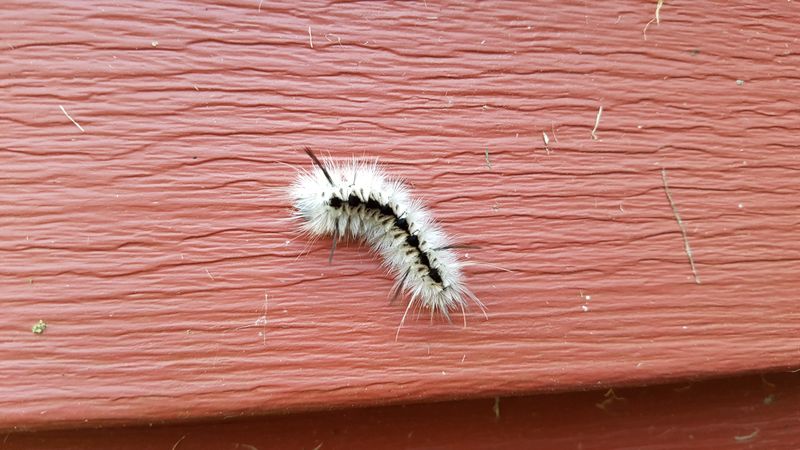
Raking can turn up hairy things, and the one tied to leaf litter is the hickory tussock moth. It is a separate species, not another name for the puss caterpillar.
The caterpillar is white and black with conspicuous tufts of hair.
Those hairs can detach and irritate skin. Penn State Extension reports a localized rash and itching as the usual reaction, which is a milder and different kind of problem from venom delivered by spines.
The leaf-litter link belongs to this species’ pupae. The Maryland Department of Agriculture says the moth spends winter as pupae in hairy cocoons under soil litter.
So a hairy cocoon in your leaf pile points to this moth, not to a puss caterpillar.
The Maryland agency also lists several hardwood hosts. The caterpillars feed on a range of trees but prefer hickory, walnut, and butternut.
That is why you might meet them near those trees in warmer months.
Wear gloves when you handle leaf piles, and avoid touching any cocoon or caterpillar with bare skin. A rash from stray hairs is usually the main worry, though it is still worth avoiding.
What to do after skin contact
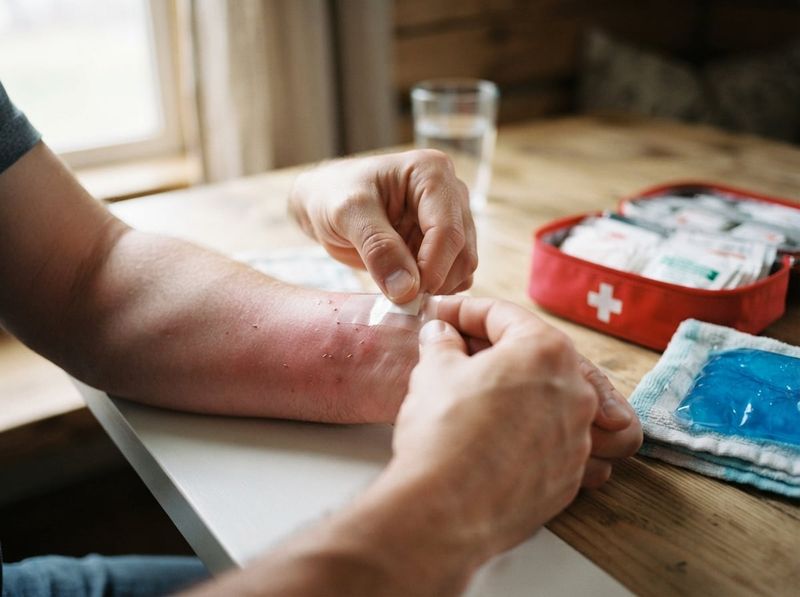
Start by not touching the caterpillar again. If it is still on you, remove it without using your hands, as Poison Control recommends.
Next, press sticky tape gently onto the affected skin and lift it away. This pulls out hairs or spines that may be stuck in the skin.
Use fresh pieces of tape as needed.
After the tape, wash the area with soap and water. Do not scrape, and do not brush at the spot with bare hands, because that can push spines deeper or spread them to your fingers.
A cool pack may ease discomfort. An appropriate over-the-counter symptom reliever may also help, and a pharmacist can point you to one that suits you.
Stick to these steps rather than trying home remedies that are not backed by the guidance.
For advice about your own situation, call Poison Control at 1-800-222-1222. They can talk through the symptoms and tell you whether more care is needed.
Know when to get medical help

Most skin contact calls only for the basic steps above. Some situations call for more.
If hairs get into an eye, rinse it with water. Poison Control gives that advice, and you should not rub the eye while you do it.
Get medical advice if eye irritation persists, if significant blistering develops, or if you suspect hairs were inhaled or swallowed. MedlinePlus lists these as reasons to seek help.
Call 911 for trouble breathing, fainting, or swelling of the lips, face, or tongue. Do not wait to see whether those symptoms pass.
If you are unsure which category you fall into, Poison Control at 1-800-222-1222 can help you decide.
Leave unfamiliar caterpillars alone
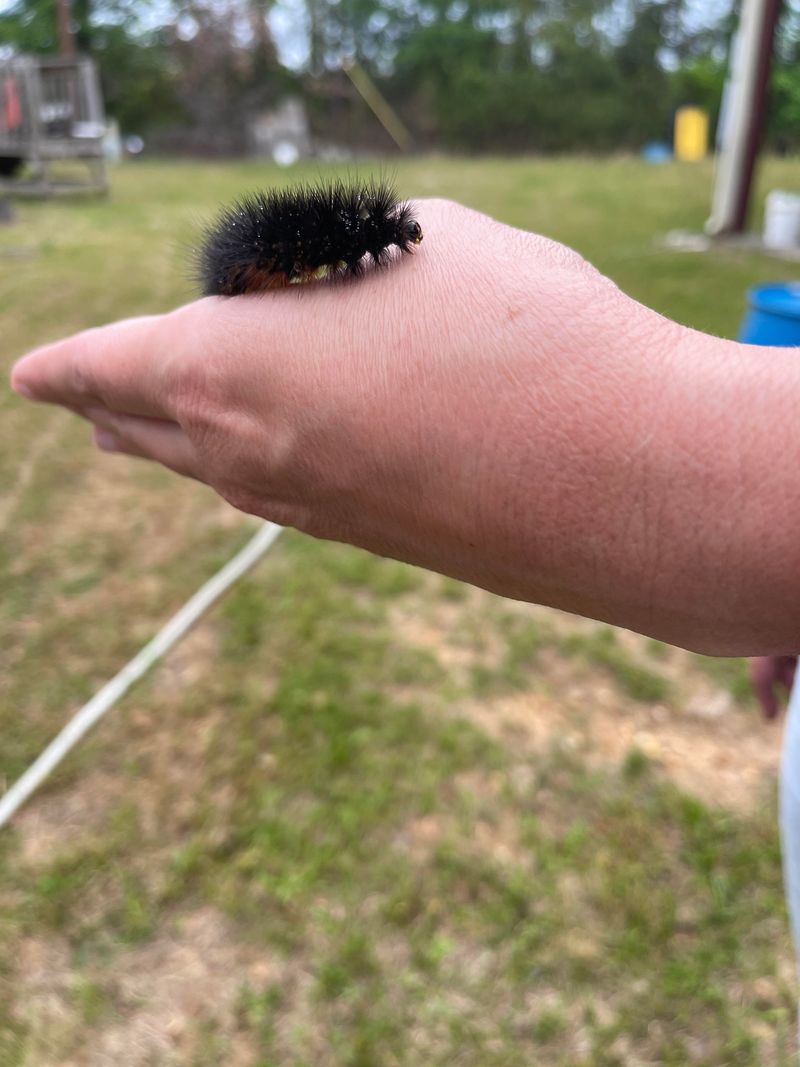
You never need to pick up a caterpillar to learn what it is. A photo from a few feet away, or a note about where you saw it, works better and keeps your skin safe.
Poison Control advises against handling unfamiliar ones.
Fuzz alone tells you little. A puss caterpillar carries venomous spines under its soft coat, while hickory tussock hairs can irritate the skin.
University of Maine Extension describes tussock hairs as an irritant rather than poisonous or venomous.
If contact does happen, go back to the steps in the skin contact section: tape, soap, and water, then a call to Poison Control if you have questions.
A good rake handle gives you distance, and distance is the best protection a gardener has.
Share this story