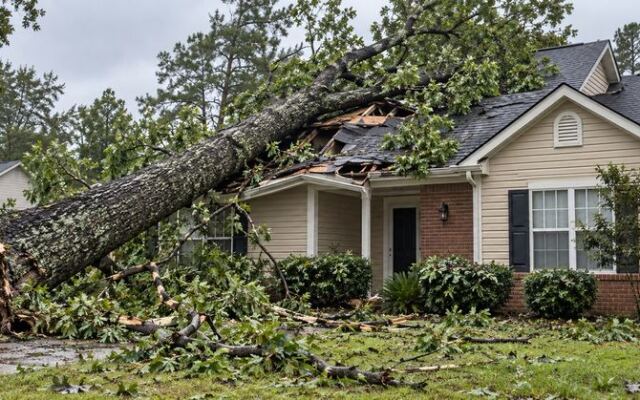
After a Texas storm drops your neighbor’s tree on your property, the neighbor’s homeowners policy probably will not pay unless the neighbor was at fault. Most of the time, the first place to turn is your own insurance policy.
Who owns the tree does not settle the bill by itself, and the condition of that tree before the storm can change the picture. Here is how to sort out fault, coverage, cleanup, and safety without guessing.
Start with the insurance route
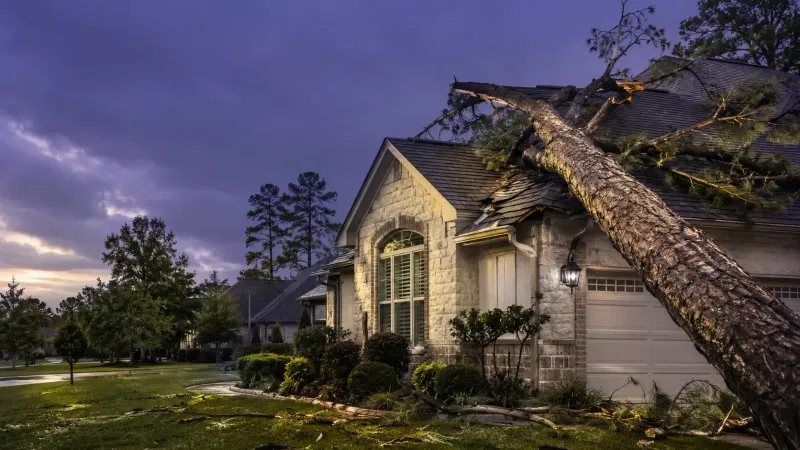
Here is the practical answer. According to Texas Department of Insurance guidance, your neighbor’s homeowners policy probably will not pay for storm damage unless the neighbor was at fault.
If it does not, you may be able to file a claim under your own policy, subject to its terms.
That surprises many people. It feels natural to think that because the tree grew on your neighbor’s land, your neighbor should cover the cost.
Tree ownership alone does not establish responsibility for storm damage. A strong wind or a flood of rain can knock down a perfectly healthy tree, and in that case nobody did anything wrong.
Fault is the key word. Insurance policies for homeowners are built mainly to cover the policyholder’s own property and to cover the policyholder’s legal liability when they are found responsible.
Without fault, there is usually no liability for the neighbor’s insurer to pay.
Your own policy is a different story. Many homeowners policies cover damage to the house from a falling tree, but what is covered, what is excluded, and what your deductible is all depend on the wording of your specific policy.
Reading your declarations page and policy language is a smart early step, and your agent or insurer can explain how those terms apply to your situation.
There is one wrinkle to keep in mind. If the tree was already in bad shape before the storm, that may affect whether your neighbor could be considered at fault.
The next section looks at how that works, and why it is a possibility to evaluate rather than a promise of payment.
When the tree’s condition may matter
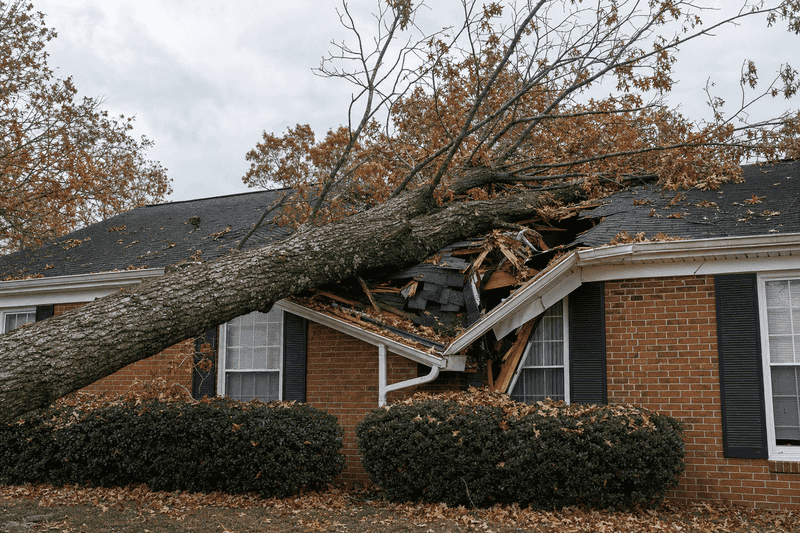
Picture two trees. One is healthy and green, and a powerful storm snaps it.
The other has been dead for two years, with brittle limbs and a rotting trunk, and it falls in the same storm. The law may treat these two situations differently.
As Texas Law Help explains, a tree that was dead, decayed, diseased, or otherwise dangerous may support a negligence claim. Two questions tend to matter.
What did the owner know, or reasonably should have known, about the tree’s condition? And did that condition actually contribute to the damage?
A storm does not always end the discussion. Some people argue that a storm is an act of God, so no one can be blamed.
That argument does not necessarily apply when negligence substantially contributed to the damage, though the facts decide the result.
A pre-existing hazard is relevant to a negligence claim. It is not automatic proof that the owner must pay.
You would still need to show how the condition played a part.
Texas courts have looked at these disputes in specific ways. In Avery v.
Alexander, an appeals court noted the general rule that a landowner has no duty to prevent natural conditions from harming adjoining property. It still reversed summary judgment and sent the case back, because the plaintiffs had evidence supporting an assumed-duty theory after the owner’s representative said he would arrange an inspection.
The court did not decide that the owner was liable.
You may also hear a rule of thumb, including from Texas A&M Forest Service, that a tree owner is liable for damage from a hazardous tree. Treat that as a general guide, not a firm rule for every storm-felled tree.
What your home or auto policy may cover
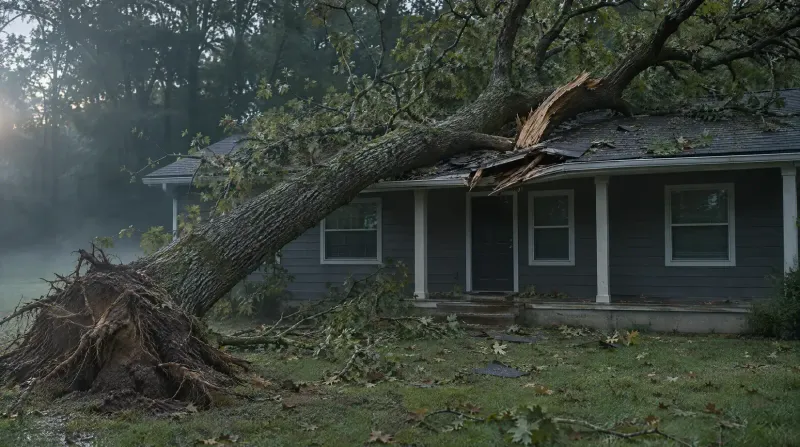
Most storm repairs begin with your own coverage. If the neighbor’s policy does not pay, you may be able to claim covered damage to your house under your own homeowners policy, subject to its terms.
Deductibles, exclusions, and limits all play a role in what you actually receive.
Cars follow a separate track. The Texas Department of Insurance says that when a tree damages a vehicle, auto coverage applies when the policy includes comprehensive coverage.
A policy with only liability coverage generally will not help with your own car.
Fences, sheds, and other structures may be treated differently from the main house. Your policy may list them under other-structures coverage, with its own limit.
Reading those sections before you call can help you ask better questions.
Once your insurer pays a claim, it may look to someone else for reimbursement. Texas Law Help notes that an insurer may pursue a subrogation claim against the neighbor.
That is a possibility, not a guarantee, and it does not mean the insurer will recover anything.
For you, the practical effect is usually limited. You may still owe your deductible, and any recovery by your insurer is its own matter.
Ask your insurer whether it expects to pursue subrogation and whether any part of your deductible could be affected.
Keep conversations with your neighbor friendly and factual. Sharing photos and a timeline helps everyone understand what happened, and you can do that without arguing about blame.
Tree removal has its own coverage limits
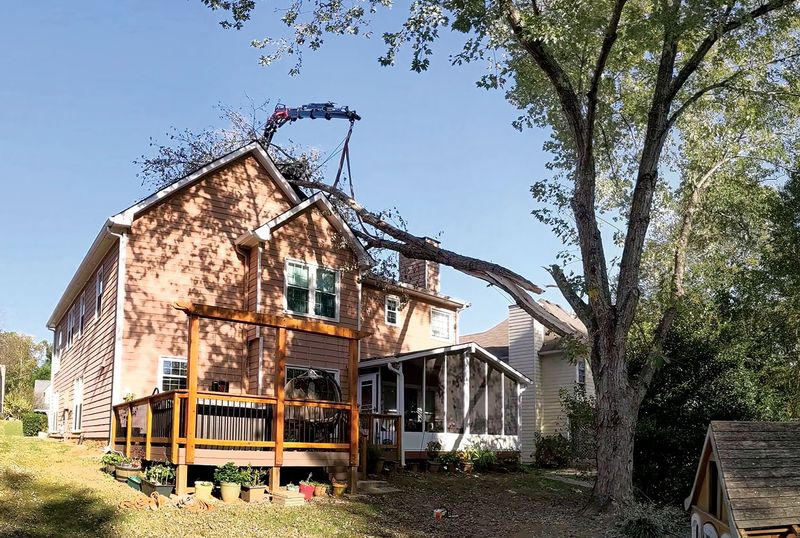
Paying for the damage and paying to haul away the tree are two different questions. A policy might cover repairs to your roof and still limit or exclude debris removal.
The specific policy controls.
According to the Texas Department of Insurance, removal from an otherwise undamaged yard is usually not covered. Some policies may cover removal when the tree damages the house or blocks a driveway.
Those removal benefits often come with dollar limits, so a large tree may cost more than the policy will pay.
A column from the Texas Department of Insurance archive makes the same point: what happens when a tree falls depends on where it lands and what it hits. Ask your insurer in plain terms whether removal is covered in your situation and what the limit is before you hire a crew.
Local rules matter too. Texas Law Help points out that disaster cleanup responsibilities and ordinances vary by location.
Check your city or county website for debris pickup programs, curbside rules, and any special storm guidance, since there is no single statewide cleanup arrangement.
Keep every receipt for removal work, even if you are not sure it will be reimbursed. Written estimates and invoices can help if your insurer later reviews the claim.
Document the damage and keep clear of hazards
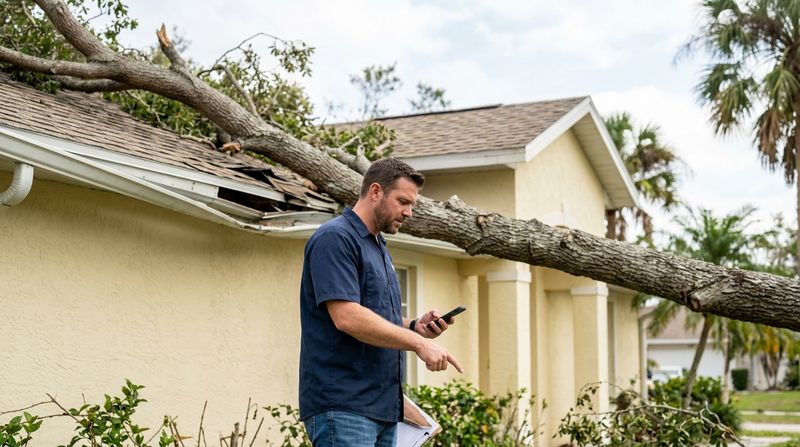
Safety comes before paperwork. Treat any downed power line as dangerous, along with any tree, fence, or object touching it.
Texas A&M Forest Service advises staying away from downed utility lines and hanging branches, and leaving large or overhead chainsaw work to professionals. Do not stand beneath a limb that is dangling, and call the utility company or emergency services about lines.
Once the area is safe, start documenting. Photograph the tree and the damage before you move the tree or make repairs.
Wide shots show where the tree landed, and close-ups show the broken trunk, rot, or other signs of its condition.
Look at the stump or break point if you can see it from a safe place. Hollow centers, fungus, or dead wood may matter later if anyone asks whether the tree was already unhealthy.
Do not cut into it yourself just to find out.
Next, the Texas Department of Insurance recommends taking reasonable temporary steps to prevent further damage, such as covering a hole in the roof with a tarp. Contact your insurer promptly, and keep receipts for materials and labor.
A simple notebook or phone note helps. Write down the date, the time the storm hit, and who you spoke with at your insurer and when.
Those details are easy to forget a week later.
Use the facts to decide what to do next
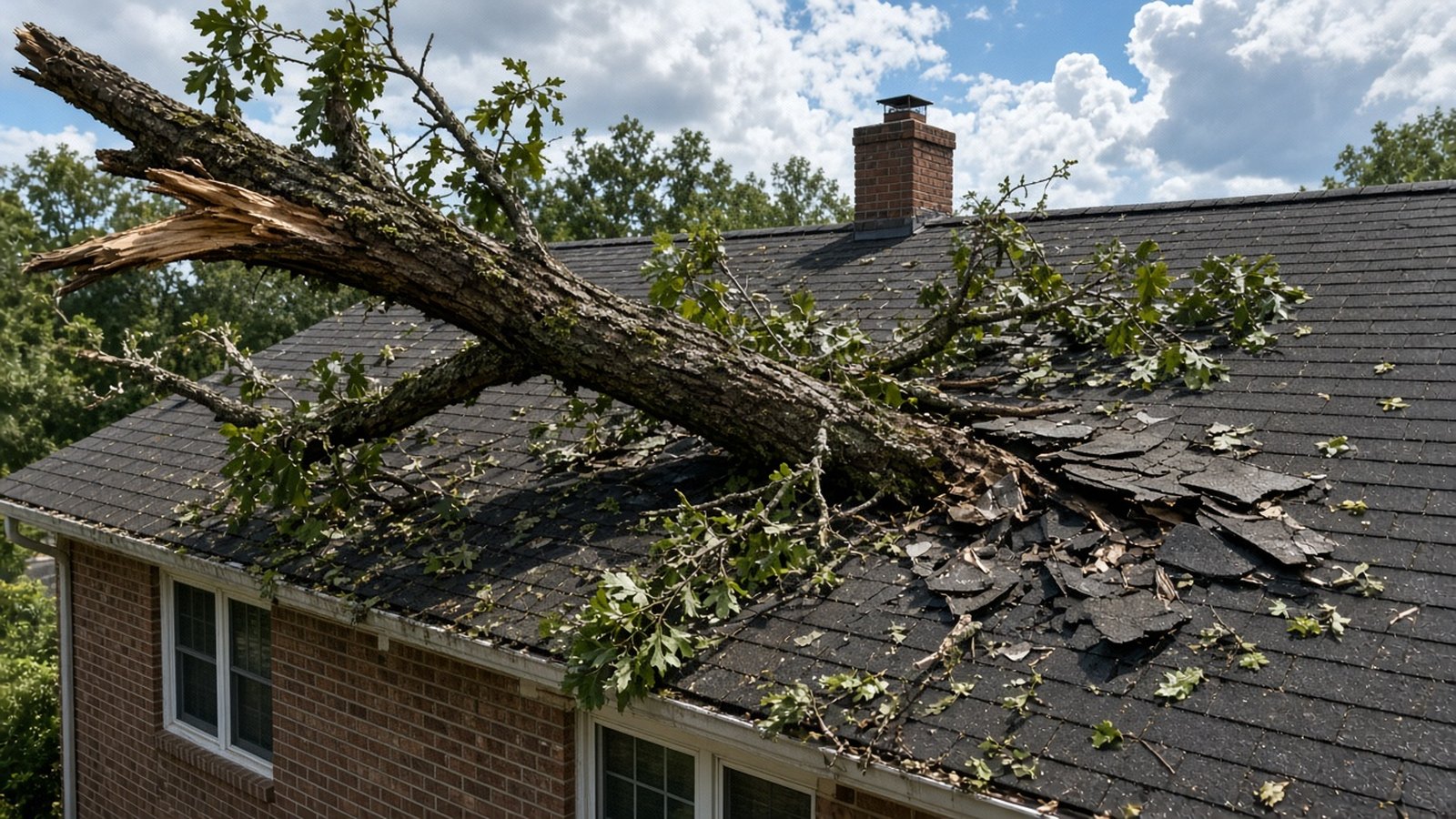
Work through it in order. Identify what was damaged, then review the policy that applies, whether home or auto, and its deductible and limits.
Keep your photos and receipts together.
Then look honestly at the tree. If it seemed dead or diseased, Texas Law Help notes that facts like what the owner knew matter, but you should not assume the neighbor must pay.
Coverage depends on policy terms, and liability depends on the circumstances. Overgrown branches and roots are a separate issue, and the Texas State Law Library says no Texas statute directly addresses them.
A storm moves fast, but good records stay useful long after the cleanup is done.
Share this story