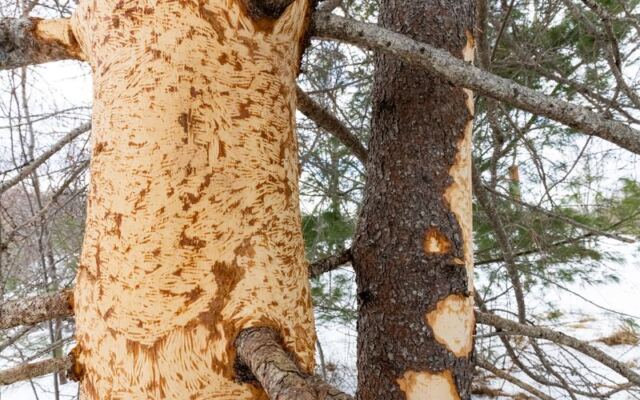
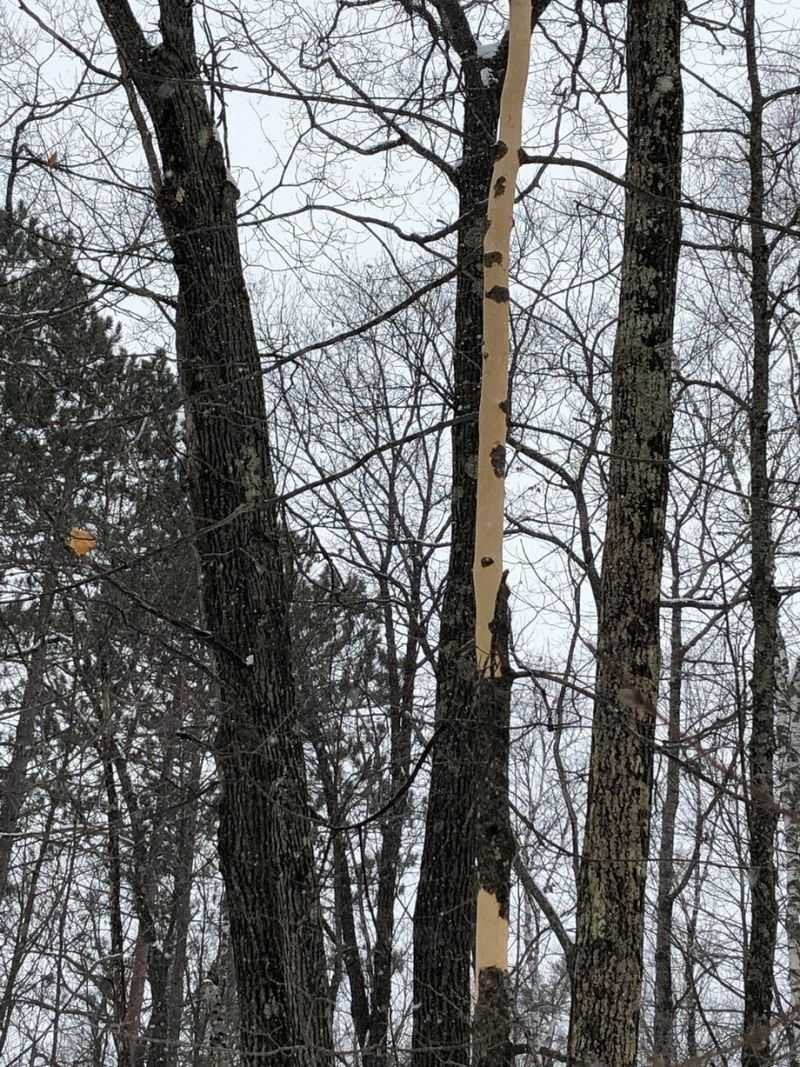
A tree with a limited bark wound that does not wrap all the way around its stem can keep growing, and that is good news for many Massachusetts yards. Porcupines chew bark in winter, and the marks can look alarming when you spot them in the snow.
Where the wound sits and how big it is make all the difference. Here is how to read the clues, judge the risk, and protect the trunk.
Winter feeding puts some Massachusetts trees at risk
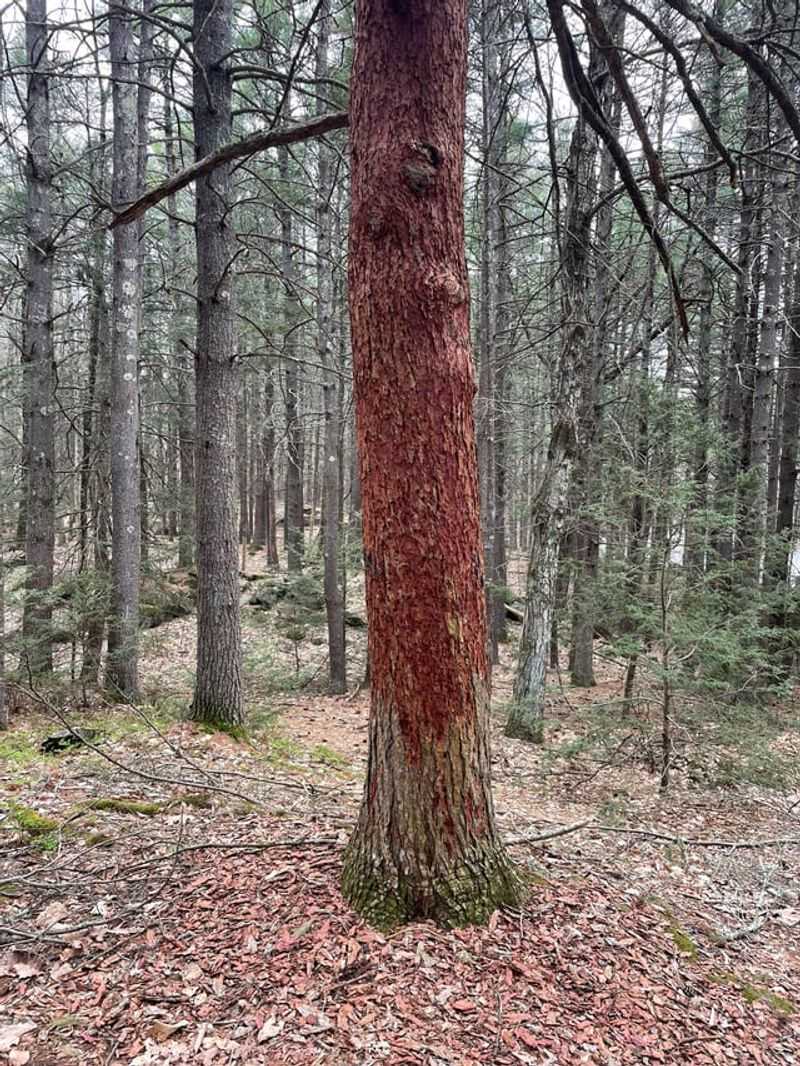
Cold months change what porcupines eat. According to MassWildlife, winter feeding in the state centers on conifer needles and bark, especially hemlock and white pine.
Hardwoods with thin, smooth bark can also be chewed.
Where you live matters. Porcupines are common and abundant statewide, but they mainly live in central and western Massachusetts.
They are rarely seen in the eastern and southeastern parts of the state, so a suspect in Worcester or Berkshire County is more likely than one in Barnstable County.
The broader seasonal diet is wider than winter bark. Apple trees are listed as a favorite food source, but that does not mean apple bark is a winter-only favorite.
Canadian forestry guidance, such as this Natural Resources Canada fact sheet, describes conifer feeding in winter, broadleaf feeding in spring, and orchard fruit feeding in fall.
So if a fruit tree or ornamental has a stripped patch, take a careful look before blaming a porcupine. The next section shows what to check.
What clues point to a porcupine?
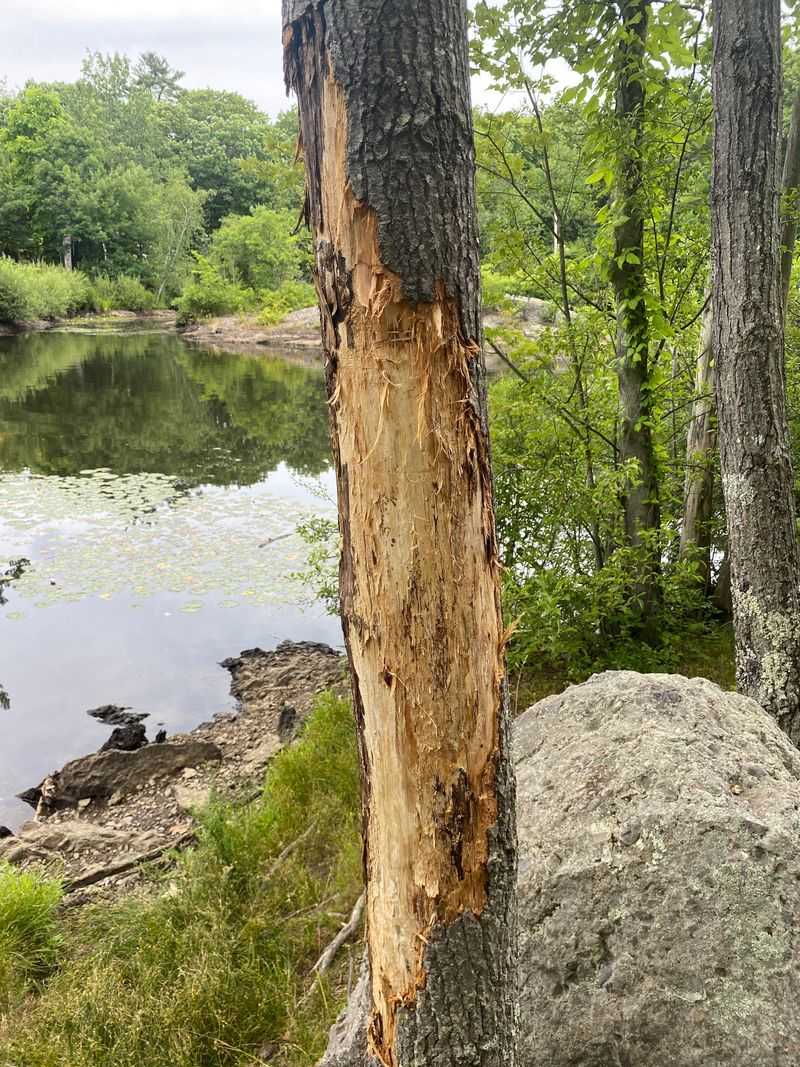
Start at the wound and work outward. Porcupine feeding exposes bare wood, and the tooth marks are deep and grooved, each about 5 mm wide, according to Natural Resources Canada.
Damage can show up on trunks or branches, and sometimes high in the canopy.
Then look at the ground. Bark scraps and clipped twigs may lie beneath the tree, and fresh snow can show tracks leading to the trunk.
On higher branches, University of Minnesota Extension notes that cuts may be clean and slanted, with snipped twigs below.
These are clues, not proof. Squirrels also strip bark, but they usually leave smaller, narrower marks.
Deer rubbing their antlers can leave shredded or polished-looking bark with no tooth marks at all.
Weigh several signs together: the height of the damage, the shape of the wound, the tooth marks, the debris, and any tracks. One chewed patch alone does not settle it.
If three or four signs agree, a porcupine becomes a reasonable guess, and your next steps stay much the same either way.
Girdling changes the outlook for the damaged stem
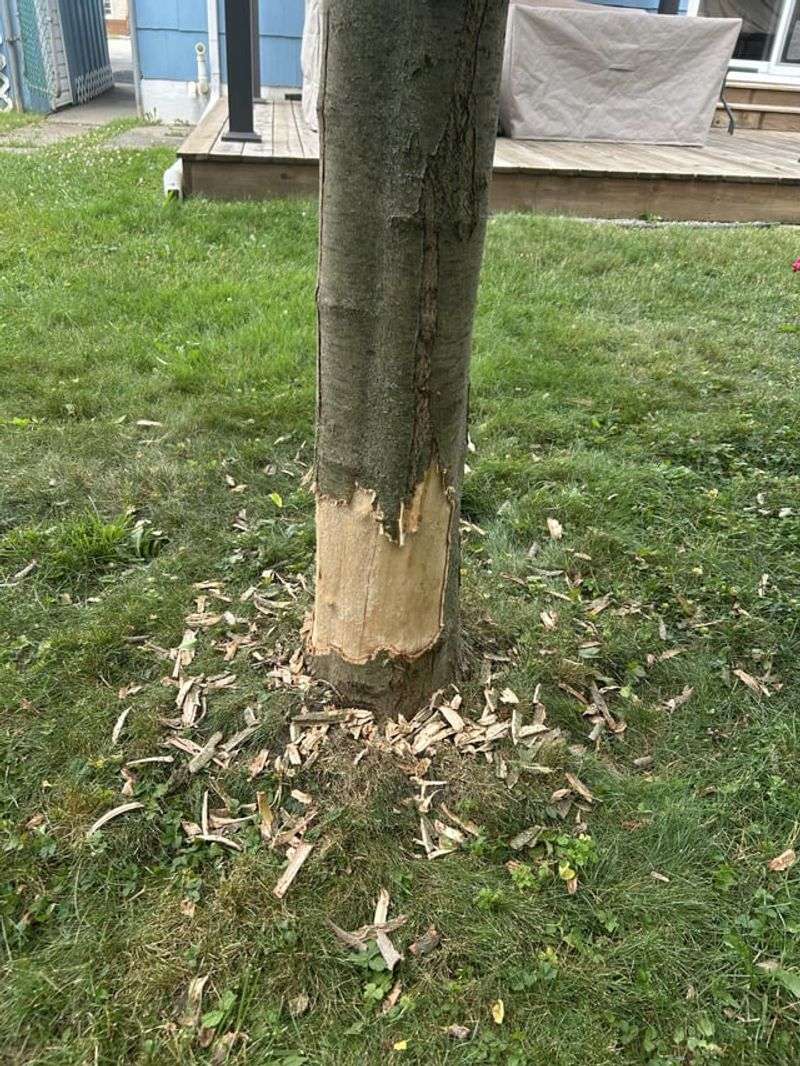
Girdling means the bark is gone all the way around the stem. Bark carries the tree’s food and water, so a full ring of missing bark can interrupt that flow and kill the trunk or the part above the wound, as Utah State University Extension explains.
Partial damage is different. A limited wound that leaves a strip of healthy bark may slowly be covered by callus tissue, and the tree may keep growing.
Still, extent and location both matter, and there is no simple percentage that tells you a tree is safe. The sources reviewed do not offer a reliable cutoff for Massachusetts trees.
Timing can fool you. Wisconsin DNR reports that nearly girdled hardwoods can leaf out in spring and then wilt once warm weather raises their water demand.
Conifers are a separate story. Damaged conifers may show decline later on, but that is not described as the same leaf-out-then-wilt pattern.
Watch for thinning or browning crowns over the following seasons.
If the damage reaches around much of the trunk, get expert help rather than waiting to see what happens.
Leave the wound exposed and get help for serious damage
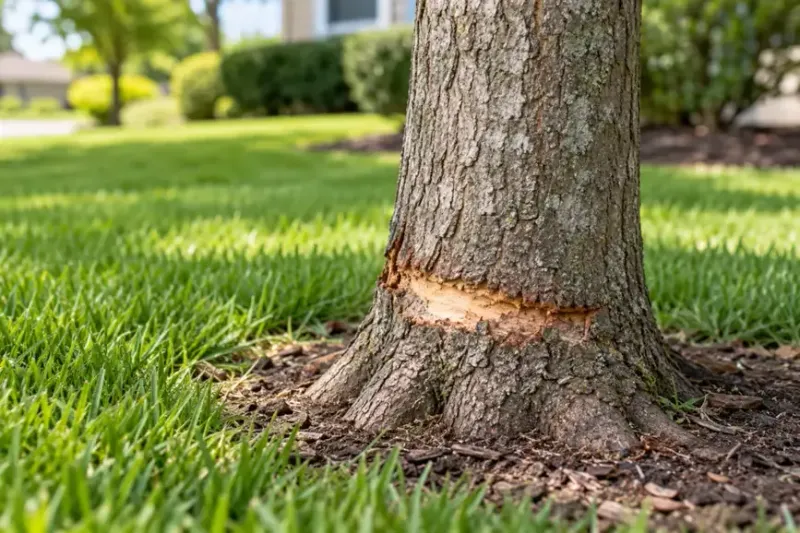
Resist the urge to fix it right away. Wound paint, tar, and sealants are not recommended, and Utah State University Extension advises leaving wounds uncovered.
At most, treatment is limited to dealing with loose bark or wood.
Do not cut into the injury to attempt a repair, either. Extra cuts can make a wound larger, and a photo or a quick look rarely tells you what is going on underneath.
Some situations call for a qualified arborist. Examples include extensive trunk damage, damage around much of the circumference, a thinning crown, or a tree that matters a lot to your property.
An arborist can judge the wound in person, though no one can promise a treatment or a recovery.
The timing question is real, too. As Wisconsin DNR forestry news notes, trouble can show up after warm weather arrives, so keep an eye on the tree through the growing season.
A monitored barrier can protect a vulnerable trunk
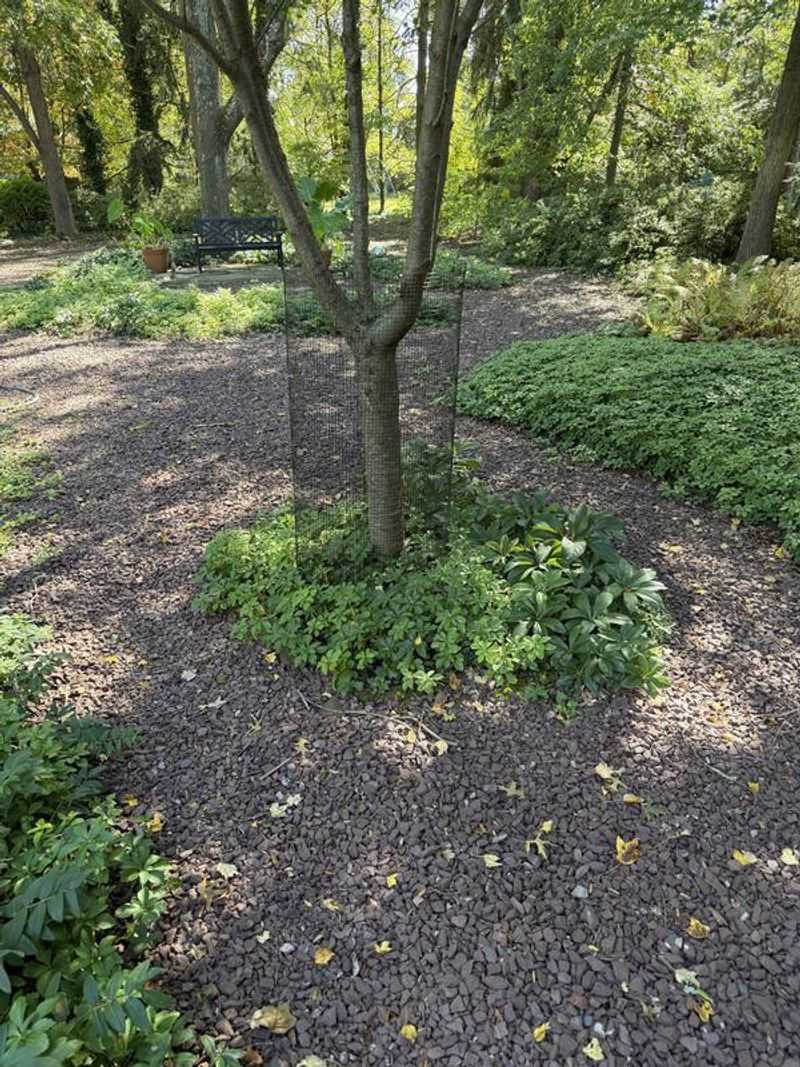
Blocking access is the most direct way to stop repeat feeding. MassWildlife suggests enclosing small trees in wire baskets or wrapping the trunk with 30-inch smooth metal flashing, starting at the ground.
Utah State University Extension also describes trunk flashing and wire mesh or hardware cloth. Its porcupine damage guide adds a warning: barriers must be checked, because they can injure or girdle a growing tree if left in place too long.
Plan on a routine. Look at the barrier a few times a year, loosen or replace it as the trunk gets thicker, and make sure nothing is cutting into the bark.
Slick, smooth material is the point, since it gives a climber nothing to grip.
Remember the goal here is prevention. A barrier will not repair a wound that already exists, but it can keep a healthy tree, or a partly damaged one, from taking another hit next winter.
Repellents and porcupine removal call for caution

Repellents sit in a gray area. MassWildlife says some commercial products have been used successfully, but its guidance also cautions that some may not be legal for porcupines or for food crops.
Utah State University Extension says that, at the time of its writing, no published research had shown an effective repellent. Treat any product as an experiment, and read the current label for permitted uses before you spray, especially near fruit or other edibles.
Removing the animal is trickier still. Relocating wildlife is illegal in Massachusetts, so trapping and moving a porcupine is not a casual do-it-yourself fix.
Trapping has its own rules, outlined in MassWildlife’s trapping information.
If a porcupine keeps returning, contact your MassWildlife district office for guidance that fits your situation. Keep pets away, too.
A dog with quills should not paw at them, and quills should not be cut, so call a veterinarian right away.
Choose next steps based on the damage
Work through it in order. Compare several clues to name the likely cause, check whether the bark loss circles the stem, and leave the wound uncovered.
Bring in an arborist if the damage is substantial, as Utah State guidance supports.
Then protect what is left with a trunk barrier that you check from time to time. A limited, non-girdling wound may be survivable, though nothing here is a guarantee.
A tree is a slow patient, and a calm look beats a rushed fix.
Share this story