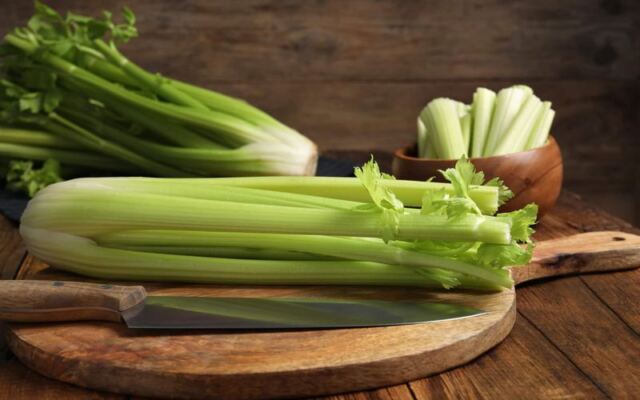
A daily serving of celery adds a crunchy, low-calorie vegetable and a little fiber to your plate. That is the real job it does, and it is a useful one.
Celery does not detox your body or act like medicine, though, and some popular claims go too far. Here is what a serving actually gives you and how to enjoy it safely.
What a two-stalk portion provides
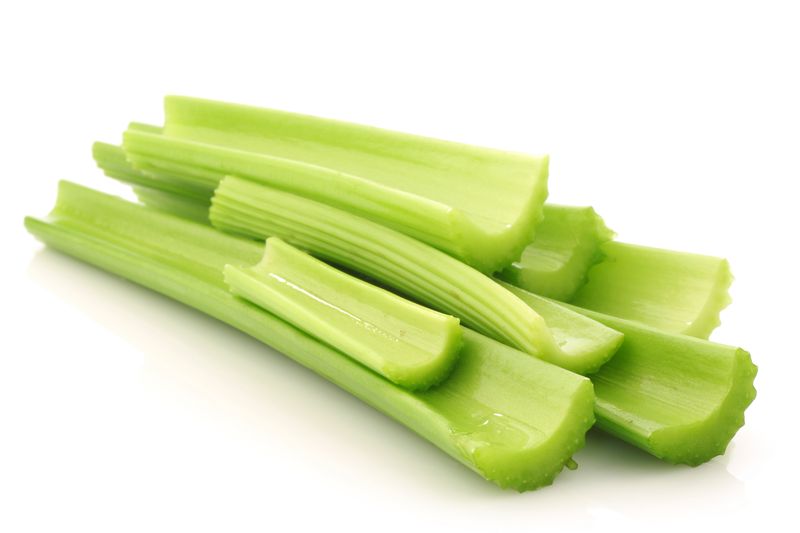
Numbers help cut through the hype, so start with the FDA’s raw vegetable poster. It lists two medium raw stalks, about 110 grams, as the reference portion.
That portion has about 15 calories, 115 mg of sodium, 4 grams of carbohydrate, and 2 grams of fiber.
In plain terms, celery is a light vegetable that fills space on a plate without adding many calories. The 2 grams of fiber is a modest contribution, not a huge one.
Think of it as a small but steady helper in a meal, whether you slice it into a salad, stir it into a pot of chili, or dip it in hummus.
The sodium figure is small too, and it comes from the celery itself, before any salt, dressing, or dip gets added. Those extras can change the total quickly, so it is worth a glance at what you pair with your stalks.
It also helps to be clear about what the FDA portion is. It is a standard serving size used to compare foods on a level playing field.
It is not a celery-specific daily dose that someone has proven your body needs.
Celery is also not nutritionally complete. No single vegetable covers everything you need, and celery is not uniquely medicinal either.
It is a useful, affordable, crunchy vegetable that can fit into a healthy way of eating, and that is a perfectly good reason to buy a bunch at the store.
Vegetable guidance calls for variety
Federal advice does not single out celery at all. The 2025-2030 Dietary Guidelines set a general goal of three vegetable servings per day for a 2,000-calorie eating pattern.
The emphasis is on variety across many kinds of vegetables.
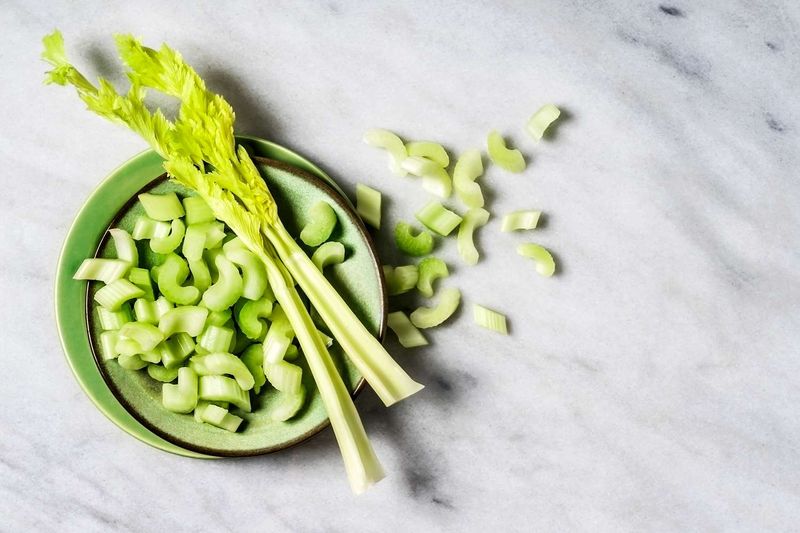
So how big is a serving? The daily serving guide counts one vegetable serving as 1 cup of raw or cooked vegetables, or 2 cups of leafy greens.
Chopped celery can count toward that cup, right alongside carrots, tomatoes, or spinach.
Your own target may look different from three servings. Needs go up or down with calorie level, so a teenager who plays sports and an older adult with a smaller appetite will not aim for the same number.
Here is where celery fits. A few stalks can help you reach your goal, but the guidance never tells anyone to eat celery every day or gives a celery-specific amount.
A plate that rotates through green beans, sweet potatoes, peppers, cabbage, and celery covers more ground than any one vegetable can.
If you love celery, keep eating it. If you only tolerate it, no rule says you must.
Pick vegetables you will actually enjoy, and let celery take its turn.
Juicing changes the fiber equation
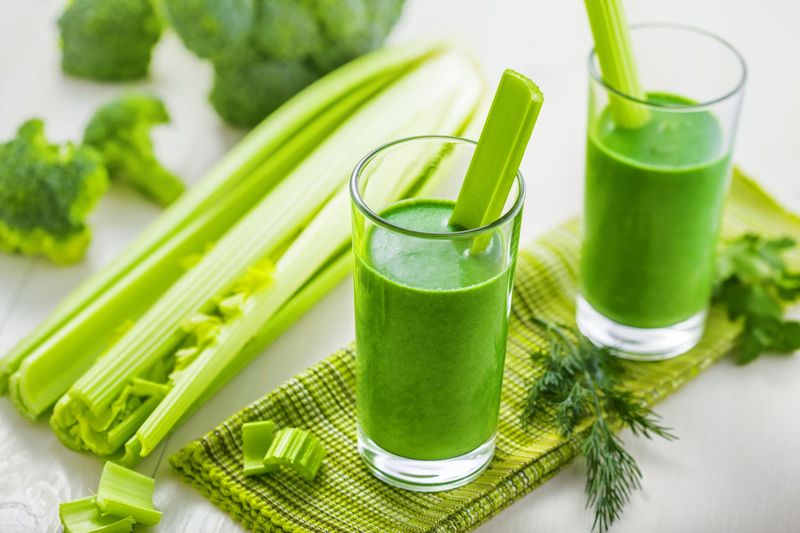
Celery juice has become a morning ritual for plenty of people, but a glass of juice and a crunchy stalk are two different foods. When juice is strained, the pulp gets left behind.
Oregon State University Extension notes that straining celery juice removes much of the fiber.
That matters if fiber is part of why you eat celery in the first place. Whole stalks keep the fiber in the package, and chewing them also takes a bit more time than drinking a glass of juice.
Guidelines point the same direction. The Dietary Guidelines encourage eating whole vegetables and advise limiting or diluting 100% vegetable juice.
None of this means a glass of celery juice is harmful for most people. It just means the juice is not a stand-in for the stalks, and it carries no special benefit that whole celery lacks.
If you enjoy the taste, you can still sip it now and then.
A simple habit works well here. If you want celery for fiber, grab the stalk, whether that is with peanut butter, in a tuna salad, or tossed into soup.
Treat juice as an occasional drink rather than a replacement for the vegetable itself.
What blood-pressure research can tell us
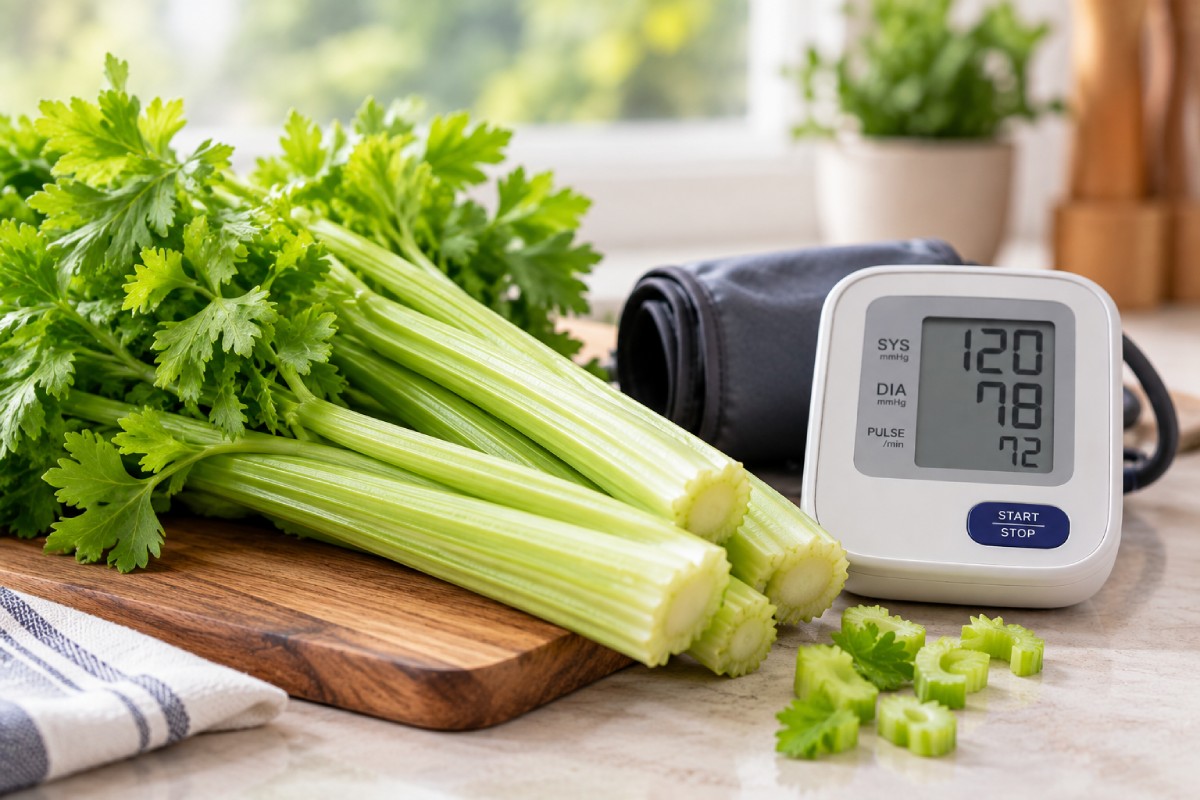
You may have seen headlines linking celery to blood pressure. The research is real, but it studies something different from a plate of stalks.
A 2025 meta-analysis pooled 10 randomized studies with 511 participants, and those studies used different celery preparations and different doses.
The analysis reported blood-pressure effects, but it also noted substantial heterogeneity and limited sample sizes. In everyday language, the studies were too different from one another, and too small, to give a firm answer.
It also found no overall effect on total cholesterol, LDL, or HDL.
A separate four-week trial gave 52 people with hypertension 1.34 grams per day of celery-seed extract. That is a concentrated product, not a serving of celery stalks from the produce aisle.
Put together, these studies do not show that eating a daily portion of fresh celery reliably lowers blood pressure. They hint that certain preparations may deserve more study, and that is as far as they go.
If you take medication for blood pressure, keep taking it as prescribed. Celery, celery juice, and celery-seed supplements are not substitutes for medical care.
Before trying an extract or supplement, talk with your doctor or pharmacist, since concentrated products can behave differently from food.
Detox claims go beyond the evidence
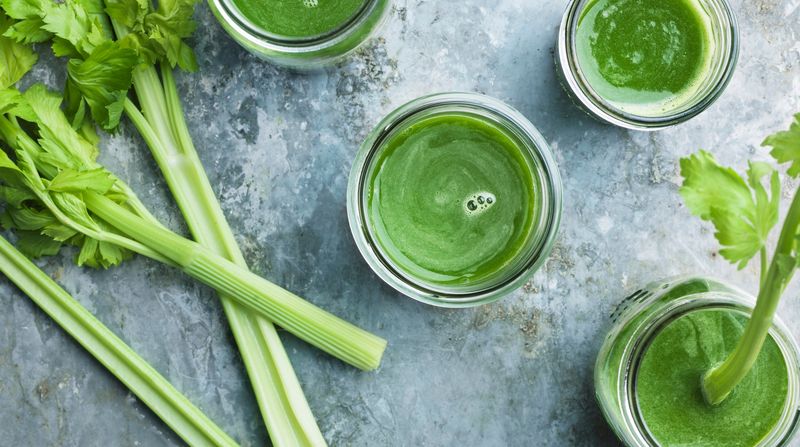
Few ideas about celery spread faster than the claim that it detoxes the body, cleanses the liver, or melts away weight. Your liver and kidneys already handle waste around the clock, and no stalk of celery has been shown to speed that up.
The National Center for Complementary and Integrative Health looked at detox diets and cleanses as a group. It reports little high-quality human research on them and no compelling research showing that detox diets remove toxins.
On weight, the picture is similar. NCCIH notes that studies of these programs are few and generally low quality, and that early weight loss from restrictive plans may not last.
Celery juice is not proven as a weight-loss method, and drinking it on an empty stomach has no special proven effect.
There is a fair limit to what that review says. It covers detox diets and cleanses broadly, so it is not a direct clinical test of every celery-juice routine someone might follow.
Still, the lack of proof is the point. You do not need celery to be a cleanser for it to earn a spot in your fridge.
As a low-calorie, crunchy vegetable, it already does its job, and that is plenty.
Wash celery and take allergy symptoms seriously
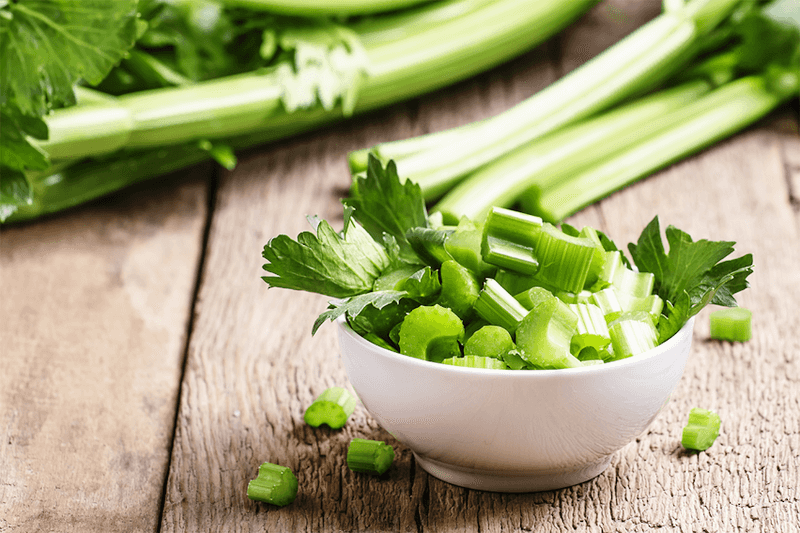
Start with the sink. FDA guidance says to wash fresh produce under running water before preparing or eating it.
Skip the soap, detergent, and commercial produce wash.
Allergies deserve attention too. Celery reactions can include itching or swelling in the mouth and, rarely, anaphylaxis, which is a serious emergency.
Not every reaction is severe, but a suspected celery allergy is worth taking seriously, as Anaphylaxis UK explains in its celery factsheet.
Some people notice mouth itching with celery because of pollen-food allergy syndrome. The American College of Allergy, Asthma & Immunology says celery is among foods that can cross-react with birch pollen.
If celery ever makes your mouth tingle or swell, stop eating it and check in with a doctor or allergist, who can sort out what is going on. If you have trouble breathing or other severe symptoms, get emergency help right away.
Make celery one part of a varied plate
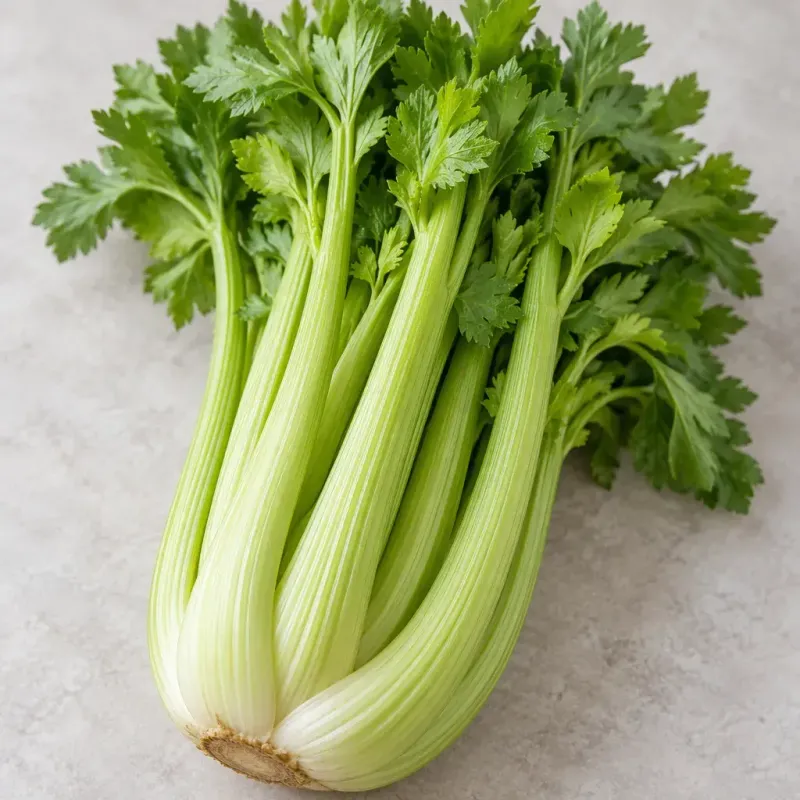
Celery earns its place as a light, crunchy vegetable. Two medium stalks bring few calories and a little fiber, and they can count toward the goals in the federal serving guide.
Rotate in other vegetables so your plate stays interesting.
Expect a good snack, not a detox or a treatment. Studied extracts, like those in the 2025 meta-analysis, are a different thing from everyday stalks.
Celery is at its best when it is simply one good vegetable among many.
Share this story