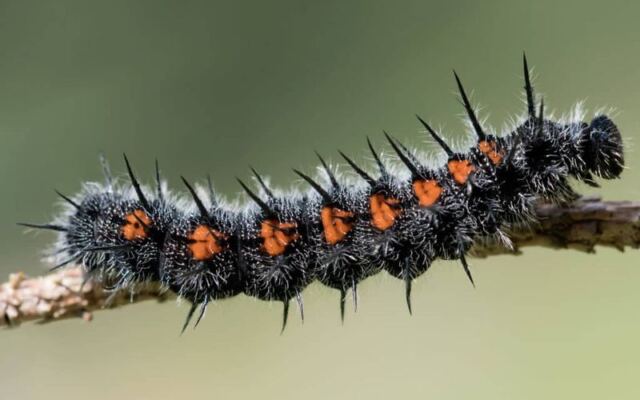
If you find a big, spiny, dark caterpillar on your mesquite, leave it alone and keep your hands off it. Some caterpillars have hairs or spines that can cause painful skin reactions, and you cannot tell which kind you have just by looking from a distance.
That does not mean this caterpillar is dangerous, or that your tree is in trouble. Here is how to stay safe, what the tree and your location can tell you, and when it makes sense to get help.
Keep your distance until you know what it is
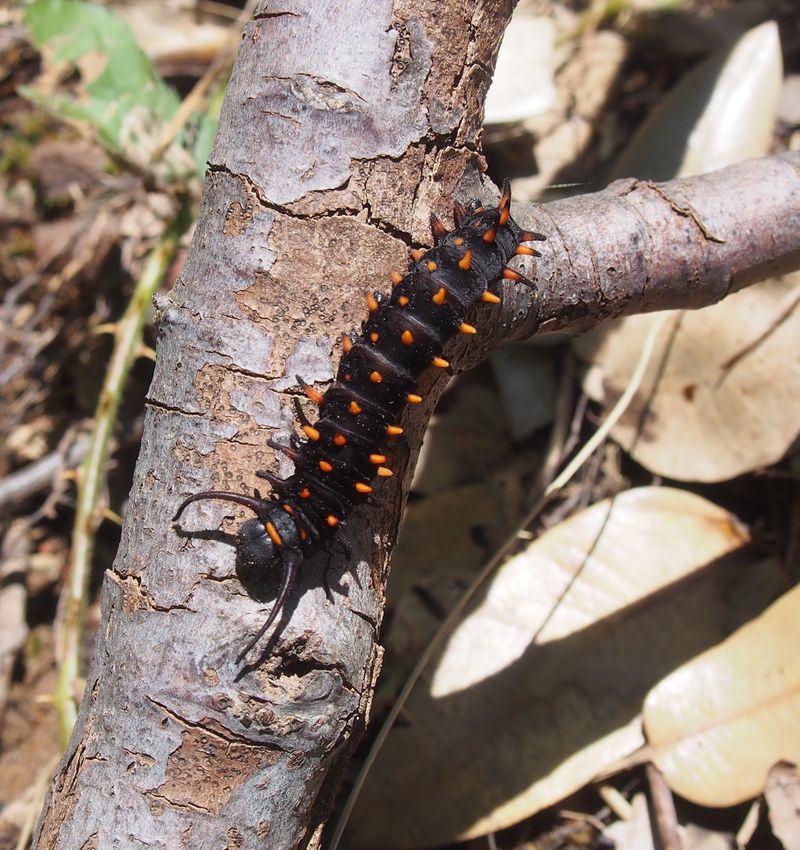
Here is the simple rule: do not pick it up, do not brush against it, and do not let children handle it. A spiny caterpillar you cannot name is best treated as a look-but-don’t-touch visitor.
The reason is practical. Poison Control explains that most caterpillars are harmless, but the hairs or spines of some species can cause reactions on the skin.
Spiny, bristly, or fuzzy caterpillars are the ones to avoid touching.
Notice what this advice does and does not say. It does not claim that every black or spiny caterpillar is poisonous, because that is not true.
It also does not say that the one on your tree is dangerous. It says that when you do not know, a little caution costs you nothing.
Being careful and knowing exactly what you have are two separate things. You can do the first right now, even if you never manage the second.
Size, color, and spikes are not enough to put a species name on an insect, and guessing wrong in either direction is the real risk.
If you need to move it, for example because it is on a walkway or a play area, do not use bare hands and do not crush it. Crushing can release hairs.
A stick, a piece of cardboard, or a tool is a better choice, as pesticide safety guidance also stresses careful handling and proper identification before any action.
For most people, the best plan is to snap a photo from a few feet away and let the caterpillar go on its way.
Mesquite and Arizona narrow the possibilities
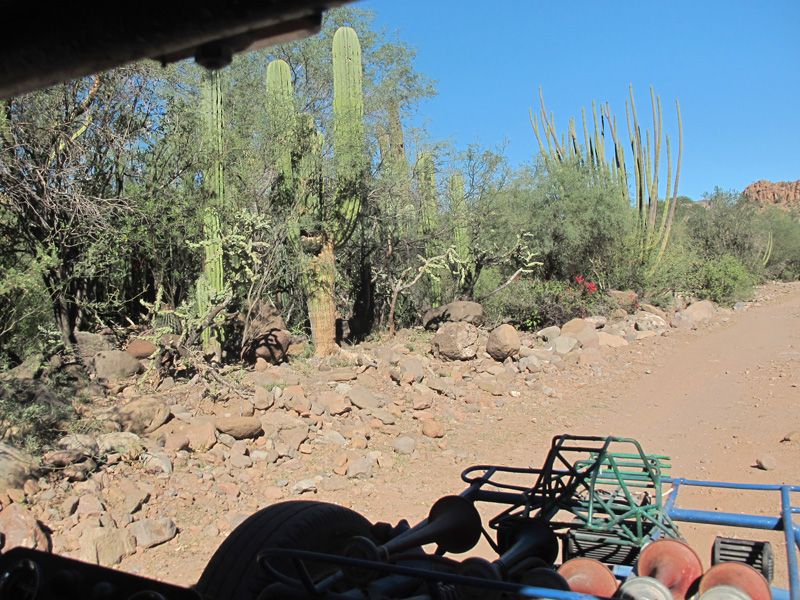
Where you live and what the caterpillar is eating are useful clues. They help shrink the list of suspects.
They do not hand you a final answer.
Take the tricolor buck moth, Hemileuca tricolor, as one example. A specialist moth reference lists it in southern Arizona and includes mesquite among the host plants its caterpillars feed on.
That makes it a reasonable candidate if you are in that part of the state.
A candidate is not a match, though. Those facts about range and host plant do not show that the caterpillar on your tree is a tricolor buck moth.
Many insects share a region, and many feed on the same trees.
Think of it like a neighborhood. Knowing a person lives on your street does not tell you who is standing at your door.
You would still need a good look at the face.
For caterpillars, that look means a clear photo, ideally from several angles, and help from someone who knows local insects. A county Extension office is a good place to start.
Until then, the safe habit stays the same. Treat the caterpillar as unidentified, enjoy the view from a distance, and avoid assuming it is either a danger or a harmless passerby.
The mesquite stinger moth has a different look
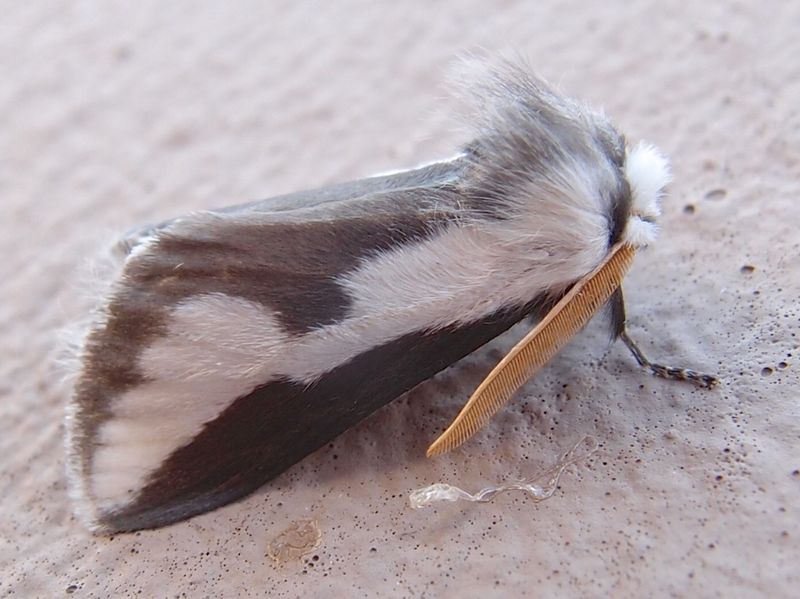
Another Arizona insect sometimes comes up in this conversation: the mesquite stinger moth, Norape tener. It is its own species, with its own look.
BugGuide describes its larva as light green with black-and-white stripes, and it records stinging hairs. So this is a caterpillar that can sting, but it is not a plain dark one.
That description does not match a plain black caterpillar particularly well. If what you saw was solid dark and spiny, the stinger moth is not an obvious fit.
Still, a mismatch on paper does not rule out every possibility, and it does not tell you what your caterpillar actually is.
A catchy common name can be misleading in the same way. Seeing a caterpillar on mesquite and thinking mesquite stinger moth is a shortcut, and shortcuts like that are how people misidentify insects.
Host plant and nickname are hints, not proof.
What helps is comparing real features: color, stripes, the pattern of spines or hairs, body shape, and size. Photos taken from a safe distance let an expert compare those details.
Keep the skin-safety rule in place no matter which species it turns out to be.
If it touches your skin, lift off hairs safely
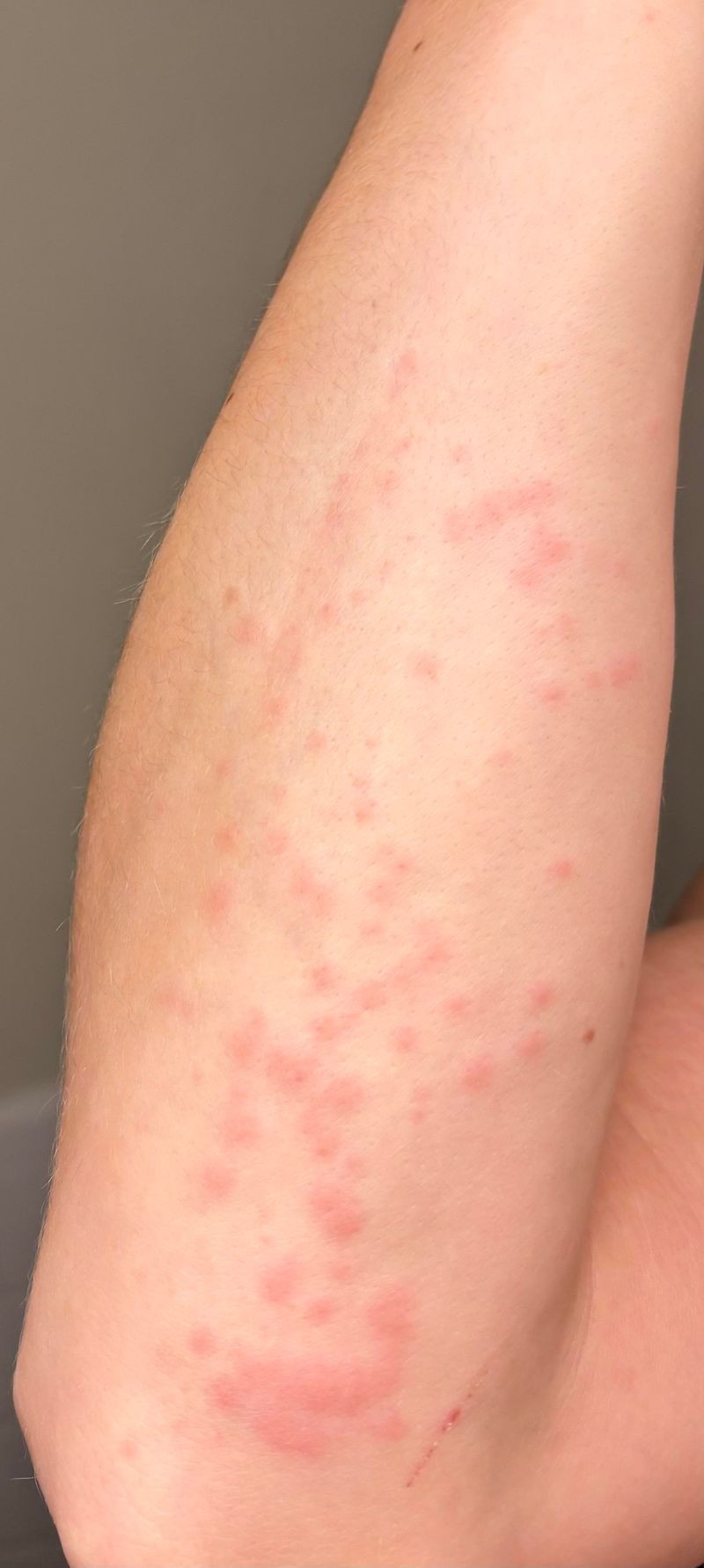
Accidents happen, especially with children and pets around. If a caterpillar ends up on your skin, stay calm.
Most contact leads to mild problems at most.
Follow the steps from Poison Control’s caterpillar guidance. First, remove the caterpillar without using bare hands.
Then press sticky tape onto the area to lift off any hairs or spines. Finally, gently wash the skin with soap and water.
Be gentle throughout. Rubbing or scrubbing can push tiny hairs deeper or spread them around.
For advice about an exposure, you can call Poison Control at 1-800-222-1222 in the United States, or use webPOISONCONTROL online. The experts can help you decide what to do next based on your symptoms.
Serious reactions are possible but rare, so there is no need to panic. Still, know the warning signs.
Difficulty breathing, fainting, or swelling of the lips, face, or tongue calls for urgent emergency care right away.
If you are not sure how bad a reaction is, calling is a sensible choice. Keep a photo of the caterpillar if you have one, since it may help with identification later.
Check the tree before considering control
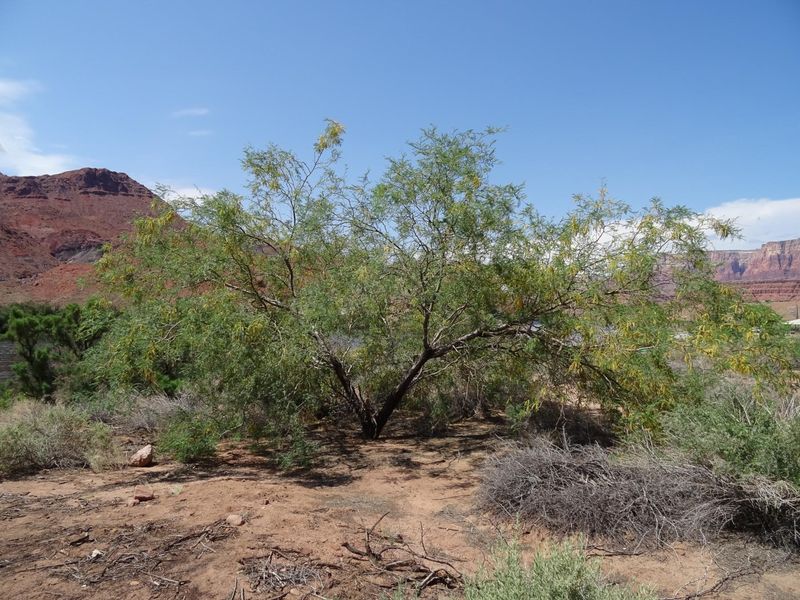
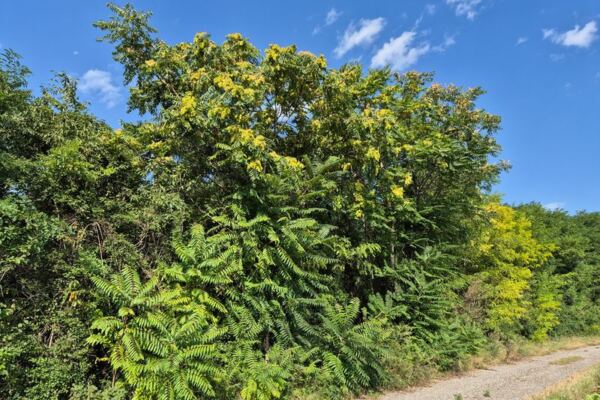
Once you are safe, turn to the mesquite. The big question is whether the tree is actually being harmed.
University of Arizona Extension documents mesquite cutworms as capable of defoliating mesquite. That is real, but it is a matter of widespread damage, not one caterpillar.
A single sighting does not mean you have a pest problem or that your tree is in danger.
Plenty of mesquite visitors are no trouble at all. A University of Arizona Extension expert notes that Hubbard’s small silkmoth feeds on mesquite and related plants but is not common enough to be considered a pest.
Not every caterpillar on a mesquite needs to be controlled.
So look at the tree. Are many leaves missing?
Are lots of caterpillars feeding at once? Or is it one or two insects and a healthy canopy?
If the damage looks substantial, photograph both the insect and the damage. Then ask a local Extension office to identify what you have.
That step matters because the National Pesticide Information Center cautions that different caterpillars call for different control methods. A product that works on one may do nothing on another, and may harm helpful insects.
Hold off on spraying or other treatment until you know what you are dealing with.
Let identification and damage guide your next step
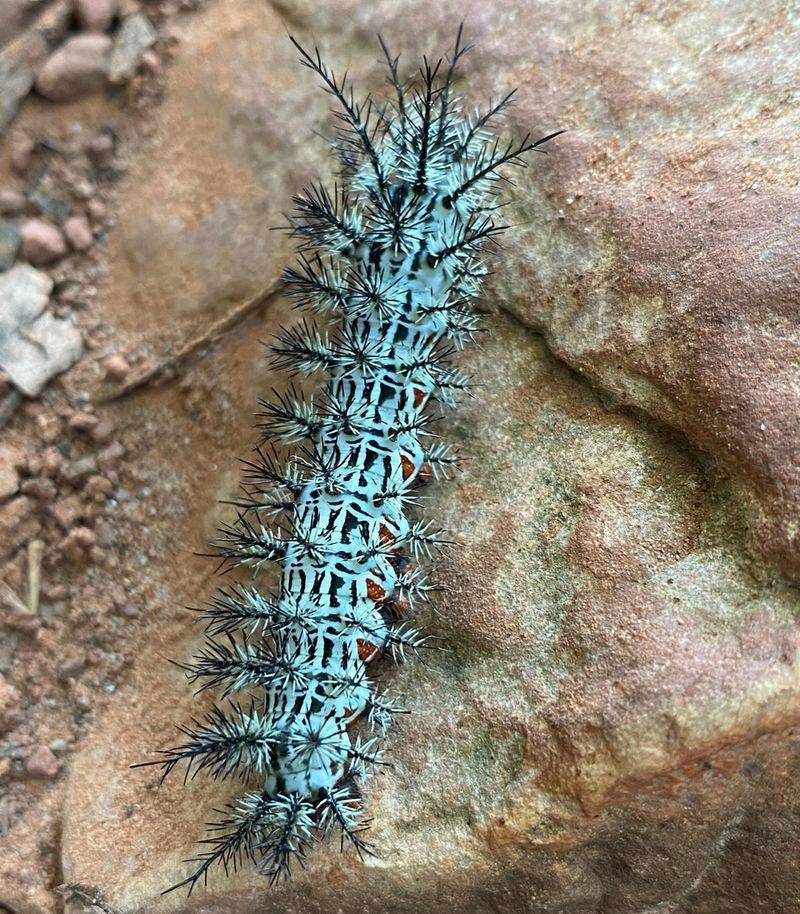
Keep your hands off the caterpillar while it is a mystery, and get a qualified identification if you need one. Let real, confirmed damage guide what you do about the tree, not the surprise of a single sighting.
Poison Control and pesticide safety guidance, from Poison Control and NPIC, point the same way.
A mesquite has handled desert summers long before you noticed this visitor, and a patient look usually serves it better than a quick spray.
Share this story