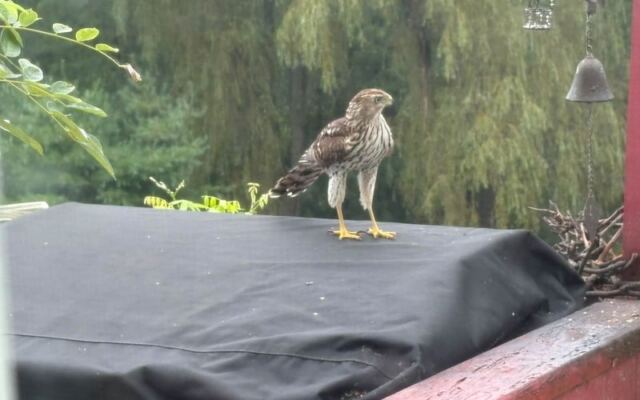
A hawk swoops through your yard, the chickadees scatter, and your feeder goes quiet. Cooper’s Hawks and Sharp-shinned Hawks sometimes hunt birds at feeders, and many Wisconsin backyard watchers see it happen in winter.
It is hard to watch, but it is also a normal part of nature. Here is why it happens, what the rules say, and what you can do to help songbirds without harming a hawk.
Why hawks hunt where feeder birds gather
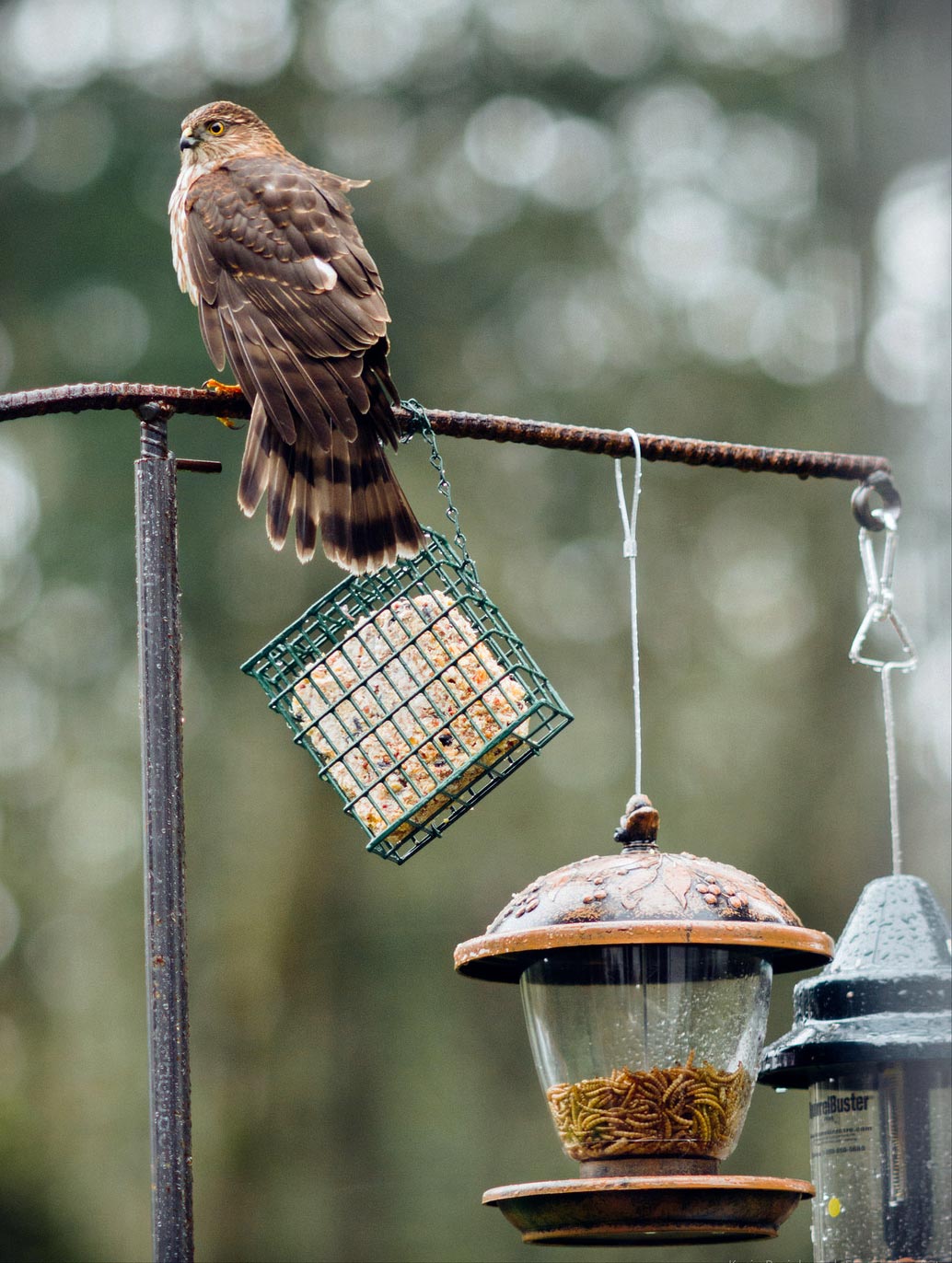
Anywhere birds crowd together in the same spot day after day, a hunter can learn to stop by. A feeder does exactly that, pulling chickadees, finches, and sparrows into one small area.
Cooper’s Hawks and Sharp-shinned Hawks are bird-eating specialists, so they may hunt there.
Plenty of people have watched it happen. A Cornell Lab summary of Project FeederWatch research reports more than 1,000 observations of these two hawks taking prey at feeders.
It also describes differences in the prey each species takes.
Those reports tell us that feeder hunts occur. They do not tell us the odds that any one bird at your feeder will be caught.
Most visits by a hawk end with no meal at all, but nobody has counted that here, so it is best not to guess.
A hawk showing up also does not prove your feeder made it settle in your yard. Hawks move around, and a single sighting may be just a passing hunter checking a likely spot.
Penn State Extension describes hawks hanging around feeders as a natural response to an easy gathering of prey, and treats it as something many feeder owners will run into.
A hawk at the window is hunting, not misbehaving. Seeing it that way makes the next steps easier to think through calmly.
What winter tracking says about feeder areas
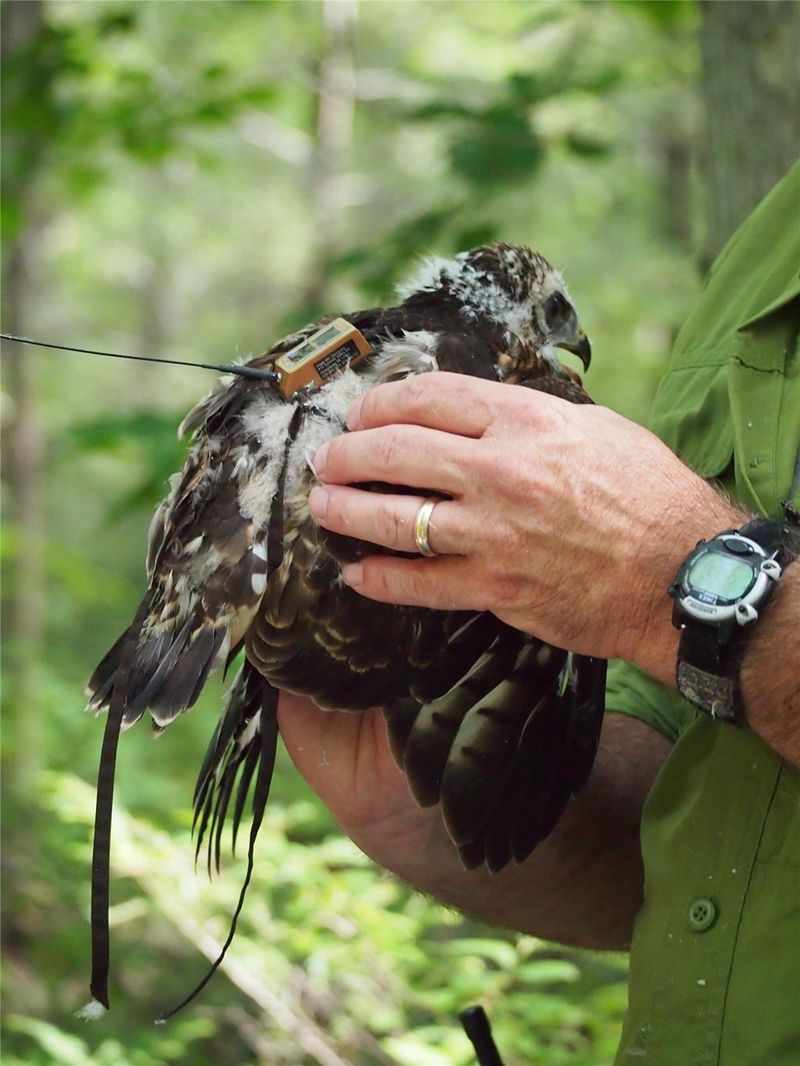
Watching a hawk strike at a feeder is one kind of evidence. Following hawks around all winter with radio tags is another, and it asks a different question.
Instead of what happens at a feeder, it asks where hawks spend their time.
In a winter telemetry study of wintering Accipiter hawks, the hawks that researchers tracked were just as likely to use areas with feeders as areas without them. They also covered broad winter home ranges, so a single yard was only a small piece of their territory.
That result fits with the feeder-hunt reports, because both can be true at once. A hawk can take a bird at a feeder and still spend its winter spread across many kinds of places.
Hunts at feeders show that hawks use them. They do not show that feeders pull hawks in.
It is also worth keeping the study’s limits in mind. It describes the hawks it tracked in its study area, not every hawk everywhere.
It cannot say how a given hawk will react to feeders, and it cannot predict whether one will visit your yard next week or not at all.
The practical lesson is to stay flexible. If a hawk visits once, you have no reason to expect it to camp out all season.
Watch what actually happens at your own feeder and adjust from there.
What Wisconsin rules say about hawks
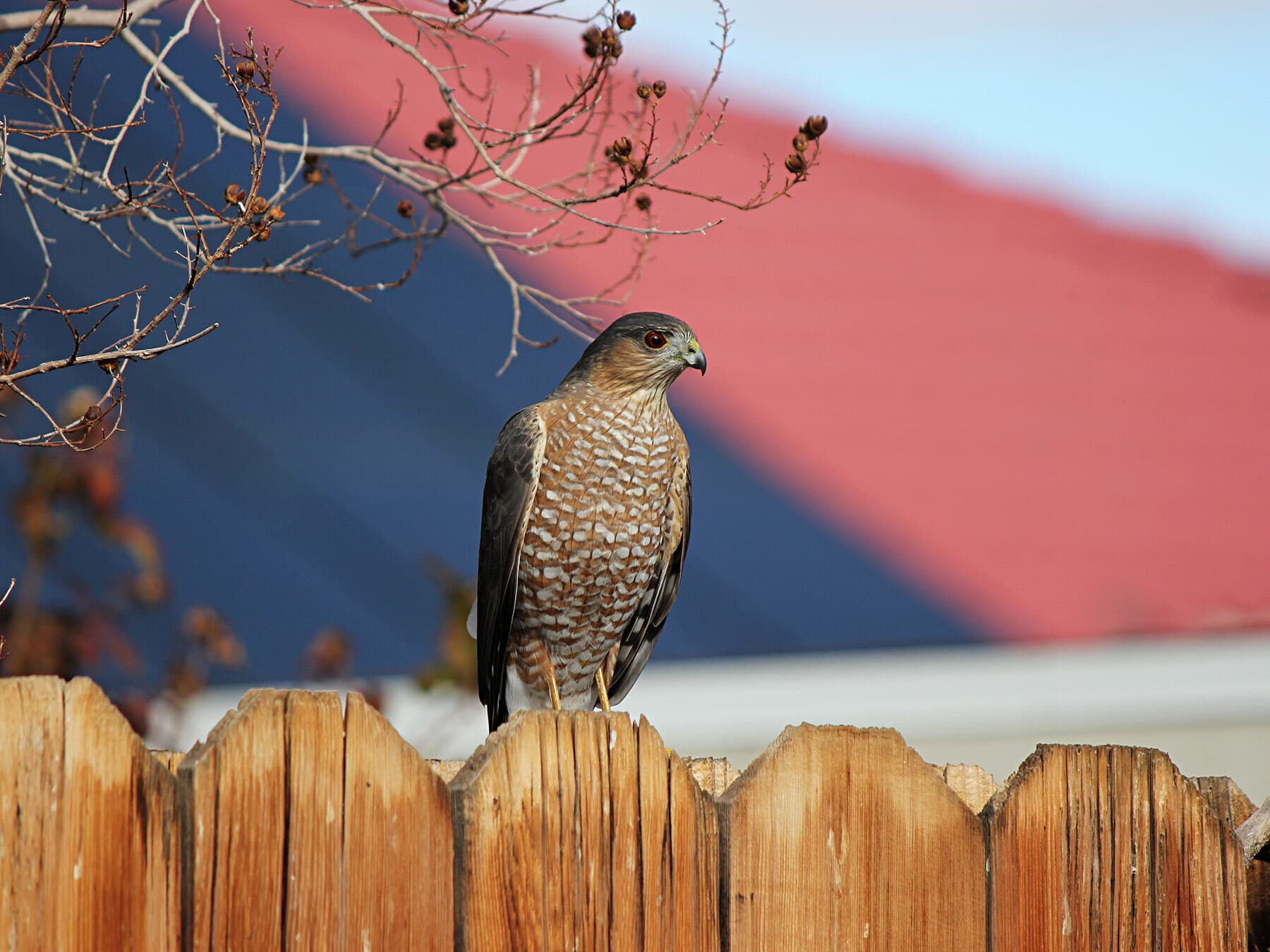
Hawks are protected wildlife, and the rules matter if you are tempted to take matters into your own hands. Wisconsin DNR guidance lists hawks among protected wild animals.
A person may not take, attempt to take, transport, or possess one without DNR authorization.
In plain terms, that means no chasing, grabbing, trapping, injuring, or killing a hawk. It also means you should not try to snatch prey away from one.
Beyond the legal trouble, getting close to a hunting hawk can hurt you or the bird.
Federal guidance draws a useful line. According to U.S.
Fish and Wildlife Service depredation guidance, a federal permit is needed to capture or kill protected migratory birds. A federal permit is generally not required just to scare or harass them without contact.
There are exceptions, including eagles and federally listed threatened or endangered species. Federal guidance also does not settle every state-law question.
If you are thinking about a specific deterrent, such as something that makes noise or flashes, ask Wisconsin DNR first.
None of this makes ordinary feeder care a problem. Pausing a feeder, moving it, or adding plants is not harming a hawk.
Those steps simply change what your yard offers, and they are the options the next two sections cover.
Pause feeding if attacks keep happening
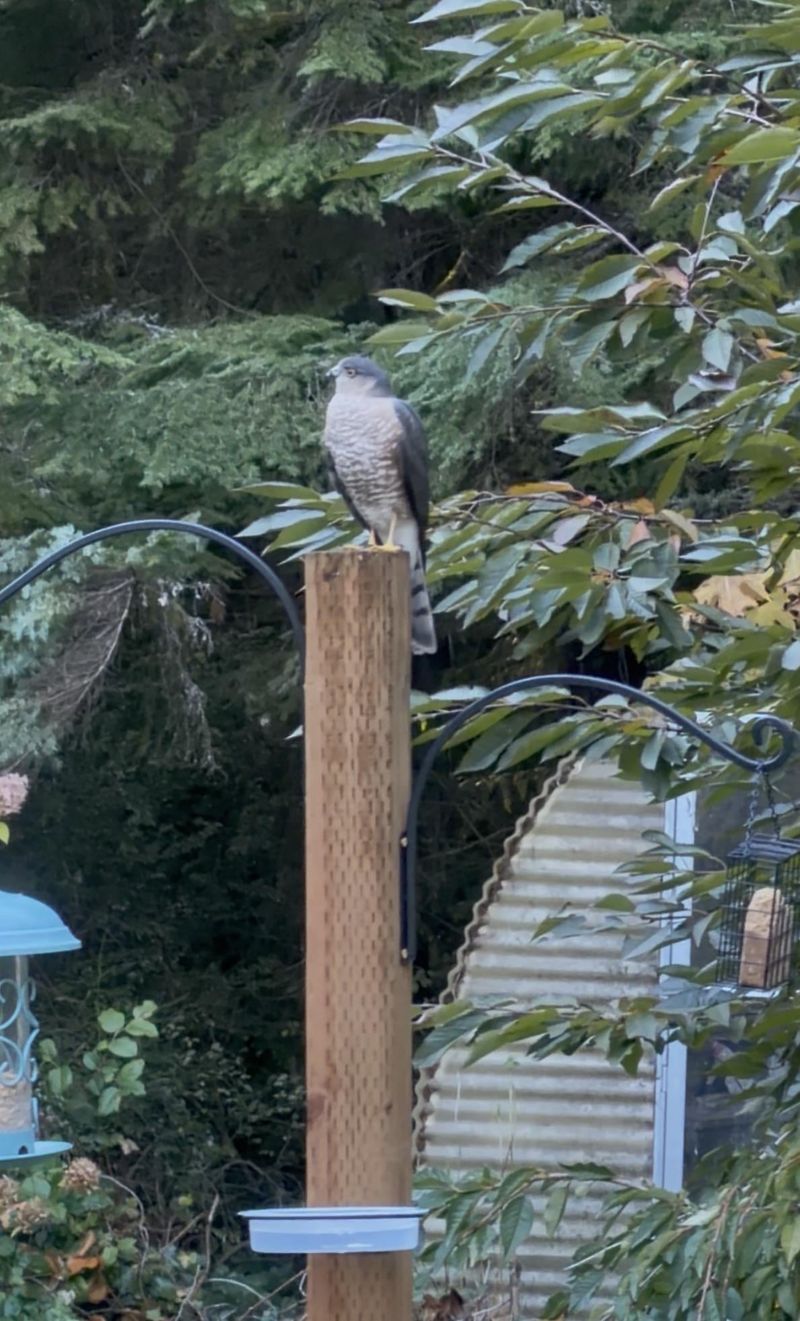
If hawk attacks keep happening at your feeder, taking it down is one practical choice. With no feeder, fewer birds crowd into one spot, so there is less of a gathering for a hawk to hunt.
It is an option, not a cure, and it cannot promise a hawk will leave or attacks will stop.
Agencies give different lengths of time. Penn State Extension suggests taking feeders down for a couple of days if a hawk has been hanging around.
Michigan DNR recommends removing feeders or stopping seed when hawks attack feeder birds, and it specifies at least two weeks. Those are two agencies giving different advice.
Neither is a universal timeline, and Michigan’s number is not a Wisconsin requirement.
So how long should you wait? Treat the range as a menu, not a rule.
You might start with a few days, watch what happens, and extend the break if hawks keep showing up.
Michigan DNR also advises cleaning up spilled seed. Seed on the ground keeps drawing birds, and ground feeders are exposed, so raking or sweeping under the feeder helps the pause actually work.
Songbirds will find food elsewhere during a break, since feeders are only a supplement to what they eat naturally. When you start again, bring the feeder back and keep watching how the birds and hawks respond.
Give songbirds places to hide
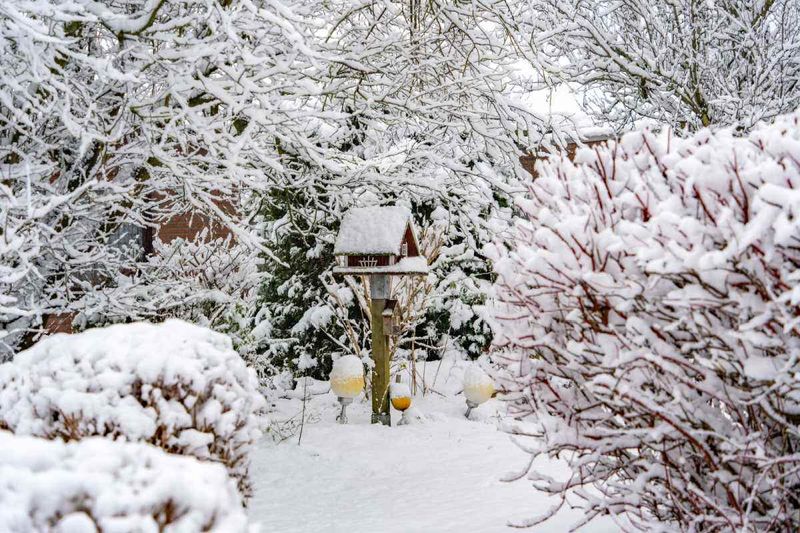
Songbirds do better when they have somewhere to duck. A tangle of branches, an evergreen, or a thick shrub gives a small bird a quick place to vanish when a hawk appears.
Penn State Extension recommends giving small birds cover in a well-planted yard.
Think of cover as a refuge, not a shield. It gives birds a place to hide, but it does not guarantee that moving a feeder or planting shrubs will stop attacks.
No single layout is proven to keep every songbird safe.
That is also why this article does not give a magic distance between feeder and shrubs. The source does not establish one.
Instead, look at your own yard and ask where birds already dart when they get nervous.
A few ideas are worth trying. Plant native shrubs and small evergreens over time, set up a brush pile from trimmed branches, or place a feeder where birds can reach thick plants quickly.
Keep in mind that a hawk can also use cover to approach, so watch for changes after you rearrange things.
If you rearrange and attacks continue, combine the steps. Plantings take time to grow, so a feeding pause can bridge the gap while new cover fills in.
Small changes add up season after season.
Get advice before handling an injured songbird
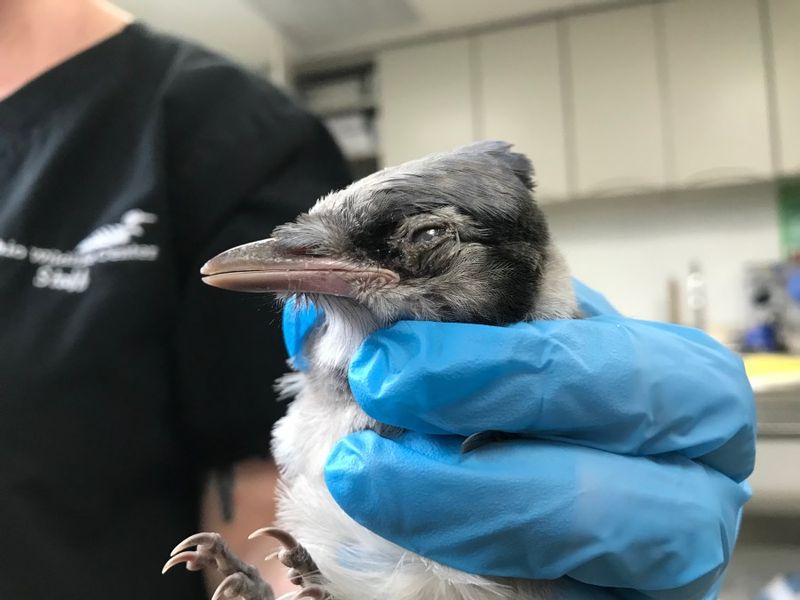
After an attack, you may spot a songbird sitting oddly still or fluttering on the ground. Resist the urge to scoop it up right away.
An apparently injured bird may not need rescuing, and handling it can add stress.
U.S. Fish and Wildlife Service guidance says to avoid unnecessary handling and to contact a wildlife rehabilitator before attempting to trap an injured bird.
A rehabilitator can tell you whether the bird needs help and how to proceed safely.
Keep a respectful distance, keep pets and children away, and watch from a window. Write down what you see, such as the species, where it is sitting, and any signs of injury, so you can describe it clearly on the phone.
The same calm approach applies to the hawk. Do not chase it, grab it, or take prey from it.
Pausing your feeders and adding cover, as Penn State Extension describes, are options to try, not guarantees.
Both birds are just trying to get through a Wisconsin winter.
Share this story