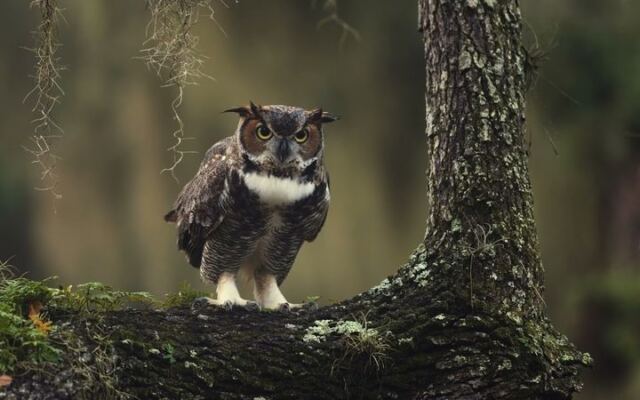
The surprising reason is simple: that deep hooting is usually owl communication, not a message about your house. Great Horned Owls use their voices to advertise and defend territory, and a pair may answer each other back and forth.
Knowing this can turn a spooky sound into something you can understand. Here is what the calls can tell you, what they cannot, and how to handle owls safely.
Great Horned Owls live in Indiana year-round
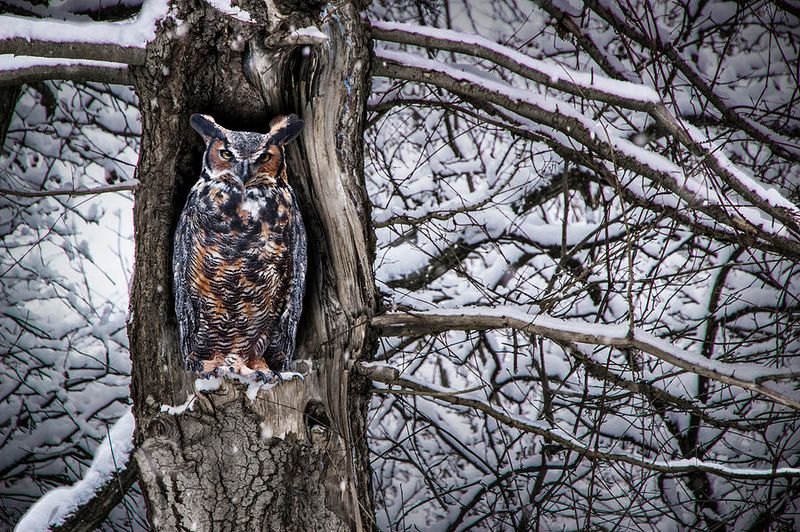
Great Horned Owls are part of Indiana’s birdlife, and Indiana DNR’s list of birds in the state includes the species. They do not leave for the winter.
The owl you hear in January may well be the same kind you hear in July.
A University of Indianapolis guide to winter birds describes the Great Horned Owl as a year-round Indiana resident that breeds in winter. That helps explain why cold-season nights can sound so busy with owl voices.
These birds are mostly active at night, especially around dusk and before dawn, according to the Cornell Lab of Ornithology. That matches the times many homeowners notice hooting, when the neighborhood is quiet and sound travels easily.
Still, local presence is only background. Indiana has other owl species, so hearing a hoot after dark does not prove a Great Horned Owl made it.
Think of the bird as a suspected Great Horned Owl unless someone has reliably identified it.
A hoot can help mark territory
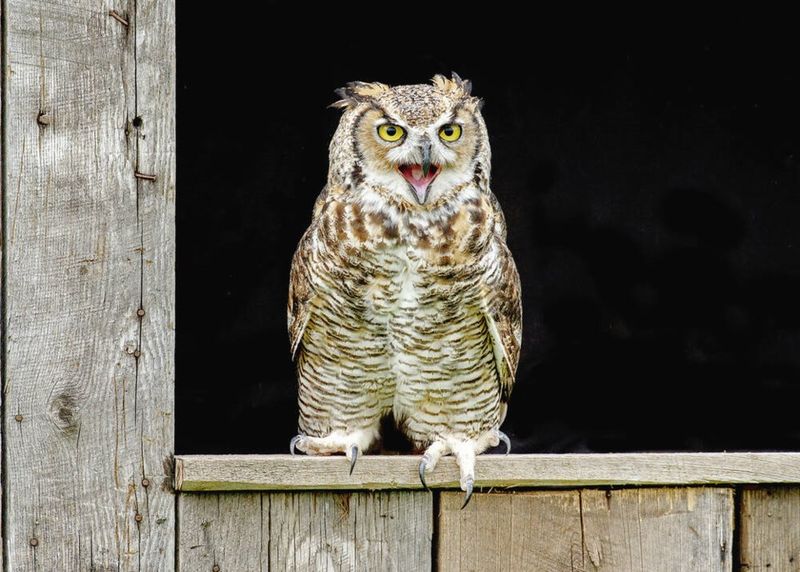
Owls cannot put up fences, so they use sound. Cornell Lab of Ornithology notes that Great Horned Owls hoot to advertise and defend their territory.
A call tells other owls that the area is already taken.
Pairs can also answer each other. One bird hoots, and its partner responds in a different pitch, creating a duet.
A peer-reviewed study of the species’ vocalizations describes territorial hooting and the associated behaviors.
These are ordinary, well-supported explanations for the sound. A hooting owl is communicating with other owls, and that is a normal part of life for the species.
What a call cannot do is tell you what prompted one particular bird to hoot. Sound alone cannot show whether an owl is reacting to a house, another owl, or something else entirely.
A house could be a factor for an individual bird, but a hoot by itself will not settle that question.
Folklore treats owl calls as omens, but there is no biological evidence behind that idea. The call is communication, not a warning aimed at the people inside.
Why calls are more common in fall and winter
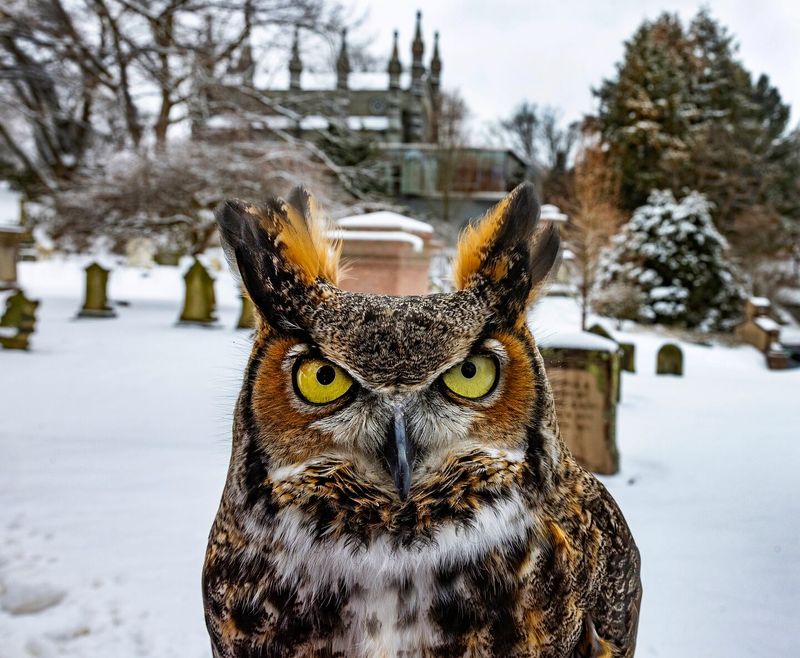
Many people notice owls most when the weather turns cold. In the study of Great Horned Owl vocalizations, territorial hoots were recorded across the year, with a peak in fall and winter.
So hooting is not limited to one short season. An owl can call in summer, though you are likely to hear more in the colder months, especially in the period before egg-laying.
Indiana’s owls are early nesters. As Cornell Lab’s life history page explains, the species is among the first birds to breed each year.
Territories get sorted out while the weather is still chilly.
Other things help too. Bare trees let sound travel farther, and longer nights give owls more active hours that overlap with your evenings indoors.
Even so, a seasonal pattern describes owls as a group. It cannot tell you whether the bird outside your window has a mate or is nesting nearby.
Treat a winter chorus as a sign of normal owl business, not a forecast.
What a night call can—and cannot—tell you
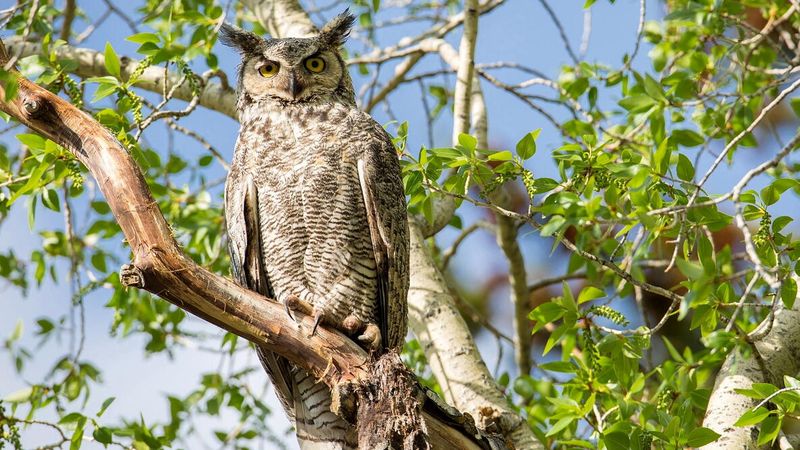
Hoots carry. A deep call that seems to come from right outside may actually come from a tree some distance away, so a loud sound does not mean the owl is on your roof.
Cornell Lab of Ornithology describes a night-active bird whose calls travel well.
Distance is only one thing a recording or a listen cannot reveal. Sound alone cannot establish an owl’s precise location, its motive, whether it has a mate, or where a nest might be.
Species is another. Indiana DNR’s bird list shows that the state has several owl species.
Great Horned Owl hoots are distinctive, but without a recording or a clear look at the bird, call it a suspected Great Horned Owl.
A quick phone recording can help if you later compare it with reference sounds. A flashlight search is not a good idea, since it can disturb the bird.
The call also says little about your home. The territorial and pair explanations in the vocalization research do not let anyone diagnose one owl’s situation from its voice.
Nor does hooting prove rodents are around. Great Horned Owls eat varied prey, so a call is not a pest report and does not promise pest control.
Owls make more than one kind of sound
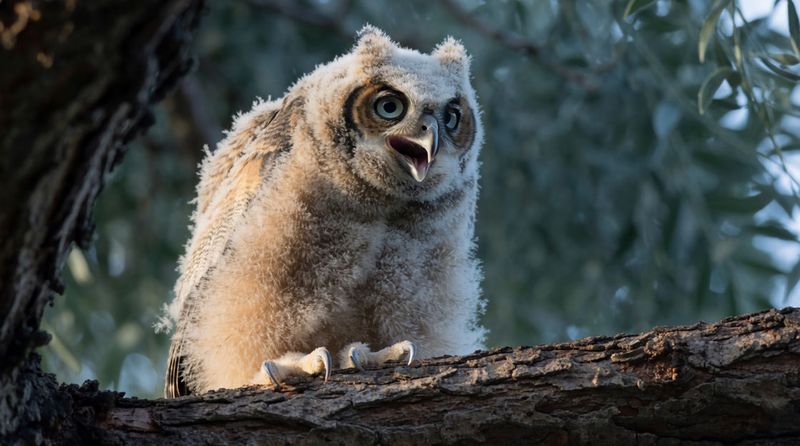
The classic hoot is only part of the repertoire. According to the Cornell Lab’s page on Great Horned Owl sounds, pairs may duet, young owls may scream while begging for food, and adults may scream in nest defense.
A duet sounds like two hooters trading calls, often at different pitches. It is a familiar pattern and fits the pair communication described earlier.
Begging young owls sound very different. Their screams can seem harsh or raspy, and they are about food, not about danger to you.
An adult’s scream in nest defense is another separate sound. It tends to be sharper and more urgent than a regular hoot.
Hearing one of these sounds gives context, but it does not prove anything on its own. A scream does not confirm a nest in your yard, and a hoot does not rule one out.
Not every owl noise is a territorial hoot.
If you hear unusual shrieks, simply note the time and place and keep your distance. Other animals and even other owl species can make loud, eerie sounds too.
Give nesting owls and young birds space
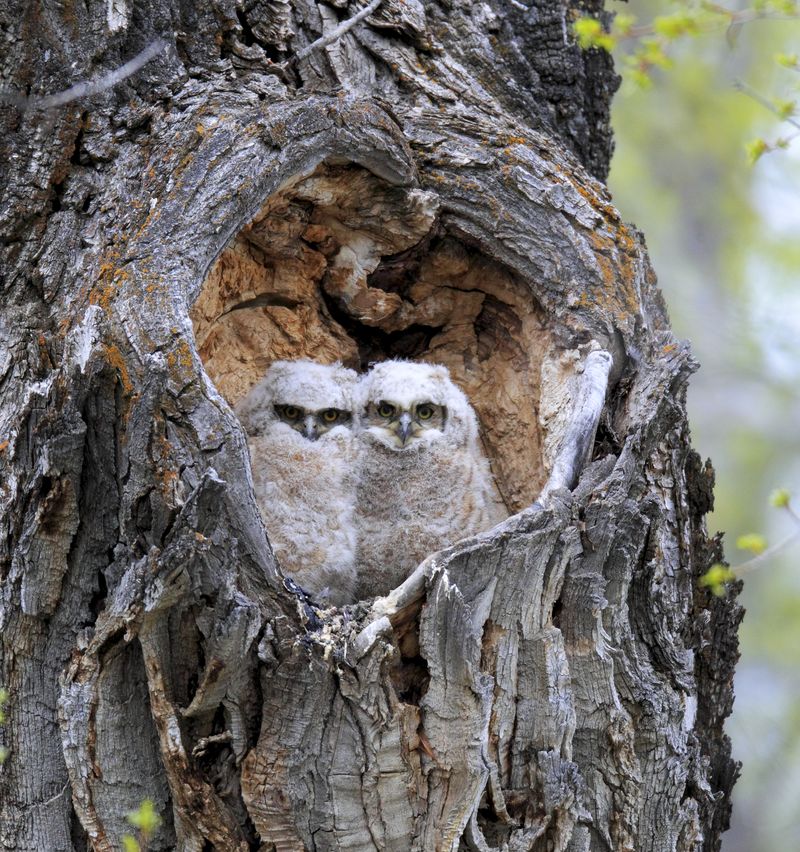
When it comes to owls, the best help is usually no help. Leave owls undisturbed, and avoid walking up to a tree to look for one.
If a nesting raptor acts aggressively, keep people and pets away from the immediate area. Indiana DNR’s bird FAQs recommend avoiding areas where nesting raptors behave this way.
If avoiding the area is not possible, or you have a safety concern, contact an Indiana DNR district wildlife biologist. They can give advice for your exact situation.
Do not approach, handle, or move an owl, and do not touch or knock down a nest. A young owl on a branch or on the ground is often still being watched by its parents.
Disturbance can hurt nesting birds. The U.S.
Fish and Wildlife Service warns that bothering a nest can lead to harm for birds and eggs.
One caution on distances: the 330-foot viewing recommendation on Indiana DNR’s FAQ page applies to bald eagle and osprey nests. It is not an owl-specific legal buffer, so simply give any owl nest generous room and watch the bird’s behavior.
Protect backyard poultry with secure enclosures
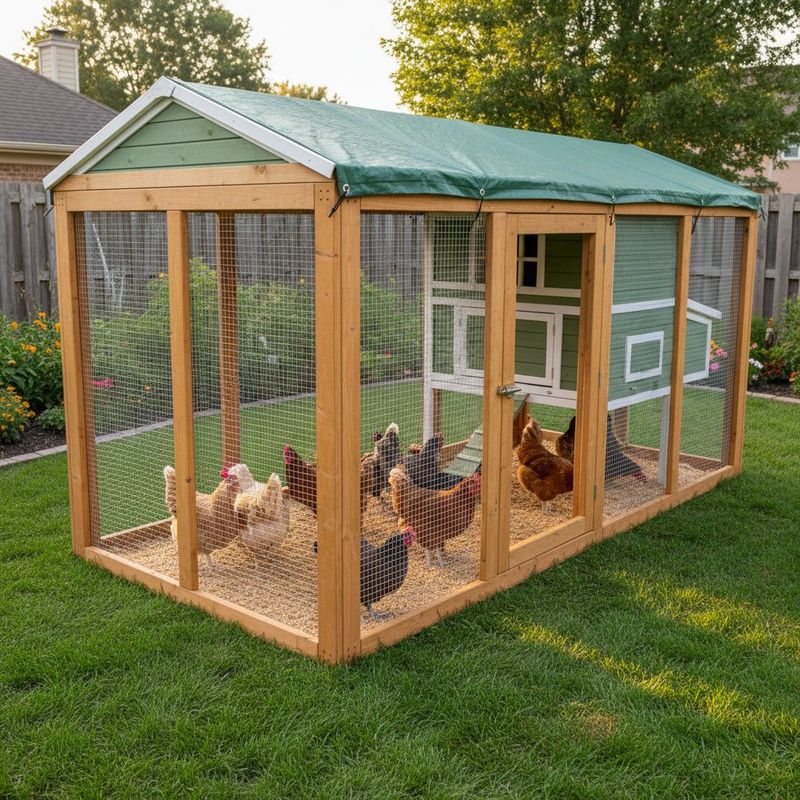
Chickens and other backyard poultry deserve protection, but that is a separate matter from why an owl is calling. An owl’s hoot does not mean it is targeting your flock.
Indiana DNR’s living with wildlife guidance recommends strengthening and covering enclosures. It also advises keeping birds enclosed during dawn, dusk, and night.
A solid roof or sturdy netting over the run keeps flying predators out. Check the wire and latches for weak spots, since many predators will test a coop for any gap.
Closing the coop door each evening before dusk is a simple habit that makes a big difference. Do it at the same time every day, so it becomes routine.
Do not harass or harm an owl to protect your birds. Good housing handles the problem without putting anyone at risk, and it also guards against other nighttime predators.
Leave ordinary callers alone and seek help with conflicts
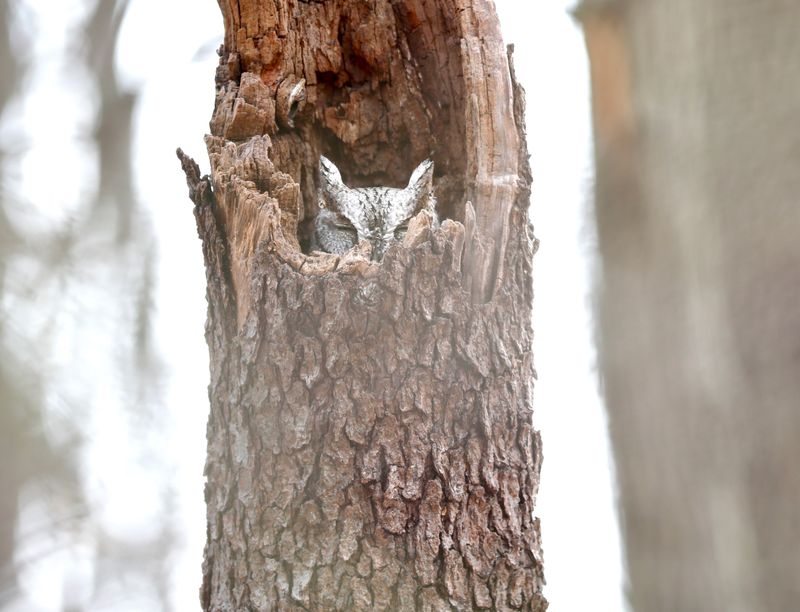
For ordinary hooting, the answer is easy: let the owl be. A caller in the trees is doing what owls do.
A real safety concern or property conflict is different, and that calls for agency guidance rather than personal action. Indiana DNR says a federal migratory-bird depredation permit is required to harm, kill, or capture non-endangered hawks and owls causing damage or safety threats, as described in its living with wildlife guidance.
The federal rule is a separate matter. The U.S.
Fish and Wildlife Service explains that nest destruction alone is not automatically prohibited in every circumstance, but destruction that results in unpermitted harm to birds or eggs can violate the Migratory Bird Treaty Act. Because the details matter, ask the agencies before touching any nest.
Some nights, the best response to a hoot is to listen. The owl is not talking to you, and that may be the most reassuring part.
Share this story