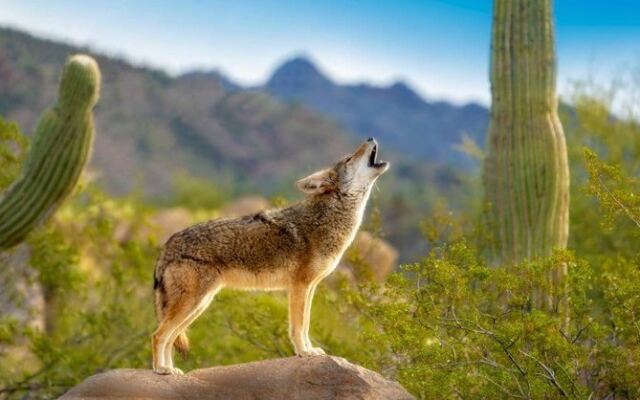
Coyote howls and yips are the way these animals talk to each other, and the calls you hear at night mostly say things like “here I am,” “this area is occupied,” and “where is everyone?” Hearing a whole chorus outside your window can feel eerie, especially in Indiana farm country or near the edge of Indianapolis. The sounds are real communication, but no one can translate a single yip or howl word for word.
Knowing what the calls can and cannot tell you makes those late-night concerts a lot less spooky.
Coyote calls communicate, but they are not a code
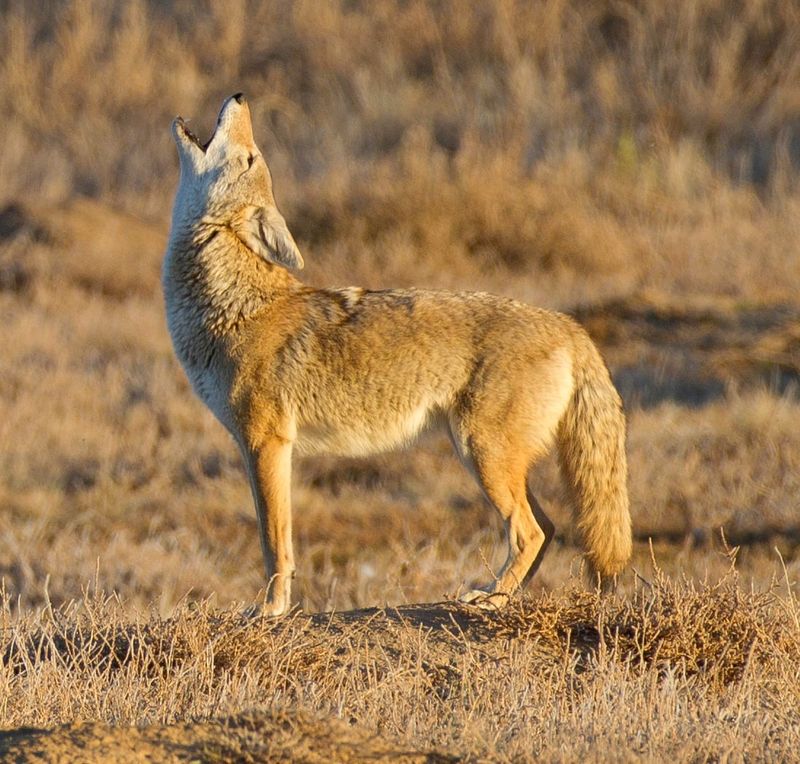
Suppose you hear a burst of yips and a long howl behind your barn. It is natural to wonder what was said, but coyote calls are not a dictionary of fixed words.
USDA wildlife-management guidance notes that coyote sounds often blend into sequences, which makes a sound-by-sound interpretation uncertain.
What listeners can say is that howls, yips, and barks are communication. Indiana DNR says coyotes live throughout the state, including urban areas, and that they talk with barks, yips, and howls.
Research on resident coyotes, such as a 1998 study of howling, shows that calling varies with the season and with the animal’s social role.
Here is the catch. When you hear a call from your porch, you do not see who is calling, how many animals are there, or what just happened nearby.
That missing context is why a neat claim like “that yip means a pup is checking in” cannot be trusted.
Darkness does not add a special meaning either. Coyotes can be active day or night, and Missouri’s conservation agency reports that calls happen in daytime too.
We simply notice them more after dark, when the neighborhood is quiet and sound carries.
Calls help coyotes keep track of one another
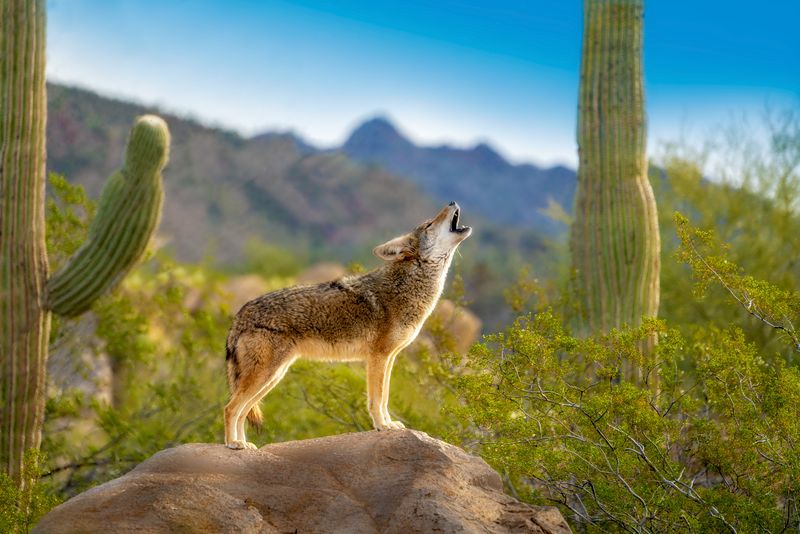
Think of coyote calls as a way of staying in touch across open ground. According to the USDA guide, howls can communicate where an animal is or that a home range is occupied.
A howl from one hillside can let other coyotes know who is around without anyone having to meet face to face.
Calls can also help a family group keep contact. A coyote that has wandered off to hunt can call, and relatives can answer.
The 1998 howling research mentioned earlier looked at coyotes in different social roles and found that howling differs among them, which fits the idea that calls are tied to family and group life.
Barking is a different kind of sound. USDA describes barking as something that may attract attention or announce danger.
A coyote barking at a car on a gravel road or at a dog in a yard may simply be saying, “I see you.”
Each of these is a possible purpose, not a guaranteed meaning for any one sound. A single howl might be a location call, a way of checking in, or a bit of both, and you cannot tell which by ear.
Indiana DNR points out that coyotes often live in family groups, so many choruses are likely relatives talking, not a crowd of strangers.
A helpful habit is to ask what a call might be doing instead of what it says. That keeps curiosity high and guesswork low.
Late fall is a time of change for Indiana coyotes
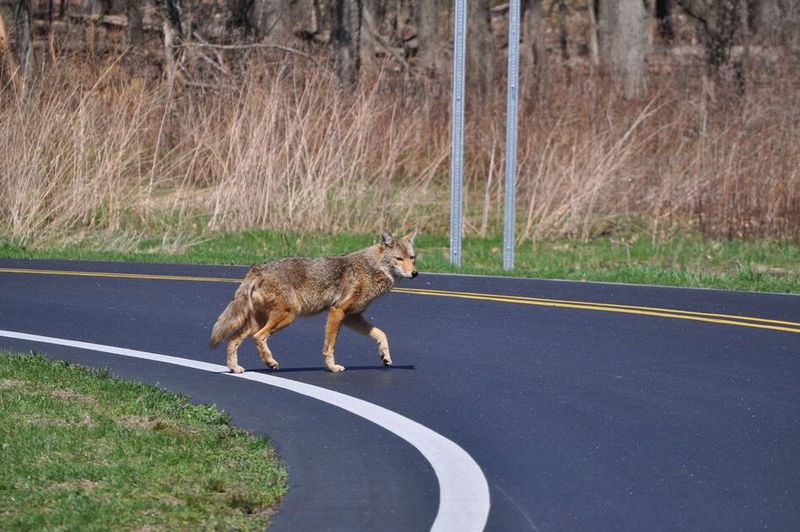
By late fall, the Indiana coyote year is in a very different place than it is in spring. Indiana DNR says pups learn to hunt in the fall and usually disperse, meaning leave to find their own space, before their first birthday.
The agency places mating in February and pup births in April.
So the choruses you hear in November may coincide with young coyotes learning to hunt and moving out, along with adults calling about territory. They do not necessarily mean mating has begun, and they are not a sign of newly emerged pups.
Those events come later in the winter and spring.
Other sources give slightly different dates. The USDA guide describes breeding as typically happening in February and March.
Treat all of these as general seasonal patterns, not a calendar that every coyote follows.
Howling also changes through the year. A study of coyotes in Yellowstone, the 1998 howling research, found that howling peaked around dispersal and breeding periods and was lowest during pup-rearing.
That work was not done in Indiana neighborhoods, but it supports the idea that the season shapes how much coyotes call.
If you hear more yips than usual this time of year, a changing family and a few young animals finding their way is a reasonable backdrop. It is context, not a certain explanation.
A chorus can sound bigger than the group really is
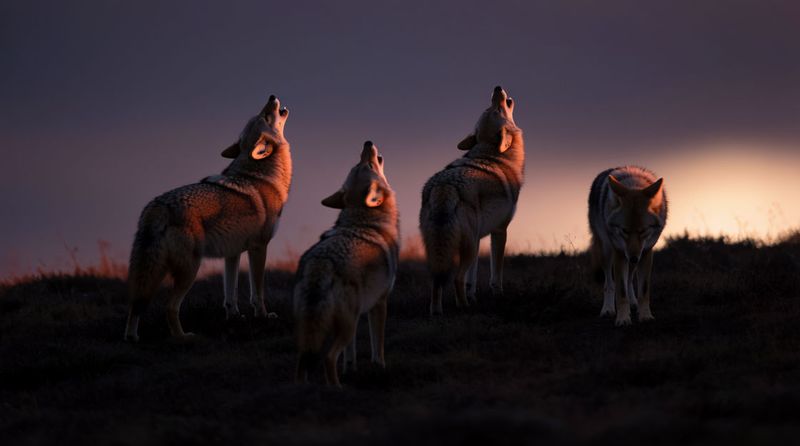
Ever count voices in a chorus and land on a dozen? You are in good company, and you are probably wrong.
Coyote yips and howls overlap and bounce around, so two or three animals can sound like a crowd.
Indiana DNR says listeners cannot reliably tell group size once three coyotes are calling. That means a big sounding chorus does not prove a big group.
Researchers tested this. In a 2017 sound-playback study, participants overestimated the number of coyotes they heard by nearly twofold.
Distance is just as hard to judge. Sound travels differently over open fields, across frozen ground, or between houses, so a call that seems close may be farther away, and the reverse can be true as well.
A practical example: if you hear a lively chorus after dark, skip the headcount. Check that pets are inside, and carry on with your evening.
The sound alone does not tell you how many coyotes there are or how near they are.
Hearing a coyote is not by itself a reason to panic
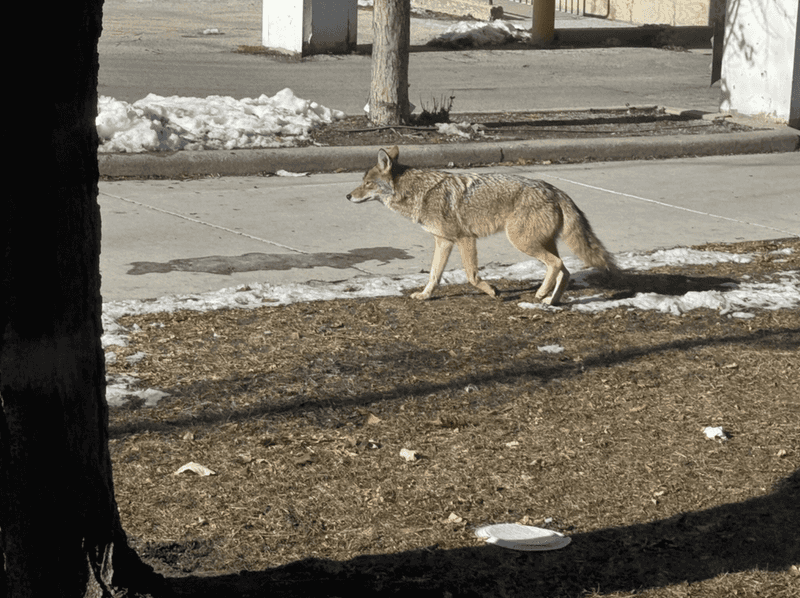
Hearing coyotes, or even spotting one, is part of living in Indiana. According to Indiana DNR’s common questions page, coyotes normally avoid people, and seeing one alone is not cause for concern.
Calls are no different. A howl outside your window is not a sign of an approaching encounter, and sound alone does not show a den, a kill, or an attack about to happen.
Nor is there any sign that coyotes howl because of moonlight; a study cited in the group-size research found no link between howling and moonlight intensity.
Pets are where the real risk lies. Indiana DNR notes that pets can be at risk, which is why a little planning goes a long way.
Small dogs and cats are the animals most often worried about.
A fair way to think about it: the howl is a reminder that coyotes share your neighborhood, not a warning. Stay calm, keep an eye on your animals, and treat the sound as a prompt to check your habits, not as a reason to lose sleep.
Protect pets and give coyotes room to leave
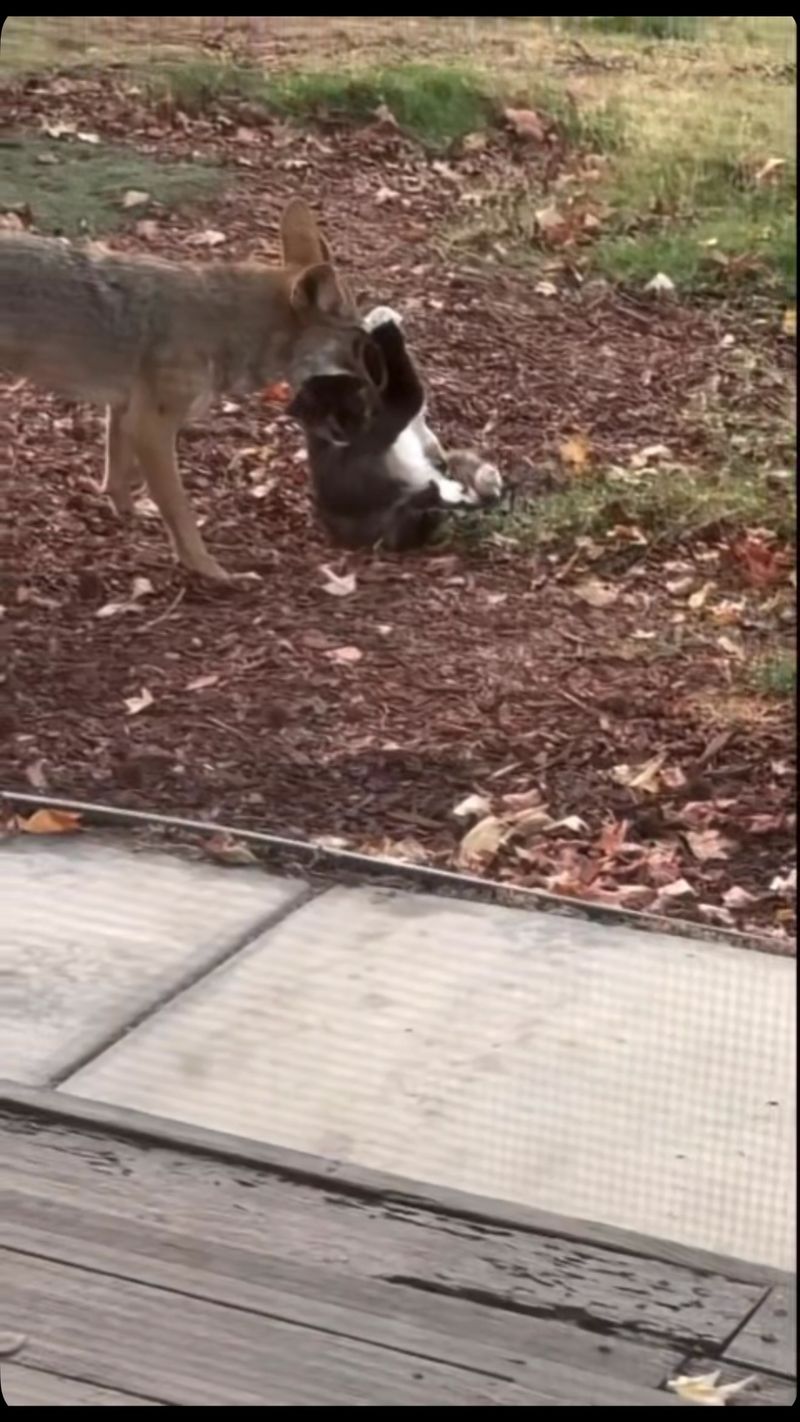
Once the howling starts, the best response is a short checklist. Keep cats indoors, since they are easy prey outside after dark.
Supervise your dogs when they are outside, and keep them on a leash, even in the yard if you live near fields or woods.
Food is the other big piece. Secure pet food, garbage, and anything else coyotes could reach, such as fallen fruit or bird seed spilled below a feeder.
Indiana DNR’s coyote fact sheet lists these precautions, and they work in a farmyard as well as a subdivision.
If you do see a coyote nearby, you can make noise or spray it with water. The goal is to remind it that yards are not a comfortable place to linger.
Do not corner it, chase it, or try to get close; leave it a clear path to walk away, because an animal with an escape route usually takes it.
The state agency’s main coyote page gives the same direction on leaving an escape route. Nothing here requires approaching the animal to figure out what its calls mean.
The howls are a reminder that wild neighbors are close, and a few easy habits let everyone stay on their own side of the fence.
Share this story