Get the latest garden guides in your inbox →
Gardening Latest
  • General Gardening
  • Lawn Care
  • Plant Care
  • Composting
  • Soil Health
  • Backyard
  • Garden Muse Magazine
  • General Gardening
  • Lawn Care
  • Plant Care
  • Composting
  • Soil Health
  • Backyard
  • Garden Muse Magazine
  • News
  • Gardening Calendar
  • Garden Structures
  • Vegetable Garden
  • Vertical Garden
  • Raised Beds
  • Hydroponics
  • General Equipment
  • Community Gardens
Garden Themes
  • Spiritual Garden
  • Hydroseeding
  • Seeding and Laying Sod
  • Artificial Grass
  • Lawn Care Equipment
  • Plants
  • Trees
  • Planting Tools
  • Composting Basics
  • Fertilizer
  • Alternative Growing Mediums
  • Front Yard
  • Backyard Activities
  • Landscaping
Gardening Latest

Explore by state

Which state is your garden in?

Currently viewing Indiana

All states

Northeast

  • Connecticut —
  • Delaware 36
  • Maine —
  • Maryland 22
  • Massachusetts 38
  • New Hampshire —
  • New Jersey 22
  • New York 31
  • Pennsylvania 32
  • Rhode Island —
  • Vermont —

Southeast

  • Alabama 22
  • Arkansas —
  • Florida 22
  • Georgia 23
  • Kentucky 36
  • Louisiana 21
  • Mississippi —
  • North Carolina 20
  • South Carolina 35
  • Tennessee 19
  • Virginia 21
  • West Virginia —

Midwest

  • Illinois 21
  • Indiana 23
  • Iowa 35
  • Kansas —
  • Michigan 22
  • Minnesota 21
  • Missouri 21
  • Nebraska —
  • North Dakota —
  • Ohio 22
  • South Dakota —
  • Wisconsin 37

Southwest

  • Arizona 22
  • Colorado —
  • Nevada —
  • New Mexico —
  • Oklahoma —
  • Texas 21
  • Utah —

West

  • Alaska —
  • California 21
  • Hawaii —
  • Idaho —
  • Montana —
  • Oregon —
  • Washington —
  • Wyoming —

No state matches that search.

Site menu

Gardening Latest
  • General Gardening
    • News
    • Gardening Calendar
    • Garden Structures
    • Vegetable Garden
    • Vertical Garden
    • Raised Beds
    • Hydroponics
    • General Equipment
    • Community Gardens
    Garden Themes
    • Spiritual Garden
  • Lawn Care
    • Hydroseeding
    • Seeding and Laying Sod
    • Artificial Grass
    • Lawn Care Equipment
  • Plant Care
    • Plants
    • Trees
    • Planting Tools
  • Composting
    • Composting Basics
  • Soil Health
    • Fertilizer
    • Alternative Growing Mediums
  • Backyard
    • Front Yard
    • Backyard Activities
    • Landscaping
  • Garden Muse Magazine

Explore

  • About GardeningLatest.com
  • Contact Us

Get the latest from the garden

New guides on lawn care, plants and backyard projects, sent when they go up.

Subscribe →

Follow

  • Facebook
  • X
  • Pinterest
  • YouTube
Indiana Gardening

Your Neighbor’s Tree Ended Up in Your Indiana Yard After the Storm, and Here’s Who Pays the Bill

When a storm drops your neighbor's tree in your yard, the bill usually lands in one of two places: your own insurance…

DH

By Dale Hutchins

November 26, 2026 · 6 min read

Your Neighbor’s Tree Ended Up in Your Indiana Yard After the Storm, and Here’s Who Pays the Bill

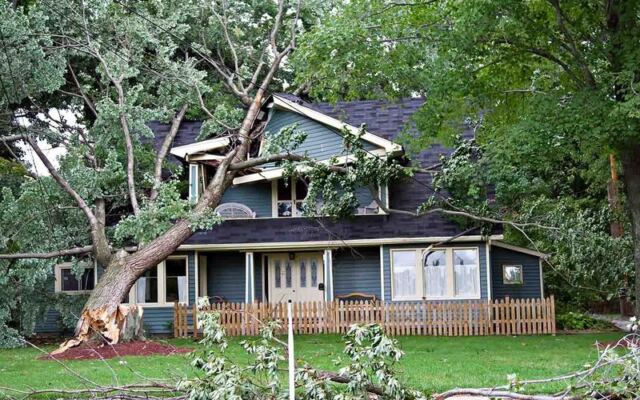
When a storm drops your neighbor’s tree in your yard, the bill usually lands in one of two places: your own insurance policy or, in some cases, the neighbor. Which one depends on what the tree hit and whether anyone ignored an obvious danger.

The tree’s old address does not decide it by itself. Knowing the difference can save you money, time, and a lot of arguing over the fence.

At a glance

Where
Indiana Gardening
Hardiness zone
6 −10 to 0°F
Read
6 minutes
Published
November 26, 2026

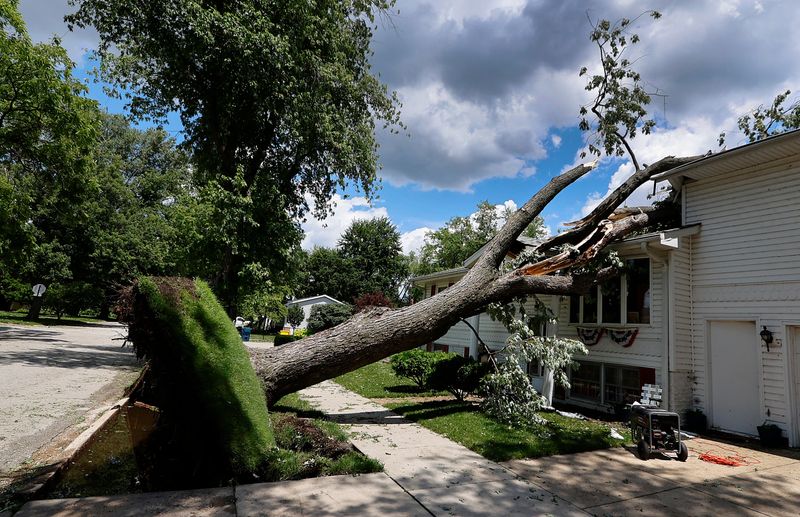
The tree’s former address is only part of the answer
The tree’s former address is only part of the answer
© Chicago Tribune

Two separate questions tend to get mixed together after a storm. One is what insurance will cover.

The other is whether a neighbor may be legally responsible. Where the tree grew does not settle either one.

Insurance depends on your policy and on what the tree actually did. Indiana Department of Insurance guidance separates damage to a home from the cost of removing a tree that caused no damage.

Those are treated differently, so it helps to sort your situation into the right bucket early.

Legal responsibility is a different track. A neighbor may owe a duty of reasonable care when a tree poses an unreasonable risk, as the Indiana Court of Appeals recognized in Marshall v.

Erie Insurance Exchange. Whether that duty was ignored depends on the facts, not on where the trunk once stood.

The sections below walk through three things: damage to a structure, yard cleanup, and evidence that someone failed to deal with a known hazard.

Damage to an insured structure usually starts with your policy
Damage to an insured structure usually starts with your policy
© Piekarski Tree Care

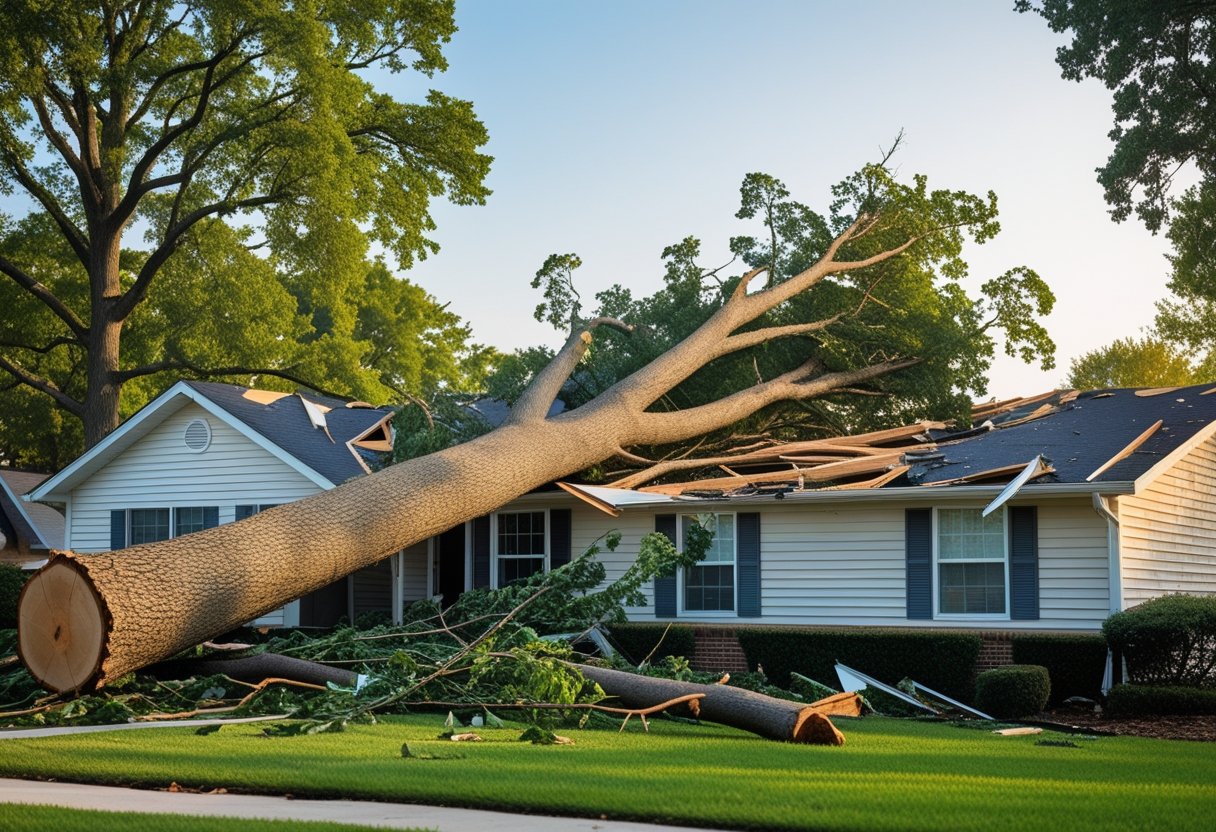
Picture a limb crashing through your roof or a trunk crushing your detached garage. In that case, you will generally start with your own homeowners insurer, no matter whose yard the tree grew in.

The Insurance Information Institute explains that a standard policy typically covers damage to the structure and contents when a tree hits an insured building.

Courts may look at how the tree looked before it fell, such as dead limbs, rot, or a lean, and at what the owner knew or had been told.

That is general guidance, not a promise. Your actual policy, deductible, coverage limits, and endorsements control what gets paid.

Two neighbors with similar damage can see different results because their policies are written differently.

Your deductible matters too. If repairs cost only slightly more than the deductible, a claim may not leave you with much money.

Your agent can help you weigh that before you file.

Sometimes your insurer will try to recover its costs later. This is called subrogation, and it means your insurer may seek reimbursement from your neighbor’s insurer if the neighbor was responsible.

That outcome is possible, not guaranteed, and it happens between the insurance companies. You still begin with your own claim, and the state’s consumer guidance points the same direction.

A tree in the yard is not automatically a covered cleanup
A tree in the yard is not automatically a covered cleanup
© www.anthonystreeservices.com

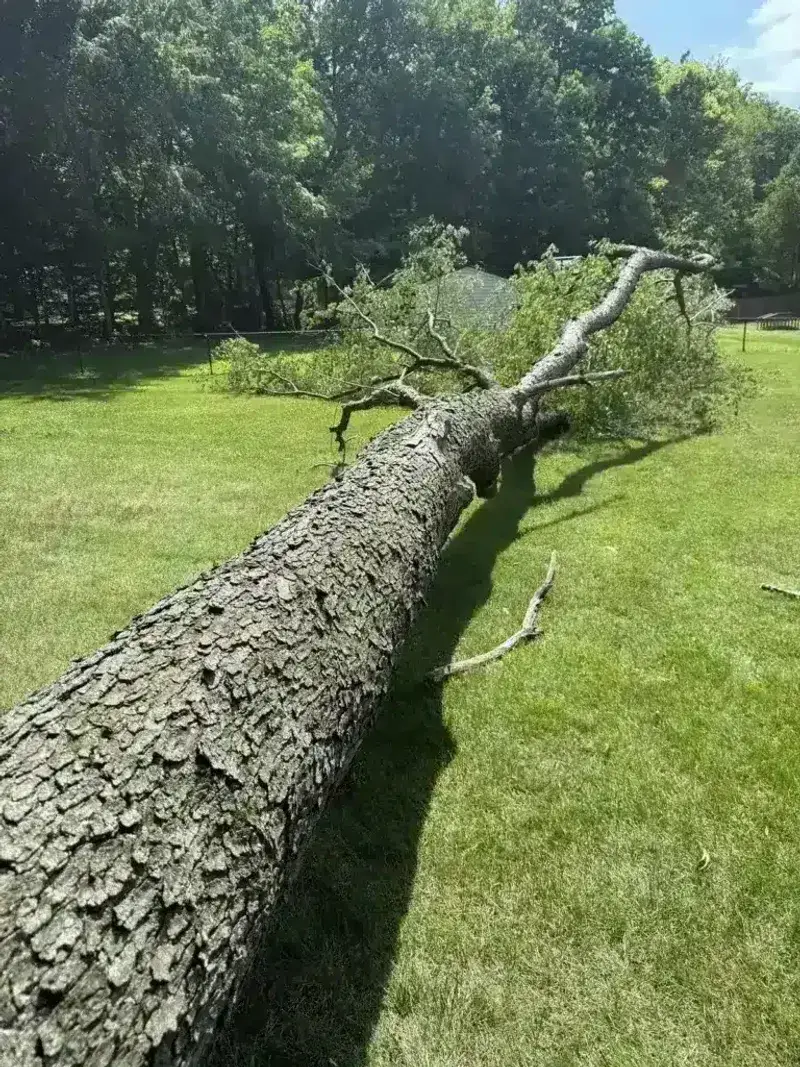
Sometimes the tree comes down and misses everything important. It lies across the grass, blocks the driveway edge, or leans on a fence, and the house is untouched.

Here the bill for hauling it away can be a surprise.

The Indiana Department of Insurance says removal of fallen trees is generally not covered by most standard homeowners policies when the tree did not land on and damage the home. So a tree in the yard is not automatically a covered cleanup, and insurance does not pay to remove any tree that lands on your property.

Policies differ, though, and some include limited removal coverage or exceptions, such as when a tree blocks a driveway or ramp. Do not assume a specific dollar limit applies to you.

Numbers you may see online are commonly cited examples, not guaranteed Indiana benefits.

The practical step is to call your insurer and ask which policy language applies, what limits exist, and whether any endorsement changes the answer. Write down who you spoke to and what they said.

If the tree is still your problem after that call, the neighbor question from the next section may become relevant.

When can a neighbor be responsible?

When can a neighbor be responsible?
© mwl-law.com

Indiana courts look at fairness and facts. In Marshall v.

Erie Insurance Exchange, the Indiana Court of Appeals recognized that an urban or residential landowner can owe a duty of reasonable care concerning a hazardous tree that poses an unreasonable risk to neighbors.

Having that duty is not the same as breaking it. Whether an owner fell short depends on the evidence and the circumstances.

Courts may look at how the tree looked before it fell, such as dead limbs, rot, or a lean, and at what the owner knew or had been told.

Warnings can matter. A written note, an email, or a photo showing the tree’s condition may help show that the hazard was obvious.

In the Marshall case, the record included warnings to the owners and evidence about the tree’s condition.

Here is what does not settle the question on its own. A tree crossing a property line does not prove fault.

A storm does not automatically excuse a landowner either, if a hazardous tree may have posed an unreasonable risk before the wind arrived. A healthy tree that a severe storm knocked over looks very different from a visibly rotting one that was ignored for years.

Every dispute turns on its own facts, so no one can predict an outcome from the general rule. A local attorney can look at your evidence and tell you where you stand.

Stay clear of electrical and unstable tree hazards
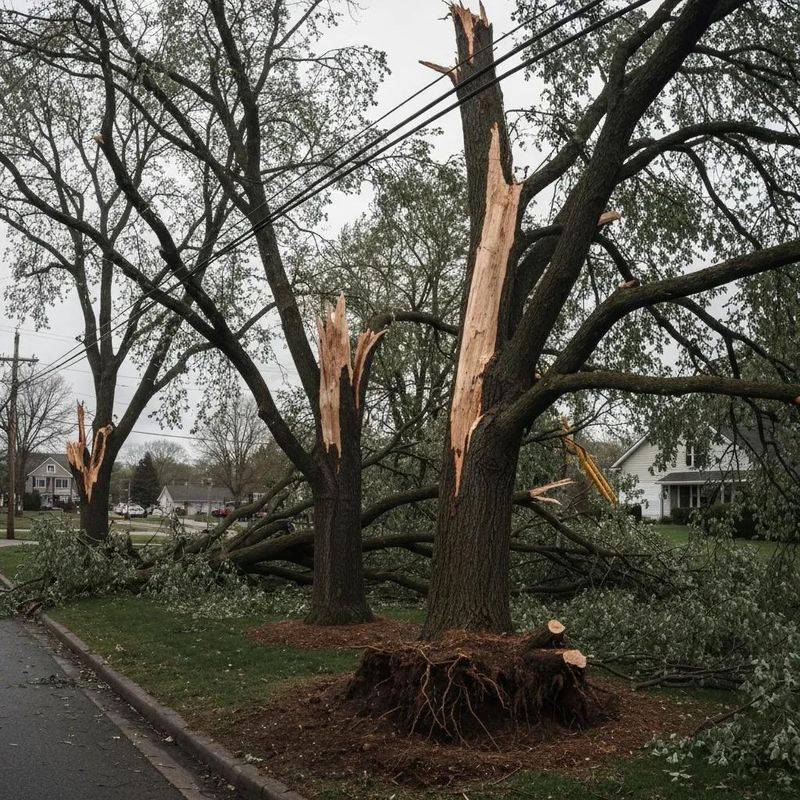
Stay clear of electrical and unstable tree hazards
© Tree Service Fort Wayne

Safety comes before cleanup. The Indiana Office of Utility Consumer Counselor says to treat every downed power line as live, stay at least 15 yards away, and call 911.

Never touch a tree that is in contact with a line, even if it looks calm and nothing is sparking.

Keep children and pets back too. A wire can be hidden under leaves or branches, and it may still carry power long after the storm has passed.

Trees themselves can be dangerous even with no wires nearby. Purdue notes that storm-damaged trees and hanging branches can fall without warning and suggests considering a certified arborist’s risk assessment.

Trees under tension can snap back when cut, and broken limbs can drop days later. So clearing the tree yourself is not a safe default.

Leave dangerous work to qualified professionals, and take photos from a safe distance instead of climbing in for a closer look.

Document the damage and ask your insurer what comes next
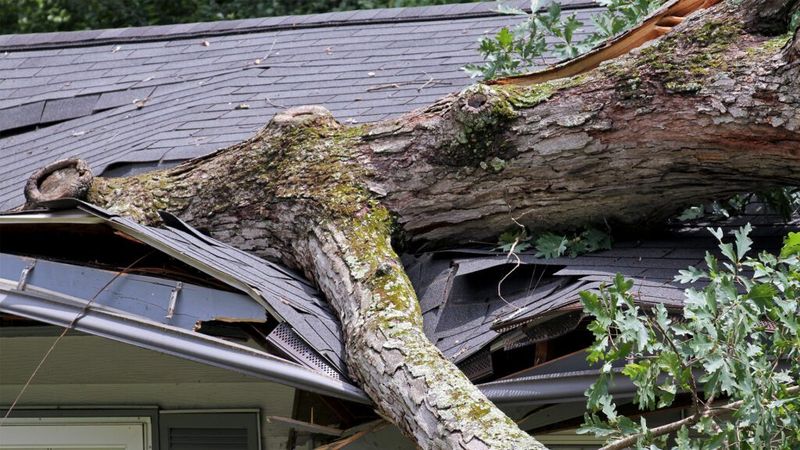
Document the damage and ask your insurer what comes next
© Best Version Media

Once everyone is safe, start building a record. The Indiana Department of Insurance advises that you photograph or video the damage before temporary repairs, keep receipts for those repairs, and avoid permanent repairs before the insurer inspects when possible.

Include wide shots of the whole yard and close-ups of the damage.

Take pictures of the tree’s trunk, stump, and any signs of rot or dead limbs as well. If you ever need to show a neighbor or a court that the tree was a known hazard, those images may help.

Save any texts, emails, or letters about the tree from before the storm.

Then call your insurer and ask three plain questions. Which policy language applies to this situation?

What are the deductible and limits? Is there any removal coverage, exception, or endorsement?

The state’s consumer guidance is a good reference to have open during the call.

Where a tree grew is only the start of the story. Document the damage, protect people, and verify your coverage before anyone decides who owes what.

Share this story
DH

Written by

Dale Hutchins

More from Dale Hutchins →

About Gardening Latest

Gardening Latest provides in-depth guides to maintaining and enhancing your garden and backyard. Learn how to make the most of the space you have and create a beautiful garden.

More about us →

Latest stories

  • Pennsylvania GardeningThat Red Fox Trotting Across Your Pennsylvania Yard This Winter Has a Reason to Be There

    That Red Fox Trotting Across Your Pennsylvania Yard This Winter Has a Reason to Be There

    2 min ago
  • Arizona GardeningMonsoon Winds Toppled Your Neighbor’s Tree Into Your Arizona Yard, So Here’s Who Pays for the Damage

    Monsoon Winds Toppled Your Neighbor’s Tree Into Your Arizona Yard, So Here’s Who Pays for the Damage

    7 min ago
  • Texas GardeningBefore You Cut That Tall Flower Stalk Off Your Texas Cilantro, Here’s What It Actually Means

    Before You Cut That Tall Flower Stalk Off Your Texas Cilantro, Here’s What It Actually Means

    12 min ago
  • Georgia GardeningCaught a Red Fox Trotting Through Your Georgia Yard This Winter? Blame Mating Season

    Caught a Red Fox Trotting Through Your Georgia Yard This Winter? Blame Mating Season

    17 min ago
  • Wisconsin GardeningA Wild Turkey Flock Keeps Roosting in Your Wisconsin Trees This Winter, and Here’s Why They Picked Your Yard

    A Wild Turkey Flock Keeps Roosting in Your Wisconsin Trees This Winter, and Here’s Why They Picked Your Yard

    23 min ago

Gardening by state

Stories for your state, and the hardiness zone most of it gardens in.

Keep exploring

Read next

All Indiana Gardening →
Indiana GardeningCan You Trim a Neighbor’s Vine in Indiana? What the Law Does and Doesn’t Say
Indiana Gardening

Can You Trim a Neighbor’s Vine in Indiana? What the Law Does and Doesn’t Say

5 hr ago
Indiana GardeningSeeing a Red Fox in Your Indiana Yard This Winter? It’s Hunting, Courting, or Hunting for a Den
Indiana Gardening

Seeing a Red Fox in Your Indiana Yard This Winter? It’s Hunting, Courting, or Hunting for a Den

9 hr ago
Indiana GardeningVenomous Critters Quietly Share Your Indiana Yard, Until Late Fall Pulls Them Into View
Indiana Gardening

Venomous Critters Quietly Share Your Indiana Yard, Until Late Fall Pulls Them Into View

23 hr ago

More from Indiana Gardening

  • Hoosiers Adding Celery To Their Plate Every Day Are Learning What It Does For Their Bodies

    Nov 24
  • Who’s Responsible When Your Fall Leaves Blow Into Your Indiana Neighbor’s Yard?

    Nov 24
Back to top

Leave a response Cancel

Your email address stays private. Required fields are marked with an asterisk.

Gardening Latest

In-depth guides to maintaining and enhancing your garden and backyard: how to make the most of the space you have, and how to make it beautiful.

  • Facebook
  • X
  • Pinterest
  • YouTube

We may earn a portion of sales from products or services that are purchased through our site as part of our affiliate partnerships with retailers.

Explore

  • About GardeningLatest.com
  • Contact Us
  • Terms and Conditions
  • Privacy
  • Editorial Note:
  • FTC Disclosure

Newsletter

New garden guides and seasonal tips, straight to your inbox.

We’ll email you a link to confirm. Unsubscribe any time.

Almost there! Check your inbox and tap the link to confirm.

© 2026 Gardening Latest. All rights reserved.

Back to top