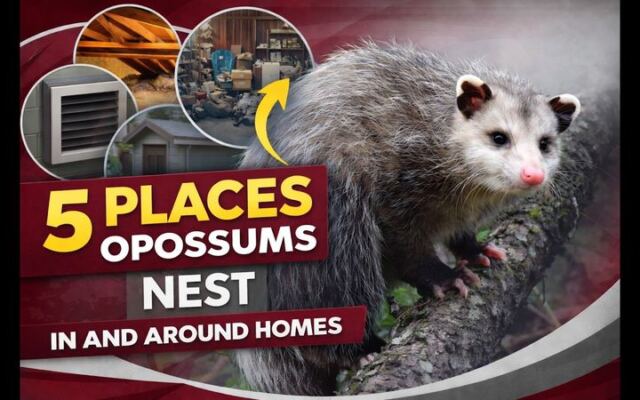
Opossums in Ohio may shelter during cold or snowy stretches, and the spaces under porches and decks can serve as their den sites. That means the dark gap beneath your deck could hold a quiet guest on a freezing night.
Knowing how to check, what to remove, and when to wait helps you keep both your home and the animal safe. A few calm steps can keep you on the right side of Ohio’s rules.
Opossums shelter in cold weather and use decks as dens
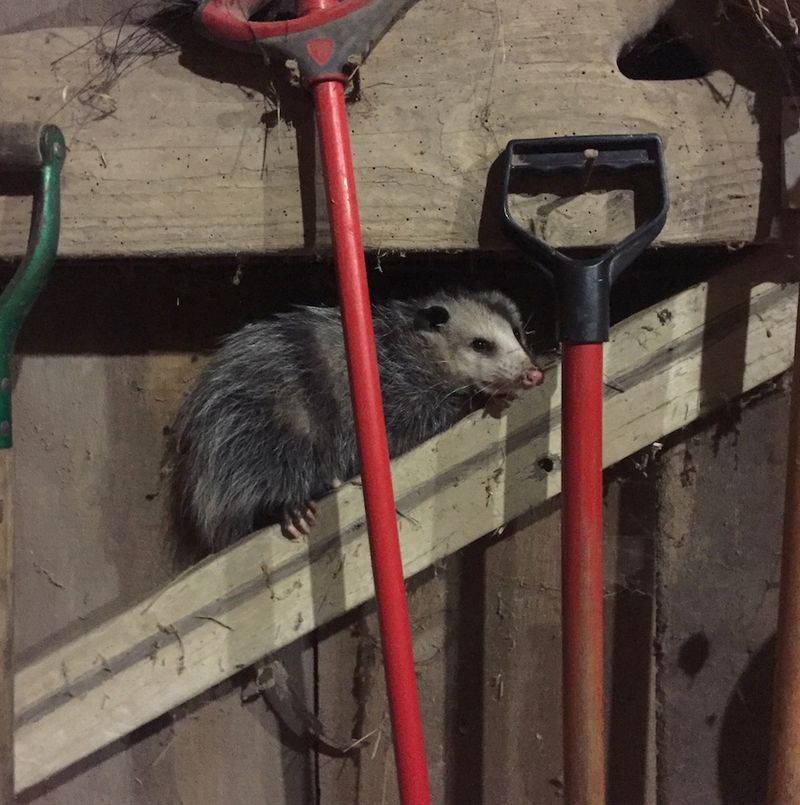
Two facts are true about opossums, and they are separate. First, Pennsylvania’s wildlife agency says opossums may den up during cold or snowy periods.
Second, Ohio’s nuisance wildlife training materials list denning under porches, decks, and sheds as a common situation.
Those two facts do not prove a link between them. The sources we have do not show that cold or snow makes an opossum pick a deck or porch over other shelter.
They also do not show that Ohio cold snaps routinely send opossums under these structures. An opossum might use a woodpile, a hollow log, a brush pile, or an old burrow just as readily.
It also helps to get the winter picture right. Opossums do not hibernate.
Ohio Wildlife Center names woodchucks, bats, and thirteen-lined ground squirrels as Ohio’s true hibernators. Opossums instead shelter and become less active when the weather turns harsh.
Science does show that opossums change with the seasons. A study of Ohio opossums documented seasonal shifts in coat density and body weight.
It did not test whether cold weather pushes them toward decks or porches.
So the useful takeaway is practical. A deck or porch can be a den site, and cold weather can lead to sheltering, but you should not assume either one explains what is going on at your house.
The next step is to find out what is really happening.
A nearby sighting does not prove a den is occupied
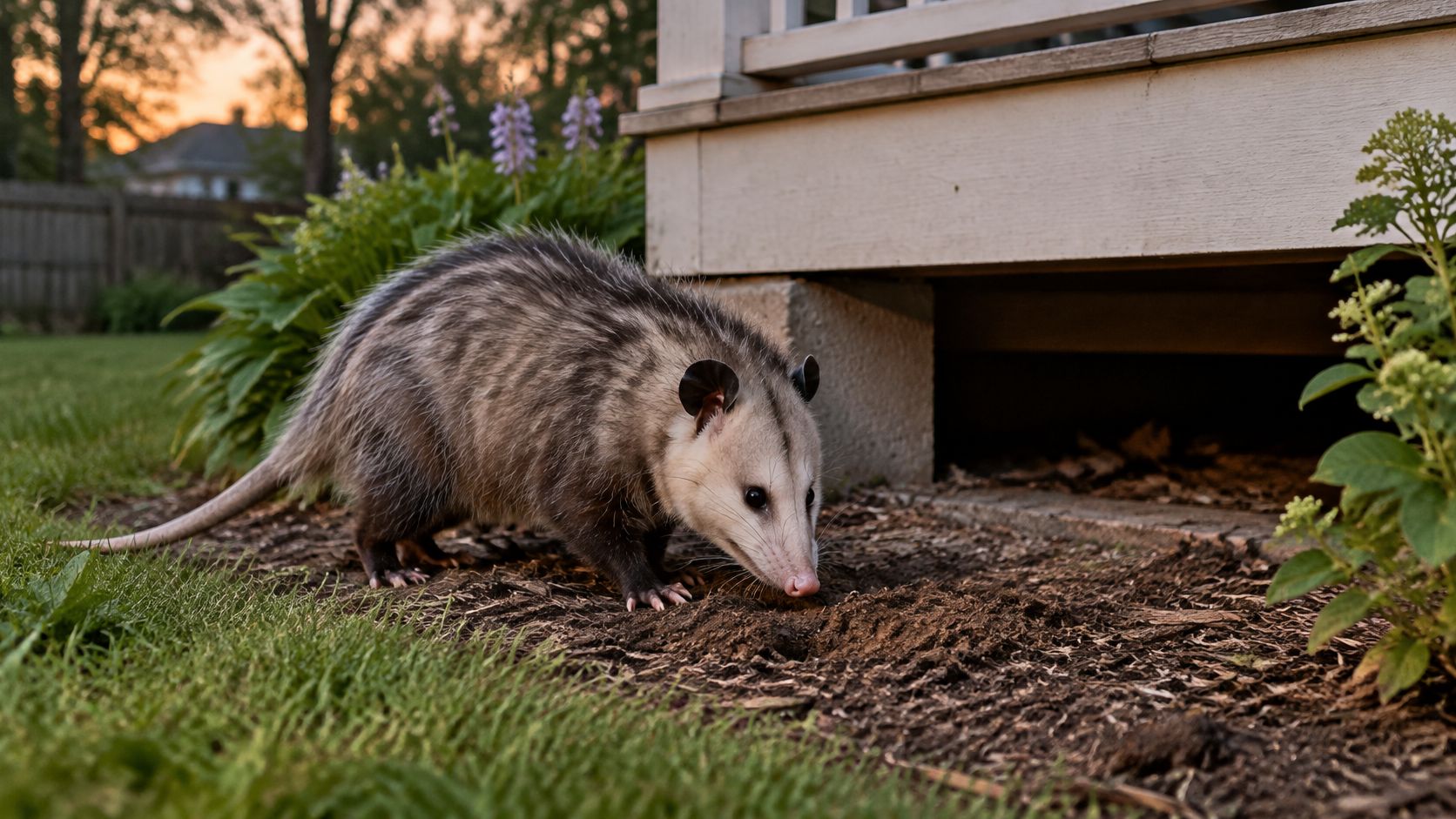
Spotting an opossum near your deck feels like a clear sign, but it is not proof. A nearby sighting does not establish that one lives beneath it.
Opossums wander at night looking for food, and your yard may simply be on the route.
Opossums are often nocturnal and use a wide mix of den sites. Pennsylvania’s wildlife agency reports that they seldom spend two nights in a row in the same den.
An animal seen on Monday may be several yards away by Tuesday.
Think of clues in two groups. A visit might leave scattered trash, a few paw prints, or one glimpse by a flashlight.
Ongoing use looks more like repeated tracks at the same gap, flattened dirt at an entrance, or nesting material such as dry leaves pulled into the space.
Even those clues are not perfect. Ohio’s nuisance wildlife manual lists denning under porches, decks, and sheds as a common situation, but it can involve other animals too, such as skunks or groundhogs.
That is why careful checking matters before you close anything off. Treat what you saw as a reason to look closer, not as a diagnosis.
Remove food that can attract wildlife
Food is the easiest thing to fix, and it does not require touching or confronting any animal. Ohio Wildlife Center recommends reducing attractants rather than treating the animal as the problem.
A yard with fewer snacks gives wildlife fewer reasons to hang around.
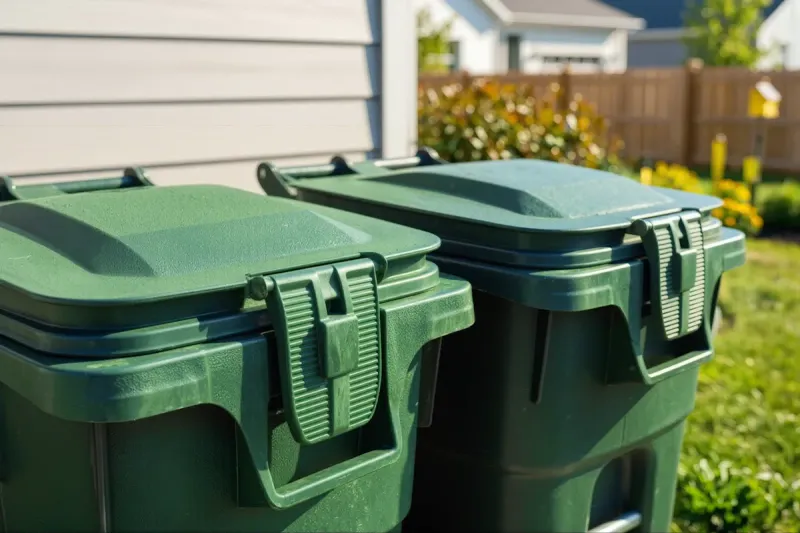
Start with the garbage. Use cans with tight, latching lids, and keep them in a garage or shed until pickup morning if you can.
A bag left on the ground is an open invitation.
Next, handle pet food. Bring bowls indoors at night, and store the bag in a lidded container.
If you feed outdoor cats, pick up leftovers once they finish eating.
Then walk the yard. Pick up fallen apples, pears, and other fruit, and sweep up spilled birdseed under feeders.
Compost piles with food scraps should be covered or moved to a closed bin.
Keep expectations realistic. Cleaning up makes your property less inviting, but it will not guarantee that an animal already settled under the deck will leave.
Think of it as a first step that works alongside the checking and sealing steps that follow.
How to check whether the space is empty
Before you close any gap, you need to know if something is inside. Watching is the safest way to find out.
Spend several evenings and early mornings observing the opening from a distance, since opossums are mostly active at night.
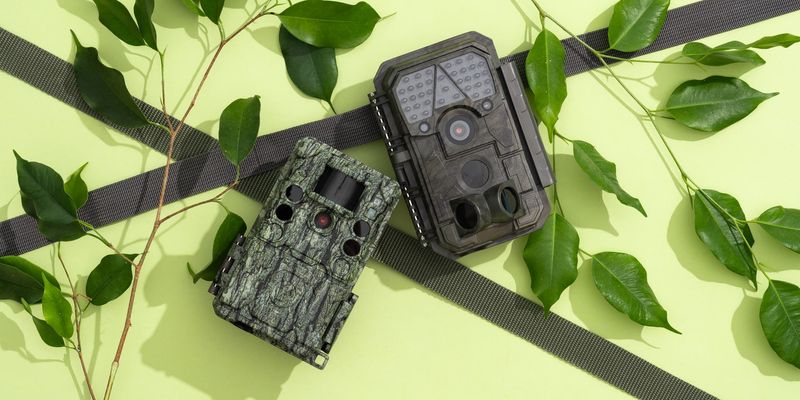
A trail camera makes this easier. Ohio Wildlife Center suggests watching for activity, using a trail camera, or checking a temporary barrier or tracks.
Point the camera at the entrance and review the footage each day.
You can also look for physical clues. Loosely fill the opening with crumpled newspaper or lightly place a few sticks across it, then see whether it is disturbed.
Smooth dirt or flour sprinkled near the gap can show fresh tracks, in or out.
Here is the key caution. A quiet entrance does not prove the space is vacant.
In cold weather an animal may stay inactive for days, and Wisconsin Humane Society warns that winter inactivity can complicate these checks.
So give it time and gather several days of evidence. If signs of use keep showing up, or you cannot tell, hold off and call a qualified wildlife professional.
Move on only when you are confident the space is empty.
Young opossums make one-way doors risky
It is tempting to think winter means no babies. The calendar does not offer that guarantee.
Ohio’s nuisance wildlife manual gives a peak birth period of March to April, but says births can occur anywhere from February through November.
That does not mean young are in every den. It means you cannot rule them out just because it is cold or because the date seems early.
Young that are left behind cannot fend for themselves.
This is where one-way doors cause trouble. The door lets an adult leave but blocks return, which can strand babies inside.
Wisconsin Humane Society cautions against using one unless you are certain no babies are present.
The same caution applies when you are unsure of the species. Skunks, raccoons, and groundhogs may be living under a deck, and each has different timing and needs.
If you cannot assess who is there or whether young are present, pause. A qualified wildlife-control professional or licensed rehabilitator can evaluate the situation and help you avoid a harmful mistake.
Block re-entry after confirming the space is empty
Sealing comes last, and only once you have confirmed that nothing is inside. After that point, the goal is to keep animals from moving back in.
Done right, it solves the problem for good.
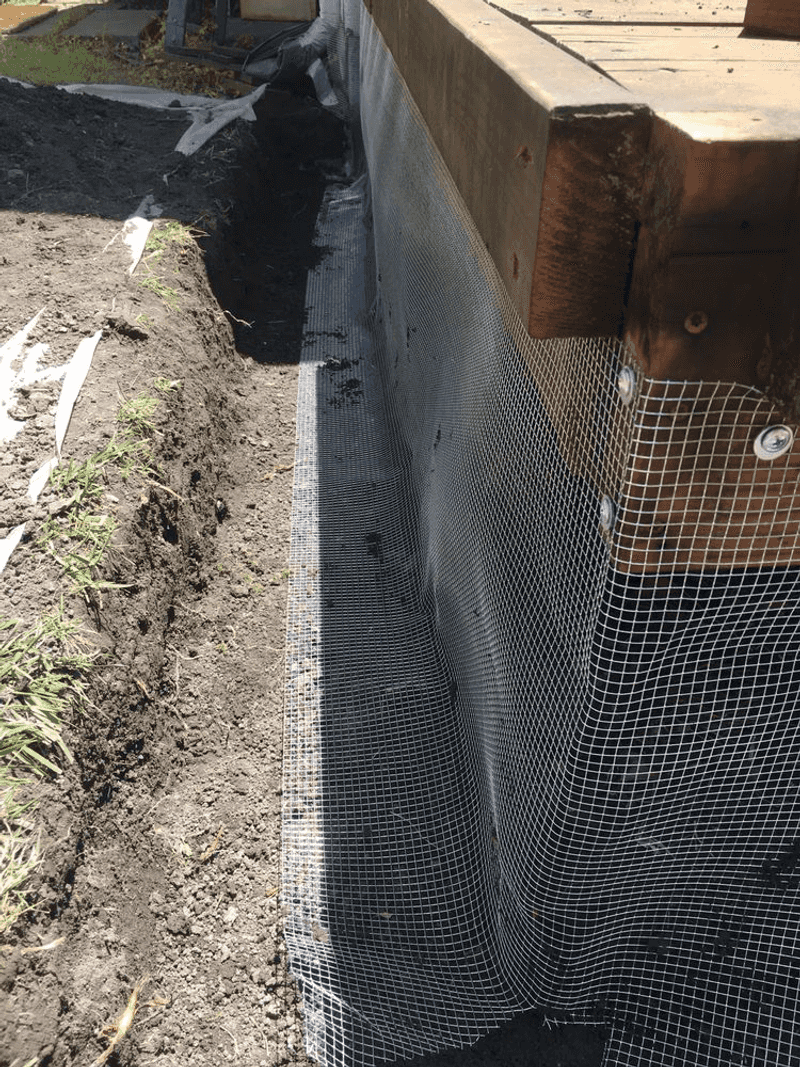
The Internet Center for Wildlife Damage Management advises confirming the area is unoccupied first. It then describes screening with hardware cloth, a sturdy metal mesh, and adding an underground or outward-bent apron to discourage digging.
Standard chicken wire is too flimsy for this job.
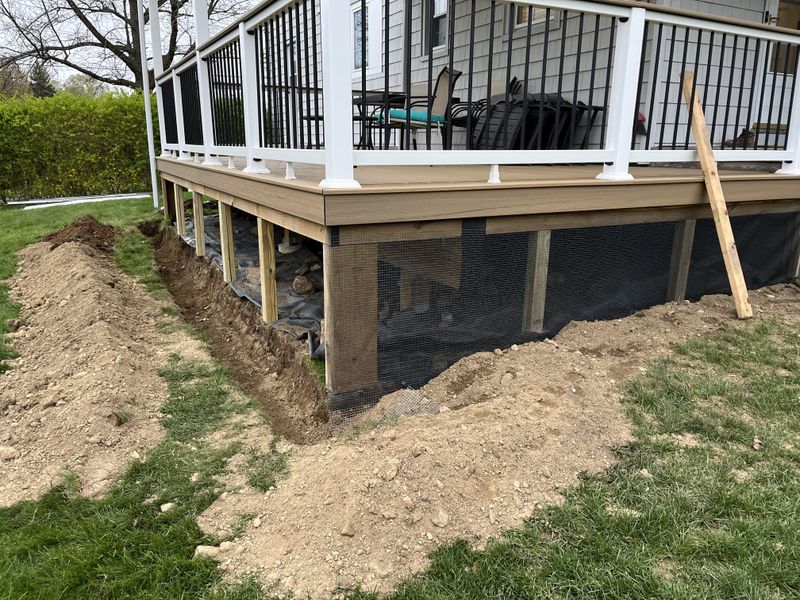
In practice, the mesh should run from the deck skirt down into the soil, with the bottom edge bent outward in an L shape and buried several inches. Fasten it firmly so an animal cannot pry up corners.
The right approach depends on your structure, so lattice, slab porches, and low decks may each need a different method.
Walk the whole perimeter. Close any gaps, torn screening, or loose boards that could give an animal a way back in.
Small openings are often enough.
Keep the food cleanup going as well, since Ohio Wildlife Center stresses reducing attractants. If you cannot safely check or screen the space, a professional can do it for you.
Know Ohio’s rules before trapping or handling
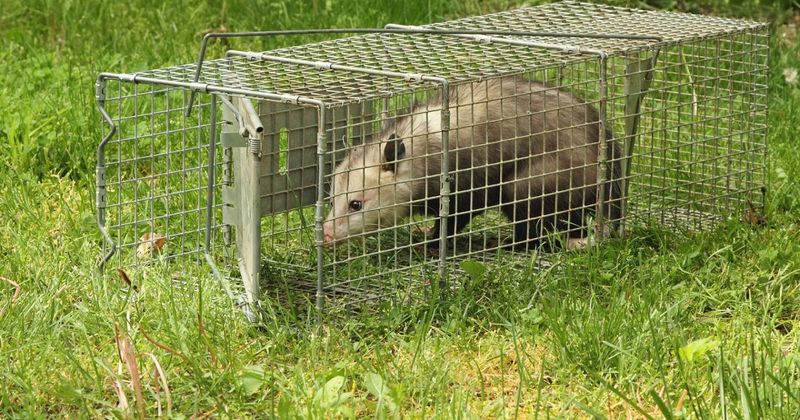
Trapping is not the default answer, and Ohio has firm rules about it. Under Ohio Administrative Code Rule 1501:31-15-03, a nuisance opossum that is captured, trapped, or taken must be euthanized or released on site.
Relocating it elsewhere is not allowed. Traps must also be checked at least once each calendar day.
This is not a how-to for trapping. Check the current rule before you act, and consider hiring a qualified wildlife-control professional who knows the requirements.
Ohio’s nuisance wildlife manual also lists rabies and leptospirosis as handling concerns.
A word on rabies. Opossums are relatively resistant to it, but they are not immune.
Ohio Department of Health guidance reports opossum rabies cases in the state, and Ohio DNR also covers the disease.
Keep your distance from any opossum, and keep children and pets away. If you are bitten or think you may have been exposed, contact a health professional or your local health department for advice.
Removing food and confirming the space is empty are the preferred steps. Trapping and handling belong at the end of the list, not the start.
Check carefully before sealing an opening
Work in this order: remove food first, then watch whether an animal is really using the space, and block re-entry only after you know it is empty. Ohio Wildlife Center and the Internet Center for Wildlife Damage Management both point in this direction.
If you cannot rule out young, or you are unsure about safety or the law, stop and call a qualified professional. A closed gap can always wait a few more days.
Share this story