Get the latest garden guides in your inbox →
Gardening Latest
  • General Gardening
  • Lawn Care
  • Plant Care
  • Composting
  • Soil Health
  • Backyard
  • Garden Muse Magazine
  • General Gardening
  • Lawn Care
  • Plant Care
  • Composting
  • Soil Health
  • Backyard
  • Garden Muse Magazine
  • News
  • Gardening Calendar
  • Garden Structures
  • Vegetable Garden
  • Vertical Garden
  • Raised Beds
  • Hydroponics
  • General Equipment
  • Community Gardens
Garden Themes
  • Spiritual Garden
  • Hydroseeding
  • Seeding and Laying Sod
  • Artificial Grass
  • Lawn Care Equipment
  • Plants
  • Trees
  • Planting Tools
  • Composting Basics
  • Fertilizer
  • Alternative Growing Mediums
  • Front Yard
  • Backyard Activities
  • Landscaping
Gardening Latest

Explore by state

Which state is your garden in?

Currently viewing Ohio

All states

Northeast

  • Connecticut —
  • Delaware 45
  • Maine —
  • Maryland 31
  • Massachusetts 47
  • New Hampshire —
  • New Jersey 31
  • New York 40
  • Pennsylvania 40
  • Rhode Island —
  • Vermont —

Southeast

  • Alabama 31
  • Arkansas —
  • Florida 31
  • Georgia 31
  • Kentucky 45
  • Louisiana 30
  • Mississippi —
  • North Carolina 29
  • South Carolina 44
  • Tennessee 28
  • Virginia 30
  • West Virginia —

Midwest

  • Illinois 30
  • Indiana 32
  • Iowa 44
  • Kansas —
  • Michigan 31
  • Minnesota 30
  • Missouri 30
  • Nebraska —
  • North Dakota —
  • Ohio 31
  • South Dakota —
  • Wisconsin 45

Southwest

  • Arizona 30
  • Colorado —
  • Nevada —
  • New Mexico —
  • Oklahoma —
  • Texas 29
  • Utah —

West

  • Alaska —
  • California 30
  • Hawaii —
  • Idaho —
  • Montana —
  • Oregon —
  • Washington —
  • Wyoming —

No state matches that search.

Site menu

Gardening Latest
  • General Gardening
    • News
    • Gardening Calendar
    • Garden Structures
    • Vegetable Garden
    • Vertical Garden
    • Raised Beds
    • Hydroponics
    • General Equipment
    • Community Gardens
    Garden Themes
    • Spiritual Garden
  • Lawn Care
    • Hydroseeding
    • Seeding and Laying Sod
    • Artificial Grass
    • Lawn Care Equipment
  • Plant Care
    • Plants
    • Trees
    • Planting Tools
  • Composting
    • Composting Basics
  • Soil Health
    • Fertilizer
    • Alternative Growing Mediums
  • Backyard
    • Front Yard
    • Backyard Activities
    • Landscaping
  • Garden Muse Magazine

Explore

  • About GardeningLatest.com
  • Contact Us

Get the latest from the garden

New guides on lawn care, plants and backyard projects, sent when they go up.

Subscribe →

Follow

  • Facebook
  • X
  • Pinterest
  • YouTube
Ohio Gardening

Only A Handful Of Ohio Yard Creatures Are Actually Venomous, And Here’s How To Recognize Them

Most of the critters crawling, buzzing, and slithering around an Ohio backyard are completely harmless, even…

MK

By Margaret Kessler

November 29, 2026 · 4 min read

Only A Handful Of Ohio Yard Creatures Are Actually Venomous, And Here’s How To Recognize Them
Only A Handful Of Ohio Yard Creatures Are Actually Venomous, And Here's How To Recognize Them

Most of the critters crawling, buzzing, and slithering around an Ohio backyard are completely harmless, even the scary-looking ones. Still, a small group of local animals can deliver venom, and knowing which ones they are can save you a painful surprise or even a trip to the doctor.

The good news is that each of them has clear clues that make them easy to spot once you know what to look for. Here are the seven Ohio yard creatures worth recognizing and respecting.

At a glance

Where
Ohio Gardening
Hardiness zone
6 −10 to 0°F
Read
4 minutes
Published
November 29, 2026

1. Northern Copperhead

Northern Copperhead
© Wide Open Spaces

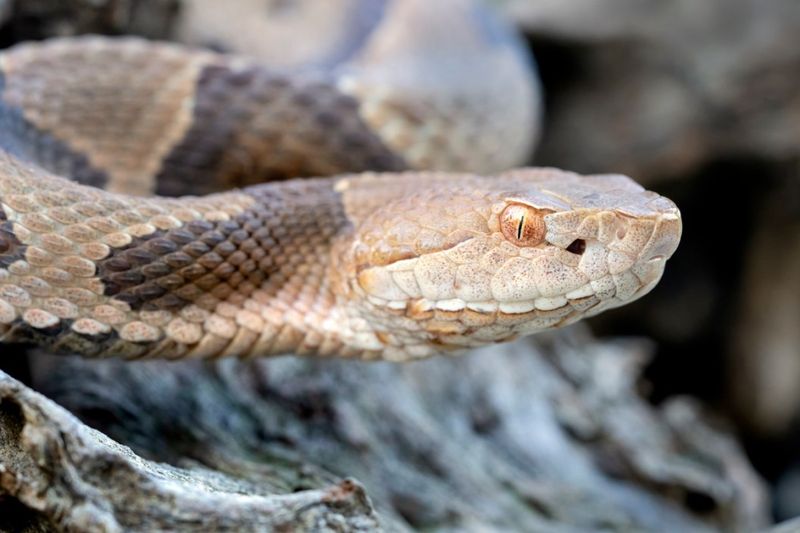
Picture a pile of fallen autumn leaves, and you have basically pictured the copperhead’s favorite disguise. Its tan body is crossed with darker brown bands shaped like hourglasses, wide on the sides and skinny along the spine.

The head is a solid coppery color with no markings at all.

In Ohio, copperheads mostly live in the hilly southern and eastern counties, especially near rocky hillsides, woodpiles, and stone walls. They are not aggressive, but they tend to freeze instead of flee, which is why people sometimes step on them.

A bite is painful and needs medical care, though it is rarely deadly.

Fun fact: young copperheads have bright yellow-green tail tips. They wiggle them like a worm to lure frogs within striking range.

2. Timber Rattlesnake
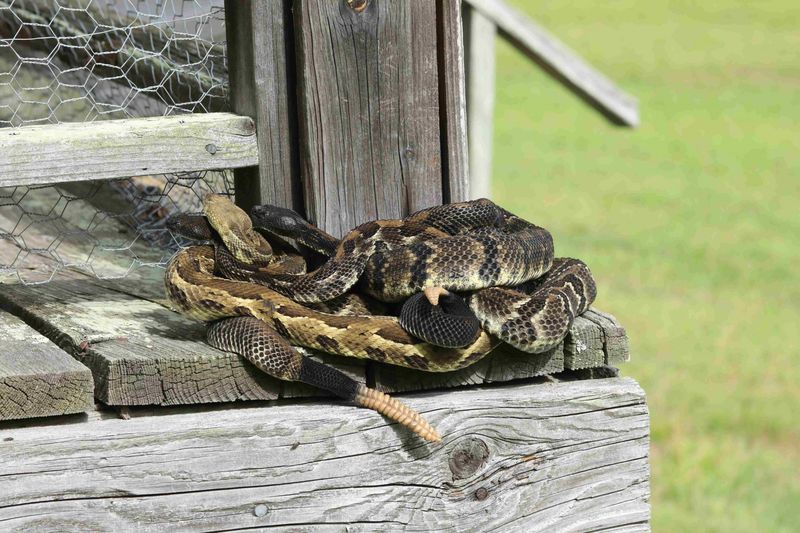
Timber Rattlesnake
© Oxford American

Ohio’s biggest venomous snake is also one of its rarest. Timber rattlesnakes can stretch past four feet long, and their bodies show dark, zigzag chevron bands over a yellow, tan, or nearly black background.

The tail ends in solid black and, of course, a rattle.

You would be very lucky, or unlucky, to find one in a yard. They are listed as endangered in Ohio and survive mainly in a few wooded, rocky counties in the south-central part of the state.

To identify one, look for a plain tan body with a darker violin shape on its back, the neck of the violin pointing toward the rear.

If you ever hear that dry buzzing sound, back away slowly and give the snake plenty of room. Rattlers would much rather warn you than waste their venom.

3. Eastern Massasauga
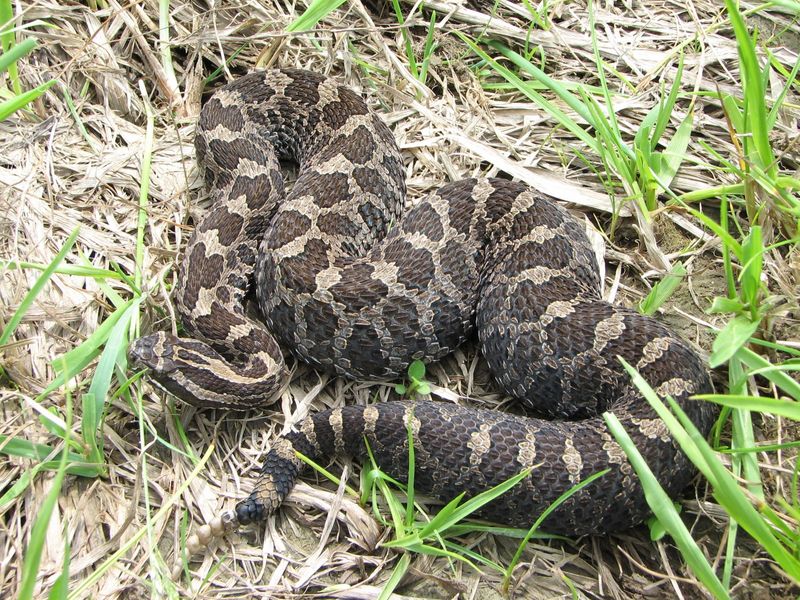
Eastern Massasauga
© Ohio State News – The Ohio State University

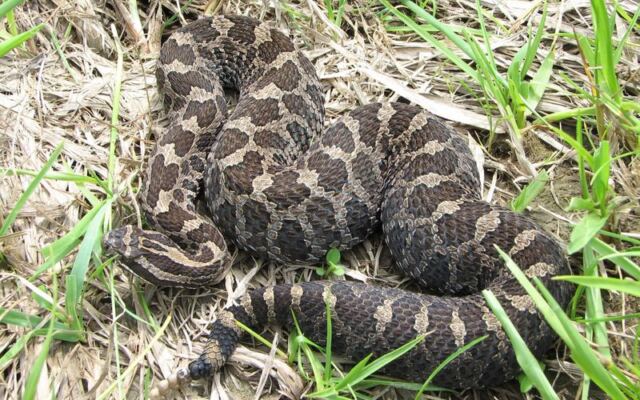
Small, shy, and threatened, the eastern massasauga is the snake most Ohioans have never heard of. It usually measures only about two feet long, with a gray body covered in rounded dark brown blotches and a stubby tail tipped with a tiny rattle.

Massasaugas like soggy places: wet meadows, marshes, and prairie fens, mostly in the northern and western parts of the state. Homes bordering these wetlands are the only ones likely to see them.

Its rattle is so small it can sound like a buzzing insect. If you hear an odd hiss-buzz from the grass near a marsh, take the hint and step back.

4. Black Widow Spider
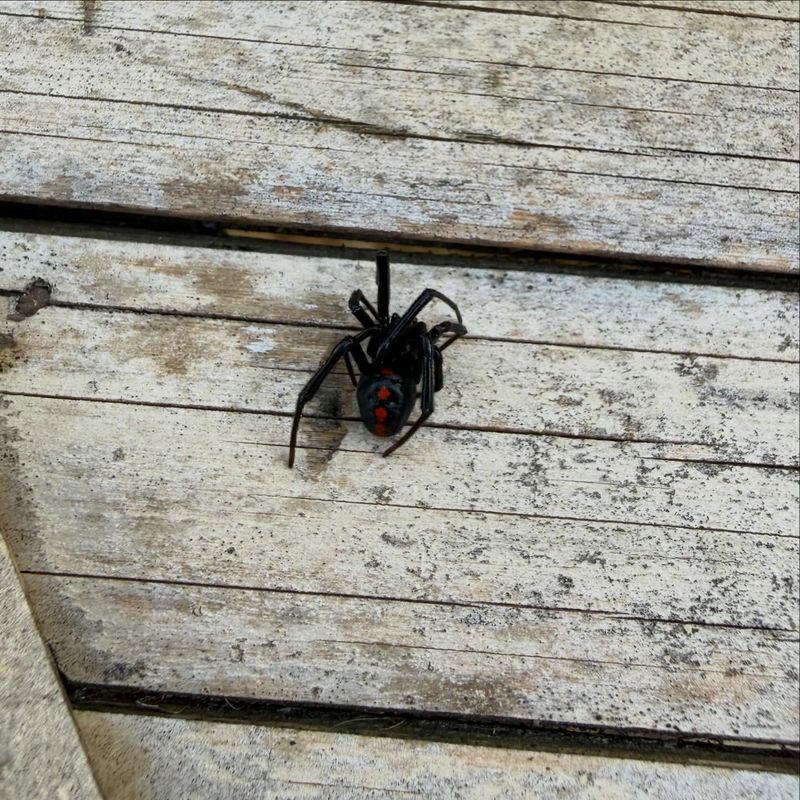
Black Widow Spider
© yetihuntoutdoors

Flip over an old flowerpot or reach under the deck, and you might meet Ohio’s most famous spider. Female black widows are glossy black with a red hourglass or red spots on the belly.

The males are small and harmless.

Their webs look tangled and sloppy, not neat like a garden spider’s. They hide in quiet, dark spots such as woodpiles, sheds, and garage corners.

A bite can cause muscle cramps, sweating, and stomach pain, so call a doctor if it happens. Wearing gloves while gardening or moving stored items is the easiest way to avoid one.

5. Brown Recluse Spider
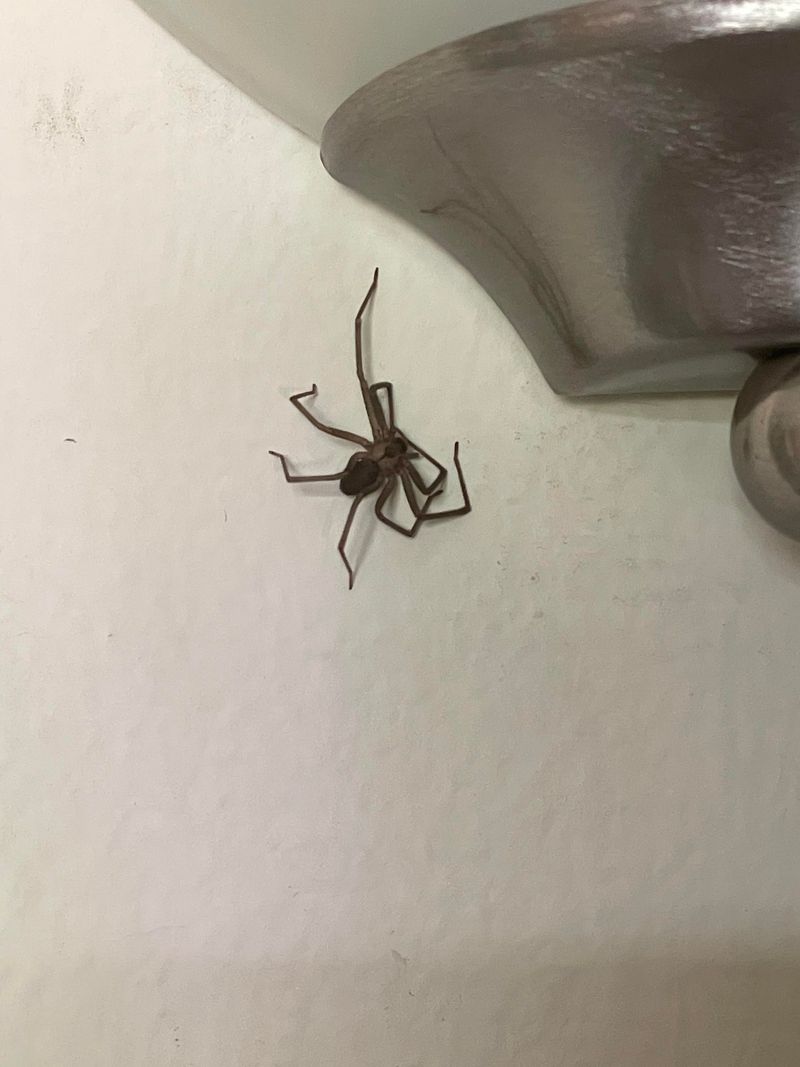
Brown Recluse Spider
© Reddit

Here is a surprise: the brown recluse gets blamed for far more bites in Ohio than it actually causes. It is found here, but only in scattered spots, often brought in on boxes or furniture from states farther south.

To identify one, look for a plain tan body with a darker violin shape on its back, the neck of the violin pointing toward the rear. Even more telling, it has six eyes arranged in pairs instead of the usual eight.

Its legs have no stripes or bands.

Recluses truly live up to their name, hiding in closets, basements, and attics. Shake out shoes and clothes stored for a long time, and you will cut your risk to almost nothing.

6. Bald-Faced Hornet
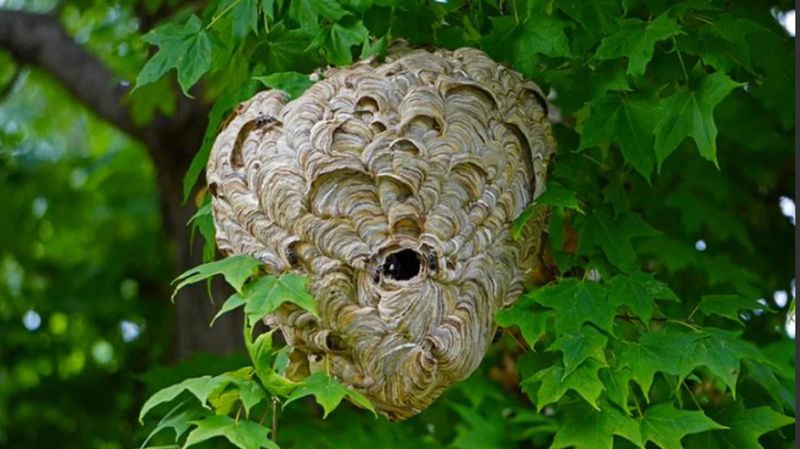
Bald-Faced Hornet
© Yahoo

Ever spotted a gray paper ball the size of a basketball dangling from a tree? That is the work of bald-faced hornets, and you should not poke it.

These insects are black with bright ivory-white markings on the face and tail end.

Technically, they are a type of yellowjacket, not a true hornet. They defend their nests fiercely and can sting again and again, unlike honeybees.

Mowing or trimming near a hidden nest is the classic way to get stung. For people with insect allergies, stings can be serious, so a professional should handle nests near the house.

7. Saddleback Caterpillar
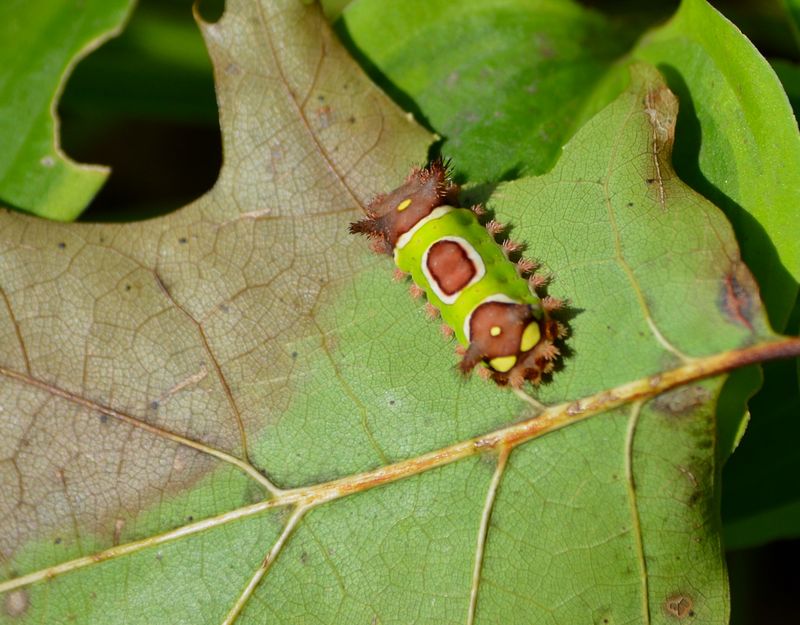
Saddleback Caterpillar
© Before You Garden…

Cute? Absolutely.

Safe to touch? Not even a little.

The saddleback caterpillar looks like it is wearing a tiny green blanket with a brown spot in the middle, like a saddle on a horse.

Both ends of its stubby body are covered in spiky horns loaded with venom. Brushing against them causes a burning sting, swelling, and sometimes a rash that lasts for days.

Watch for them in late summer on garden plants, shrubs, and corn leaves. Kids love picking up caterpillars, so this is one worth pointing out to the whole family.

A strip of tape can help pull out leftover spines if someone gets stung.

Share this story

MK

Written by

Margaret Kessler

More from Margaret Kessler →

About Gardening Latest

Gardening Latest provides in-depth guides to maintaining and enhancing your garden and backyard. Learn how to make the most of the space you have and create a beautiful garden.

More about us →

Latest stories

  • Missouri GardeningIf Your Missouri Woodpile Sits Against the House, You’re Inviting Brown Recluses Indoors This Winter

    If Your Missouri Woodpile Sits Against the House, You’re Inviting Brown Recluses Indoors This Winter

    4 min ago
  • Tennessee GardeningBefore You Dig In, Here’s How To Recognize Every Venomous Creature Sharing Your Tennessee Yard

    Before You Dig In, Here’s How To Recognize Every Venomous Creature Sharing Your Tennessee Yard

    10 min ago
  • Alabama GardeningThat Burning Saddleback Caterpillar Sting in Your Alabama Garden Calls for These Steps Right Away

    That Burning Saddleback Caterpillar Sting in Your Alabama Garden Calls for These Steps Right Away

    16 min ago
  • Minnesota GardeningBefore You Pick Up That Big Black Caterpillar With White Spots In Minnesota, Read This

    Before You Pick Up That Big Black Caterpillar With White Spots In Minnesota, Read This

    22 min ago
  • Illinois GardeningDeer Are Rubbing Their Antlers on Your Illinois Saplings Right Now, and Here’s How to Save Them

    Deer Are Rubbing Their Antlers on Your Illinois Saplings Right Now, and Here’s How to Save Them

    28 min ago

Gardening by state

Stories for your state, and the hardiness zone most of it gardens in.

Keep exploring

Read next

All Ohio Gardening →
Ohio GardeningOhioans, Eating Celery Every Day Does More For Your Body Than You’d Think
Ohio Gardening

Ohioans, Eating Celery Every Day Does More For Your Body Than You’d Think

4 hr ago
Ohio GardeningOhio’s Cold Snaps Send Opossums Looking for Shelter Under Decks and Porches, and Here’s What to Do
Ohio Gardening

Ohio’s Cold Snaps Send Opossums Looking for Shelter Under Decks and Porches, and Here’s What to Do

7 hr ago
Ohio GardeningCoyotes Are Howling Near Your Ohio Home Late at Night, and Every Yip Has a Purpose
Ohio Gardening

Coyotes Are Howling Near Your Ohio Home Late at Night, and Every Yip Has a Purpose

11 hr ago

More from Ohio Gardening

  • Across Ohio, an Invasive Tree Is Taking Over Neighborhoods Faster Than Anyone Can Pull It

    Nov 27
  • What’s Behind That Giant Flower Stalk on Your Ohio Rhubarb, and Why Snapping It Off Helps

    Nov 26
Back to top

Leave a response Cancel

Your email address stays private. Required fields are marked with an asterisk.

Gardening Latest

In-depth guides to maintaining and enhancing your garden and backyard: how to make the most of the space you have, and how to make it beautiful.

  • Facebook
  • X
  • Pinterest
  • YouTube

We may earn a portion of sales from products or services that are purchased through our site as part of our affiliate partnerships with retailers.

Explore

  • About GardeningLatest.com
  • Contact Us
  • Terms and Conditions
  • Privacy
  • Editorial Note:
  • FTC Disclosure

Newsletter

New garden guides and seasonal tips, straight to your inbox.

We’ll email you a link to confirm. Unsubscribe any time.

Almost there! Check your inbox and tap the link to confirm.

© 2026 Gardening Latest. All rights reserved.

Back to top