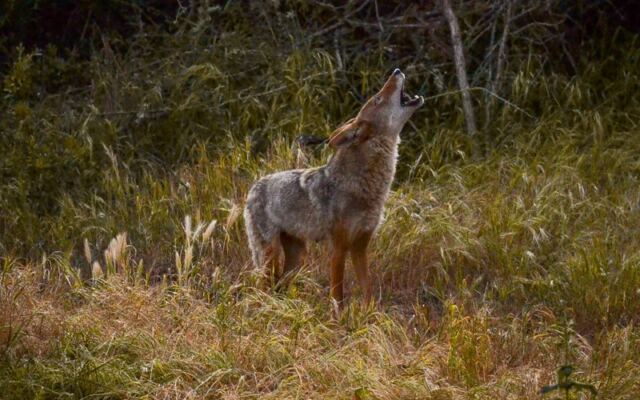
Those yips and howls drifting across your yard after dark are coyotes talking to each other. Their calls help them show where they are, answer other coyotes, and mark an area as occupied.
You cannot translate each yip word for word, and the sound alone does not tell you much about danger. Here is what the noise can and cannot tell you, and what to do about it.
What coyote calls can communicate
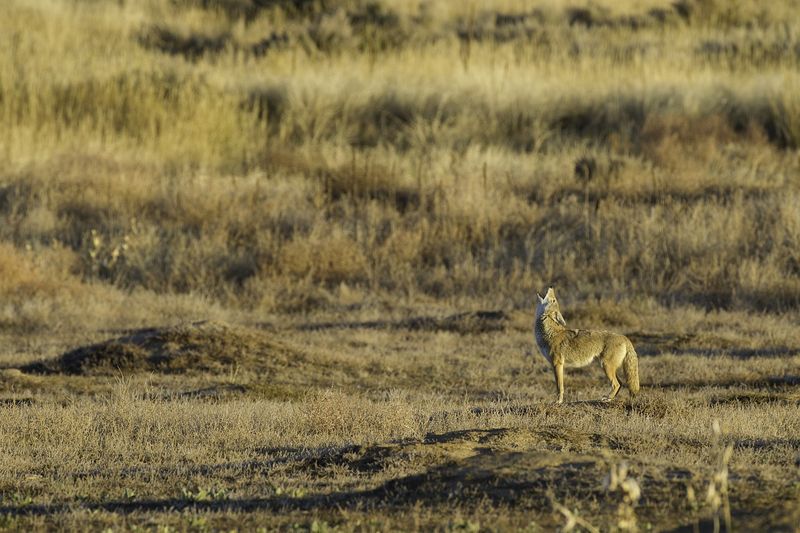
Coyotes in Ohio have a surprisingly big vocabulary. They howl, yip, bark, whine, and mix those sounds together.
A single chorus can include several kinds of calls at once, which is part of why it sounds so wild from a bedroom window.
So what are they saying? In broad terms, calls can reveal where a coyote is, draw answers from other coyotes, or signal that an area is already occupied.
National Park Service guidance for Ohio’s Cuyahoga Valley describes howling in just these general terms. Think of it as a way of saying “I’m here” and listening for who answers.
Plenty of people like to describe a particular yip as a greeting, a warning, or a pack check-in. Those labels make a good story, but they are shorthand, not translation.
Coyote sounds do not come with a dependable one-call, one-meaning guide, and researchers who study how coyotes respond to broadcast calls, such as a Wildlife Biology study of vocal responses, look at what affects whether coyotes answer, not at decoding single yips.
That leaves you with a useful, honest takeaway. A chorus tells you coyotes are somewhere nearby and in touch with one another.
It does not tell you exactly what any one animal meant, and that is okay. Knowing the general purpose is plenty for most backyard listeners.
A few coyotes can sound like a crowd
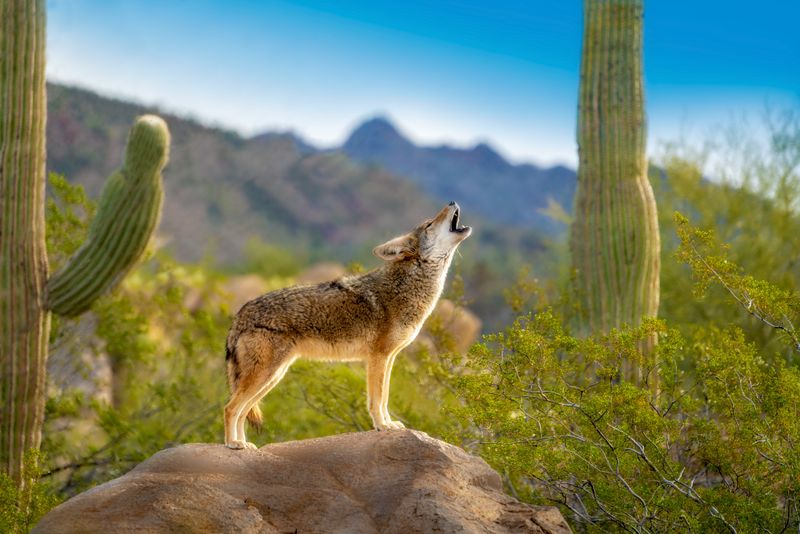
A loud, swirling chorus can make it seem like dozens of coyotes have surrounded the neighborhood. The truth is usually quieter.
Ohio coyotes generally live in family groups, and the National Park Service describes the typical unit as an adult pair and their young, not a big wolf-like pack.
Overlapping voices are the reason for the illusion. When a few coyotes call at the same time, their howls and yips blend and bounce off buildings, trees, and hills.
The result can sound like many more animals than are actually there. Ohio DNR’s coyote guidance also points to the family-based social structure of these animals.
Researchers have tested how well people judge this by ear. In a study of human perception of coyote group size, 427 people listened to recordings of one to four coyotes.
On average, they overestimated the number by nearly twofold.
The practical lesson is simple. If you hear what sounds like a dozen coyotes, you may be hearing a handful.
A chorus cannot give you a dependable headcount, so try not to read it as proof of a large pack close to your home.
Late November is outside Ohio’s usual breeding season
Dates matter when you ask why coyotes are loud. As of November 28, 2026, Ohio’s usual coyote breeding period has not begun.
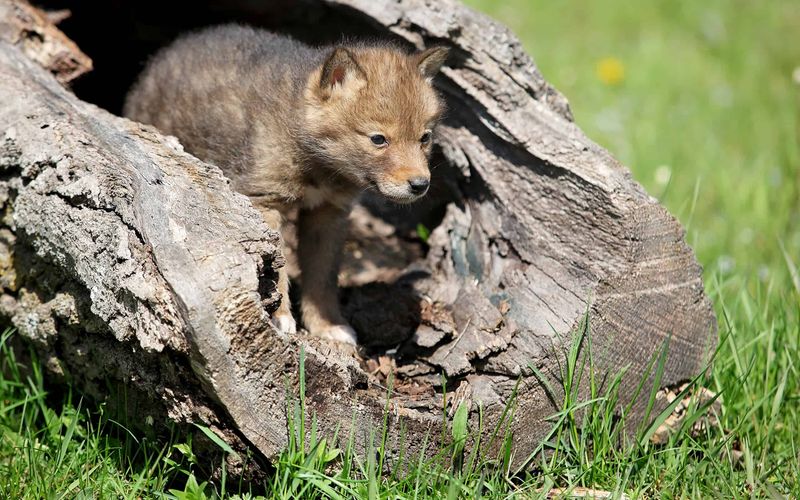
Ohio DNR places breeding from late January through March, with pups born roughly two months after that.
That timing means mating-season chatter is a believable explanation in winter, but not a year-round one. A howl you hear in late November should not be treated as proof of mating activity.
Coyotes have plenty of other reasons to call, and the sound alone cannot show which one applies.
Pups are another possible factor, not a rule. Young coyotes grow up and family members spread out through the year, and that may lead to some extra vocalizing.
Still, nobody can say that every chorus, or every Ohio chorus, comes from pups.
It is tempting to borrow tidy numbers from research. One Michigan study, published in Wildlife Biology, found that vocal responses to broadcast calls were greatest in August.
That is an interesting clue about timing, but it is not a precise seasonal calendar for Ohio neighborhoods.
So when you hear calls this late in the year, the honest answer is that the season does not point to one clear cause. It just tells you that breeding is still a couple of months away.
Why coyotes call after dark
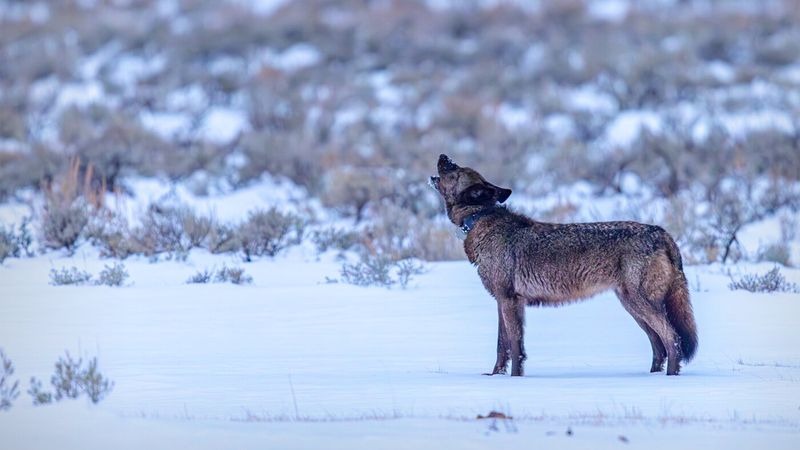
If you listen for coyotes, dawn and dusk are your best bets. Those are the times they are most often heard.
Calls can still happen well after dark, though, which is why many people hear them from bed.
Some sounds in our own world may set off a response. According to National Park Service guidance for Ohio, train whistles and emergency-vehicle sirens may prompt coyotes to howl back.
If a siren passes and the hills erupt with yips a minute later, that may be what you are hearing.
Notice the careful wording there: may prompt. A siren or train is a possible trigger, not a confirmed cause.
Nobody listening from a porch can know why a particular coyote or a particular chorus started up.
That uncertainty is fine. A few practical clues can still help you make sense of the night.
Do you live near rail lines or a busy road? Did a siren go by?
Is it the same time most evenings? Jotting down patterns gives you a better sense of your local soundscape than guessing at meaning.
In the end, night calling is a normal part of coyote life. It adds to the picture of animals staying in touch across open ground, even when we cannot see them.
A howl alone does not show that danger is near
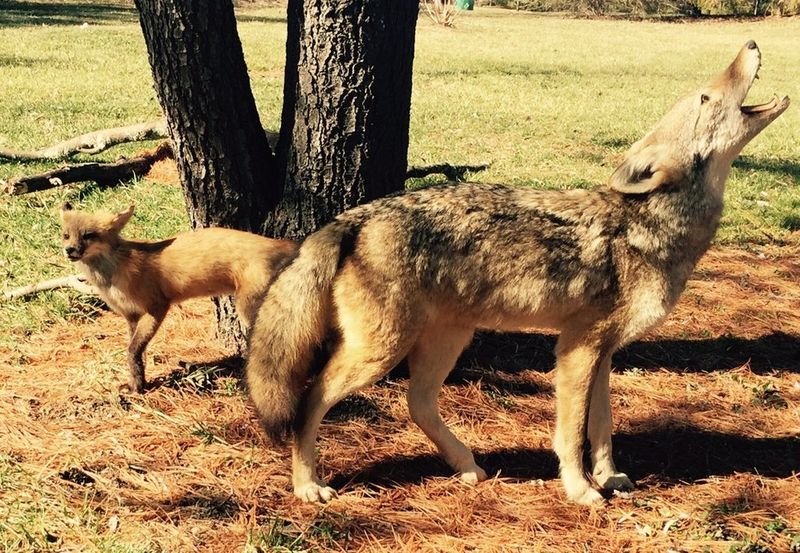
A howl in the dark can raise your heart rate, and that reaction is natural. Still, an unsettling sound is not the same as a threat.
A chorus by itself does not establish that coyotes are approaching your house, guarding a den, or getting ready to attack.
Each of those explanations may fit some situations, but sound cannot confirm them. The National Park Service notes that coyotes can defend themselves or their young, which is a good reason to give them space.
Space, not panic, is the usual answer.
Seeing a coyote in daylight can also feel alarming. Yet coyotes can be active at any hour, and Ohio DNR notes they may be seen throughout the day.
A daytime sighting alone does not prove rabies or aggression, a point also made in Massachusetts wildlife guidance.
That does not mean coyotes are harmless. USDA APHIS technical material covers conflicts that can arise, especially with pets and livestock.
The sensible approach is to judge what a coyote is doing, such as coming close to people or getting into food, rather than judging by the noise alone.
In other words, treat howling as background information and save your concern for behavior you can actually see.
Protect pets and keep your distance
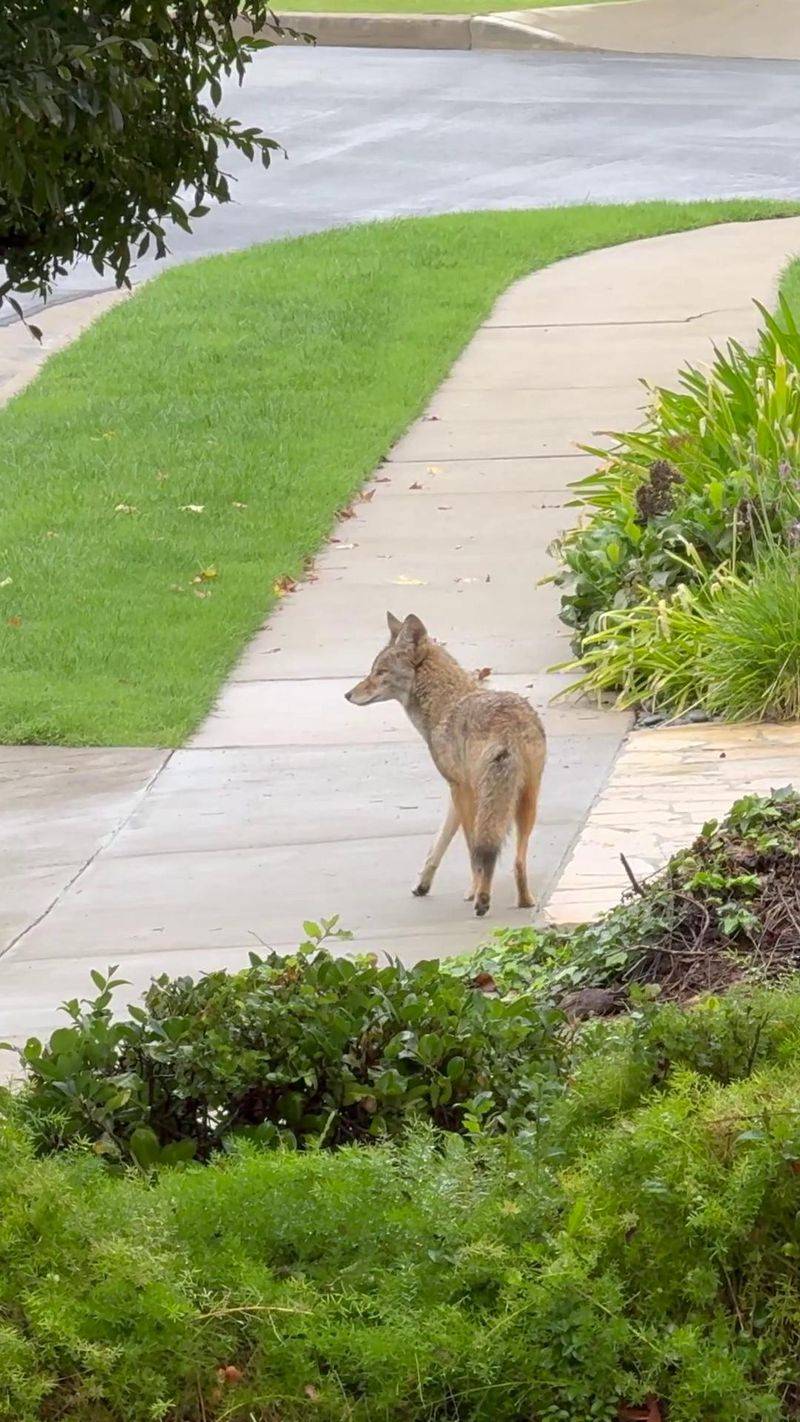
Good coyote habits start with the yard, not the howls. Pick up outdoor pet food, and keep garbage in secured containers.
Supervise small pets when they are outside, and keep cats indoors. Those few steps remove the things that bring coyotes close in the first place, as National Park Service guidance recommends.
If a coyote is poking around your yard, Ohio DNR advises clapping and shouting to scare it away. Stay where you are, make yourself loud, and let the animal leave.
USDA APHIS on hazing explains how this kind of scare tactic can help coyotes keep a wary distance from people.
Never feed a coyote. Do not walk toward it, corner it, or try to handle it.
If one comes too close, make noise and try to scare it off without closing the distance.
Sometimes a coyote keeps showing little fear of people, or a problem keeps coming back. In that case, call your local animal control or Ohio wildlife officials for advice.
The USDA APHIS coyote technical series covers the wider picture of managing ongoing conflicts.
Most nights, the howling is just coyotes being coyotes. Leave the porch light on if you like, and let the chorus pass.
Share this story