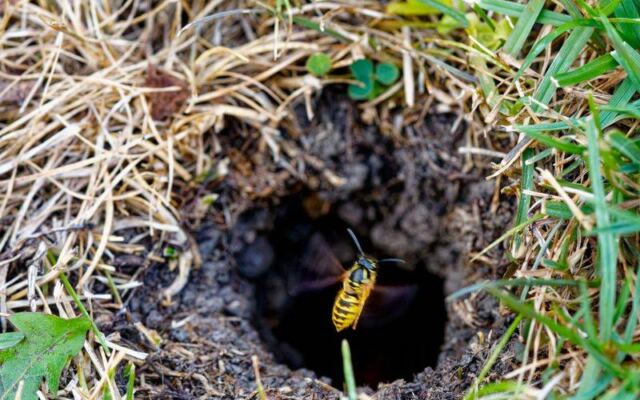
Yellowjackets often build their nests underground in Indiana yards, and a nest beside a path, play area, or other busy spot can lead to painful stings. The best first move is to keep people and pets away from any spot you suspect.
Not every nest has to be removed, though, because the risk depends on how close people will get to it. Here is how to tell what you are dealing with and choose a safe response.
Yellowjackets at a picnic do not prove a nest is nearby
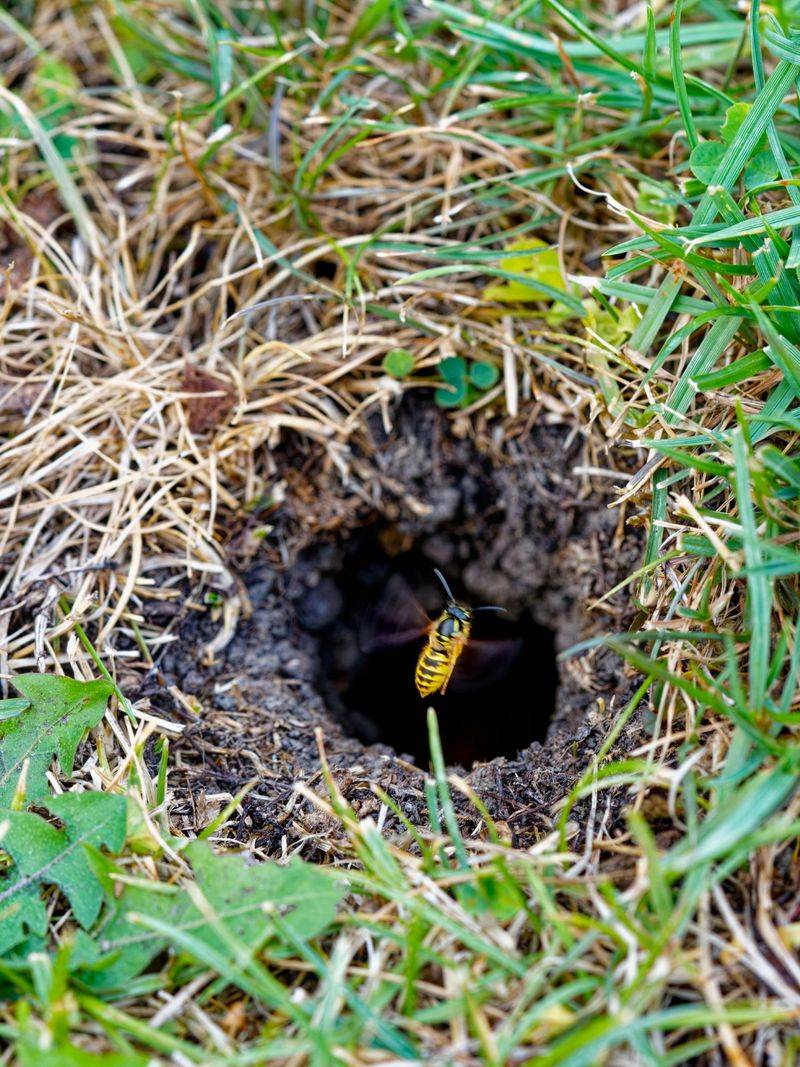
Yellowjackets commonly nest in Indiana yards, most often underground. Even so, spotting one at your cookout does not mean a colony is hiding beside the house.
Workers wander widely in search of food. They visit open drinks, sweet snacks, meat, and trash cans, and Illinois Extension notes that they become more noticeable later in the season.
A wasp on your plate could have flown in from a nest well beyond your property line.
A real nest looks different. You would see wasps flying steadily in and out of one spot, such as a small hole in the ground, a gap in a wall, or an opening under a deck.
Purdue Extension describes nests that can hold thousands of workers late in the year, which is why identifying the source matters.
Watch from a distance and note where the traffic goes. That tells you whether you have a nest at all.
If you do, the next question is how likely anyone is to bump into it, and that answer shapes everything else you do.
The way you use the space matters more than distance
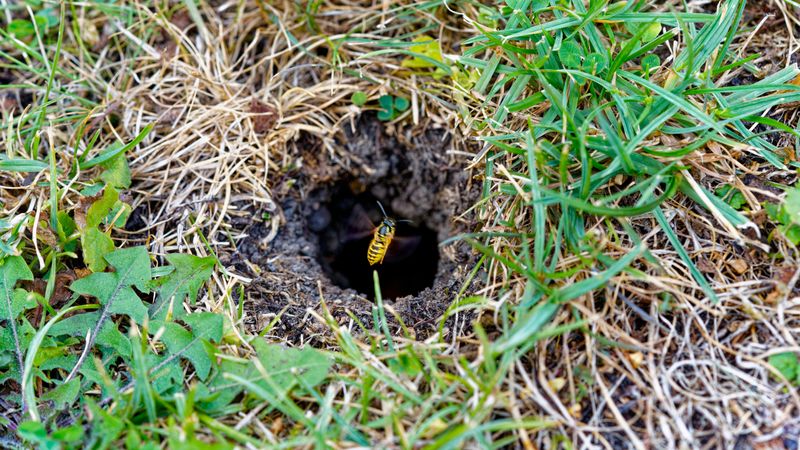
Most Indiana yellowjackets nest below ground. Purdue lists lawns, creek banks, forest floors, and garden and flower beds as possible spots.
Nests can also turn up in building voids and other sheltered places.
Picture two nests. One sits beside the walkway to your door, or in a patch of lawn you mow every week.
The other is in a weedy corner nobody visits. The first has a high chance of being disturbed, while the second may never meet a person.
Play areas, doorways, vegetable beds, and the edges of paths all raise the odds of contact. Heavy footsteps and mower vibrations can set off a defensive response.
That is why Purdue says colonies in residential yards often call for control, while Illinois Extension says a nest away from busy areas can be left alone.
You may wonder how many feet count as safe. The sources give no universal distance for that, and any number someone offers is a guess.
Think about who walks, plays, mows, or gardens near the nest, and how easily they can stay away.
Keep clear of a suspected nest
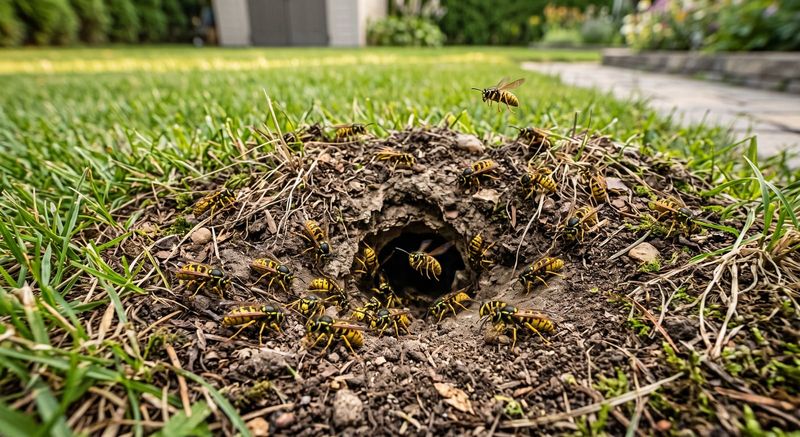
If you think a nest is in the yard, the first job is simple: stay away. Keep children and pets out of the area, and let everyone in the household know where it is.
Do not mow, dig, rake, or otherwise disturb the spot. Purdue warns that nests may sit just beneath the surface or under leaf litter, so a harmless-looking patch could be much more active than it appears.
Resist the urge to poke at the hole with a stick or toss something in to check. Disturbing a nest is the most common way people get stung.
Confirm the location by watching wasps come and go from a safe distance instead.
A temporary barrier can help, such as a rope line, a few cones, or a chair placed across the path. Treat this as the holding step while you decide whether the nest can be left alone or needs professional help.
When can you leave a nest alone?
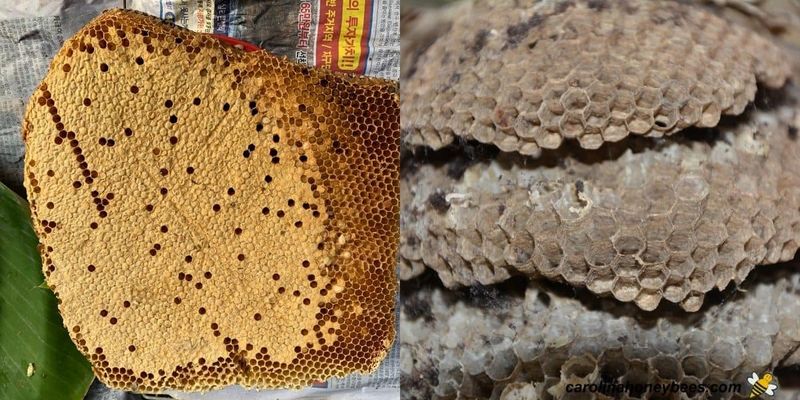
Sometimes the calmest choice is to leave things as they are. If the nest is away from regular activity and everyone can keep avoiding it, Illinois Extension says it can be left to die off with cold weather.
Colonies generally last just one year. Cold weather ends them, but no one can name an exact date, and the nest may stay busy for weeks.
Waiting only makes sense if no one has to pass near it in the meantime.
If the nest sits beside a path you use daily, waiting is not a good plan. In that case, move to the professional-help option instead.
Before deciding anything, be sure of what you are looking at. Yellowjackets are wasps, not bees, and honey bees may call for a different response.
University of Minnesota Extension offers a helpful guide to telling wasps and bees apart. If you are unsure, ask a local extension office or pest professional to identify the insect first.
High-traffic and building nests call for professional help
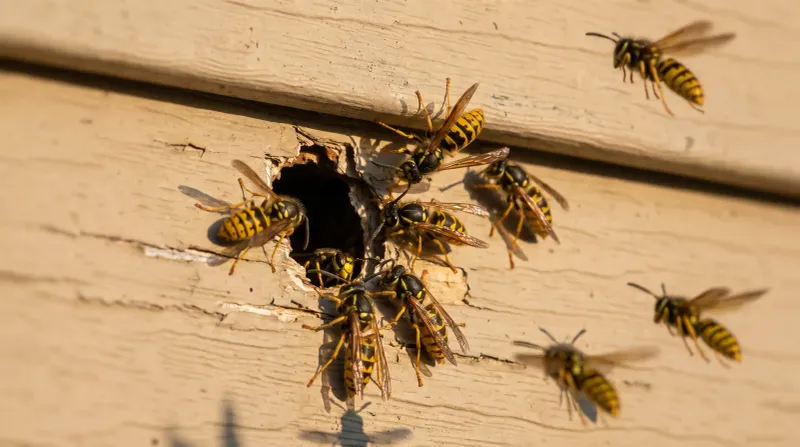
Some nests are best handled by someone with training and gear. That includes a nest beside an area people must use, such as an entry walk, a driveway, or a spot that needs regular mowing.
It also includes any nest inside a wall, attic, basement, or other building void. Purdue recommends professionals for structural colonies, which can be large and hard to reach.
Do not plug the entrance to an active wall nest. Illinois Extension warns that yellowjackets may chew through walls, and trapped wasps can end up inside your living space.
The deciding factors are access and exposure, not the mere presence of a nest in your yard. A colony in a quiet corner may not need any treatment.
When people cannot avoid it, or it is in the structure, a professional assessment is the prudent step.
Food precautions reduce foragers, not the nest
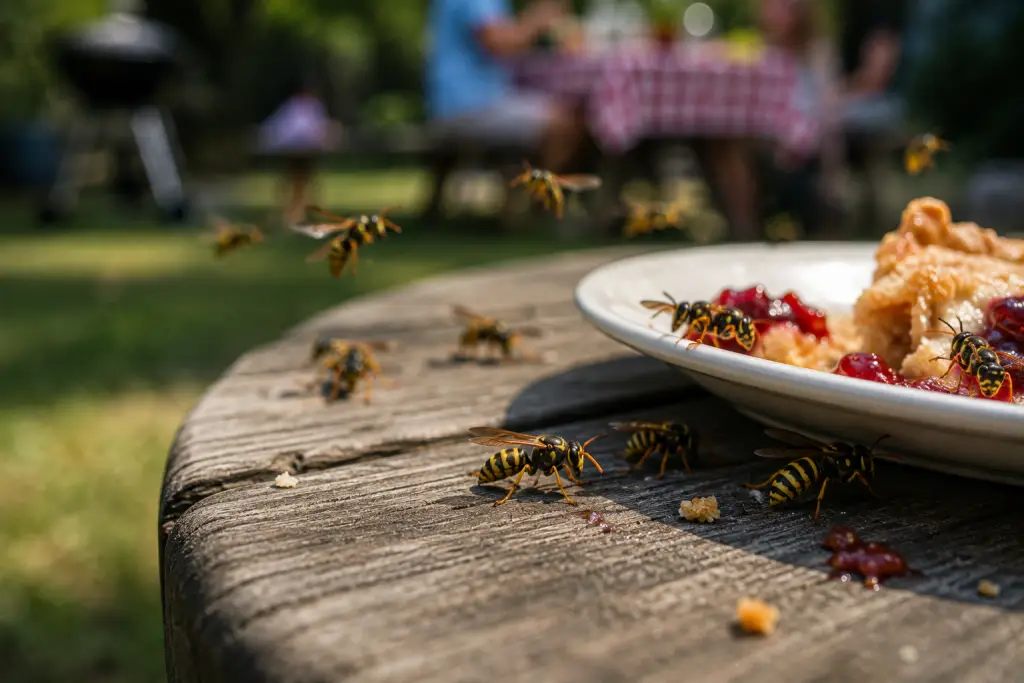
Outdoor meals are a magnet for wasps, so a few habits can keep your table calmer. Cover food and drinks, and check cups before sipping, since a wasp can crawl inside unnoticed.
Wipe up spills and sticky spots quickly. Keep garbage covered, and move cans well away from where people gather.
Purdue and Illinois Extension both point to food and trash as what draws foragers in.
Know what these steps can and cannot do. They lower the number of run-ins with foraging wasps.
They do not remove a colony, and they do not tell you where one is nesting.
If wasps keep arriving in numbers even after you have tidied up, watch where they fly. A steady line to one spot may point to a nest worth assessing.
Any pesticide use must follow the product label
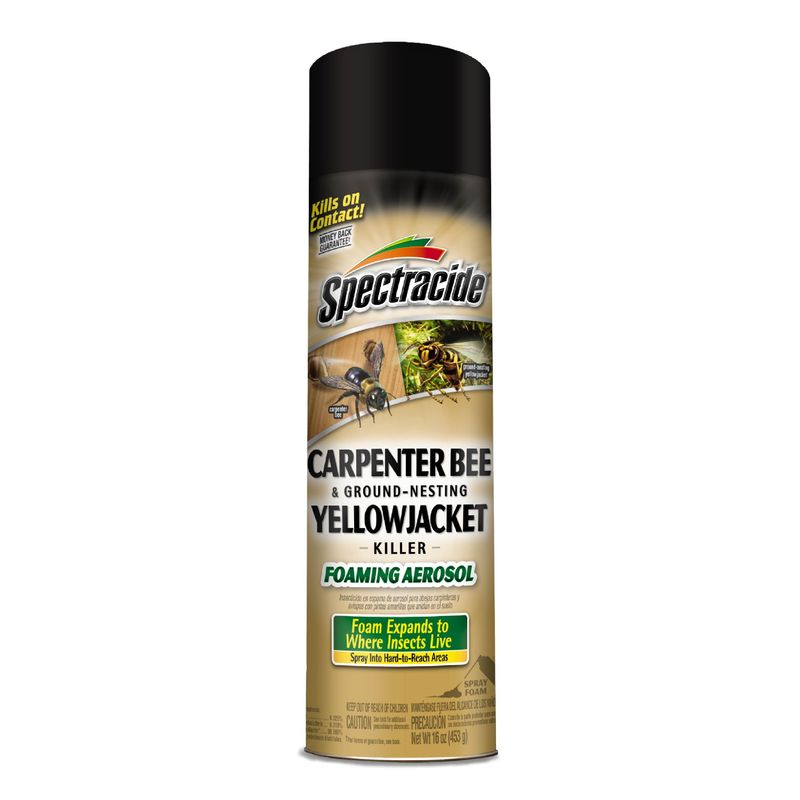
If you decide to use a pesticide, the label is your rulebook. Purdue directs readers to follow all label instructions and precautions.
Each product has its own limits on where and how it can be used, as shown on a sample EPA-registered label.
That is why there is no homemade recipe here. Read the whole label before buying and again before using, and keep children and pets away from the area.
Some popular ideas are unsafe. Virginia Cooperative Extension warns against gasoline, diesel, bleach, smoking, and burning a nest.
These can cause fires, poison soil and water, and injure the person doing it.
Store-bought traps are not a dependable fix either. Purdue says commonly sold yellowjacket traps are largely ineffective for controlling social wasps.
When a nest truly needs to go and you are not comfortable, call a professional.
A severe sting reaction needs emergency action

Yellowjackets can sting more than once, so a person who is stung should move away from the area right away. Purdue notes that these wasps defend their nests aggressively.
Some people react far beyond local pain and swelling. ACAAI advises that anyone with signs of anaphylaxis should use prescribed epinephrine and seek emergency help.
If you or a family member has a known severe sting allergy, follow the emergency plan from your clinician and keep medication within reach outdoors. You do not need to diagnose a reaction yourself.
If you are worried, treat it as an emergency.
A nest is easy to avoid when you know where it is. The stings tend to come from the one you never saw.
Share this story