Tennessee has a rule many homeowners never heard of: the state’s litter law bars knowingly placing litter on someone else’s property without permission and failing to remove it right away. Whether leaves you rake or blow onto a neighbor’s lawn count as litter is a question the reviewed legal sources leave open.
Leaves that simply fall from a tree are treated very differently. Knowing where that line sits can keep a small yard chore from turning into a bigger fight.
Start with how the leaves got there
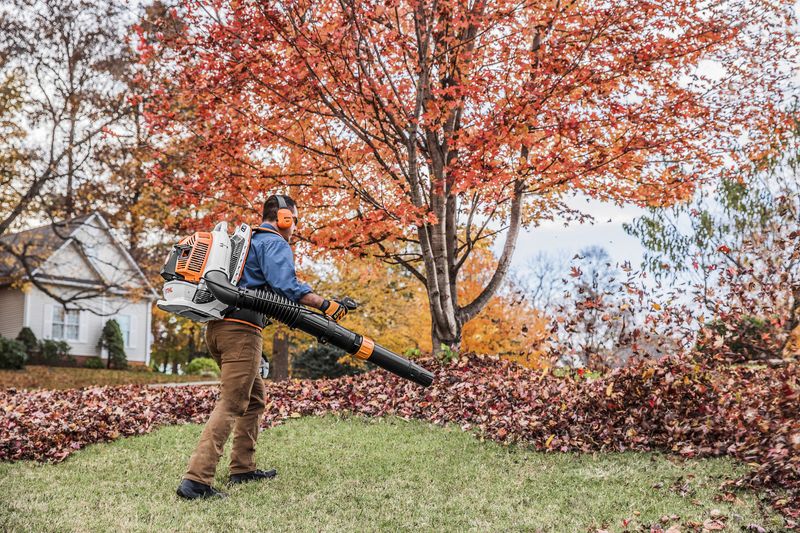
Two yards can end up with the same leaves for very different reasons. A maple branch hanging over a fence drops leaves on its own.
A person with a rake or blower moves leaves from one spot to another. Tennessee law treats those two situations differently, and the way the leaves arrived is the first thing to figure out.
On the deliberate side, Tennessee’s littering law covers knowingly placing, dropping, or throwing litter on public or private property without permission and failing to remove it immediately. You can read the statute’s definitions in Tennessee Code section 39-14-501 and the offense itself in section 39-14-502.
The authorities reviewed do not say whether leaves moved on purpose count as litter. They also do not create an automatic violation every time leaves reach a neighbor’s lawn.
On the natural side, the state Supreme Court addressed leaves that fall from encroaching trees in Lane v. W.J.
Curry & Sons. That ruling is about trees, not about people with rakes.
Beyond the litter question, two other legal ideas sometimes come up: nuisance and trespass. Each has its own test, and later sections cover them one at a time.
For now, the main point is simple: how the leaves got there matters.
Natural leaf fall is not automatically a nuisance

Leaves drifting down from a neighbor’s tree are a fact of life in Tennessee, and the state’s highest court has said so. In Lane v.
W.J. Curry & Sons, the Tennessee Supreme Court held that encroaching trees and plants are not nuisances merely because they drop leaves, flowers, or fruit.
There is a limit. The same decision says such vegetation can become a nuisance if it causes actual harm or poses an imminent danger of actual harm.
Falling leaves alone do not meet that bar, but real damage or a real threat can change the picture.
Lane deals with leaves dropped by trees. It does not decide what happens when a person deliberately rakes or blows leaves onto adjoining land, and it does not give anyone permission to move yard debris across a property line.
The decision also describes a limited self-help option. An adjoining owner may cut encroaching vegetation back to the property line, and must do so at their own expense.
That is not a license to step onto the neighbor’s land, cut past the boundary, or cut down the whole tree.
If branches hang over your yard, trimming right at the line is the safe reading of the rule. Anything beyond that is a good moment to talk with a Tennessee attorney first.
Could deliberately moved leaves count as litter?

Tennessee’s littering offense is where the title’s “rule” comes from. Under section 39-14-502, a person commits the offense by knowingly placing, dropping, or throwing litter on public or private property without permission and failing to remove it immediately.
The definitions matter too. Section 39-14-501 defines litter broadly, and the definition includes all other waste material.
That wording is wide enough that someone could argue it reaches yard waste.
Still, the reviewed authorities do not specifically classify leaves raked or blown onto a residential lawn. No source reviewed shows a court applying the statute to a homeowner moving leaves onto a neighbor’s yard.
So it would be wrong to call that conduct automatically criminal littering. The answer would depend on the facts and on how the material is treated under the law.
Local rules add another layer. Section 39-14-508 allows counties to adopt litter-control regulations about placing or disposing of material on public or private property.
Not every county has the same rule, so a regulation in one place says nothing certain about another.
A practical clue: a one-time pile that blows over in a gust looks very different from a repeated habit of sweeping a whole yard’s worth of leaves next door. Even so, neither is settled by the sources reviewed.
Nuisance requires more than annoyance

Being irritated by a neighbor’s habits is not the same as having a legal nuisance claim. In Shore v.
Maple Lane Farms, the Tennessee Supreme Court described nuisance as a substantial and unreasonable interference with another person’s use or enjoyment of property.
Courts look at the full context. That includes the nature and extent of the harm and how the situation would affect an ordinary person, not just a particularly sensitive one.
There is no magic number here. The cases reviewed set no leaf count, pile size, or frequency that automatically creates liability.
A few leaves on a lawn is unlikely to be treated like a heavy, repeated dumping, but the court would weigh the specifics either way.
Picture a few examples. Wet leaves piled against a foundation for weeks, clogged drains that cause water to back up, or a smothered garden bed could point toward real harm.
A scattering of leaves that the owner can mulch in an afternoon looks more like ordinary annoyance.
Repeated or harmful conduct may raise a nuisance question, but no particular pile of leaves establishes a claim by itself. Keeping notes and photos of actual effects is more useful than arguing about size.
Trespass raises a separate question

Trespass and nuisance sound alike but ask different questions. Nuisance looks at whether someone’s use or enjoyment of property has been substantially and unreasonably disrupted.
Trespass focuses on an intentional entry onto land.
In Barrios v. Simpkins, the Tennessee Court of Appeals discussed intentional entry and the possible relevance of a thing entering another’s land.
That opens the door to an argument that something deliberately sent onto a neighbor’s property could count.
But the case does not settle how courts would treat leaves blown or raked onto a lawn. The reviewed cases do not resolve whether leaves meet that standard.
That means a trespass claim here is a theory, not a guarantee. The sources do not establish an automatic claim or a ready remedy for this leaf-specific situation.
One way to see the difference: if the main complaint is that a pile is blocking a drain or killing grass, nuisance may be the closer fit. If the complaint is that someone deliberately sent material across the line, trespass might be raised instead.
In either case, a Tennessee attorney can say which theory, if any, fits your facts.
Address repeated incidents without escalating

Start with a record. Take dated photos, jot down when it happens, and note any damage like blocked drains or smothered plants.
A clear log helps in any later conversation, whether with a neighbor, a code office, or a lawyer.
Next, ask politely. Many leaf problems come from a landscaping crew or a neighbor who simply did not think about it.
A friendly request often ends the issue.
Then check local rules. Counties may adopt their own litter-control regulations under section 39-14-508, and city rules can differ.
If the conduct continues or causes damage, ask local code enforcement or a Tennessee attorney which remedies fit your situation.
Do not answer by sending the leaves back. The reviewed sources do not establish a right to deposit them on the neighbor’s property, and doing so could start a new dispute.
Burning is not a shortcut either. Leaf burning may be allowed in some circumstances, but state open-burning guidance says local rules and other requirements apply.
Bagging, mulching, or composting your own leaves keeps the peace.
A pile on your own side of the fence is a lot easier to defend than one on theirs.
Share this story