Those fresh piles of soil that pop up after a monsoon storm are telling you one clear thing: ants have been busy there very recently. They are not a weather forecast, and they do not prove that a nest flooded or tell you which ant made them.
Still, a few simple clues can help you decide whether to relax or take a closer look. Here is how to read the signs without guessing too much.
What a fresh mound can tell you
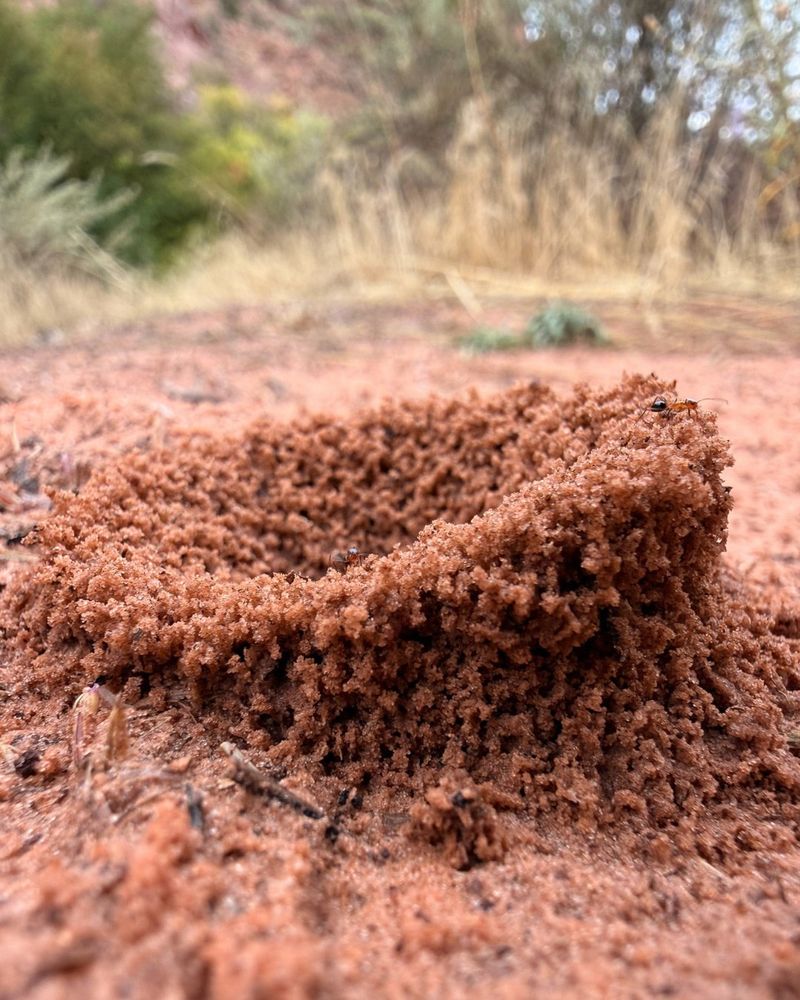
Newly moved soil means ants were working there recently. That is the solid takeaway.
A fresh mound does not tell you when the next storm will arrive, it does not prove the nest flooded, and it cannot name the ant species behind it.
Several explanations can fit the same pile. Ants may be digging out a nest after rain, repairing damage, or starting something new.
In Arizona, University of Arizona Extension notes that monsoon season stirs up a number of pests, so more ant activity around this time is not surprising.
Think of the mound as one visible clue, not a diagnosis. Harvester ants, for example, build nests that reach well below the surface, and Extension guidance on harvester ants describes the mound as only one part of the whole nest.
That means you can make a sensible decision without solving the mystery. Ask a practical question instead: is the nest in a spot where people or pets could get hurt?
If not, a fresh pile is usually just a sign of a busy desert after rain.
Rain can coincide with ant activity
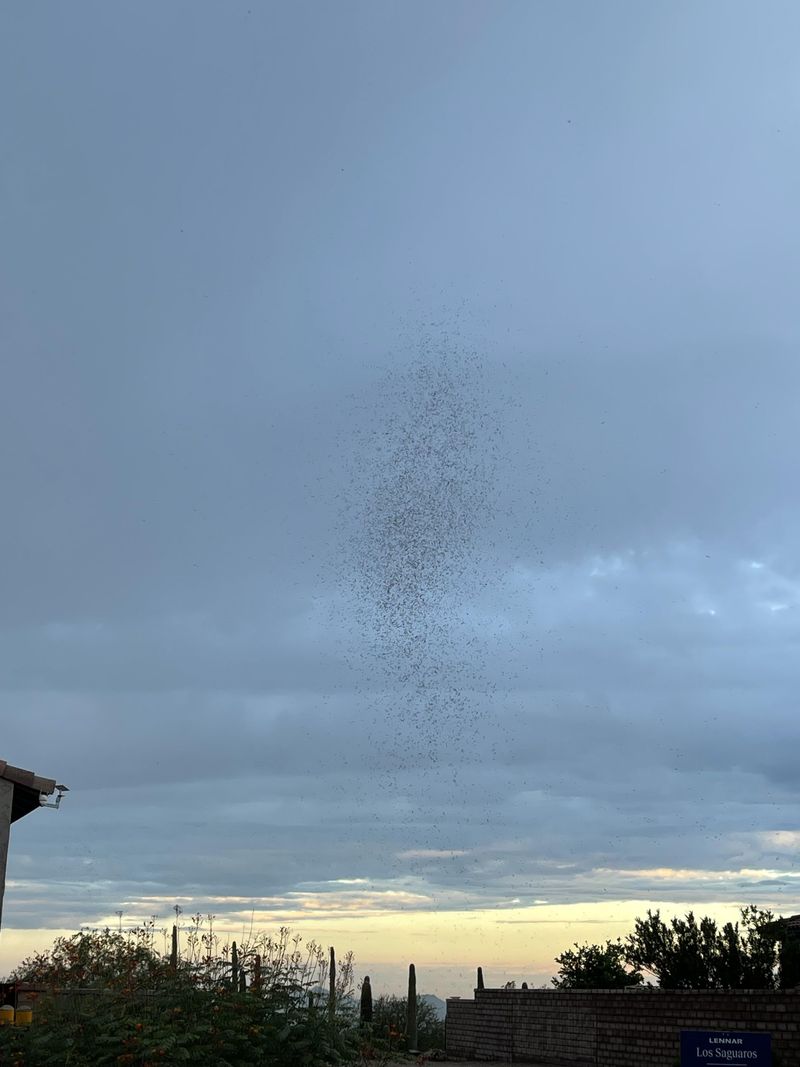
Storms and ant activity do sometimes line up. According to University of Arizona Extension, winged harvester ants swarm and start new nests in spring or summer, usually after rain.
Damp soil likely makes digging easier, though that is a practical guess rather than something a pile can prove.
If you see winged ants after a storm, that points to reproductive activity. It does not mean the fresh mound next to them belongs to a brand-new colony.
The soil could just as easily come from an older nest that was cleaned out or repaired.
Rain-linked repair has been seen elsewhere too. A study of imported fire ants in South China recorded mound repair after rainfall.
That work covers one species in one region, so treat it as a separate example, not a rule for Arizona ants.
The safe reading is this: monsoon rain and ant activity can overlap, and new nests are one possible reason for fresh soil. They are not the only reason, and a single pile cannot tell you which one you are seeing.
The mound does not show the whole nest
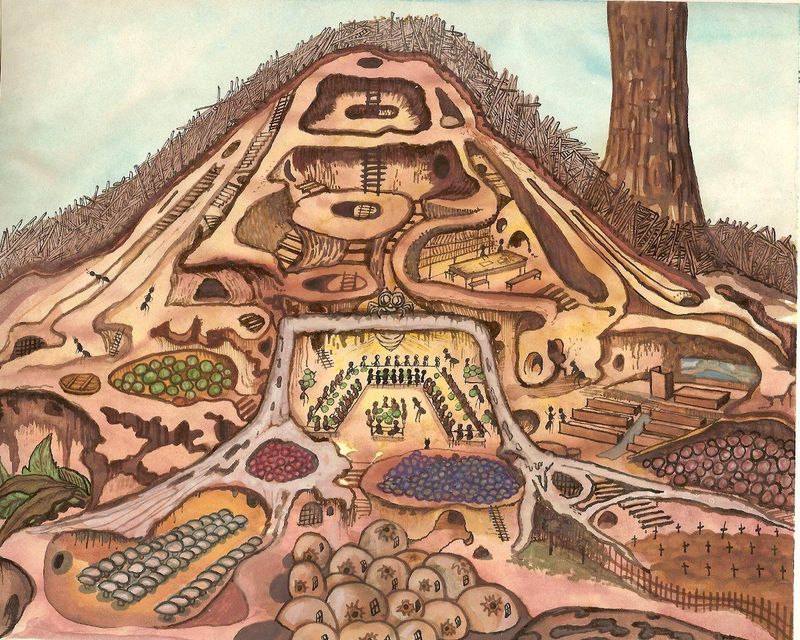
Most of an ant nest is out of sight. For harvester ants, Extension information explains that tunnels and chambers extend underground, and the surface mound is just one visible feature.
Mound shape also varies, so it is a weak clue on its own.
Soil at the surface can come from different jobs. Workers might be excavating new tunnels, clearing debris, or repairing a spot that rain disturbed.
From above, those can look nearly the same.
That is why a pile alone cannot show whether flooding happened. It also cannot show whether the soil came from repair or from fresh digging.
Some field notes add helpful context. A New Mexico nature center reports that queen-made founding chambers may be most visible 24 to 48 hours after rain and can resemble established nests.
That is regional field context, not a timing guarantee for Arizona yards.
If you want to learn more, watch from a distance over a few days. Notice whether the pile grows, whether ants keep coming and going, and whether the spot is near a walkway.
Several Arizona ants can make nests
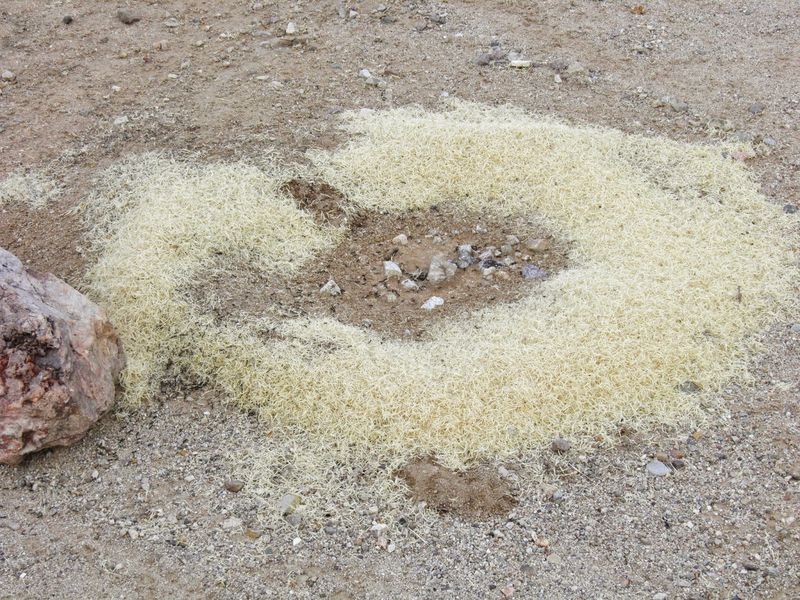
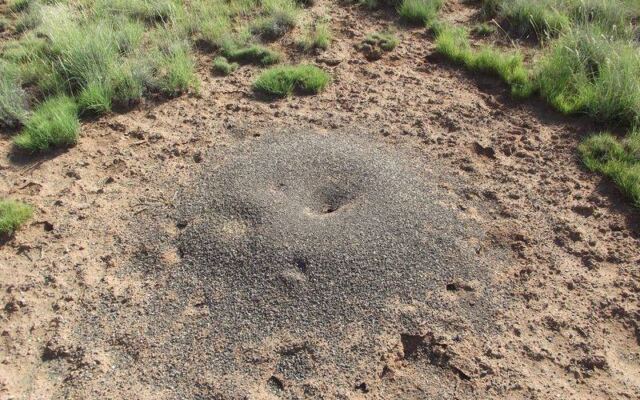
Arizona is home to more than one kind of ant that moves soil. Harvester ants typically build mounds of fine gravel, often in the middle of a broad cleared patch, according to University of Arizona Extension.
That look is common, but it is not a perfect fingerprint.
Native southern fire ants often nest in loose patches of soil and do not typically form conspicuous mounds. Desert fire ants live in the state as well.
Each group acts a little differently, and their nests can overlap in how they look.
You may have heard that every fresh mound is a fire ant mound. Extension fire ant guidance says the red imported fire ant is not established in Arizona, so that assumption is misleading.
The takeaway is simple: do not name the ant from the mound alone. Poking at it to get a better look is a bad idea, since some of these ants sting.
If you truly need an identification, get help from an Extension office or a pest professional.
When leaving a nest alone makes sense
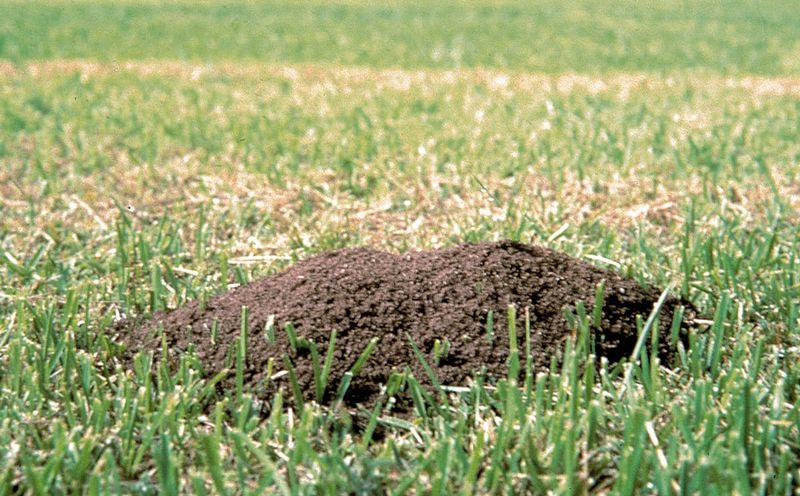
For many yards, doing nothing is a fine plan. Watch from a few steps away, and do not handle, disturb, or step on the mound.
Disturbing it is the quickest way to get stung.
If the nest sits in a low-traffic corner, away from people and pets, leaving it alone is a reasonable option. Harvester ants can be helpful in suitable places, and Extension guidance says to treat only when a nest poses a risk.
Keep in mind that harvester ants can sting and will defend a nest they feel is threatened. Kids and dogs are the most likely to blunder into one, so notice where they play.
A nest beside a back door or a play area is a different situation than one by a far fence.
Reserve control for a real risk, and identify the ant first. Extension sting guidance stresses knowing what you are dealing with before choosing a response.
A quick check after each storm is plenty. If the mound stays small and quiet, you can usually leave it be.
How to act if a nest creates a risk
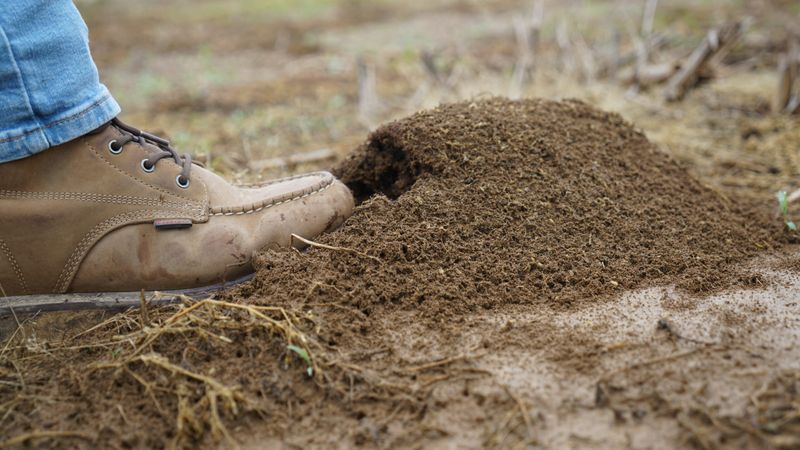
If a nest is in a spot where people or pets keep getting too close, it is time to act. Start by identifying the ant, since the right choice depends on what it is.
University of Arizona Extension advises using a pesticide labeled for the situation and following its directions.
Stick to the label and skip improvised fixes. If you are unsure, ask a licensed pest professional or your local Extension office.
Know the emergency steps too. According to Extension guidance on stings, serious allergic-reaction symptoms after a sting, including trouble breathing or faintness, call for immediate medical care.
Call 911 right away.
A fresh mound is a small clue, and a calm look from a distance usually tells you all you need.
Share this story