The opossum under your deck is most likely using that dry, covered space as a place to rest out of the cold. Seeing one does not mean it is hurt, and it does not mean your deck is now its forever home.
Most of the time, the best plan is to give it room and cut down on easy food nearby. If you do want it gone, the order of your steps matters a lot, and this guide walks you through them.
A sheltered deck is a plausible refuge

Picture the space under a deck from an opossum’s point of view. It is dry, it blocks wind, and it is tucked out of sight.
Indiana DNR says opossums look for warm places to sleep, and it even suggests a radio as a way to discourage one under a porch or deck.
The Virginia opossum is Indiana’s only native marsupial, and it lives in every county in the state. That means a visitor under a deck in Fort Wayne, Evansville, or a small farm town is not unusual.
Another state agency, the Pennsylvania Game Commission, also notes that opossums use shelter beneath porches.
Still, shelter is a likely explanation, not a sure one. Nobody can look at a single opossum and say exactly why it picked your deck.
It may be resting for a night, passing through while it searches for food, or staying a bit longer. Seeing it there does not prove it is sick or injured, and it does not prove it plans to stay for months.
That uncertainty is actually helpful, because it keeps you from rushing. You have a few calm choices.
You can leave the animal alone if it is safe to do so, make your yard less appealing, or plan a careful exclusion. The next sections cover each one, starting with why the opossum may seem to vanish.
Why an opossum may disappear for days
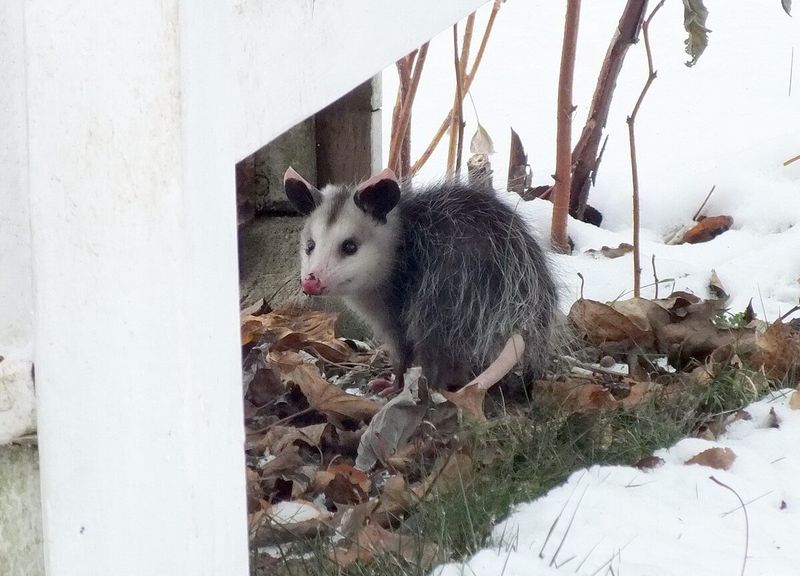
Opossums do not hibernate. Even so, the Pennsylvania Game Commission reports that cold or snowy weather can lead them to spend more time in a den.
So a opossum that seems to be gone during a freezing stretch may simply be curled up out of view.
Winter can be hard on them. Indiana DNR notes that severe winters can reduce numbers in northern Indiana and can cause frostbite to ears and tails.
A resting spot out of the wind makes sense for an animal with that kind of exposure.
Here is the catch for homeowners. The Wisconsin Humane Society cautions that in winter an animal may be inactive for days or longer.
A quiet entrance, no tracks in the snow, or a few days without a sighting is not proof the space is empty.
Think of a silent deck as a question mark, not an answer. You may see no movement because the opossum is sleeping deeply, because it left and may return, or because it never left at all.
Keep that in mind before you decide anything about blocking the opening.
Keep your distance and leave it alone if you can
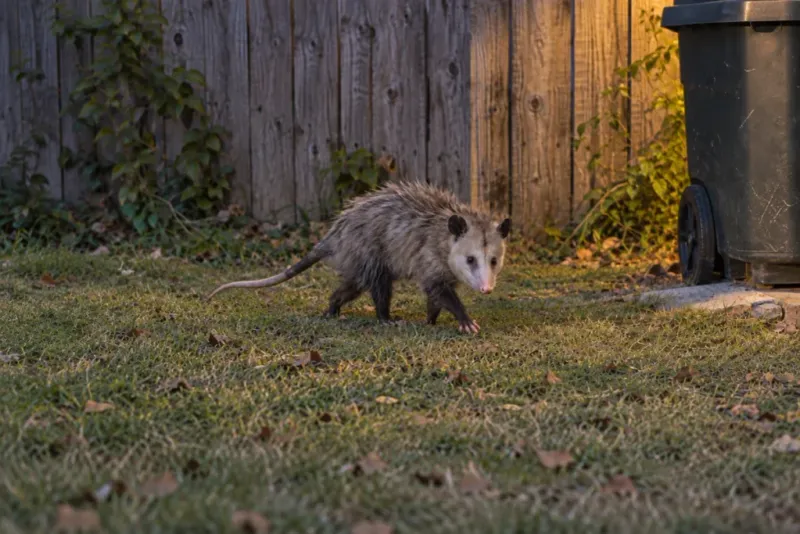
If the opossum is tucked away and not damaging anything, leaving it alone is a reasonable first move. It asks for nothing except a quiet spot.
Many opossums move on by themselves once weather or food conditions change.
The CDC advises enjoying wildlife from a distance and not feeding or handling it. That means no tossing out food to be friendly, no poking under the deck with a stick, and no trying to corner it for a closer look.
Keep dogs and cats away from the area too, since a frightened wild animal may defend itself.
Wash your hands after spending time in places wildlife may have occupied, such as after clearing leaves or stored items from around the deck. A few minutes with soap is a simple habit that lowers your risk.
Wild animals can carry disease, so the risk is real, even if it is not a reason to panic. If you get a bite or scratch, wash the wound well and seek medical advice.
Ask a medical professional whether rabies treatment is needed, because that decision should not be guessed at at home.
For most households, then, the plan is easy. Watch from a window, keep pets inside after dark for a while, and give the animal space.
Reduce food sources around the yard
Opossums eat many kinds of food, and they may wander through yards looking for an easy meal. Indiana DNR recommends a few simple habits to make your property less tempting.
Each one takes only a minute or two.
Bring pet food indoors rather than leaving a bowl on the porch overnight. Close garbage cans tightly, and think about a lid with a latch if raccoons or dogs knock yours over.
Cover or secure compost so scraps are not an open buffet.
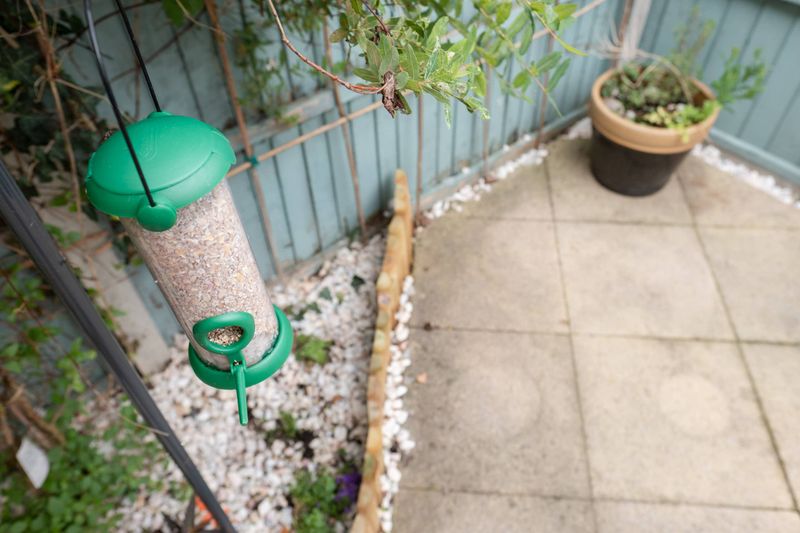
Bird feeders deserve a look as well. Seed spills onto the ground, and the DNR suggests bringing feeders in at night.
Sweeping up fallen seed in the morning helps even more.
These steps are good yard care, but they are not a guarantee. A clean yard cannot tell you why this particular animal chose your deck, and food may be only one small part of the story.
Shelter alone could be enough.
Also keep in mind that cutting off food is prevention, not exclusion. It does not tell you whether the den is empty, and it does not make it safe to block the opening.
Treat it as a first layer, then move on to the careful steps in the next section if you need the animal to leave.
Confirm the space is empty before closing it
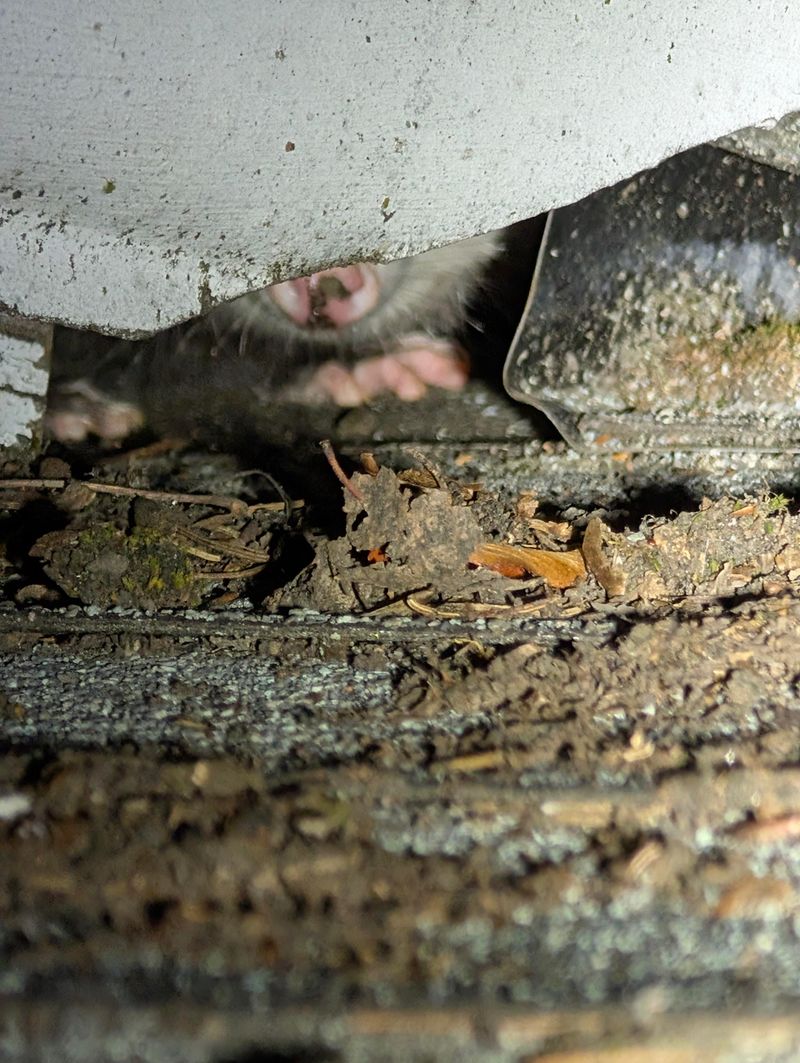
When the opossum does need to go, slow and careful works best. Indiana DNR suggests playing a talk radio station overnight near the space to discourage an opossum from staying.
Voices and noise can make a resting spot feel less safe.
Throughout this process, leave an exit available. The Wisconsin Humane Society advises checking that animals have left and closing the opening only after you have confirmed the space is empty.
Closing it too soon could trap an animal inside.
Do not count on a short quiet spell as proof. Winter inactivity means an opossum can stay still for days, so a day without sounds or tracks proves very little.
Keep watching and checking over several days, and only act once you are confident.
Be especially careful with a one-way door. Use one only if you are sure no young are inside.
Young are more commonly a spring-to-summer matter in Indiana, but late young may still travel with the mother later on, so the season alone does not tell you a den is empty.
Once you have confirmed the space is empty, fencing the bottom of the deck can help prevent future access. Put it in after that check, not before.
Sealing is the last step, not the first.
Get expert help for removal or rescue
An opossum that is simply sheltering is different from one that is causing damage, such as tearing insulation or digging in ways that harm your structure. The rules for dealing with a damaging animal are legal matters, so check current guidance first.
Start with the Indiana DNR opossum page and your local ordinances before you take any removal action.
Indiana’s rules can include reporting requirements. A state FAQ on nuisance animals says the taking of listed nuisance animals, including opossums, must be reported to a conservation officer within 72 hours.
Because the details matter, this is not a place for casual do-it-yourself trapping or shooting.
If you want help with removal, the DNR does not provide it. It points people to a qualified Wildlife Control Operator, and you can start with the DNR customer service center.
For an animal that looks injured or apparently orphaned, do not handle it more than necessary, and do not try to nurse it yourself. Contact a permitted wildlife rehabilitator.
Young animals especially should not be moved unless it is truly needed.
A short phone call can save you time and protect both your family and the animal.
Be patient, then prevent another visit
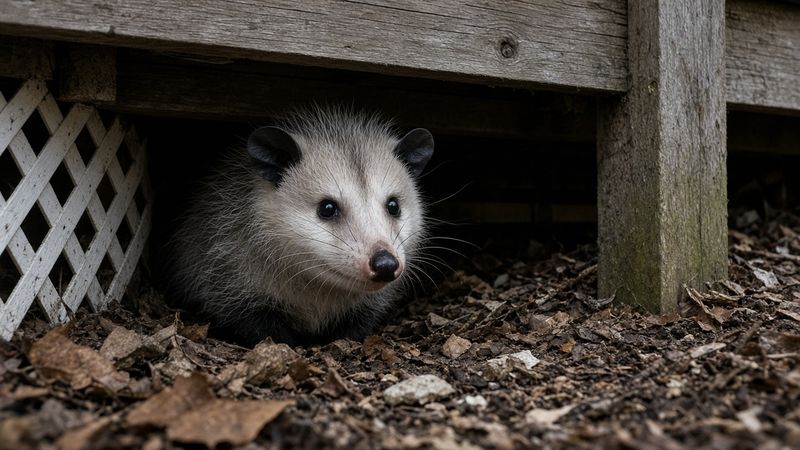
A deck can offer a cozy shelter, and one opossum’s visit is not a reason for alarm. If it can stay safely, keep your distance, as CDC guidance recommends.
If it must go, follow the Wisconsin Humane Society’s advice and verify that it and any young have left before closing access.
Patience now makes for a calmer spring.
Share this story