Get the latest garden guides in your inbox →
Gardening Latest
  • General Gardening
  • Lawn Care
  • Plant Care
  • Composting
  • Soil Health
  • Backyard
  • Garden Muse Magazine
  • General Gardening
  • Lawn Care
  • Plant Care
  • Composting
  • Soil Health
  • Backyard
  • Garden Muse Magazine
  • News
  • Gardening Calendar
  • Garden Structures
  • Vegetable Garden
  • Vertical Garden
  • Raised Beds
  • Hydroponics
  • General Equipment
  • Community Gardens
Garden Themes
  • Spiritual Garden
  • Hydroseeding
  • Seeding and Laying Sod
  • Artificial Grass
  • Lawn Care Equipment
  • Plants
  • Trees
  • Planting Tools
  • Composting Basics
  • Fertilizer
  • Alternative Growing Mediums
  • Front Yard
  • Backyard Activities
  • Landscaping
Gardening Latest

Explore by state

Which state is your garden in?

Currently viewing Alabama

All states

Northeast

  • Connecticut —
  • Delaware 45
  • Maine —
  • Maryland 31
  • Massachusetts 47
  • New Hampshire —
  • New Jersey 31
  • New York 40
  • Pennsylvania 40
  • Rhode Island —
  • Vermont —

Southeast

  • Alabama 31
  • Arkansas —
  • Florida 31
  • Georgia 31
  • Kentucky 45
  • Louisiana 30
  • Mississippi —
  • North Carolina 29
  • South Carolina 44
  • Tennessee 28
  • Virginia 30
  • West Virginia —

Midwest

  • Illinois 30
  • Indiana 32
  • Iowa 44
  • Kansas —
  • Michigan 31
  • Minnesota 30
  • Missouri 30
  • Nebraska —
  • North Dakota —
  • Ohio 31
  • South Dakota —
  • Wisconsin 45

Southwest

  • Arizona 30
  • Colorado —
  • Nevada —
  • New Mexico —
  • Oklahoma —
  • Texas 29
  • Utah —

West

  • Alaska —
  • California 30
  • Hawaii —
  • Idaho —
  • Montana —
  • Oregon —
  • Washington —
  • Wyoming —

No state matches that search.

Site menu

Gardening Latest
  • General Gardening
    • News
    • Gardening Calendar
    • Garden Structures
    • Vegetable Garden
    • Vertical Garden
    • Raised Beds
    • Hydroponics
    • General Equipment
    • Community Gardens
    Garden Themes
    • Spiritual Garden
  • Lawn Care
    • Hydroseeding
    • Seeding and Laying Sod
    • Artificial Grass
    • Lawn Care Equipment
  • Plant Care
    • Plants
    • Trees
    • Planting Tools
  • Composting
    • Composting Basics
  • Soil Health
    • Fertilizer
    • Alternative Growing Mediums
  • Backyard
    • Front Yard
    • Backyard Activities
    • Landscaping
  • Garden Muse Magazine

Explore

  • About GardeningLatest.com
  • Contact Us

Get the latest from the garden

New guides on lawn care, plants and backyard projects, sent when they go up.

Subscribe →

Follow

  • Facebook
  • X
  • Pinterest
  • YouTube
Alabama Gardening

That Burning Saddleback Caterpillar Sting in Your Alabama Garden Calls for These Steps Right Away

If a spiny caterpillar just left your skin burning, act fast: lift it off with a tool, dab away any spines…

LT

By Loretta Tate

November 29, 2026 · 6 min read

That Burning Saddleback Caterpillar Sting in Your Alabama Garden Calls for These Steps Right Away

If a spiny caterpillar just left your skin burning, act fast: lift it off with a tool, dab away any spines with sticky tape, and wash the spot with soap and water. Saddleback caterpillars live in Alabama, and their spines can cause sudden, sharp pain.

Knowing the right order of steps can make the next few minutes much easier. Here is how to handle it, when to get help, and how to keep your garden safe.

At a glance

Where
Alabama Gardening
Hardiness zone
8 10 to 20°F
Read
6 minutes
Published
November 29, 2026

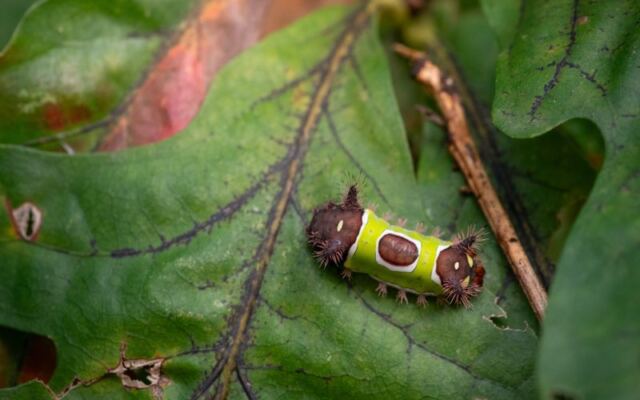
Remove the caterpillar and lift away any spines
Remove the caterpillar and lift away any spines
© A-Z Animals

Start by keeping your bare hands away from the caterpillar. Do not brush it off, rub it, or crush it, since that can push more spines into your skin.

Use a tool such as tweezers, a stick, or a folded piece of paper to flick or lift it off, then move it away from where people are working.

Next, press a piece of sticky tape gently onto the affected skin and lift it straight off. Spines can break off and stay behind, and tape can pull many of them out.

Repeat with a fresh piece each time until you stop picking up anything. Poison Control’s caterpillar guidance lays out this same tape-then-wash approach.

Once the tape work is done, wash the area with soap and water. Use a gentle touch rather than scrubbing hard, because scrubbing can irritate skin that is already sore.

For comfort, a cold pack wrapped in a thin towel may ease pain or swelling. Never put ice directly on skin.

If itching bothers you, Poison Control lists hydrocortisone cream as an option, and MedlinePlus offers similar symptom care. Follow the label directions, and ask a pharmacist, doctor, or Poison Control if you are unsure about any medicine, especially for a child.

Keep in mind that these steps deal with possible spine contact. They do not tell you for certain what caused a burning rash, and you can follow them even if you never saw the caterpillar.

The burning comes from spines, not a stinger
The burning comes from spines, not a stinger
© Reddit

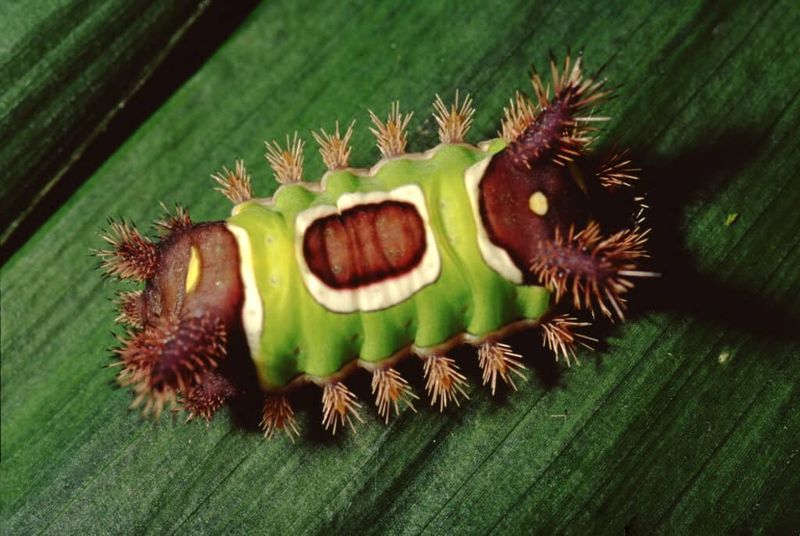
Most of us say “sting,” but a saddleback does not have a bee-like stinger. Instead, its body carries hollow spines connected to venom.

When skin brushes against them, the spines can pierce the surface or snap off and stay behind.

Most caterpillar contact causes a local skin reaction: burning, redness, itching, or a small swollen patch.

That contact can bring sudden burning pain and a local skin reaction, such as redness, swelling, or a rash. UF/IFAS Extension describes how stinging caterpillars of the Southeast cause trouble through this direct spine contact.

How much it hurts varies. A quick brush may feel very different from a firm grab, and people differ in how sensitive they are.

Some feel a brief sting, while others have pain and skin changes that last longer. No one can promise that every exposure will be mild or fade in a set number of hours.

Symptoms alone also cannot tell you which caterpillar was responsible. Several species can leave a burning rash, so a sore patch after gardening is not proof of a saddleback.

Poison Control treats the care the same way no matter which spiny caterpillar is suspected: remove spines, wash, and manage symptoms.

A saddleback has a distinctive pattern
A saddleback has a distinctive pattern
© clad_in_plaidwildlife

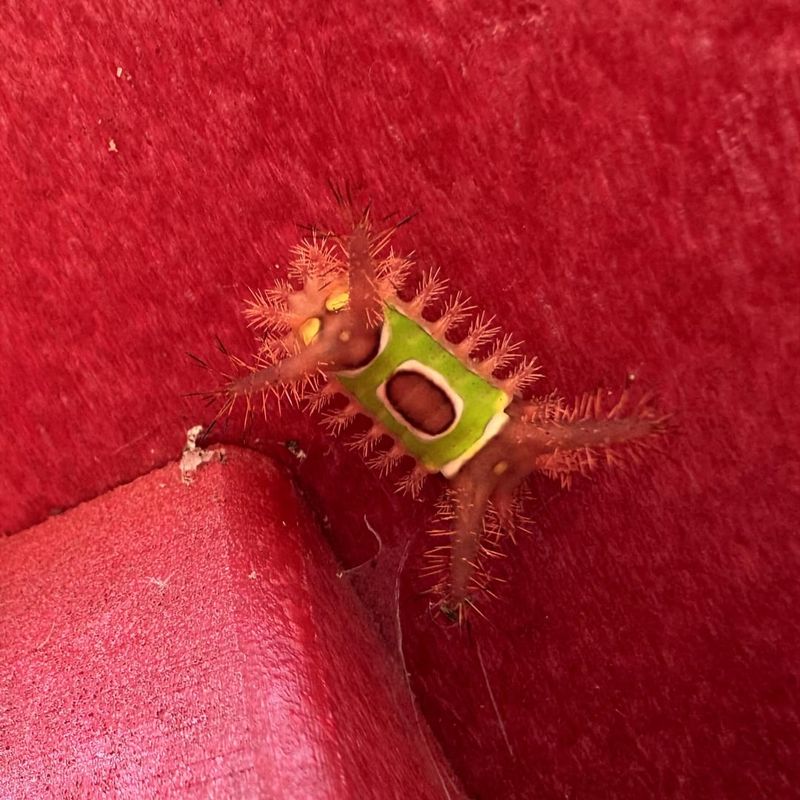
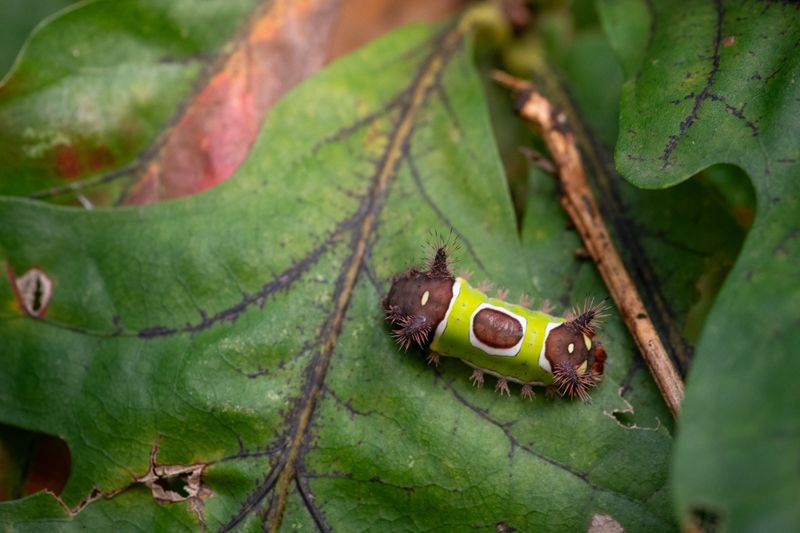
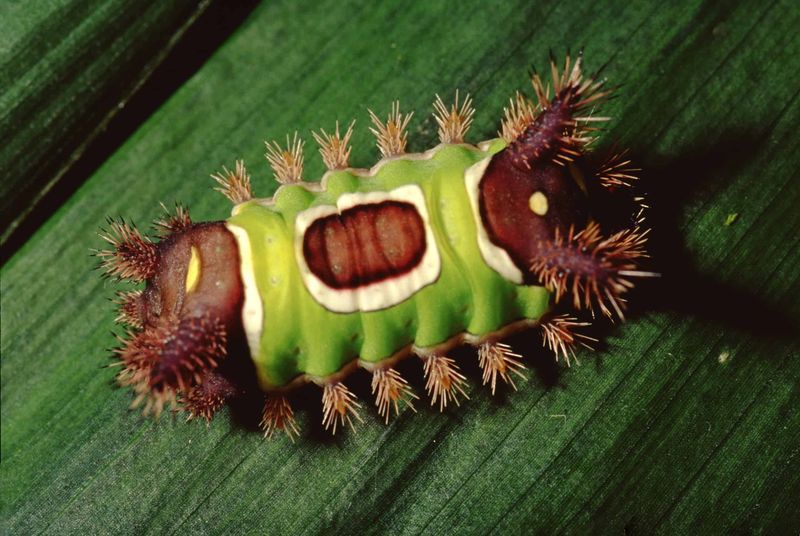
Picture a caterpillar about an inch long. Both ends are dark and covered with noticeable spines, while the middle is bright green.

On that green stretch sits a brown oval patch edged in a paler color, like a saddle on a horse’s back.

This pattern is a helpful recognition aid, not a guarantee. Auburn University’s guide to stinging caterpillars on Alabama trees shows the species and warns that harmless look-alikes also occur.

If you are checking names, you may see two. Auburn’s Alabama guide uses Sibine stimulea, while current UF/IFAS material uses Acharia stimulea and lists Sibine as a synonym.

They refer to the same caterpillar.

Do not rely on color alone. Alabama has other stinging caterpillars, as UF/IFAS’s Southeast overview explains, and some fuzzy or spiny ones are harmless.

A burning rash also does not confirm a saddleback. If you are unsure, treat any spiny caterpillar as something to leave alone, and take a photo from a safe distance if you want help naming it.

Know when to call for medical help
Know when to call for medical help
© Medical News Today

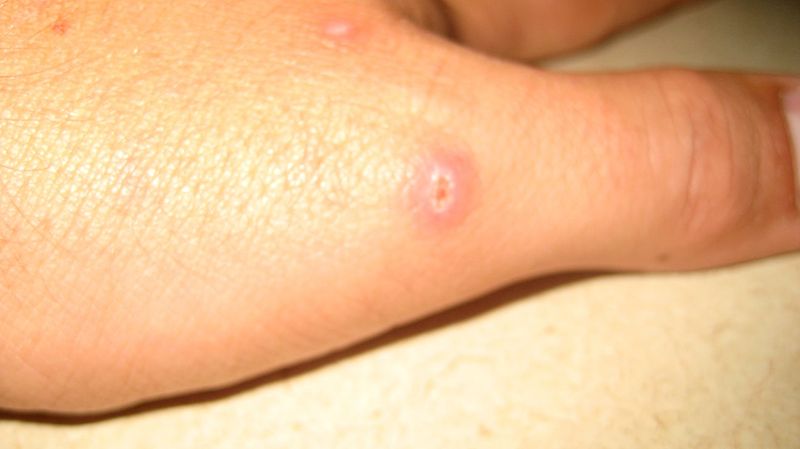
Most caterpillar contact causes a local skin reaction: burning, redness, itching, or a small swollen patch. Severe allergic reactions are possible but described as rare.

Still, you should know the signs that mean an emergency.

Call 911 right away for difficulty breathing, fainting, or swelling of the lips, face, or tongue. Poison Control lists these as signals to get urgent help.

Do not wait to see if they pass.

For problems that are less urgent, reach out for medical advice. That includes blistering, a rash that seems to be an allergic response in one area, pain that keeps getting worse, or symptoms that linger or simply worry you.

Children, and anyone with a history of strong allergic reactions, deserve extra caution.

Alabama residents can call Poison Control at 1-800-222-1222 for advice fitted to the situation. The call is free, and specialists can help you decide whether home care is enough.

The Alabama Department of Public Health also points residents to this service.

Recovery time varies. Some people feel better within hours, while others have discomfort that lasts longer, so judge by how you are doing rather than the clock.

Rinse the eye after possible exposure
Rinse the eye after possible exposure
© A-Z Animals

An eye needs its own plan. If you think a caterpillar or its spines touched your eye, go straight to rinsing with lukewarm water.

Let a gentle stream run over the open eye for several minutes, and avoid rubbing it.

Then call Poison Control at 1-800-222-1222 for next steps. Poison Control’s guidance recommends this combination of rinsing and calling for advice.

Keep an eye on how it feels afterward. If redness, pain, tearing, or blurry vision persists, get medical advice promptly, since spines can be hard to see and may need to be checked by a professional.

Prevent contact without overreacting to one caterpillar
Prevent contact without overreacting to one caterpillar
© columbialand

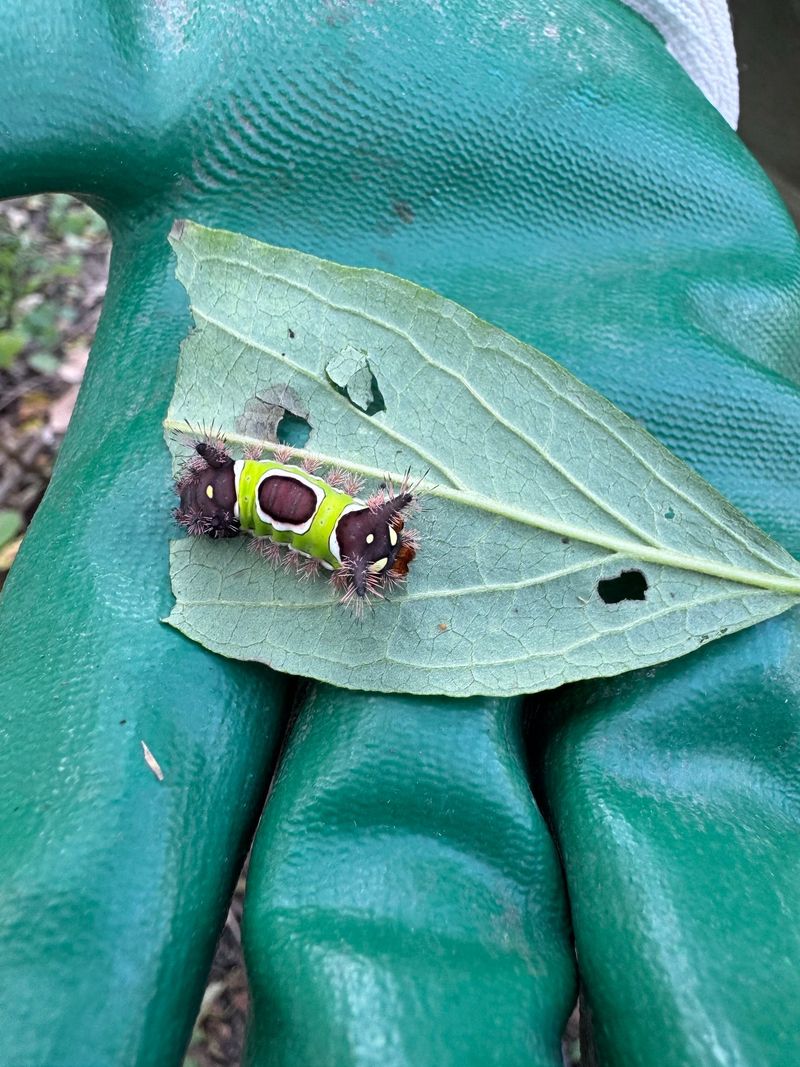
A good defense is simple clothing. Wear gloves, long sleeves, and long pants when pruning, weeding, or moving brush.

Spiny caterpillars hide on leaf undersides, so check before you grab a stem.

If you find one you cannot name, leave it alone. Do not pick it up bare-handed, even to move it.

A stick or tool can carry it away if it is in a path where people walk.

Saddlebacks feed on many kinds of plants. Even so, Auburn’s guide says they seldom occur in numbers large enough to cause serious foliage loss, and UF/IFAS likewise says they are not significant defoliators of any one plant species.

That means one sighting is not a reason to spray. Routine pesticide use for a single caterpillar adds cost and can affect helpful insects without solving much.

Do not tie the risk to one season, either. Late summer and fall may bring more encounters, but the habit of covering up and watching where your hands go works all year.

A careful gardener leaves the caterpillar to its leaf and keeps skin covered, and everyone stays comfortable.

Share this story

LT

Written by

Loretta Tate

More from Loretta Tate →

About Gardening Latest

Gardening Latest provides in-depth guides to maintaining and enhancing your garden and backyard. Learn how to make the most of the space you have and create a beautiful garden.

More about us →

Latest stories

  • Missouri GardeningIf Your Missouri Woodpile Sits Against the House, You’re Inviting Brown Recluses Indoors This Winter

    If Your Missouri Woodpile Sits Against the House, You’re Inviting Brown Recluses Indoors This Winter

    2 min ago
  • Tennessee GardeningBefore You Dig In, Here’s How To Recognize Every Venomous Creature Sharing Your Tennessee Yard

    Before You Dig In, Here’s How To Recognize Every Venomous Creature Sharing Your Tennessee Yard

    8 min ago
  • Minnesota GardeningBefore You Pick Up That Big Black Caterpillar With White Spots In Minnesota, Read This

    Before You Pick Up That Big Black Caterpillar With White Spots In Minnesota, Read This

    20 min ago
  • Illinois GardeningDeer Are Rubbing Their Antlers on Your Illinois Saplings Right Now, and Here’s How to Save Them

    Deer Are Rubbing Their Antlers on Your Illinois Saplings Right Now, and Here’s How to Save Them

    26 min ago
  • Louisiana GardeningLouisiana’s Venomous Critters Are Hiding In Your Yard, And Fall Is When They Come Out

    Louisiana’s Venomous Critters Are Hiding In Your Yard, And Fall Is When They Come Out

    32 min ago

Gardening by state

Stories for your state, and the hardiness zone most of it gardens in.

Keep exploring

Read next

All Alabama Gardening →
Alabama GardeningAlabamians, Here’s What Daily Celery Is Actually Doing Inside Your Body
Alabama Gardening

Alabamians, Here’s What Daily Celery Is Actually Doing Inside Your Body

2 hr ago
Alabama GardeningAlabama Yards Hide Venomous Snakes, Spiders, And Even Caterpillars, So Here’s How To Spot Each One
Alabama Gardening

Alabama Yards Hide Venomous Snakes, Spiders, And Even Caterpillars, So Here’s How To Spot Each One

6 hr ago
Alabama GardeningOpossums Come Around Alabama Homes When Winter Nights Turn Cold, and Here’s What to Do
Alabama Gardening

Opossums Come Around Alabama Homes When Winter Nights Turn Cold, and Here’s What to Do

9 hr ago

More from Alabama Gardening

  • Don’t Run From These 7 Alabama Critters Because They Only Look Venomous

    Nov 27
  • Alabama’s Tiny Mammal With a Venomous Bite Spends All Winter Hunting Beneath Your Leaf-Covered Lawn

    Nov 26
Back to top

Leave a response Cancel

Your email address stays private. Required fields are marked with an asterisk.

Gardening Latest

In-depth guides to maintaining and enhancing your garden and backyard: how to make the most of the space you have, and how to make it beautiful.

  • Facebook
  • X
  • Pinterest
  • YouTube

We may earn a portion of sales from products or services that are purchased through our site as part of our affiliate partnerships with retailers.

Explore

  • About GardeningLatest.com
  • Contact Us
  • Terms and Conditions
  • Privacy
  • Editorial Note:
  • FTC Disclosure

Newsletter

New garden guides and seasonal tips, straight to your inbox.

We’ll email you a link to confirm. Unsubscribe any time.

Almost there! Check your inbox and tap the link to confirm.

© 2026 Gardening Latest. All rights reserved.

Back to top