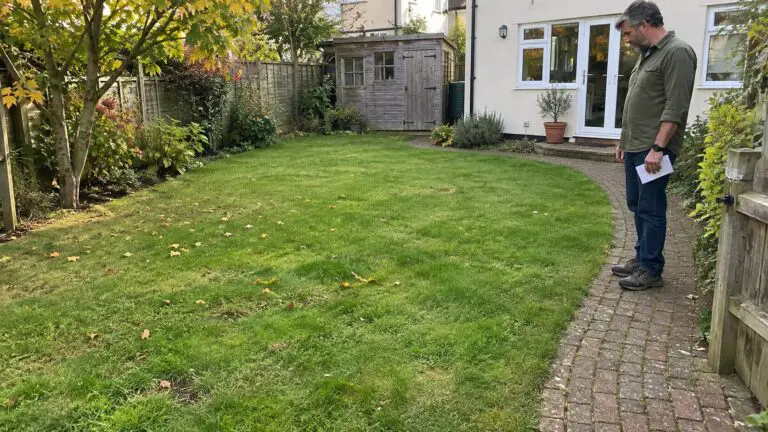
One of the most effective methods to assist with the drainage of a lawn is to aerate it. It entails making holes or perforations in the turf so that water, oxygen, and nutrients may travel more freely to the grass roots. If your lawn has barren spots, is often becoming blocked with water, or has unhealthy grass that is yellowish in color, you should seriously consider aerating it.
Drainage issues can pose a serious threat not only to the physical condition of your lawn but also to the structural integrity of your home. As such, it is important to give some thought to how you can ensure that the grass on your property has a good drainage system.

Lawns can suffer from underlying soil compaction, caused by poor soil or heavy foot traffic, or have impenetrable grass, and significant thatch buildup. These types of conditions make it more likely for you to have poor drainage and unhealthy grass.
The good news is that aeration can cure these problems before they cause any serious damage. Read on to find out how.
Download FREE Fall Lawn Care Guide
Download our FREE 28-page fall lawn guide. Give your lawn stronger spring growth with this practical guide. Explore clear instructions, photos and diagrams covering aeration, overseeding, fertilizing, mowing, watering and leaf management, with guidance for different grasses and includes handy printable checklists for your lawn maintenance.
What is lawn aeration?
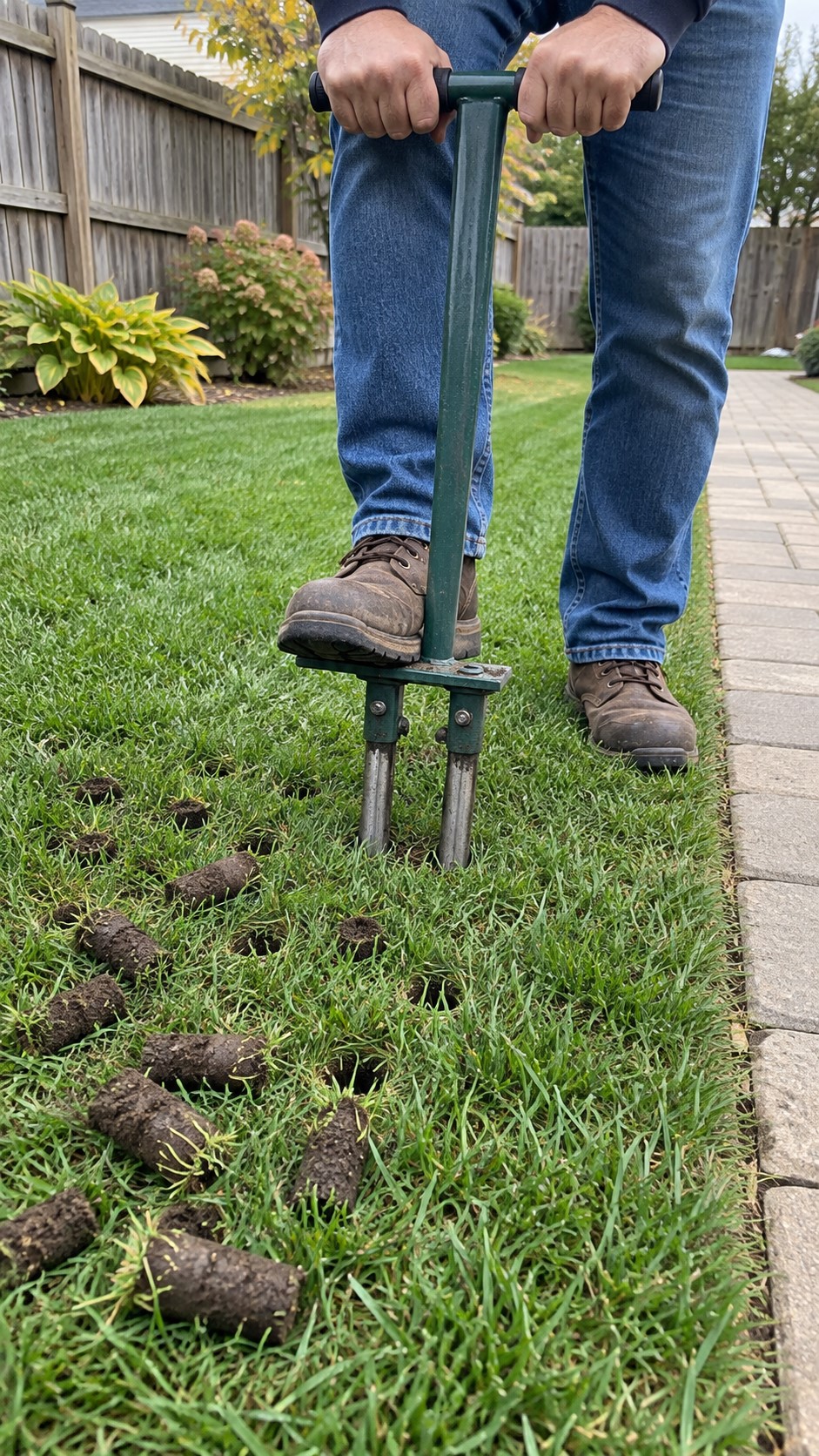
Lawn aeration is a process of perforating the soil with small holes to allow air, water, and nutrients to reach the roots of your grass. This simple procedure can vastly improve the health of your lawn by reducing compaction, improving drainage, and encouraging new growth. If your lawn has any of the above problems, or if you just want to give your grass a boost, consider aerating your lawn. It’s a cheap and easy way to improve the health of your lawn, and your grass will thank you for it!
Determining if Your Lawn is in Need of Aeration?
There are a few key indicators that your lawn may be in need of aeration. If you notice any of the following problems, aeration may be a good solution:
- Thatch buildup: If you have more than ½ inch of thatch, aeration can help to break it up and allow new growth.
- Compacted soil: If your lawn feels spongy or bouncy when you walk on it, aeration can help to loosen up the soil and improve drainage.
- Poor drainage: If your lawn is constantly wet or soggy, aeration can help to improve drainage by creating more space for water to drain.
- Yellowing or dying grass: If you notice patches of yellow or brown grass, aeration can help to improve the health of your lawn by allowing oxygen and nutrients to reach the roots.
If you notice any of these problems with your lawn, aeration may be a good solution. Aeration can help to improve the health of your lawn by breaking up thatch, loosening compacted soil, and improving drainage.
How does aeration help with drainage?
Aeration helps improve drainage by creating more space for water to drain. When the soil is compacted, water has nowhere to go but to pool on the surface. By breaking up the compacted soil, aeration allows water to seep down into the ground, where it can be used by the roots.
Aeration also helps to improve the health of your lawn by breaking up thatch. Thatch is a layer of dead and living grass, as well as other organic matter, that can build up on your lawn over time. If thatch gets too thick, it can prevent water and nutrients from reaching the roots of your grass. By aerating you can help to break up thatch and allow water and nutrients to travel to the roots of your grass promoting stronger root growth.
Does aerating your lawn help with flooding?
Aeration can improve drainage in your lawn, reducing the risk of flooding. When the soil is compacted, it can prevent water from seeping down into the ground, causing water to pool on the surface of your lawn and leading to flooding. Aerating your lawn can break up the compacted soil and allow water to seep down into the ground, where it can be used by the roots, reducing the risk of flooding in your lawn.
Does aeration help with a soggy lawn?
Aeration can improve drainage in your lawn, reducing the risk of a soggy lawn. When the soil is compacted, it can prevent water from seeping down into the ground, causing water to pool on the surface of your lawn and leading to a soggy lawn. Aerating your lawn can break up the compacted soil and allow water to seep down into the ground, where it can be used by the roots, reducing the risk of a soggy lawn.
How to Aerate a Lawn?

There are a couple of different ways in which you can aerate your lawn to help with drainage and give you a healthier lawn. These are core aeration and spike aeration.
What is Core Aeration
Core aeration is a process of aerating your lawn that involves removing small cores of soil from your lawn. These can be up to three-quarters of an inch in diameter and six inches deep and are pulled up with a plug aerator with hollow tines.
Plugging Tools – Plug Aeration
Plugging tools are designed to remove plugs of soil without damaging the root zone of your lawn. Plugging tools work best when they are used at depths of 6 inches or less.
What is a plugging tool? A plugging tool is a device that removes plugs of soil without damaging your lawn’s root zone. Plugging tools are available in different sizes and shapes with specific plugging tools made for use in wet conditions while there are others designed for dry conditions.
This process can help to improve drainage in your lawn and reduce the risk of a soggy lawn. Core aeration can be done
What is Spike Aeration of a Lawn
Spike aeration is a slightly easier way to aerate your lawn. The process of punching holes into the soil of your lawn. This process can help to improve drainage in your lawn and reduce the risk of a soggy lawn. Spike aeration can be done with a hand-held aerator, a garden fork, shoes with spikes attached, or a lawn mower that has an aeration attachment.
The main issue with is method is that the holes tend to be shallow and are only a short-term solution. The process may have to be repeated regularly, or until you can carry out proper core aeration, to maintain the soil’s drainage capacity.
Tools and materials to help aerate your lawn

Depending on the size of the lawn and the type and level of compactness of the soil you may well be able to adequately aerate your lawn with a garden fork. If however, the area is vast or you need large tools then there are various specialist tools that are available that can help make the job easier. These include
- Spike aerators: these have a series of metal or plastic spikes that penetrate the soil and help to loosen it up
- Plug aerators: these remove small cores of soil as they are pushed through the lawn, which helps to aerate the lawn while also topdressing it
- Rolling aerators: these are rolled across the lawn, and have either spikes or paddles that help to loosen the soil
Liquid Aeration
Unlike conventional aeration, which includes removing plugs or poking holes in the soil of a lawn, liquid aeration merely entails spreading a supplemented chemical solution to the grass. Ammonium lauryl sulfate, the active component, is widely found in soap and is commonly used.
There are a number of different chemicals that can be used to help aerate the lawn, although it is always best to speak to a professional before using any of these.
Should You Sand After Aerating Your Lawn?
After aerating your lawn, you can fill the holes with sand. This will substantially improve drainage and make it easier for your lawn to absorb nutrients. This is especially helpful when you have soils that are thick with clay or if your grass has a tendency to get wet. It is recommended that you make use of masonry sand for the job, but it is essential to check that there is no debris present in it.
If you have very heavy clay soil, you may want to think about adding calcium sulfate dihydrate to the soil, since this may assist in the breakdown of clay soils.
You may, instead, use a ready-mixed top treatment if your soil is normal or if it is light sandy soil. On the surface of the grass, this may assist to level out any bumps or unevenness that may be present.
When Should You Aerate Your Lawn?
If you have a lawn that is in need of aeration, most gardeners would recommend the fall as the best time, although this isn’t always necessarily be the case, as the exact time will depend on whether you have warm or cool-season grass and whether you will be overseeding.
The fall is generally favored because the cooler temperatures and higher rainfall mean that your lawn will be able to recover more quickly from the aeration process. However, you can also aerate your lawn in the spring if necessary. The important thing is to make sure that your grass is getting the aeration it needs to ensure strong grass growth and a healthy lawn.
Summary: Will Aerating a Lawn Help with Drainage?
One of the most effective methods to assist with the drainage of a lawn is to aerate it. It entails making holes or perforations in the turf so that water, oxygen, and nutrients may access the grass roots more easily. If your lawn feels spongy or bouncy when you walk on it, aeration can help to loosen up the soil and improve drainage, getting rid of excess water.
Aeration also helps to improve the health of your lawn by breaking up thatch and loosening compacted soil. There are various ways to aerate your lawn and the method you choose will depend upon the equipment that you have available and the nature of the drainage issues. In general, you should aerate your lawn on a regular basis as part of your lawn care program
Share this story