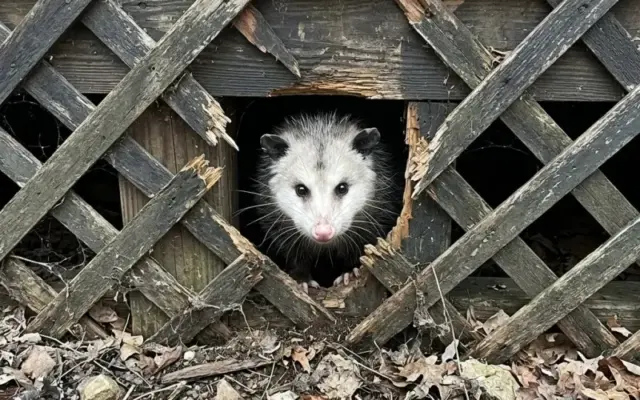
An opossum near your Georgia home in winter is most likely there for easy food or a sheltered spot to rest. Pet food, birdseed, and garbage are common things to check, along with places where it could tuck out of the cold.
A sighting alone cannot tell you exactly why that animal showed up, but a few simple checks can help. Here is how to look around safely and what to do next.
What a winter visit can tell you
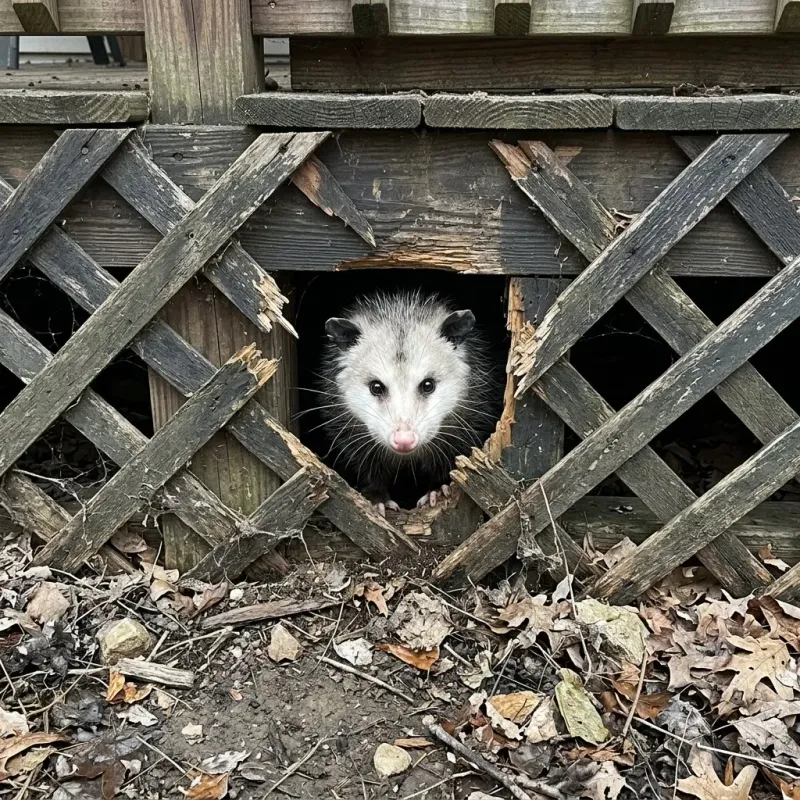
Two things are the most likely draws for a winter opossum: food it can reach and cover where it can get out of the weather. Georgia wildlife officials and extension agents point to the same short list of possibilities.
Outdoor pet food, spilled birdseed, and unsecured garbage are all easy meals, and a Georgia DNR fact sheet lists garbage among the foods opossums eat.
Opossums also use sheltered dens, and UGA Extension notes they may stay in them for several days when it is very cold. A woodpile, a space under a deck, or a shed could all offer that kind of cover.
Here is the catch. Seeing one animal in your yard does not tell you what it wanted.
It might have been passing through, checking a food bowl, or looking for a dry corner. It also does not show that the animal is trying to get into your house.
So skip the guessing and look for clues you can actually see. Is pet food sitting out overnight?
Are there seeds scattered under the feeder? Is a trash lid loose or knocked over?
Is there a gap, a chewed edge, or a trail of tracks leading to a particular spot? Evidence like that points to a real cause.
A single sighting just tells you an opossum was nearby.
Cold-weather shelter does not mean a house invasion
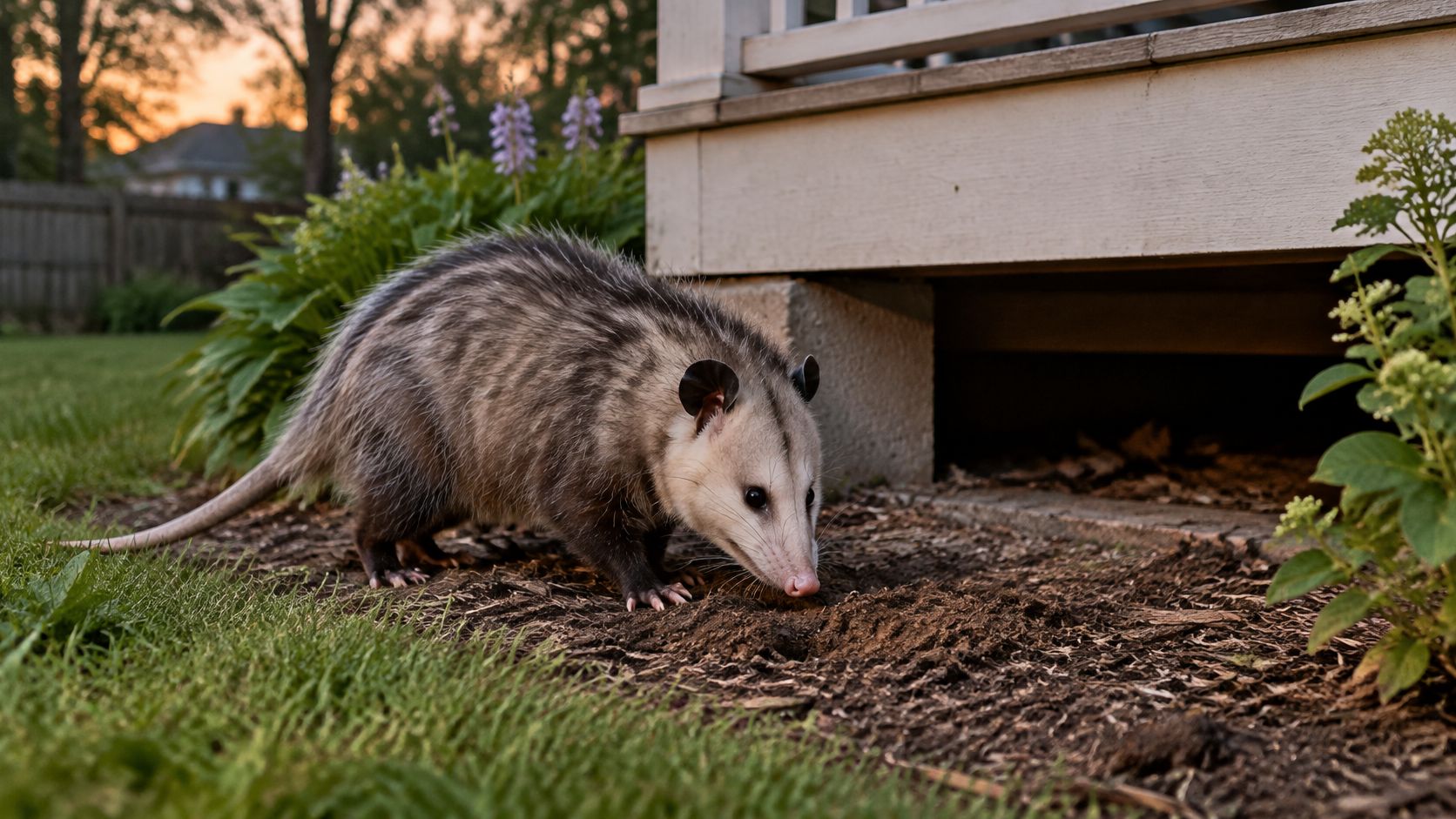
Opossums do not hibernate. According to UGA Extension, they may stay tucked in a den for several days during very cold weather, then come back out.
That pattern explains why you might see one often and then not at all for a while.
Sheltered cover is not the same as living inside your home. A brush pile, a hollow log, a gap beneath a porch, or a quiet corner of a shed can all work as a den.
Many of these spots are outside the walls of your house entirely.
A few quiet nights do not prove anything either. The animal may be waiting out the cold, may have moved on, or may still be using a spot nearby.
Missing for several days does not mean it is gone for good, and it does not mean it is living in your attic or crawl space.
Seeing an opossum in daylight can feel alarming, but UGA Extension says a daytime sighting alone is not a cause for alarm. An animal out in the afternoon may simply be looking for food.
Still, watch from a window or a distance, and do not walk up to it or try to shoo it away.
If you suspect something is using part of your home, look for signs like noises, droppings, or a damaged entry point. Those clues tell you far more than the time of day or how long it has been since the last sighting.
Check for food an opossum can reach
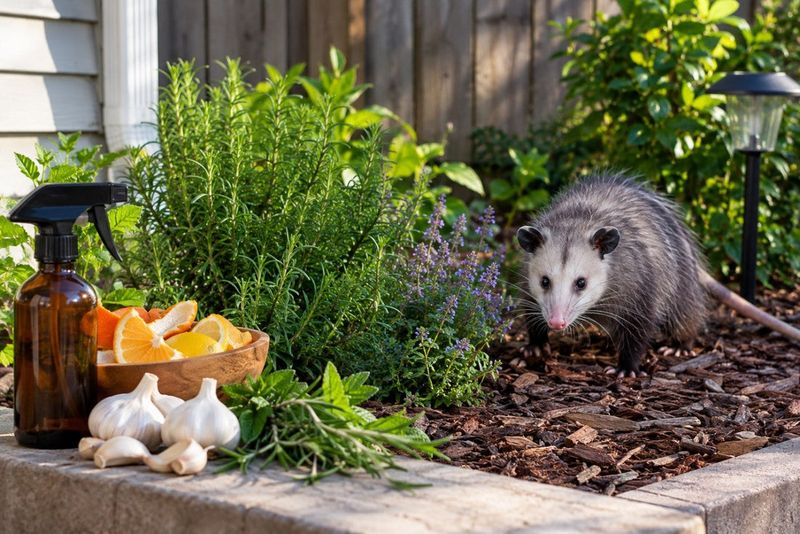
Opossums are omnivores, so they are not picky. Georgia DNR lists fruit, insects, small animals, carrion, and garbage among their foods, according to its opossum fact sheet.
That wide menu means a yard can offer a snack in more ways than most people expect.
Walk your property in daylight and look at three things in particular. First, check for pet food or water bowls left outside, especially overnight.
Second, look under bird feeders for fallen seed. Third, look at your trash cans and bags for loose lids, torn plastic, or tipped containers.
UGA Extension also mentions that opossums may take pet food, bird food, or garbage that is left accessible, which matches what you are checking for. You can read more in their article on opossums.
Treat each of these as something to check, not as proof of what drew a particular animal. If you find several, that is useful to know.
If you find none, the opossum may have been passing through or using cover nearby.
Do all of this from a safe distance. If an opossum is in the yard, wait until it leaves before you walk out to inspect.
Keep children and pets inside while you look, and never reach toward the animal to move it along.
Remove easy food sources first
Once you know what might be available, start with the simplest fixes. Bring pet food and water bowls inside, especially at night.
If you feed outdoor pets on a schedule, pick up what is left once they are done.
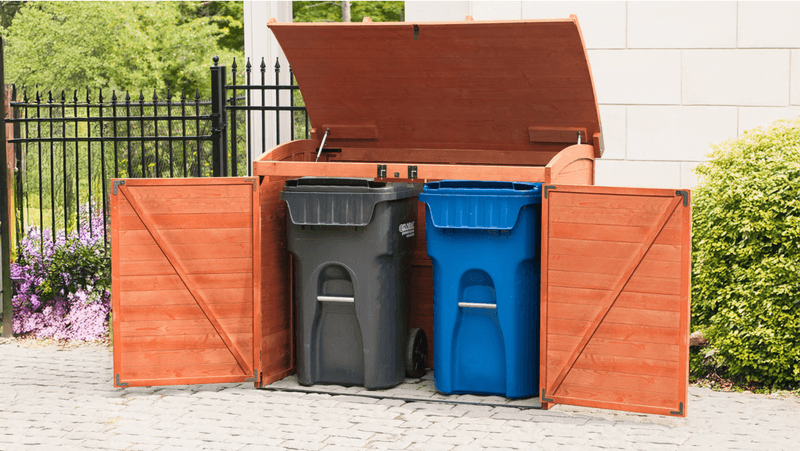
Next, secure your garbage. Use cans with tight lids, and consider a bungee cord or latch if lids get knocked loose.
Keep bags inside a closed container or garage until pickup day instead of setting them out early.
Birdseed deserves a look too. Sweep or rake up seed that has dropped below feeders, and think about using smaller amounts so less ends up on the ground.
Georgia DNR recommends securing or removing food sources in its opossum fact sheet, and Michigan DNR gives similar advice about pet food, bird food, and garbage.
Keep your expectations realistic. Taking away easy food is a sensible way to cut down on what draws wildlife, but it is not a guarantee the opossum will vanish right away.
Animals often return to places where they have found food before, so it can take some days for the habit to fade.
Stay consistent for a couple of weeks and watch what changes. If sightings drop, the food may have been part of the reason.
If they continue, you have ruled out one possibility and can move on to checking for shelter.
Check openings before closing them
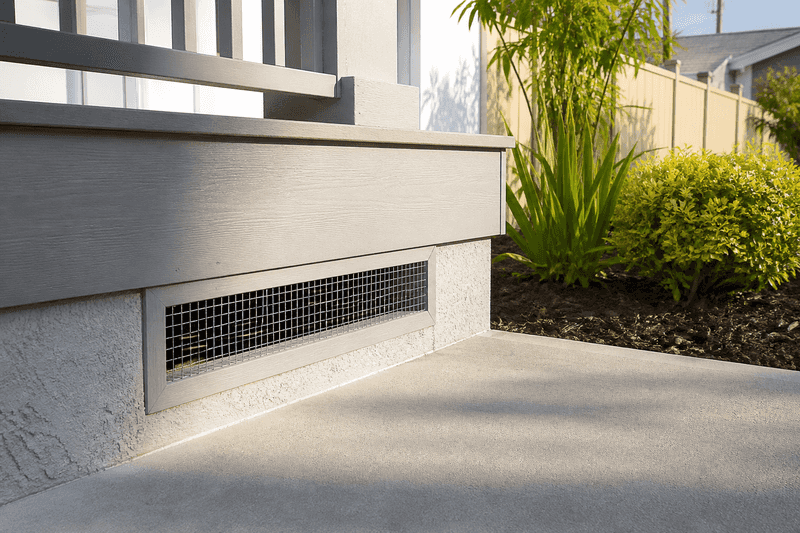
Walk around the outside of your house and look for gaps. Check under porches and decks, around vents, along the foundation, and near the edges of sheds and crawl space doors.
Look for torn screens, loose boards, or spots where the ground has been dug out.
Durable materials work best for closing access points. Heavy metal mesh or hardware cloth, along with solid repairs to wood or siding, will hold up better than foam or fabric scraps.
Close an opening only after you are sure no animal is inside.
An opossum crossing your yard is different from an animal living in an attic or a similar space. A passing visitor will usually move on, while an occupant may leave signs like noises at night, droppings, or smells.
Michigan DNR advises sealing access points after the animal has left.
Here is a simple way to check. Loosely cover the opening with crumpled paper or a light piece of material, and see if it is disturbed over a couple of nights.
If it stays in place, the animal is probably gone and you can make a permanent repair.
If you suspect something is inside, do not seal the hole. Michigan DNR suggests encouraging the animal to leave first, and that can mean making the space less comfortable with light and noise.
If that is not working or you are unsure, get qualified help instead of closing it up with the animal trapped inside.
Keep your distance and take bites seriously
The best plan is to let the opossum go on its way. Do not try to pick it up, corner it, or block its path.
Keep pets leashed or indoors while it is around, and do not let dogs chase it.
Opossums are relatively docile when cornered, but Michigan DNR notes they may bite if agitated. That does not mean every encounter is dangerous.
It means giving the animal space is the easiest way to keep everyone safe.
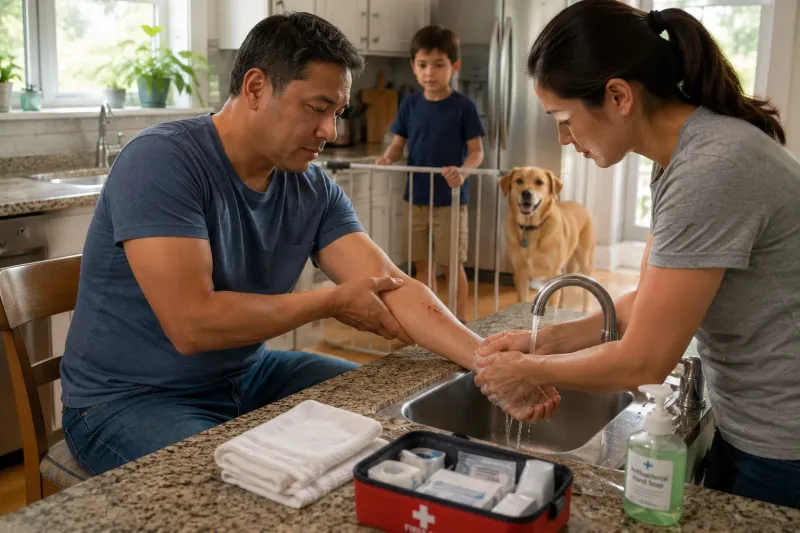
If you or someone in your home is bitten or scratched, act right away. Wash the wound with soap and water for 15 minutes.
Then contact a healthcare or public-health professional to assess rabies risk, as CDC guidance advises for wildlife bites and scratches.
Rabies is exceedingly rare in opossums, but rare does not mean impossible. Do not use that rarity as a reason to skip washing the wound or making the call.
A professional can help you decide what to do next based on the details of what happened.
The same goes for a pet that has had contact with an opossum. If your dog or cat was bitten or scratched, call your veterinarian for advice.
When you talk to a doctor or vet, it helps to describe where and when it happened and what the animal was doing.
Get Georgia-specific help for a persistent problem

If an opossum keeps coming back after you have removed food and checked for openings, it may be time to call for help. Georgia DNR describes how nuisance wildlife control operators are authorized, and its Special Permit Unit page links to a county lookup so you can find one near you.
Do not assume you can trap and relocate an animal on your own. Georgia regulates trapping, and the rules include license requirements.
Current DNR trapping regulations are the place to check before you do anything, since the older fact sheet is useful for diet and attractants but not for today’s legal requirements.
A qualified operator can also help when an animal may be inside a den or structure, which is a situation where do-it-yourself trapping can go wrong fast.
Until help arrives, keep the basics in place. Keep food out of reach, make sure an animal has left before any opening is sealed, and leave handling to the professionals.
Most winter opossums are just looking for a free meal and a dry corner, and a tidy yard gives them neither.
Share this story