Get the latest garden guides in your inbox →
Gardening Latest
  • General Gardening
  • Lawn Care
  • Plant Care
  • Composting
  • Soil Health
  • Backyard
  • Garden Muse Magazine
  • General Gardening
  • Lawn Care
  • Plant Care
  • Composting
  • Soil Health
  • Backyard
  • Garden Muse Magazine
  • News
  • Gardening Calendar
  • Garden Structures
  • Vegetable Garden
  • Vertical Garden
  • Raised Beds
  • Hydroponics
  • General Equipment
  • Community Gardens
Garden Themes
  • Spiritual Garden
  • Hydroseeding
  • Seeding and Laying Sod
  • Artificial Grass
  • Lawn Care Equipment
  • Plants
  • Trees
  • Planting Tools
  • Composting Basics
  • Fertilizer
  • Alternative Growing Mediums
  • Front Yard
  • Backyard Activities
  • Landscaping
Gardening Latest

Explore by state

Which state is your garden in?

Currently viewing Georgia

All states

Northeast

  • Connecticut —
  • Delaware 45
  • Maine —
  • Maryland 31
  • Massachusetts 47
  • New Hampshire —
  • New Jersey 31
  • New York 40
  • Pennsylvania 40
  • Rhode Island —
  • Vermont —

Southeast

  • Alabama 31
  • Arkansas —
  • Florida 31
  • Georgia 31
  • Kentucky 45
  • Louisiana 30
  • Mississippi —
  • North Carolina 29
  • South Carolina 44
  • Tennessee 28
  • Virginia 30
  • West Virginia —

Midwest

  • Illinois 30
  • Indiana 32
  • Iowa 44
  • Kansas —
  • Michigan 31
  • Minnesota 30
  • Missouri 30
  • Nebraska —
  • North Dakota —
  • Ohio 31
  • South Dakota —
  • Wisconsin 45

Southwest

  • Arizona 30
  • Colorado —
  • Nevada —
  • New Mexico —
  • Oklahoma —
  • Texas 29
  • Utah —

West

  • Alaska —
  • California 30
  • Hawaii —
  • Idaho —
  • Montana —
  • Oregon —
  • Washington —
  • Wyoming —

No state matches that search.

Site menu

Gardening Latest
  • General Gardening
    • News
    • Gardening Calendar
    • Garden Structures
    • Vegetable Garden
    • Vertical Garden
    • Raised Beds
    • Hydroponics
    • General Equipment
    • Community Gardens
    Garden Themes
    • Spiritual Garden
  • Lawn Care
    • Hydroseeding
    • Seeding and Laying Sod
    • Artificial Grass
    • Lawn Care Equipment
  • Plant Care
    • Plants
    • Trees
    • Planting Tools
  • Composting
    • Composting Basics
  • Soil Health
    • Fertilizer
    • Alternative Growing Mediums
  • Backyard
    • Front Yard
    • Backyard Activities
    • Landscaping
  • Garden Muse Magazine

Explore

  • About GardeningLatest.com
  • Contact Us

Get the latest from the garden

New guides on lawn care, plants and backyard projects, sent when they go up.

Subscribe →

Follow

  • Facebook
  • X
  • Pinterest
  • YouTube
Georgia Gardening

Fresh Fire Ant Mounds Show Up Across Georgia Lawns After a Rain, and They’re Trying to Tell You Something

A fresh fire ant mound after a rain really can be a message, but it is a smaller one than most people…

SB

By Savannah Brooks

November 28, 2026 · 6 min read

Fresh Fire Ant Mounds Show Up Across Georgia Lawns After a Rain, and They’re Trying to Tell You Something
Fresh Fire Ant Mounds Show Up Across Georgia Lawns After a Rain, and They're Trying to Tell You Something

A fresh fire ant mound after a rain really can be a message, but it is a smaller one than most people fear. Rain can change how a mound looks or how easy it is to see.

That does not mean a brand new colony moved in overnight. Knowing the difference helps you stay calm, stay safe, and decide what to do next.

At a glance

Where
Georgia Gardening
Hardiness zone
8 10 to 20°F
Read
6 minutes
Published
November 28, 2026

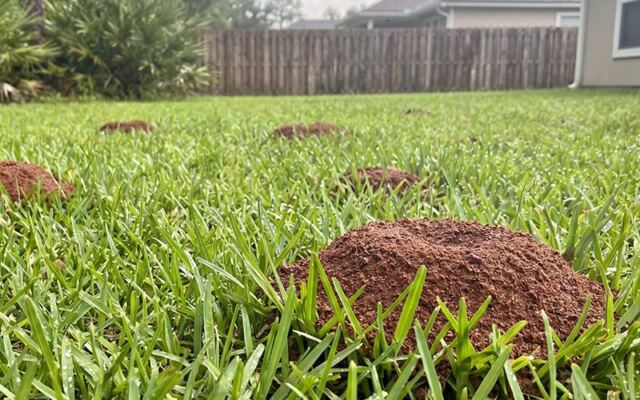
Rain can change a mound without creating a new outbreak
Rain can change a mound without creating a new outbreak
© gray_pest_control

Here is the practical answer. Rain can coincide with changes in how a fire ant mound is built or how visible it is, but a new mound after a storm does not prove that a new infestation has formed.

A USDA Agricultural Research Service study on simulated and natural rainfall looked at how imported fire ants build mounds. Under hot, dry summer conditions, rain mainly prompted surface repair of the mound.

When rain came with cooler fall temperatures, mounds grew taller and larger in volume.

So the same weather event led to different results depending on the season and conditions. That is why there is no simple rule that rain makes fire ant mounds appear.

The study also has limits. It was conducted in one region under the specific summer and fall conditions that researchers examined, so its results are not a universal rule for every yard in every place.

Most important for a homeowner, it cannot diagnose why a particular mound showed up in your Georgia lawn. Think of the research as a helpful background story, not an answer key for the patch of grass outside your door.

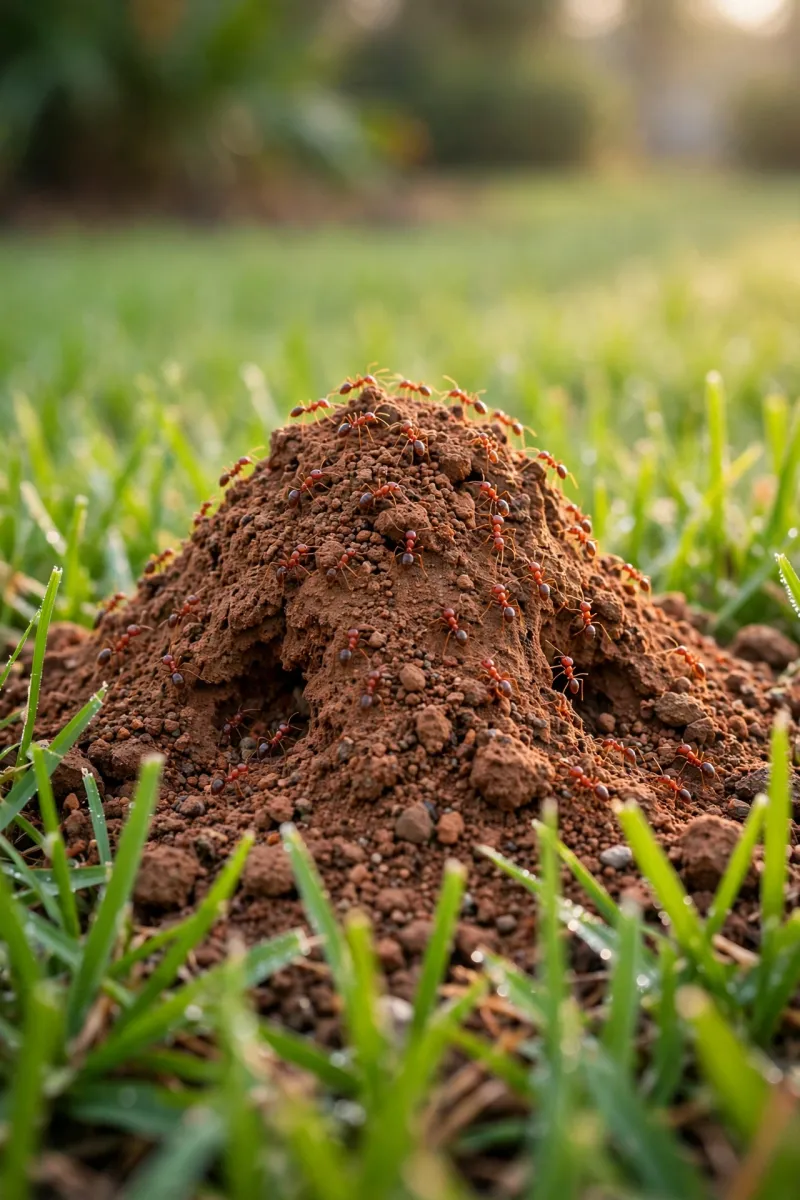
A fresh-looking mound cannot tell you when its colony began
A fresh-looking mound cannot tell you when its colony began
© U.S. Pest Protection

Suppose you spot a tidy dome of loose soil the morning after a storm. It is tempting to guess that it popped up overnight, but the mound itself cannot confirm that.

A mound that looks new may have been there all along, just harder to notice under thick grass or dry, packed soil. It may also have been repaired after the rain washed or flattened part of it.

A single mound in a back corner is not the same as many mounds across a play area, and one visible mound rarely shows the full extent of ant activity in a lawn.

Or it may have changed in size, getting a little taller or wider.

From the surface, you cannot reliably tell which of these happened. Fresh soil does not work like a calendar, and appearance alone cannot date a colony or show whether a mound was less visible, repaired, or resized.

This is also where the research reaches its edge. The USDA rainfall study shows that mounds can respond to rain in different ways, but it does not say which explanation fits your lawn.

A better habit is to note where the mound is, how large it looks, and whether more appear over the next few weeks. Those observations tell you far more than a single fresh-looking dome.

Mating flights are a separate event
Mating flights are a separate event
© EveryAnt

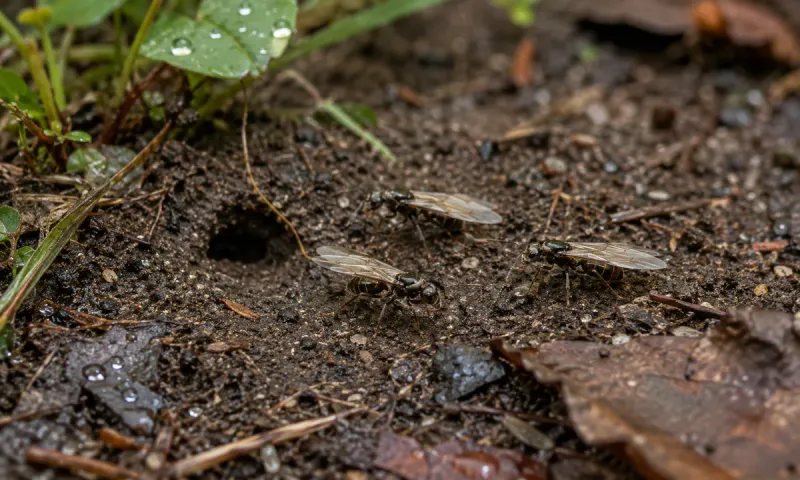
Wet weather brings another fire ant event that is easy to mix up with mound changes. According to University of Georgia Extension, imported fire ant mating flights commonly occur after rainy periods.

In a mating flight, winged reproductive ants take to the air. That is a different thing from soil being repaired, raised, or made more visible on a mound.

One is about flying ants, and the other is about the nest itself.

Seeing winged ants does not prove that the fresh mound in your yard is a new colony. Likewise, a changed mound does not prove that a flight happened nearby.

The two events can overlap in time without one explaining the other.

Neither sign shows a sudden population surge. If you see winged ants and a new-looking mound in the same week, treat them as two separate clues.

The useful next step is the same either way: keep your distance, look for ongoing activity, and confirm what kind of ants you have before taking action.

Confirm the ants without provoking the mound
Confirm the ants without provoking the mound
© CAES Field Report – University of Georgia

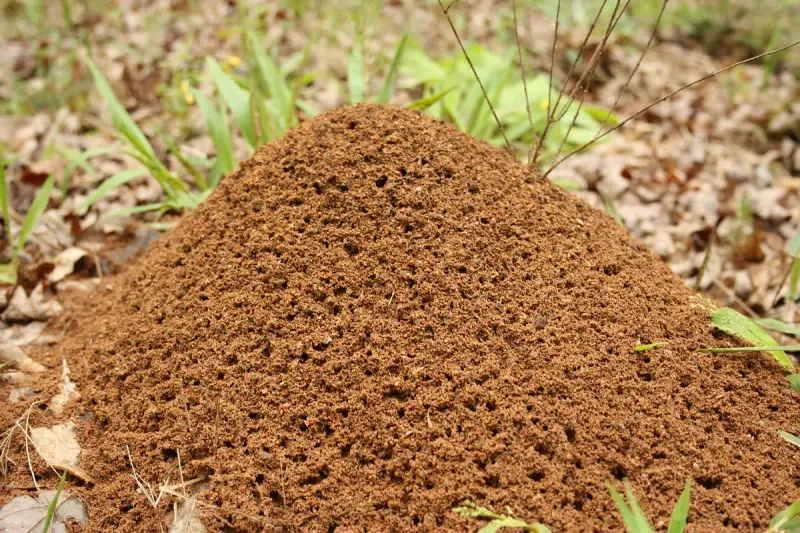
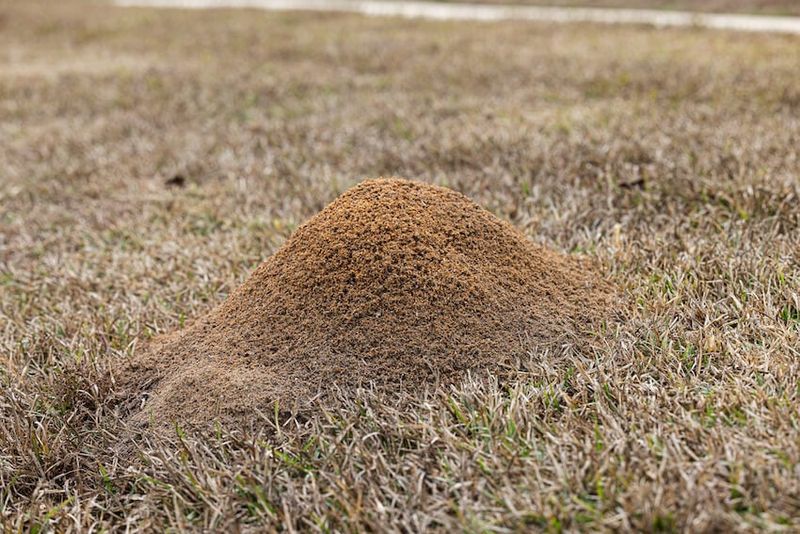
Imported fire ants do live in Georgia, so a mound in your yard could belong to them. According to USDA APHIS, a mound or a painful sting can be a clue to their presence.

A clue is not the same as a confirmed identification. Other ants and other critters also leave soil piles in lawns, and a sting alone does not tell you which insect was responsible.

If you are not sure, call your county Extension office. Staff there can help you work out what you are dealing with, and a clear photo taken from a safe distance can make that conversation easier.

Do not kick, dig into, or poke a mound to test it. UGA Extension guidance notes that disturbing a mound can bring workers streaming out to sting, and that is a bad trade for a bit of curiosity.

Keep children and pets away from the area while you sort things out. Wearing closed shoes when you walk the lawn is a simple extra precaution.

Choose control for the lawn problem, not just the mound
Choose control for the lawn problem, not just the mound
© Gen Lawn

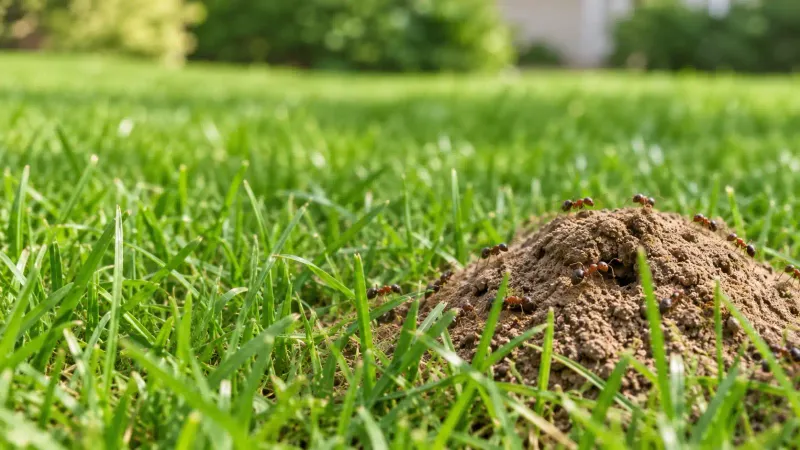
Before reaching for any product, decide what problem you want to solve. A single mound in a back corner is not the same as many mounds across a play area, and one visible mound rarely shows the full extent of ant activity in a lawn.

Not every mound needs treatment. If ants are far from where people walk, sit, or play, you may choose to watch and wait.

If they are in busy spots, control may be worth the effort.

When a lawn needs managing, University of Georgia Extension describes one approach: broadcast bait across the area, then, if needed, treat the nuisance mounds that remain. It is one lawn-management approach, not a universal or guaranteed fix.

Bait works differently from a quick spray. Worker ants carry it back to the colony, so it is not an instant-kill method.

You may not see mounds go quiet for days or longer.

That slower pace surprises many homeowners, who expect immediate results and apply more product. More is not better, and the label tells you what is allowed.

Use bait only when conditions and the label allow
Use bait only when conditions and the label allow
© UTIA News

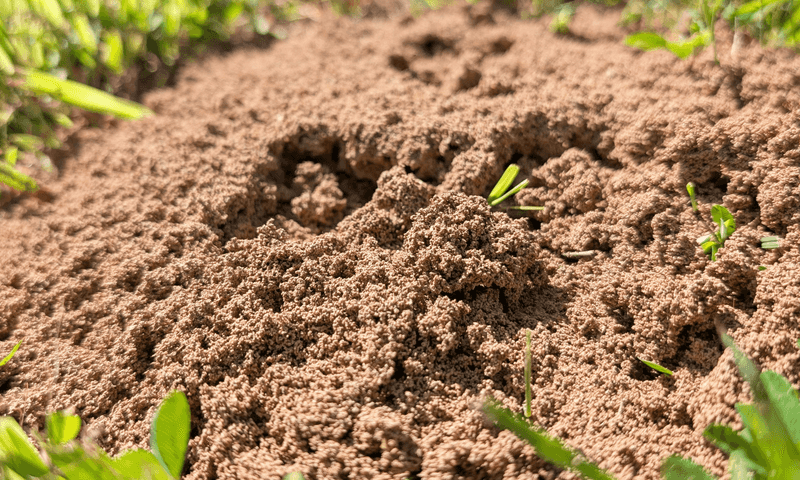
Timing matters more than most people expect. UGA guidance points to applying bait when ants are actively foraging, the ground and grass are dry, and rain is not expected soon.

That means a fresh rain is not a signal to treat. Wet grass and a forecast of more showers are reasons to wait, not to hurry.

Do not assume all bait products share the same directions. Read the specific label for the application rate and timing, and follow it exactly.

Labels also spell out precautions for people and pets, including how long to keep them off the treated area. Follow those directions as written.

Take extra care to prevent runoff near drains, ponds, streams, and flood-prone areas, a point also stressed in the Texas A&M fire ant FAQ. Never use a product anywhere its label does not permit.

If you cannot tell whether ants are foraging, your county Extension office can help you choose a good time.

Treat suppression as management, not a permanent cure
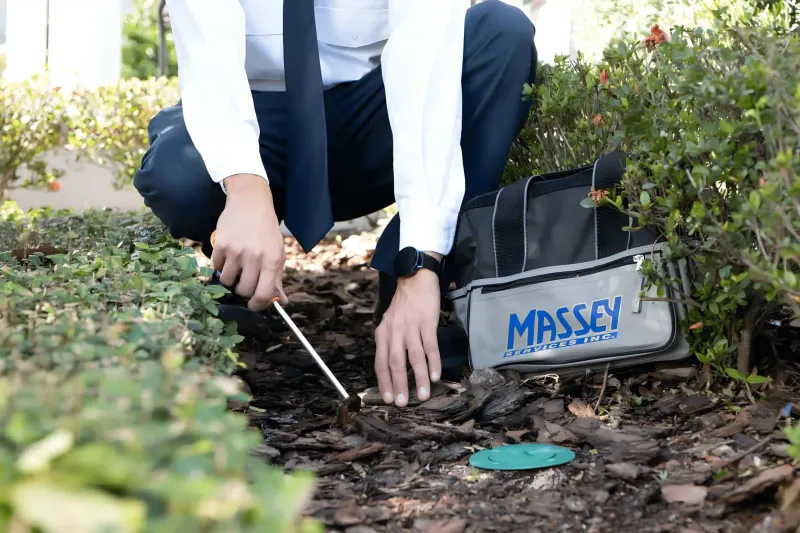
Treat suppression as management, not a permanent cure
© Massey Services

Even careful treatment gives you suppression, not a permanent cure. UGA notes that colonies can migrate into treated areas and that reinfestation can occur, so plan to keep an eye on your lawn.

Shortcuts do not change that. Gasoline is hazardous, with risks of fire or explosion, plant damage, and soil or groundwater pollution.

Grits are described as ineffective, and boiling water is unreliable and can cause burns and damage to grass and plants.

The Texas A&M FAQ also lists many home remedies as unproven, which is a good reason to stick with label-directed products.

Check back every few weeks, repeat the steps that fit your situation, and ask Extension for help if ants keep returning.

A mound after rain is a reason to look closer, not to panic.

Share this story
SB

Written by

Savannah Brooks

More from Savannah Brooks →

About Gardening Latest

Gardening Latest provides in-depth guides to maintaining and enhancing your garden and backyard. Learn how to make the most of the space you have and create a beautiful garden.

More about us →

Latest stories

  • Missouri GardeningIf Your Missouri Woodpile Sits Against the House, You’re Inviting Brown Recluses Indoors This Winter

    If Your Missouri Woodpile Sits Against the House, You’re Inviting Brown Recluses Indoors This Winter

    4 min ago
  • Tennessee GardeningBefore You Dig In, Here’s How To Recognize Every Venomous Creature Sharing Your Tennessee Yard

    Before You Dig In, Here’s How To Recognize Every Venomous Creature Sharing Your Tennessee Yard

    10 min ago
  • Alabama GardeningThat Burning Saddleback Caterpillar Sting in Your Alabama Garden Calls for These Steps Right Away

    That Burning Saddleback Caterpillar Sting in Your Alabama Garden Calls for These Steps Right Away

    16 min ago
  • Minnesota GardeningBefore You Pick Up That Big Black Caterpillar With White Spots In Minnesota, Read This

    Before You Pick Up That Big Black Caterpillar With White Spots In Minnesota, Read This

    22 min ago
  • Illinois GardeningDeer Are Rubbing Their Antlers on Your Illinois Saplings Right Now, and Here’s How to Save Them

    Deer Are Rubbing Their Antlers on Your Illinois Saplings Right Now, and Here’s How to Save Them

    28 min ago

Gardening by state

Stories for your state, and the hardiness zone most of it gardens in.

Keep exploring

Read next

All Georgia Gardening →
Georgia GardeningAn Opossum Hanging Around Your Georgia Home This Winter Is After Something Specific, and Here’s What to Do
Georgia Gardening

An Opossum Hanging Around Your Georgia Home This Winter Is After Something Specific, and Here’s What to Do

2 hr ago
Georgia GardeningGeorgia Gardeners Jump at the Sight of These 7 Critters That Only Look Venomous
Georgia Gardening

Georgia Gardeners Jump at the Sight of These 7 Critters That Only Look Venomous

4 hr ago
Georgia GardeningJust Found A Yellow Jacket Nest Near Your Georgia Home? Here’s How To Deal With It
Georgia Gardening

Just Found A Yellow Jacket Nest Near Your Georgia Home? Here’s How To Deal With It

8 hr ago

More from Georgia Gardening

  • Caught a Red Fox Trotting Through Your Georgia Yard This Winter? Blame Mating Season

    Nov 27
  • What Coyotes Are Telling Each Other When They Howl Outside Your Georgia Home After Midnight

    Nov 26
Back to top

Leave a response Cancel

Your email address stays private. Required fields are marked with an asterisk.

Gardening Latest

In-depth guides to maintaining and enhancing your garden and backyard: how to make the most of the space you have, and how to make it beautiful.

  • Facebook
  • X
  • Pinterest
  • YouTube

We may earn a portion of sales from products or services that are purchased through our site as part of our affiliate partnerships with retailers.

Explore

  • About GardeningLatest.com
  • Contact Us
  • Terms and Conditions
  • Privacy
  • Editorial Note:
  • FTC Disclosure

Newsletter

New garden guides and seasonal tips, straight to your inbox.

We’ll email you a link to confirm. Unsubscribe any time.

Almost there! Check your inbox and tap the link to confirm.

© 2026 Gardening Latest. All rights reserved.

Back to top