A yellow jacket nest near your Georgia home does not automatically have to be removed. What matters most is whether your family and pets can steer clear of it.
Some nests can simply be left alone, while others call for a professional. Here is how to tell the difference and stay safe while you decide.
Proximity matters less than whether people can avoid the nest
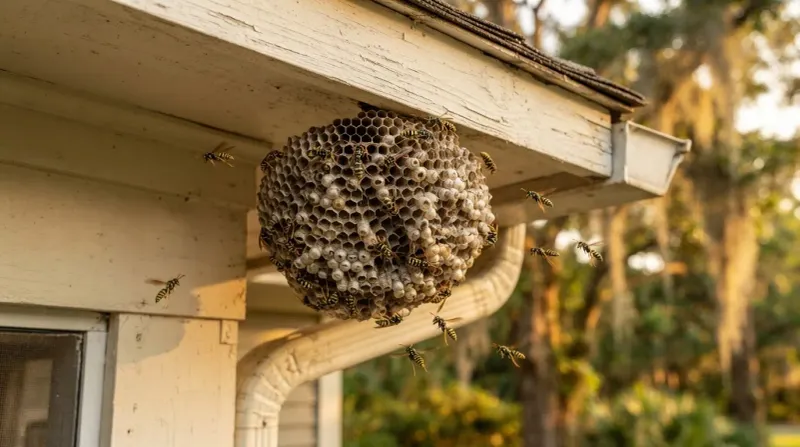
Finding a nest close to your house feels alarming, but distance alone does not tell you what to do. A nest at the far edge of the yard, behind a fence, is a very different situation from one beside the back steps or next to the dog’s favorite spot.
The better question is whether people and pets can routinely avoid it. Think about where your family walks, mows, plays, grills, and takes out the trash.
A nest that sits well away from those paths is easier to live with than one right beside them.
There is no magic number of feet that makes a nest safe. Instead, picture a normal week at your home and ask whether anyone has to pass close to the nest.
If the answer is yes, that nest deserves more concern. If the answer is no, you have more options.
Either way, treat an active nest with respect. UGA Extension guidance explains that disturbing an active nest can trigger the colony to defend itself, and that can mean many stings in a short time.
UGA also suggests leaving nests alone when they are out of the way, while nests near high-traffic areas, homes, or wall voids call for more caution.
So your first job is not to destroy anything. It is to figure out how close the nest is to everyday life and whether you can keep everyone clear of it.
Yellowjacket nests are often hidden, and lookalikes exist
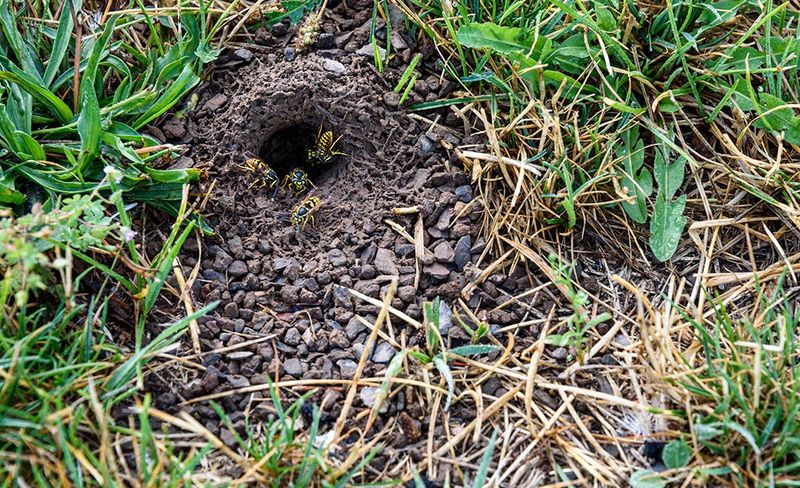
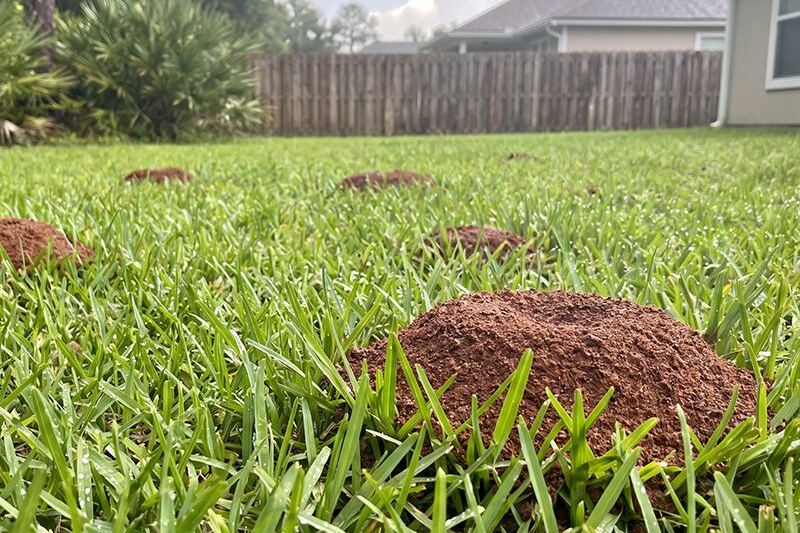
Many people expect a yellow jacket nest to look like a hanging paper ball, but these insects often hide their homes. The two most common types in Georgia, the Southern and Eastern yellowjackets, are about half an inch long, black and yellow, and often nest in the ground.
Some use cavities, including wall voids, according to Georgia Department of Natural Resources.
That means what you see may be only part of the story. A ground entrance can be hard to find, and the visible opening may not sit directly over the nest itself.
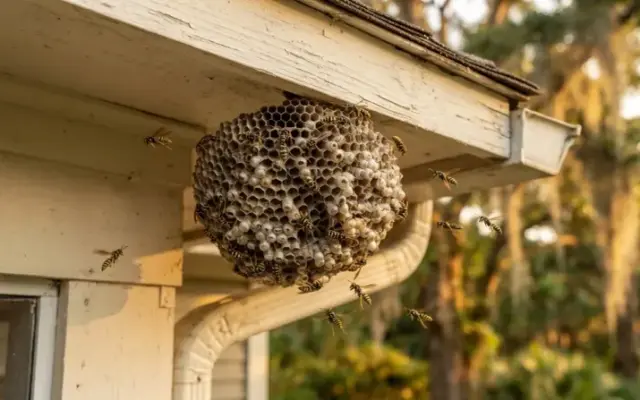
Paper wasps are a common lookalike. They often build open, umbrella-like combs under eaves, where you can see the cells.
Yellowjacket nests are more often concealed, though Cornell IPM notes that some related yellowjackets make enclosed nests in the air.
Because identifying a nest from its look alone can be uncertain, do not walk up to it, uncover it, or poke around to get a better view. Watching from a safe distance, such as from a window, can tell you how insects come and go without putting anyone at risk.
What to do while the nest is active
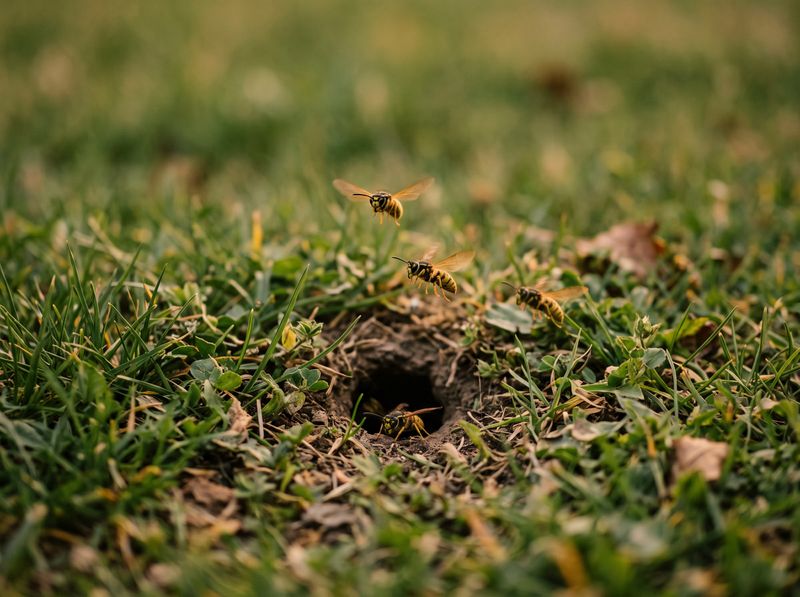
Once you suspect an active nest, the goal is simple: give it room. Keep children and pets away from the area, and let everyone in the household know where it is.
Hold off on mowing, trimming, digging, or any yard work near the entrance. Vibration and activity close to the nest count as threats, and UGA Extension notes that a threat near the entrance can trigger colony defense.
A few practical steps help. Mow other parts of the lawn first, mark off the spot with a few stakes placed from a safe distance, and move pet bowls and toys elsewhere.
Yellowjackets away from the nest are rarely aggressive, so a lone insect at your picnic table is not the same as a nest under attack. Still, UGA’s fall picnic advice is clear about what to do if you are attacked: move away promptly instead of swatting at them.
Swatting can make things worse.
An out-of-the-way nest may not need removal
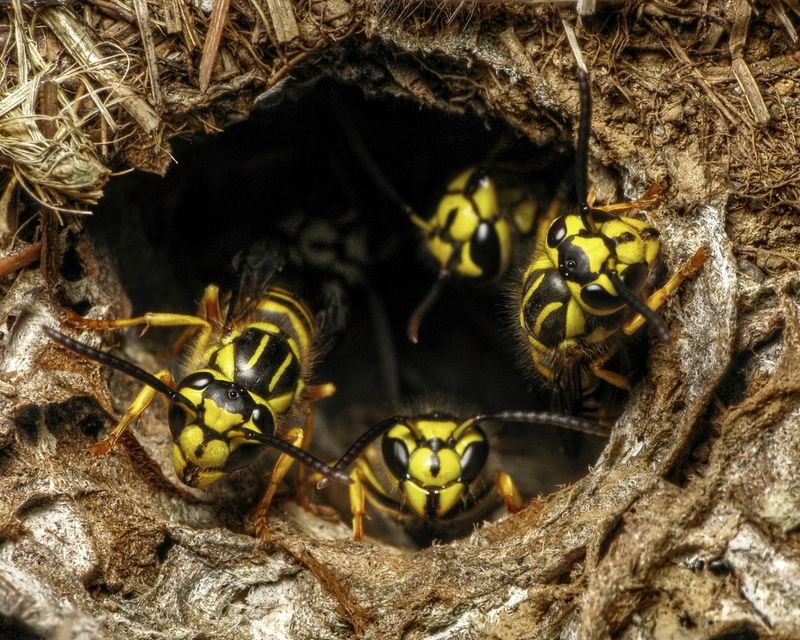
If your family can easily avoid a nest, leaving it alone is a reasonable choice. Yellowjackets are predators that feed on other insects, so they do some useful work in a yard or garden.
Their colonies also die off with the seasons, which means a nest is not a permanent neighbor. A nest tucked behind a shed or under a far hedge may cause no trouble at all if nobody goes near it.
Do be careful with the calendar. Georgia wildlife officials note that colonies here can stay active well into November, so a cool October day is not proof that the nest is empty.
A cold snap may slow activity, but it does not mean you can safely start digging.
If you choose to wait, keep your routines away from the nest until you are sure it is inactive, and keep watching for changes. If the nest turns out to sit on a path someone must use, that is the time to reconsider your plan rather than push your luck.
When to consider calling a professional
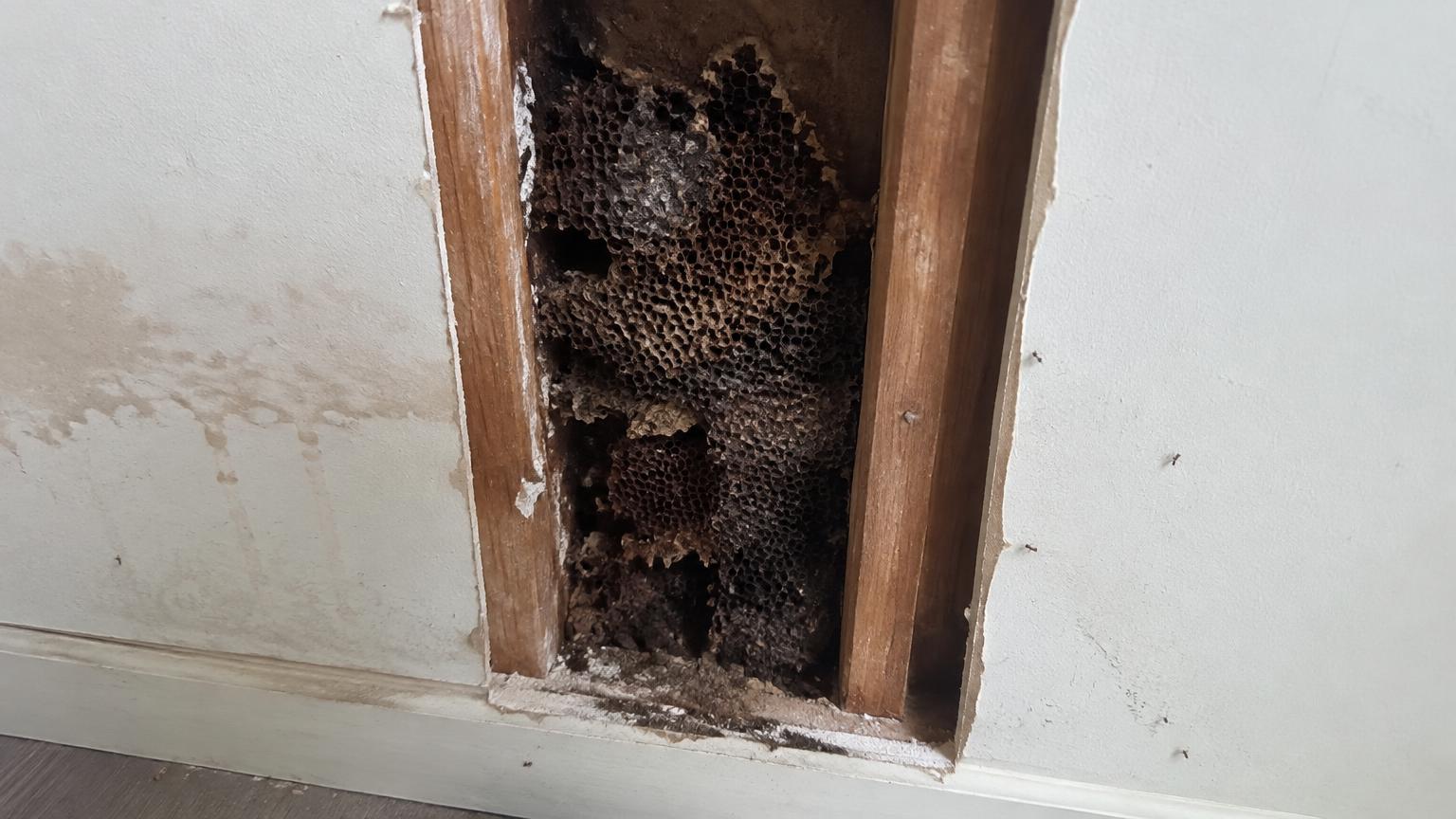
Some nests are simply too close to daily life to ignore. UGA recommends considering a pest-management professional when a nest is near people or routine activity, is hard to avoid, or is located in a wall void.
Think of examples like an entrance beside the front walk, under a deck where kids play, or near a door you use every day. In those cases, waiting and hoping is harder to do safely.
For nests in a wall void, UGA’s advice is to consider professional help, so that is a sensible first call rather than a last resort. Do not try to seal or plug a hole in a wall to deal with the problem yourself.
The reason to be careful is serious. UGA Extension warns that a treatment mistake can lead to hospitalization or death from multiple stings.
Hiring a professional is a prudent option, not a guarantee that nothing can go wrong. Ask companies about their experience with yellowjackets, and keep everyone away from the area until the work is finished.
DIY treatment has strict limits
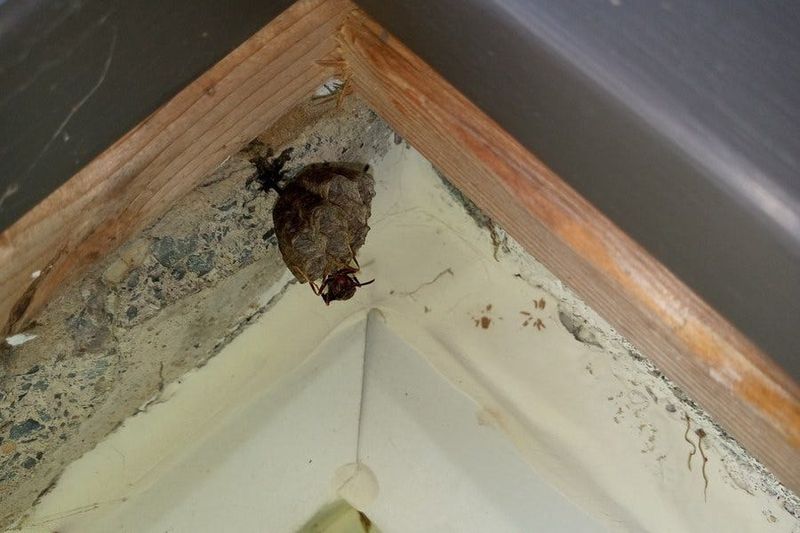
Treating a nest yourself is a conditional option, not a default. UGA’s Georgia guidance says that if treatment is warranted, you should treat the nest entrance only at night, using an insecticide labeled for that use.
Night matters because the colony is less active then, but that does not make the job safe for everyone or every nest. A nest in a wall void, near a busy area, or in a spot you cannot clearly see is not a good candidate for do-it-yourself work.
UGA also points readers to the Georgia Pest Management Handbook for current product guidance.
Whatever product you consider, read the label and follow it exactly. The EPA states that using a registered pesticide in a way that is inconsistent with its labeling violates federal law.
This article does not name any chemical or offer a recipe, because the right product depends on the current label and Georgia guidance. Remember UGA’s warning that mistakes can cause serious harm from many stings.
If you feel unsure at any step, stop and call a professional instead.
Traps are not a reliable way to eliminate a nest
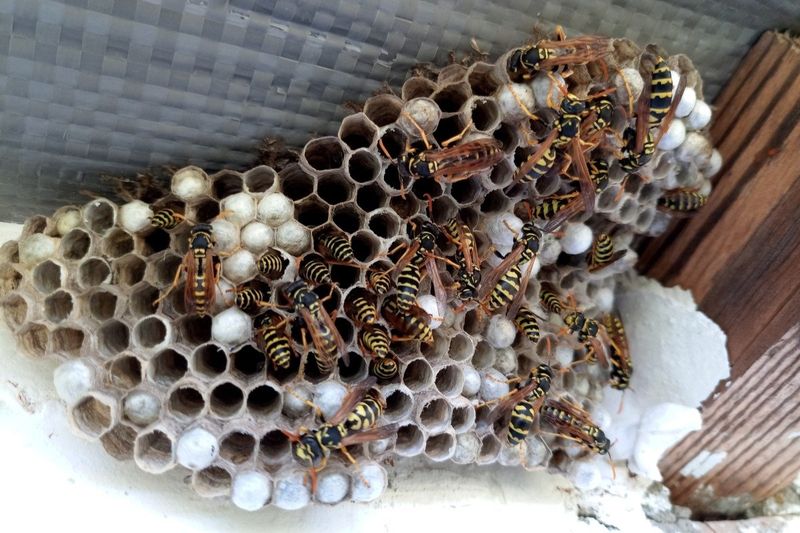
A trap can look like an easy fix, and it may catch some foraging yellowjackets. But catching the workers you see flying around is not the same as removing the colony.
UGA’s Home and Garden guidance says traps have little to no impact on population reduction. So do not count on one to wipe out an established nest.
Skip the dramatic shortcuts too. Gasoline, kerosene, fire, and homemade chemical mixtures are unsafe, and Penn State Extension warns they carry serious risks of poisoning, injury, and property damage.
These are not alternatives to anything on this list. If a nest is a problem for your household, the safer path is to keep clear of it and weigh the professional option.
After a sting, know which symptoms need urgent care

Most of the time, the goal after a sting is to get away from the area. Then pay attention to how the person feels.
The Georgia Poison Center advises seeking urgent medical attention for symptoms such as hives, dizziness, nausea, vomiting, or difficulty breathing.
If any of those show up after a sting, do not wait to see whether they pass. Get medical help right away.
The Georgia Poison Center also offers treatment advice at 1-800-222-1222. Consider saving that number in your phone now, so you do not have to hunt for it in a stressful moment.
Choose the response that keeps people clear of the nest
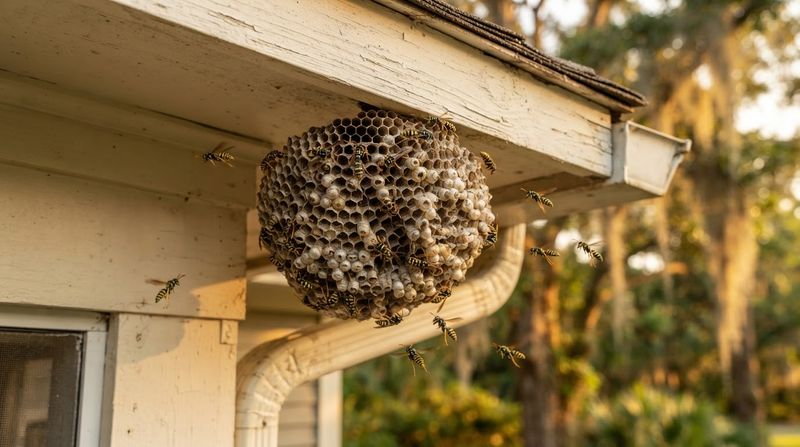
Start by leaving the nest undisturbed. If it is out of the way, leaving it alone is a fair choice, and if it sits near routine activity or in a wall void, professional help is worth considering, as UGA Extension suggests.
A nest is easiest to live with when nobody has to walk past it.
Share this story