In Minnesota, you can generally trim the part of a neighbor’s tree that hangs over your yard, as long as you cut back to the property line and no farther. That is the basic idea behind a common self-help rule, and it can save a lot of arguing over the fence.
The details matter, though, because where you stand, how you cut, and what kind of tree you are dealing with all change the picture. Here is how the rule works and where it stops.
What the boundary-side rule allows
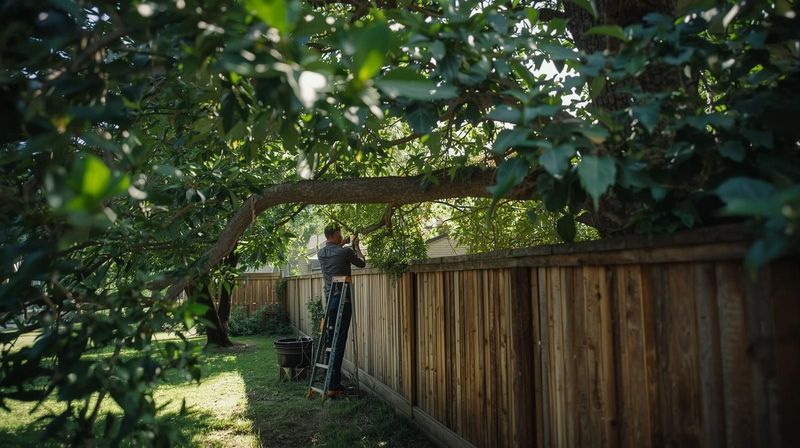
Minnesota guidance and the state’s highest court recognize a general self-help option. A homeowner may usually trim encroaching branches back to the property boundary, and the homeowner pays for the work.
That is the practical answer most people are looking for.
The idea shows up in a Minnesota tree-law fact sheet and is acknowledged by the Minnesota Supreme Court in Holmberg v. Bergin.
In that 1969 case, the court said neighbors could resort to self-help by cutting encroaching branches back to the boundary. It also recognized that a court action may be available when self-help is impractical.
It helps to be clear about what this is not. No statute written specifically about overhanging branches gives you an unlimited right to cut every limb that crosses the line.
The state’s general nuisance law, Minnesota Statutes section 561.01, talks about interference with the free use of property and lets an affected person seek abatement and damages. It does not specifically authorize trimming every overhanging branch.
Holmberg also involved a much bigger problem than a few stray twigs. The dispute centered on a tree and its roots causing significant property trouble.
Treat it as a source for the general principle, not as a ruling on every minor overhang.
Think of the boundary-side rule as a sensible starting point rather than a guarantee. It is not legal advice, and it does not replace advice from a lawyer or a tree professional when the situation is complicated.
Start by checking the property line
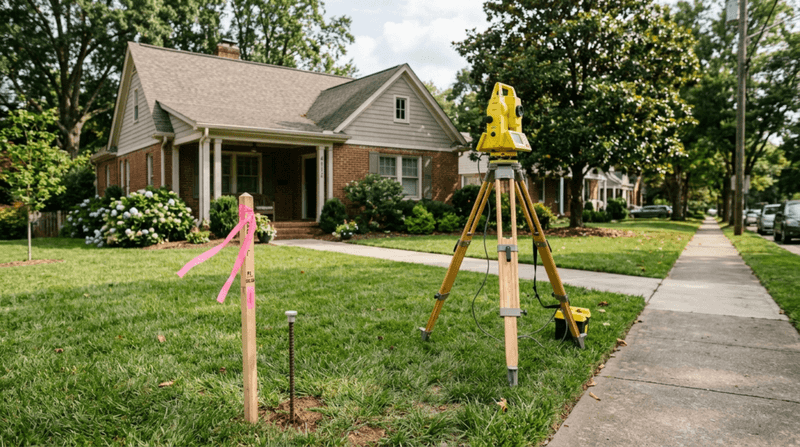
Before a saw or pruner comes out, you need to know exactly where your lot ends. Guessing is risky, since a cut made on the wrong side of the line can turn into a dispute you did not plan for.
A fence, a hedge, or a row of shrubs may look like the boundary, but those features are not always placed on the true line. The Minnesota tree-law fact sheet from University of Minnesota authors says a survey is the best way to determine a lot line.
Treat what looks obvious as a clue, not as proof.
Once you know where the line runs, stay on your own side of it. The same guidance advises against trespassing, and it even cautions against leaning over the line to make a cut, unless the owner has agreed.
A ladder placed in the neighbor’s flower bed or an arm stretched across the fence is the kind of shortcut to skip.
If a clean cut would require stepping onto the neighbor’s land, the simple fix is to ask. A quick conversation and a yes from the neighbor lets you do the job properly.
Without that consent, keep your feet, your tools, and your ladder on your own property.
Protect the tree when you trim
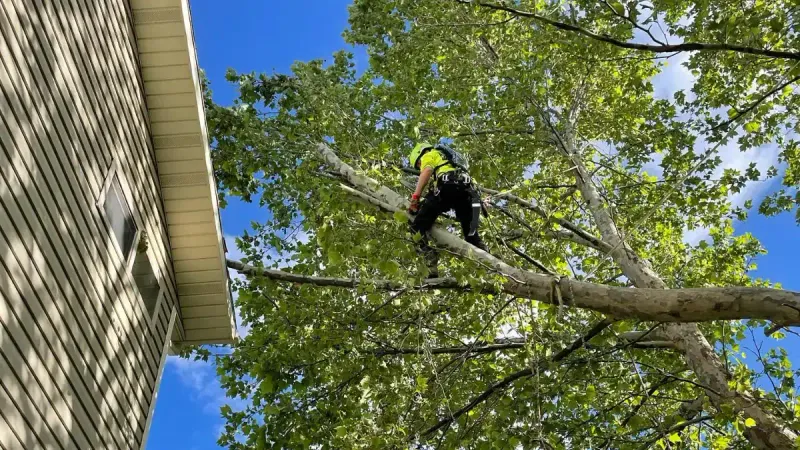
Even when a branch clearly crosses onto your side, the right to trim has limits. Cutting back to the boundary should not harm the tree’s health or destroy it.
A butchered or badly weakened tree can create problems that a tidy property line does not fix.
Some cuts are riskier than they look. Removing a large share of a tree’s canopy, cutting very close to the trunk, or slicing through a major limb can leave the tree stressed or unstable.
The Minnesota fact sheet recommends consulting a tree expert when the consequences of a cut are uncertain.
That advice is worth following whenever you are unsure. An arborist can tell you which branches can come off safely, where to make the cut, and whether the job is too much for one afternoon.
Talking with your neighbor is another smart step, especially for major trimming. The same guidance recommends it, even when permission is not legally required.
It is prudent advice, not a rule you must follow.
A friendly heads-up can prevent hard feelings later. The neighbor may know something about the tree’s history, or may even offer to share the cost of a professional crew.
Leave hazardous pruning to qualified professionals
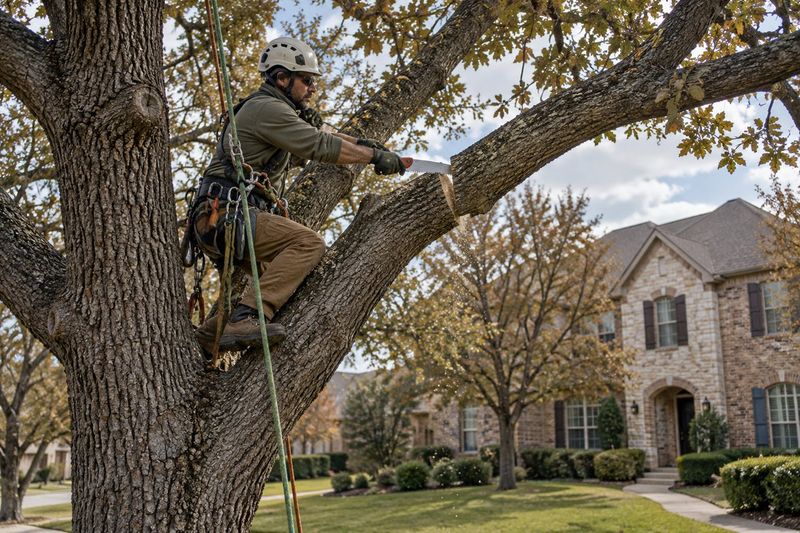
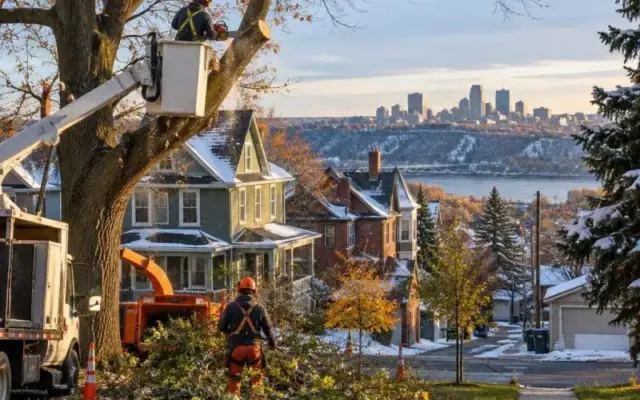
Some tree jobs are simply not do-it-yourself projects. UMN Extension pruning guidance says not to prune near electrical or utility wires, never to use a chainsaw from a ladder or above shoulder height, and to leave large-tree pruning to qualified professionals.
Those warnings matter even when the branch is clearly over your yard. A limb that falls the wrong way can hit a person, a roof, or a power line.
Being legally allowed to trim does not make a risky cut safe.
If a branch is high, heavy, or tangled near wires, call a pro. The cost is often small compared with an injury or a damaged house.
Timing is a separate issue for oaks. UMN Extension’s oak wilt guidance gives Minnesota’s general risk as high from April through July and low from August through October.
That timing varies with weather and location.
Because wounding an oak at the wrong time can invite disease, check current local risk information before making any cut. If you are not sure what kind of tree you have or what the risk is right now, wait and ask an expert first.
Serious property damage may call for another remedy
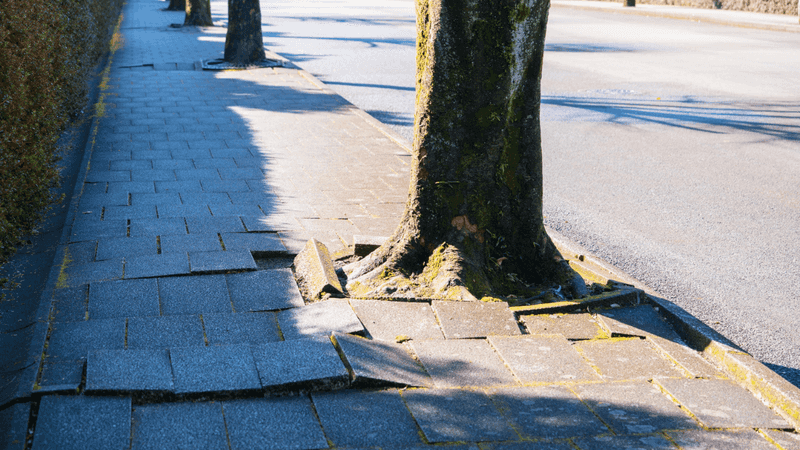
Routine overhang is one thing. A tree that is damaging a roof, a foundation, a driveway, or a drain line is another.
Once the problem goes beyond a few branches, simple trimming may not be enough.
Self-help also has practical limits. If the branch cannot be reached safely from your own property, or if cutting it would put the tree or your house at risk, a do-it-yourself cut may not be a realistic answer.
In those cases, a professional assessment is a sensible next step.
The law has a broader tool for bigger problems. Minnesota Statutes section 561.01 is a general nuisance statute that allows an affected person to seek abatement and damages.
It is not a branch-trimming authorization, and it does not spell out rules for overhanging limbs.
Holmberg shows how that can play out. In that case, the court found a nuisance and ordered a remedy after considering the property impacts and the risk that corrective work would destabilize the tree.
The court also recognized that a court action can be considered where self-help is impractical.
No two disputes are alike, and a different case could turn out differently. If damage is serious, document it with photos and estimates, and consider talking with an arborist or an attorney about your options.
Shared trees and damage claims raise separate questions
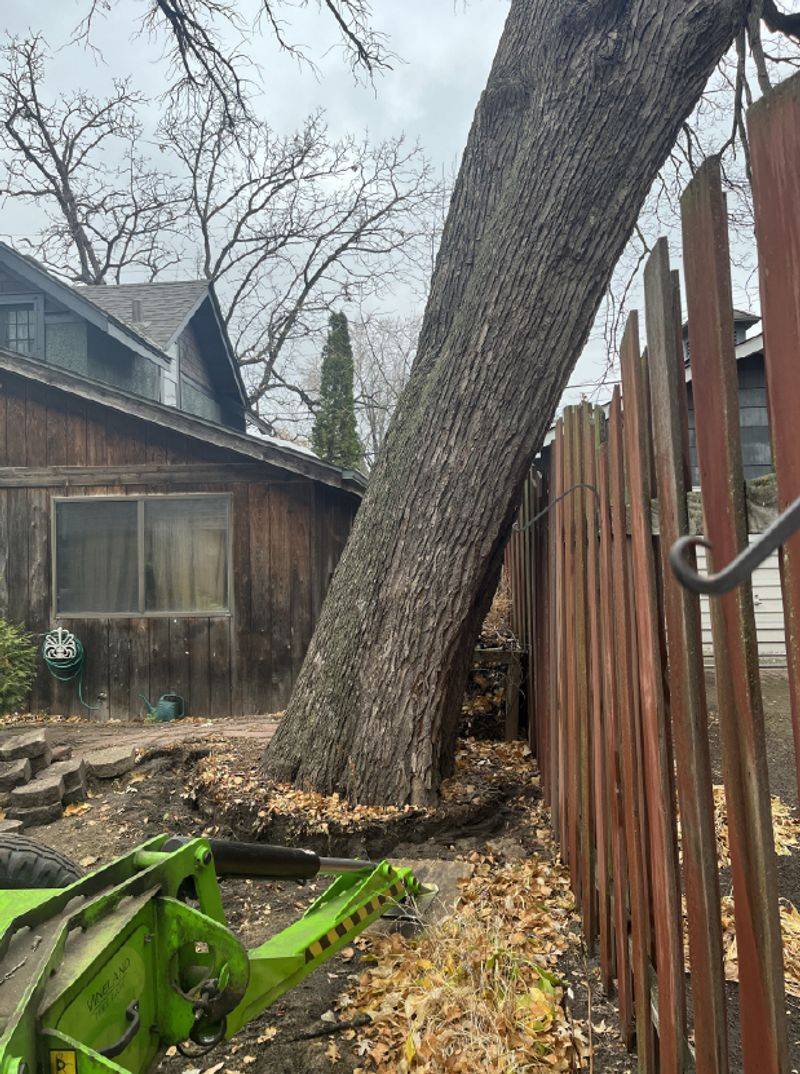
Sometimes the tree itself sits right on the line, and ownership gets murky. Many people assume a trunk that crosses the boundary makes the tree jointly owned.
According to Holmberg, mere growth of part of a trunk across a boundary does not by itself establish common ownership.
The court looked at other facts instead. These included whether the neighbors had an agreement, whether they planted or cared for the tree together, and whether they treated the tree as a partition between their yards.
Shared-tree status depends on the facts, and nothing here decides ownership in your situation.
That matters because a truly shared tree can raise different consent issues. Cutting one without talking to the other owner could cause trouble.
If you suspect the tree is shared, pause and get advice before cutting.
Damage claims are a separate topic. Minnesota Statutes section 561.04 provides treble damages for certain unauthorized acts involving trees on another person’s land, such as cutting, carrying off, girdling, or injuring them.
The statute also lists exceptions.
It is not an automatic penalty for any pruning disagreement, and the sources do not show that lawful boundary-side trimming triggers treble damages. Still, cutting on the neighbor’s side or hurting a tree you do not own is where trouble can start.
Keep the work safe and within the boundary
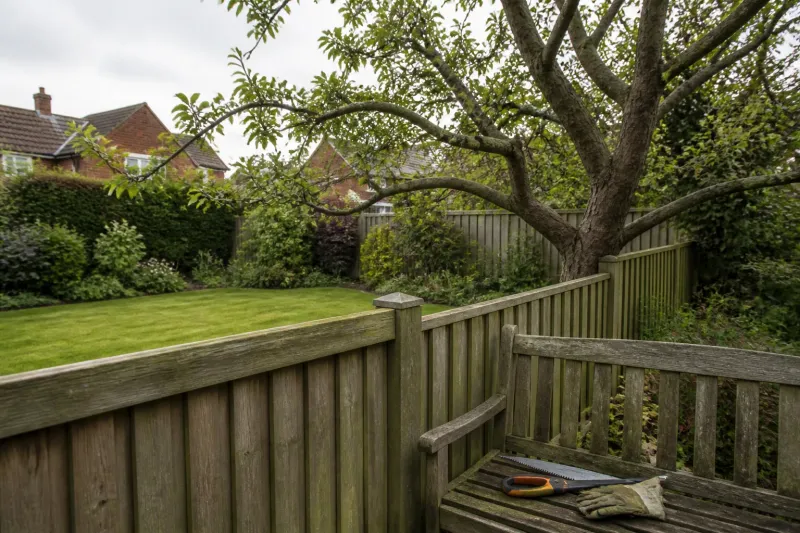
The short version is simple. Confirm the line, stay on your side, and cut only what Minnesota guidance supports, without hurting the tree.
Skip anything near wires or high up, as UMN Extension advises.
If the problem is bigger than a few branches, bring in a qualified pro. A court case like Holmberg shows that serious tree trouble can need more than a saw.
A good fence makes good neighbors, but a good conversation makes a better one.
Share this story