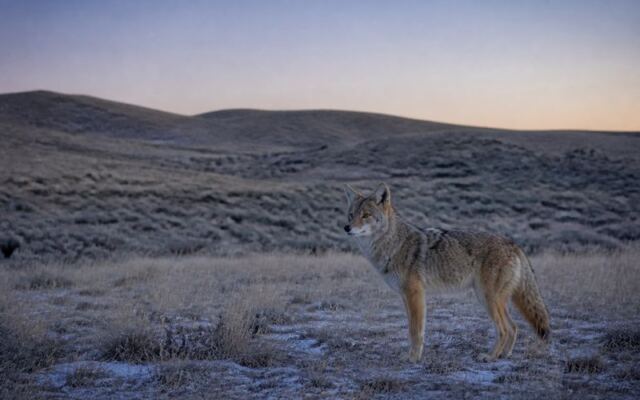
Yes, coyotes yipping and howling after dark are talking to each other. Their calls carry across fields, neighborhoods, and ridgelines so coyotes can stay in touch over long distances.
The sound can feel eerie when it drifts through your window at night. Knowing what the calls can and cannot tell you makes the darkness a little less mysterious.
Coyote calls carry broad messages, not exact translations
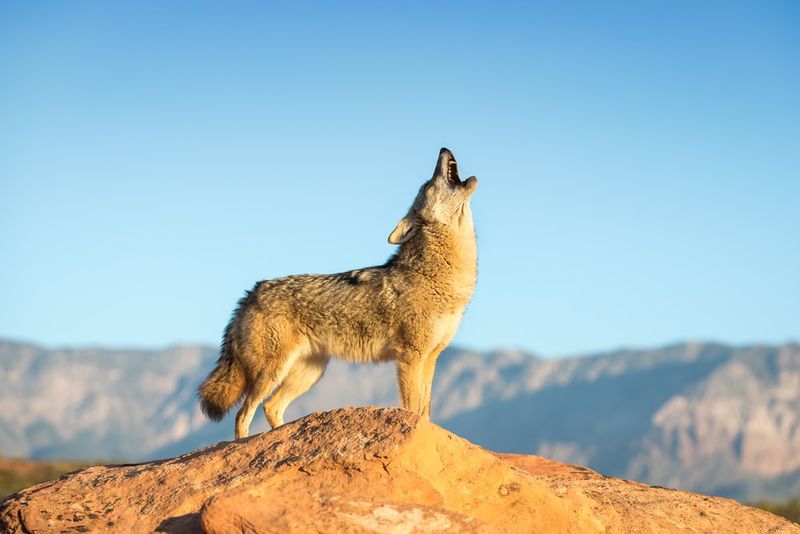
Coyotes do not have just one howl. They use lone howls, short yips, and group yip-howls, where several voices tumble together.
All of these sounds travel far, which makes them useful for communicating across open land and woods.
Researchers have proposed a few jobs for these calls. In a 1974 field analysis of long-distance vocalizations, Philip Lehner described calls that may help coyotes locate one another and that can go along with group reunions.
Group yip-howls may also reinforce bonds between group members and advertise that an area is occupied.
Those are likely functions, not a dictionary. Lehner’s 1978 lexicon of coyote sounds sorted calls into types and compared them with other canids, but sorting sounds is different from decoding a message.
A person standing in a backyard cannot tell which situation a particular call belongs to.
You may hear people say coyotes are “checking in” with each other. That is casual shorthand, and it is a fair guess at what some calls might do.
Still, no one can confidently label a single howl behind your house as a check-in, a boundary warning, or anything else.
So the safest way to think about it is this: the calls are real communication, and the meaning stays mostly private to the coyotes.
Why can a chorus sound larger than it is?
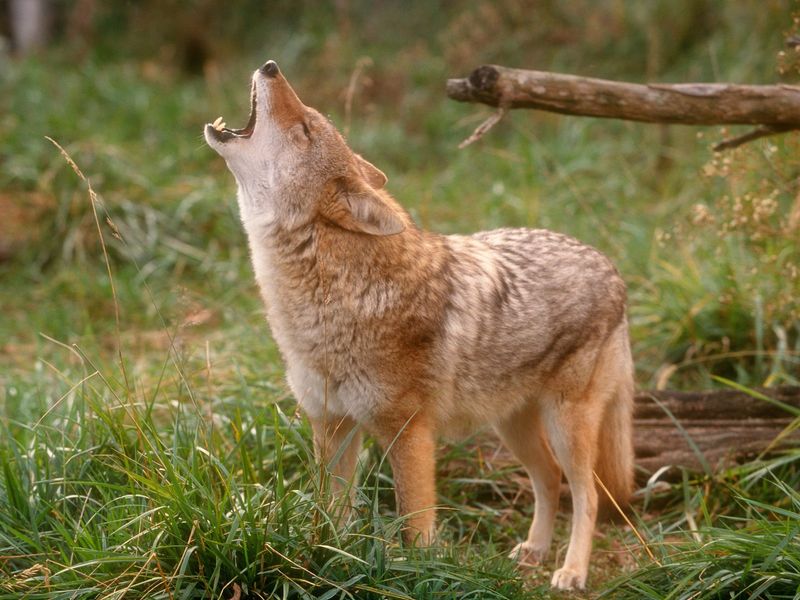
Ever heard a burst of yips that sounded like a dozen coyotes surrounding the neighborhood? Your ears may be fooling you.
Overlapping voices, echoes, and quick changes in pitch can make a small group sound like a crowd.
Researchers tested this directly. In a 2017 study of human perception of coyote group size, 427 listeners heard recordings of one to four coyotes.
On average, the listeners overestimated the number of animals by nearly twofold.
That result is a useful warning about head counts. A loud chorus does not prove a big pack is nearby, and it does not tell you how many animals are really calling.
Two or three coyotes may produce a sound that feels much bigger.
The study does not predict what every person will hear on every night. Your yard, the weather, the distance, and the shape of the land all change how sound reaches you.
The takeaway is simply to treat your own estimate as a rough impression.
If you want to describe what you heard to a neighbor or local wildlife officials, stick to what you noticed. Say when you heard it and roughly which direction it came from, and leave the number of animals as a guess.
Nighttime timing does not identify the call’s purpose
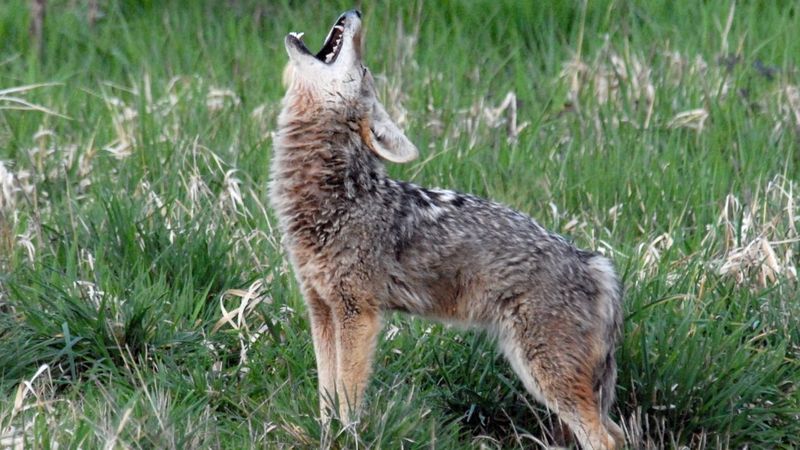
Darkness makes everything feel closer and more serious. A howl at midnight can raise the hair on your arms even when the animal is far away.
That reaction is normal.
Coyotes can be heard vocalizing in the evening and at night throughout much of the year, according to a University of California extension guide. So hearing them after dark is common, and the hour alone tells you very little.
It helps to separate two questions. One is when a call happens.
The other is what the call means. Nighttime answers the first question, but it does not answer the second.
The same is true for other details that make a call feel important. A howl that sounds near your house, a loud chorus, or a sudden burst of yips does not point to one specific cause.
None of those clues shows that the coyotes are heading toward your home.
That leaves some uncertainty, and it is fine to admit it. You cannot know from your bed what the animals are doing.
What you can do is take simple steps in daylight, like securing trash and watching pets, which we cover in the sections ahead.
November calls do not come with a seasonal translation
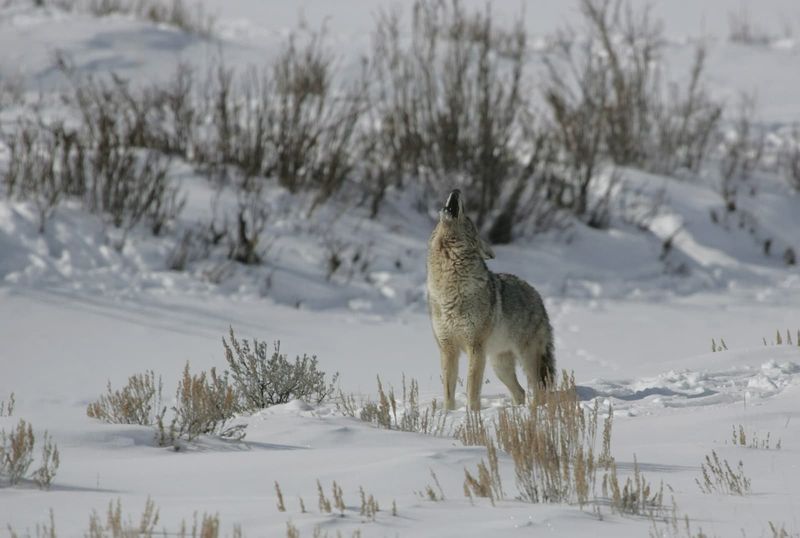
It is tempting to link a late-fall howl to mating season or to raising pups. The sources reviewed for this article do not support that.
They do not establish mating or pup-rearing as the explanation for a North Carolina howl heard in November 2026.
There is one seasonal detail worth knowing, and it is about a different situation. NC Wildlife says a coyote that seems intent on defending a specific area may have a den nearby, particularly from February through June.
That is guidance about behavior you might see in person during those months, not a way to interpret a howl in November.
You may also come across reports that coyote calls are most common during breeding season and dispersal. The University of California source mentions this, but it comes from research that is not specific to North Carolina.
It would be a stretch to carry it over to your neighborhood in Charlotte, Raleigh, or Boone.
The same source also notes that coyotes can be heard in evenings and at night through much of the year. In other words, a November howl is not unusual, and it does not come with a season-based label.
If you hear coyotes tonight, you are hearing animals that communicate. Beyond that, the honest answer is that nobody can tell you the reason from the sound alone.
If you encounter a coyote, make yourself assertive
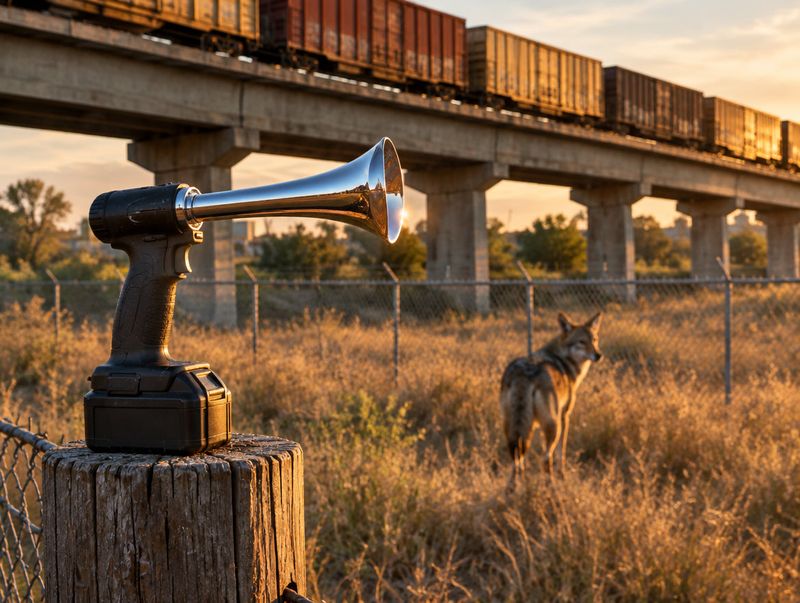
Hearing a coyote is one thing. Meeting one face to face is another, and the advice changes from listening to acting.
Hearing calls nearby is not evidence that a coyote is an immediate threat, so think of these steps as ordinary precautions.
NC Wildlife advises that if you meet a coyote, you should stand tall, be assertive, and haze it until it leaves. Hazing means waving your arms, making loud noises, or otherwise showing the animal that you are not to be approached.
Keep it up until the coyote moves away.
Never feed a coyote, and never try to pet one. Feeding teaches coyotes to connect people with food, which can bring them closer to homes.
You can cut down the draw around your house in a few simple ways:
Secure garbage cans with tight lids or keep them in a garage until pickup. Remove outdoor pet food and bring bowls inside at night.
Clear fallen fruit and spilled birdseed from the yard.
Pets need protection too. NC Wildlife recommends keeping them indoors, leashed, or in a fenced area.
A short walk at dusk with a leashed dog is a better plan than letting the dog roam out of sight.
These habits matter most when coyotes are around, but they are easy to adopt all year.
A coyote defending an area may have a den nearby
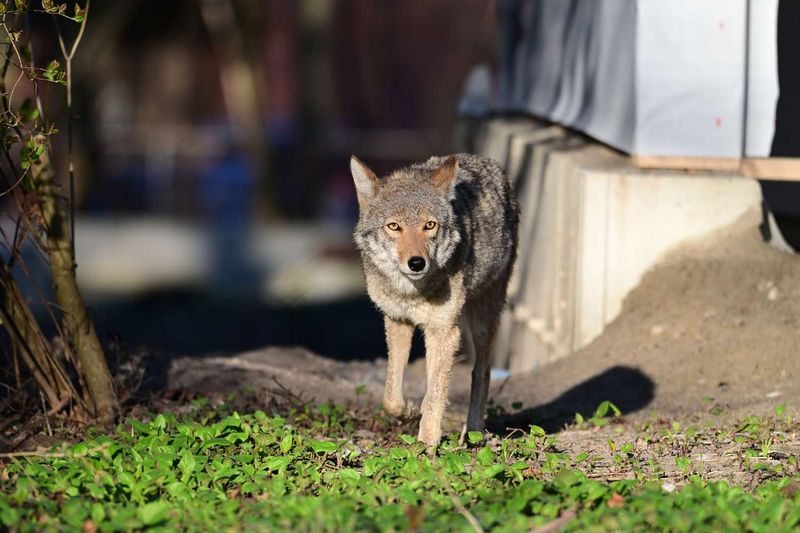
Most coyotes you see will move on when you make noise. Once in a while, one acts differently and seems determined to hold its ground.
That behavior is a cue worth knowing.
NC Wildlife says a coyote that appears intent on defending a specific area may have a den nearby, particularly from February through June. The word may matters here.
It is a possibility, not a certainty, and a howl by itself does not reveal a den.
If you see this kind of behavior, leave calmly. Do not walk toward the coyote or try to get a closer look.
Back away, keep pets close, and choose another route for a while.
There are also times to call for help. NC Wildlife says to contact your local animal control if a coyote fails to respond to direct hazing or acts aggressively for no apparent reason.
Local animal control can tell you what to do next in your county or town.
Keep the two situations separate in your mind. A coyote that stands its ground in an area is one thing.
A coyote that ignores hazing or acts aggressively without a clear cause is another, and that second case is the one that calls for a report.
After a bite or scratch, seek medical advice

Physical contact with a coyote is uncommon, but it is important to know what to do if it happens. Act quickly and keep it simple.
Wash the bite or scratch promptly with soap and water. Then seek medical advice.
CDC guidance on wildlife points people to a health professional after an injury from a wild animal.
A health professional or your public-health department can assess whether rabies prevention is needed. CDC rabies prevention information explains how rabies prevention works.
You do not need to figure that out on your own.
Do not try to judge whether the animal had rabies, and do not decide for yourself what treatment you need. Those decisions belong to medical professionals who can ask about the situation and the wound.
If it helps, write down when and where it happened and what the animal did. That information can make a phone call to your doctor or health department easier.
Listen for communication, not a precise message
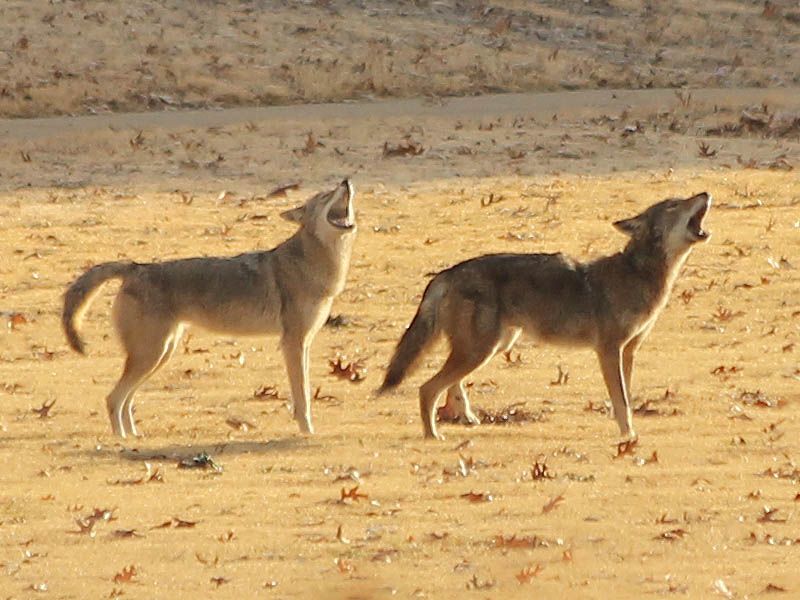
Coyotes really are talking when they yip and howl. Researchers have suggested that long-distance calls help with contact, group bonds, and advertising occupied space, as Lehner’s field work describes.
Even so, a person cannot decode one howl, and as the listener study showed, we are not great at counting callers either.
So listen with curiosity, keep your trash and pets secure, and let the animals keep their secrets. A chorus in the dark is a conversation you are allowed to overhear, not one you are expected to translate.
Share this story