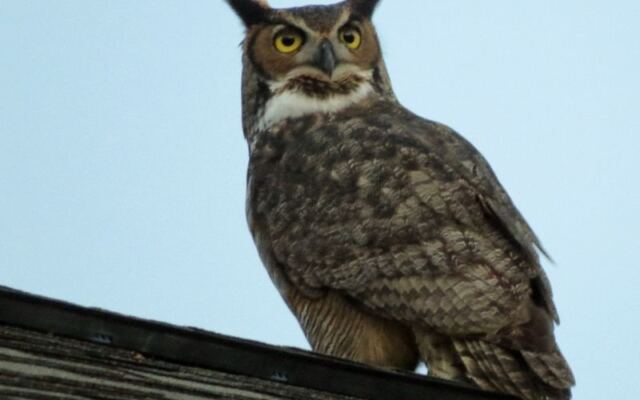
That deep, steady hooting outside your window at night is most likely a Great Horned Owl talking to other owls. Its calls often have to do with territory, and sometimes with courtship between a pair.
Knowing what the sound can and cannot tell you helps you enjoy the show and respond wisely. Here is what North Carolina wildlife experts and bird researchers have to say about it.
Territory is the clearest explanation
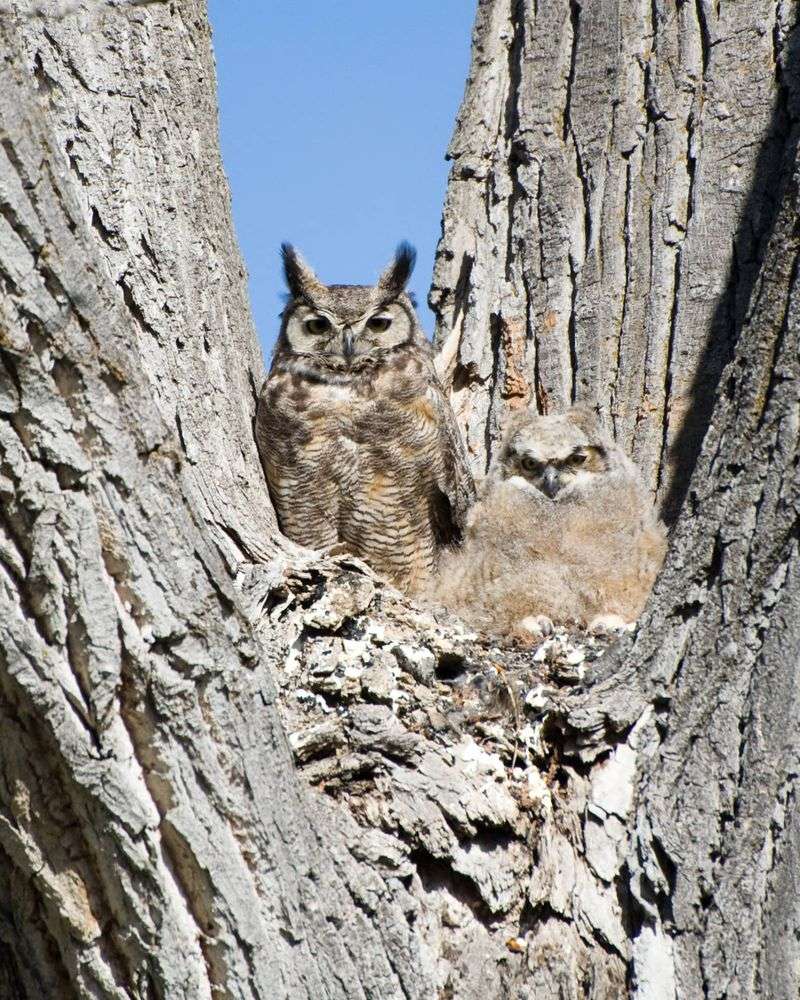
Familiar low hoots from a Great Horned Owl most often advertise or defend territory. The bird is telling other owls, “this area is taken.” That is the best general reading of the sound, though no one can say exactly what a single hoot means.
Great Horned Owls live across the state, and North Carolina Wildlife Resources Commission notes they are mainly nocturnal, even in suburbs. That is why a backyard can become part of an owl’s evening routine.
Your yard may simply sit inside a territory the owl patrols and announces.
Courtship can also shape calling. A pair may trade hoots as the breeding season gets going, and the Cornell Lab of Ornithology sound guide describes this kind of back-and-forth.
Still, a hoot by itself cannot show whether the owl is speaking to a mate, warning a rival, or doing something else entirely.
Here is the part that surprises many people: the calls are not aimed at you. Owls are communicating with other owls.
Old stories say a hoot predicts death, danger, or some other human event, but nothing in the biology backs that up.
Details of the species’ breeding cycle are covered in Cornell’s life history account, which is a handy read if you want to know more. For now, a good way to think about it is this: the owl is keeping in touch with its neighbors, and you happen to be within earshot.
Listening carefully, and without assuming too much, is the right approach.
Calling picks up in fall and early winter
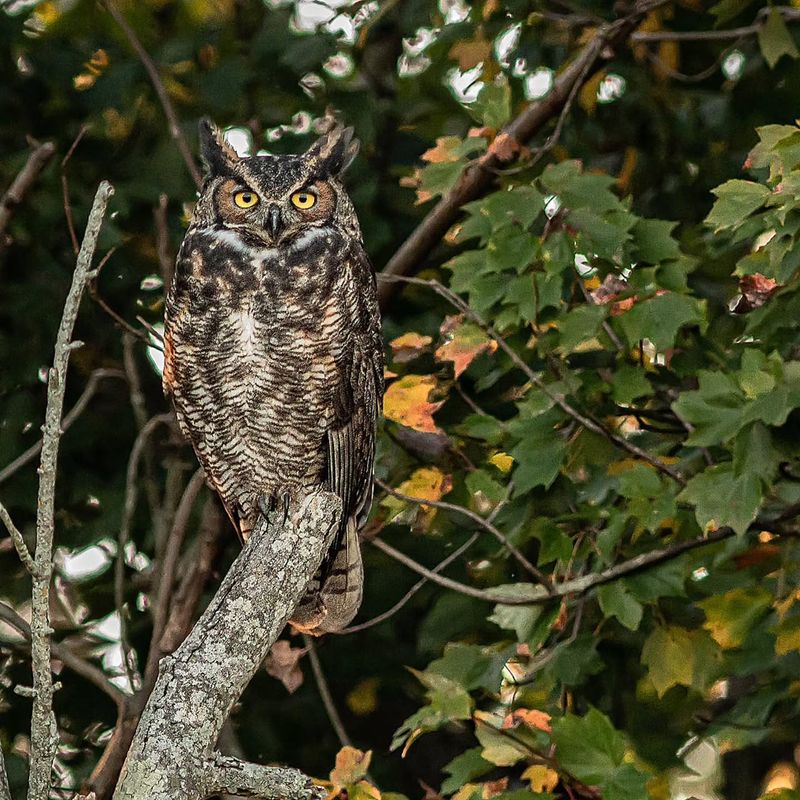
Many North Carolina residents first notice owl hoots when the weather turns cool. In this state, calling becomes common as courtship begins in October, then peaks in November and December.
That timing is described by the state wildlife agency.
Calls are often heard around dusk and after dark, when the birds become active. Early evening, after the sun slips below the trees, is a good time to step outside and listen.
Leaves are off many trees by then, and sound carries farther on still, cold nights.
This seasonal pattern helps explain why a neighbor might say, “the owls just showed up.” They were likely there all along, and the louder calling simply made them easier to notice. Cornell’s life history details show that Great Horned Owls are among the earliest nesters in North America, which fits with fall and winter courtship activity.
Season is a clue, not a rule. Not every owl follows this calendar, and a hoot in October or January does not prove courtship is underway.
Owls may also call at other times for territorial reasons.
If you want to track the pattern yourself, jot down the date and time whenever you hear hooting. After a few weeks, you may see your own local rhythm take shape.
It is a simple, free way to get to know the wildlife that shares your neighborhood.
Pairs may call back and forth
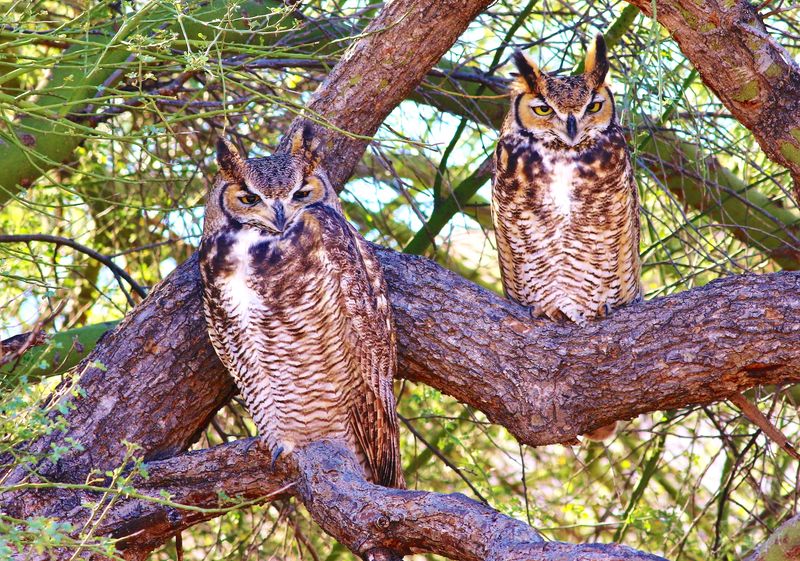
Sometimes the hooting sounds like a conversation, and that may be just what it is. A pair can alternate calls, creating a nighttime exchange that sounds like a duet.
One bird calls, the other answers, and the pattern may repeat for a while.
According to Cornell’s sound guide, a female’s voice is typically higher-pitched than a male’s. That tempts many listeners to sort out who is who.
Pitch in a backyard recording is not a reliable way to tell, since distance, trees, and wind all change how a call sounds.
Birds of North Carolina, a Carolina Bird Club species account, also describes the species’ hooting and its place in the state’s bird life. Even so, hearing two voices does not tell you what they are saying.
Great Horned Owls make more than hoots. A 2009 vocalization study documented several kinds of hoots, chitters, squawks, hisses, and bill-clacking.
Its authors cautioned that further verification in wild owls is needed, and it included a captive female, so it cannot be used to decode a specific call outside your window.
Finally, a duet does not prove a nest is close by. Owls can answer each other across long distances.
Enjoy the exchange for what it is: two owls keeping in touch.
Another owl may be calling
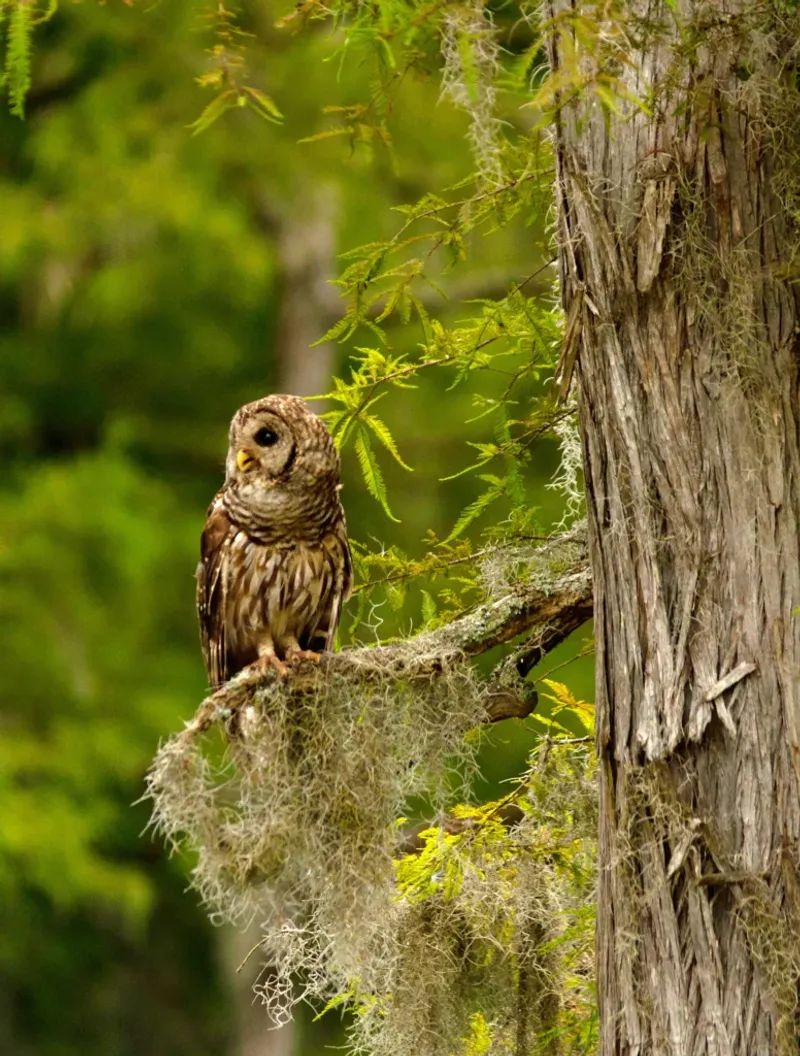
A hoot in the dark is not automatically from a Great Horned Owl. Barred Owls also live throughout North Carolina, and their calls can be mistaken for other species by people who are just starting to listen.
Nighttime alone cannot settle the question.
Habitat gives a hint. The state’s Barred Owl profile describes that species as more typical of swamps, floodplains, and moist woodlands, while Great Horned Owls are more associated with uplands.
That is a clue, not proof, because both birds can turn up in places that fit the other better.
So what can you do? Record the call on your phone, then compare it with reference recordings.
Cornell’s Great Horned Owl sound page offers samples you can play side by side with your own clip.
Pay attention to rhythm and tone. Listen for the number of notes, the spacing between them, and whether the voice is deep and steady or has a different pattern.
If you can safely see the bird with a flashlight or binoculars at a distance, that helps too.
Until you have heard or seen the bird well, “an owl” is a perfectly good answer. Confident identification takes a good listen, and sometimes more than one night of it.
A call does not locate a nest
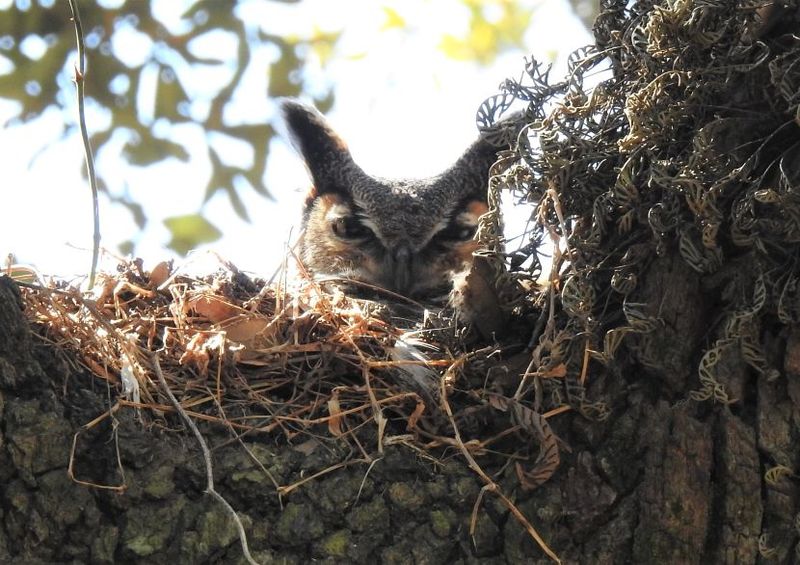
Hearing an owl near your house is a different thing from finding its nest. Great Horned Owls occur statewide in North Carolina, and the state wildlife agency notes they are present even in suburbia.
Seeing or hearing one is not unusual.
Owl calls carry a long way on a quiet night. The bird you hear may be perched in woods down the road or across a field, well beyond your property line.
That means a call from the dark cannot tell you where the owl lives.
A call also cannot reveal the exact behavior behind it. Territory advertising, a reply to another owl, and courtship all sound similar to human ears.
Because of that, a hooting pair does not prove they are nesting on your land.
Nest-area advice matters only if you actually find young owls or a nest. If you do not, there is nothing special to do.
Keep enjoying the sound, and leave the guessing about nest sites to the owls.
If you are curious, you can watch from a comfortable distance in daylight for signs such as a bulky stick nest in a large tree. Never climb, trim, or poke around to check.
Simply noticing is plenty.
Give nesting owls space
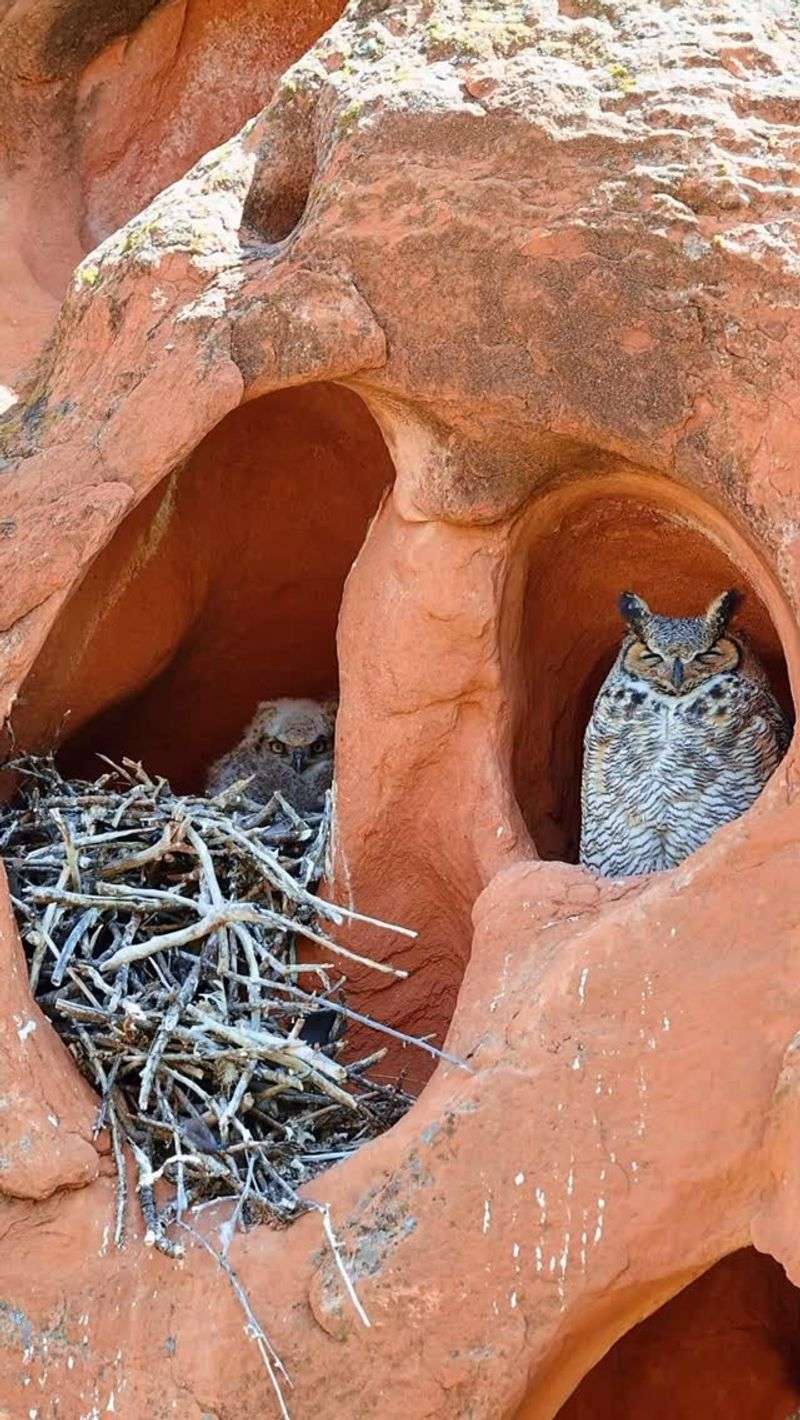
If you know young owls are nearby, a little distance goes a long way. North Carolina Wildlife says rare swooping incidents can occur when people pass too close to young.
Parents are protecting their family, not picking on you.
The agency recommends avoiding the immediate area for a few weeks. When owlets are outside the nest, that shortens to 24 hours.
Walking a different route, keeping children and visitors away from that corner of the yard, and using a side door can all help.
Small pets deserve ordinary care. Supervise them outdoors, especially at night and around dawn and dusk, when owls are most active.
A leash for a small dog or a quick check on a cat at the door is a sensible habit.
Keep the risk in proportion. Dives at small dogs or cats are very rare, and an owl is unlikely to carry a pet away.
Stories of owls routinely snatching pets are exaggerated.
Most of the time, nesting owls simply want to be left alone. Give them room, stay calm, and enjoy the sight from afar.
A few weeks of patience is a small price for such a remarkable neighbor.
A grounded owlet may still have parental care
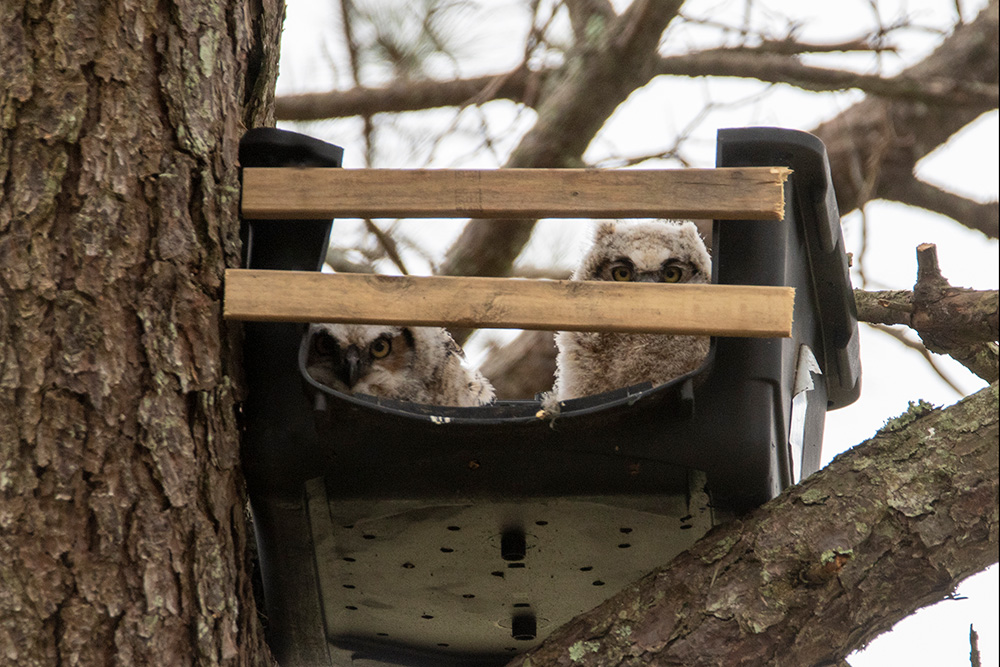
Finding a fluffy young owl on the ground can feel alarming. It looks helpless, so many people assume it was abandoned.
In fact, young Great Horned Owls may spend time on the ground while they learn to fly, and their parents can still look after them.
The best first move is to step back. North Carolina Wildlife guidance says to leave the owlet alone unless it is clearly injured, sick, or in immediate danger.
Picking it up can interfere with the care the parents are giving.
Look for signs of real trouble. A visible wound, a drooping wing, or a bird in the middle of a road needs attention.
A bird sitting quietly beneath a tree, alert and upright, is usually fine.
If you think help is needed, contact a licensed raptor rehabilitator for advice. The state’s page on injured and orphaned wildlife explains how to find help.
Keep pets and children away while you wait for guidance, and avoid handling the bird yourself.
An owlet on the ground is often just a student mid-lesson. The kindest thing most of us can do is watch quietly and let the parents do their job.
Share this story