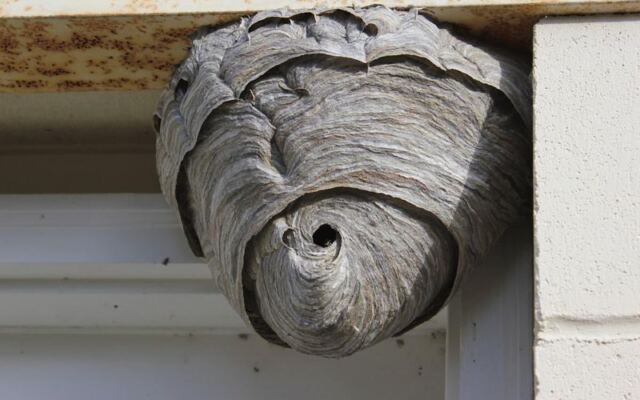
Start by keeping people and pets away from the nest, then ask one simple question: how likely is anyone to run into it? A nest tucked in a quiet corner of the yard can often be left alone, while one by a door, a walkway, or inside a wall needs a professional.
Knowing the difference can save you from a stressful, painful mistake. Here is how to sort out what you are dealing with and what to do next.
Keep people and pets clear before you investigate
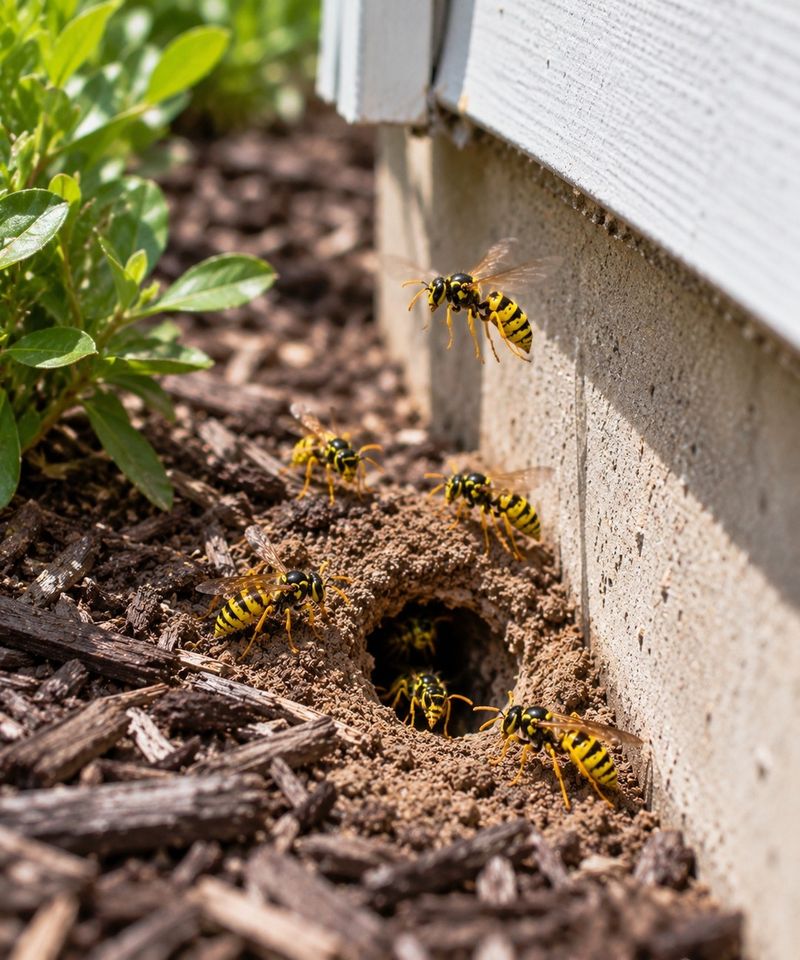
Before you try to figure out anything about the nest, get everyone out of its way. Call children inside, leash or bring in pets, and avoid mowing, trimming, or running a leaf blower near the spot.
Yellowjackets defend their nests, and vibration or sudden movement nearby can set them off.
Once everyone is clear, you can learn a little by watching. Penn State Extension suggests observing from about 10 to 15 feet away to see where the insects fly in and out, and then staying clear.
Pick a time when you can watch calmly, such as a bright afternoon when workers are active, and keep your visit short.
Treat that distance as a guide for watching, not a promise of safety. Yellowjackets can react to people closer than you expect, especially if the nest is disturbed.
Never walk up to peek into the entrance, poke at it, or spray it to see what happens.
What you are looking for is a simple picture: the entrance, the path the insects take, and whether that path crosses places your family uses. A few notes or a quick photo from a distance will help you decide your next step, or help a professional understand the situation if you call one.
Check whether people or pets could encounter the nest
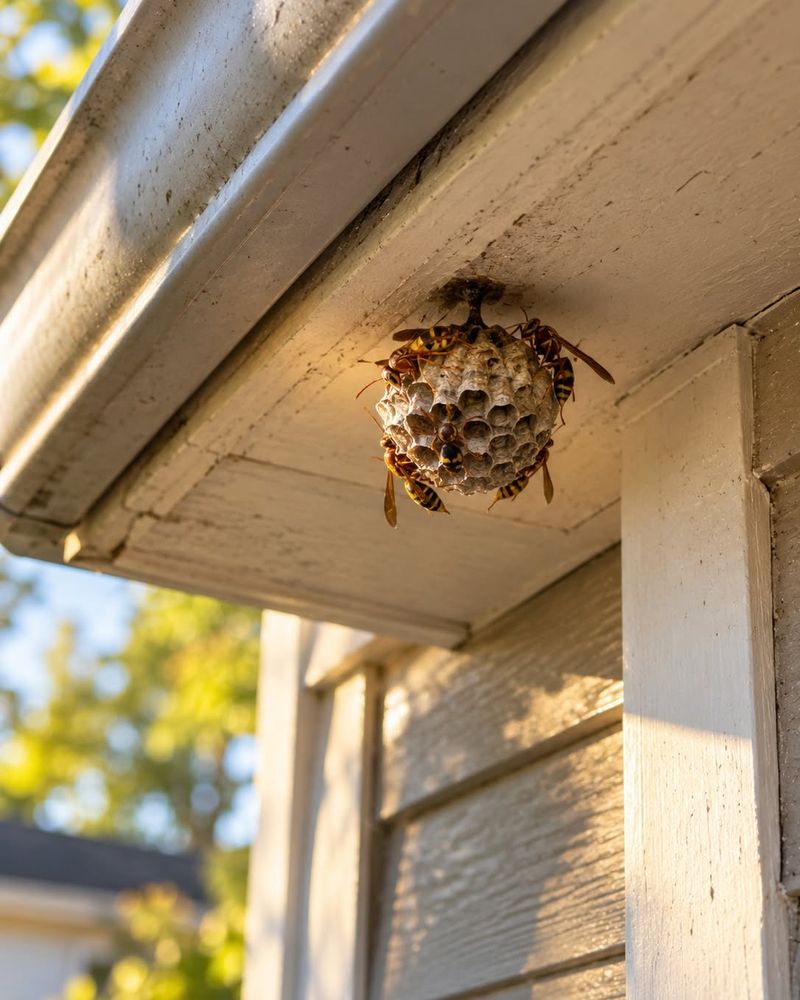
Being near the house does not decide the question by itself. What matters is how likely someone is to cross the nest’s path.
A nest at the far edge of the yard behind a brush pile is a very different situation from one beside the front steps.
According to Penn State Extension, nests away from entrances, mowed areas, and places people use can generally be left alone. Nests close to those spots, or near someone with a known sting sensitivity, call for professional pest management.
Walk through your day in your mind. Do kids play near the spot, or does the dog patrol that fence line?
Do you mow, garden, take out the trash, or carry laundry past it? A doorway, walkway, play space, or opening into the home puts the nest in the high-contact group.
UMass Amherst Extension also points toward a professional when a nest sits close to areas people use.
These examples are not rigid cutoffs. A nest 30 feet away along a path your family uses daily may be a bigger concern than one 8 feet away behind a fence nobody visits.
If you are unsure, a pest management professional can look at the layout and give advice.
A known sting allergy in the household raises the stakes. In that case, lean toward getting professional help even when the nest seems fairly out of the way.
Leave wall and attic nests to a professional
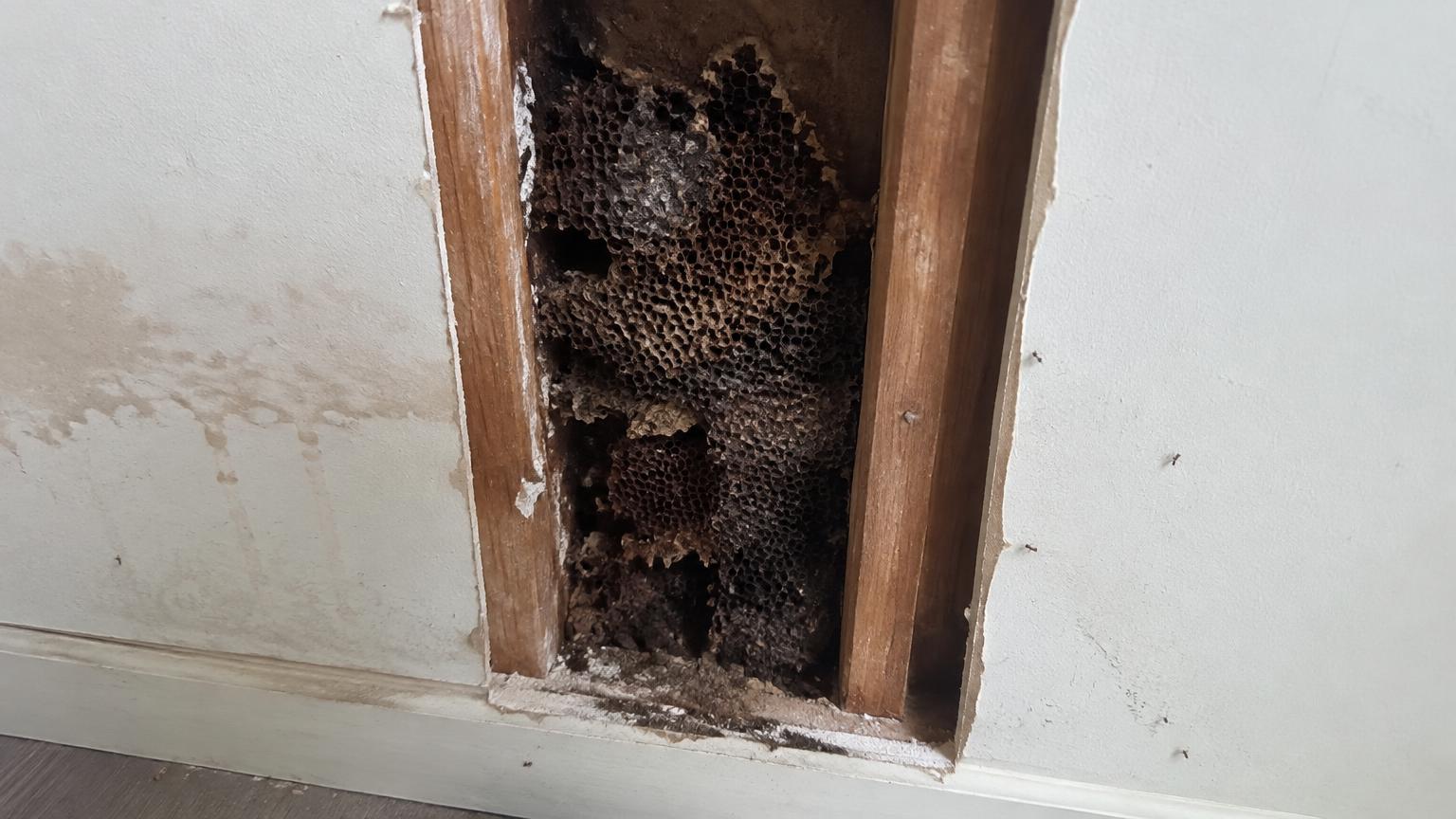
Nests inside walls or attics are a different problem from ones in open ground or shrubs. You cannot see the nest, you cannot easily reach it, and the insects are only a thin layer of building material away from your living space.
Penn State Extension advises having a professional treat these structural nests.
The biggest mistake is sealing the hole. It may feel logical to plug the entrance and trap the colony, but Penn State warns that yellowjackets may chew through interior drywall and enter the home.
Instead of stopping the problem, you could end up with angry insects inside a bedroom or hallway.
The University of Maine Cooperative Extension likewise advises treating a wall nest without plugging its entrance. That is guidance for how a trained applicator handles the job, not a how-to for homeowners.
If you notice yellowjackets streaming in and out of a crack in siding, a gap near a vent, or a hole in a soffit, mark the spot from a safe distance and call a pest management professional. Mention that you suspect a structural nest so they can plan for it.
Until they arrive, leave the entrance alone and keep people and pets away from that side of the house.
An out-of-the-way nest can often stay
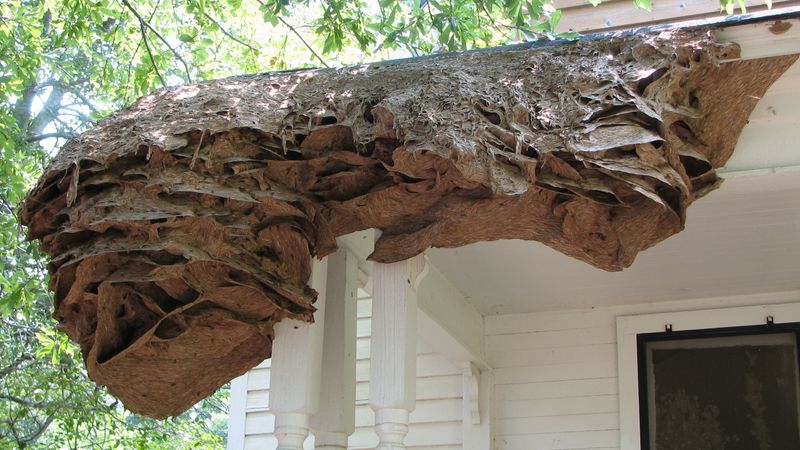
Plenty of yellowjacket nests never cause a single problem. If yours sits in a spot nobody visits, leaving it undisturbed is a reasonable choice.
Yellowjackets also provide some insect control, since workers hunt caterpillars, flies, and other pests, as Penn State Extension notes.
Nests are also temporary. Many colonies die with cold weather, and only the new queens survive the winter, tucked away in sheltered spots.
The old nest is not reused the next year, so a quiet nest this summer does not mean a bigger one in the same hole next summer.
Cold-weather die-off is typical, though, not certain. Penn State’s German yellowjacket page explains that some German yellowjacket nests in warm, insulated structures can survive winter.
That is one more reason a nest inside a wall or attic deserves professional attention.
If you decide to let an outdoor nest be, keep a few habits. Mark or mentally note the area, steer mowers and kids away, and check now and then from a distance to see whether activity is growing toward a busy spot.
If circumstances change, such as a new patio, a visiting relative with an allergy, or a path moving closer, you can reconsider.
Avoid risky shortcuts if treatment is needed
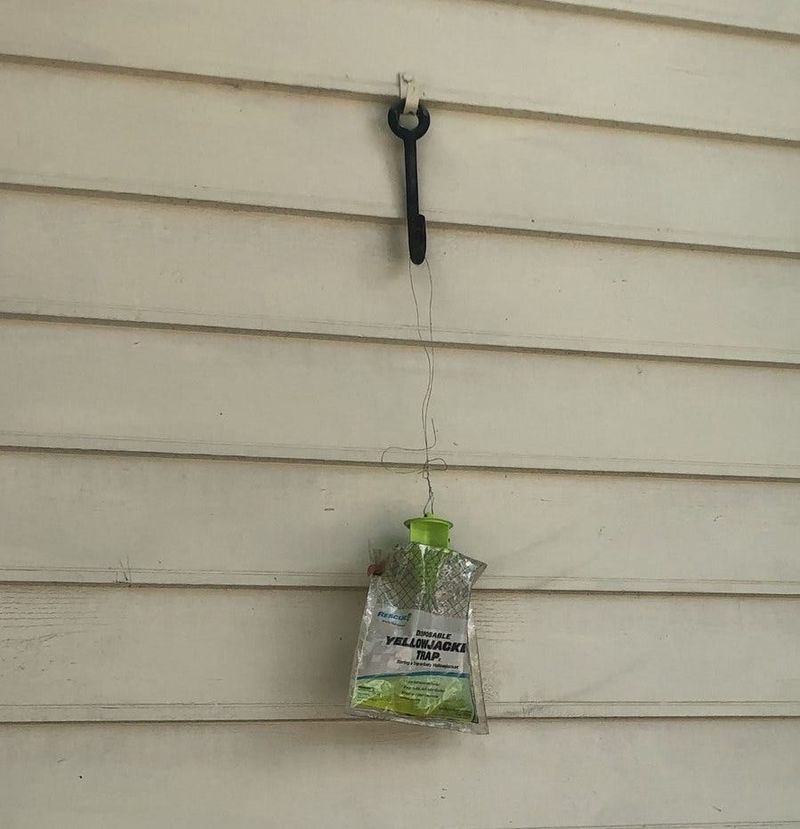
When a nest is in a busy spot or the household has a sting risk, a pest management professional is the safest route. Internet tips can tempt people toward shortcuts, and several of them cause more trouble than they solve.
Traps are a common one. Penn State Extension says traps may reduce the number of foraging workers, but they are unlikely to solve a nest problem.
Paper-bag decoys, hung to look like a rival nest, also lack clear evidence that they keep yellowjackets away.
Some people try flooding a nest with soapy water. Penn State’s guide to Pennsylvania social wasps says this can control some nests, depending on their size and shape.
That is far from a reliable or universally safe method, and it puts you right at the entrance.
Never use gasoline, kerosene, fire, or other improvised hazards. Penn State describes fire as significantly more dangerous, with risks from toxic fuels, property damage, and injury.
If a pesticide is part of the plan, use only a product labeled for the intended pest and application site, and follow the directions and precautions. The Pennsylvania Department of Health notes that using a product against its label violates federal law and can be dangerous or ineffective.
Hiring a licensed professional takes much of that guesswork off your shoulders.
Treat a severe sting reaction as an emergency
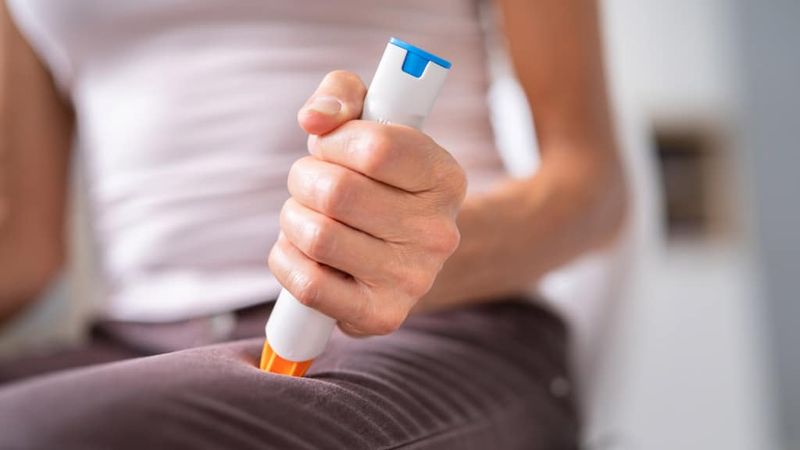
Most stings hurt and swell, but a few people react far more strongly. If someone in your home has a known severe sting allergy, talk with their clinician ahead of time and follow the plan they provided.
Make sure that person and the adults around them know where the medicine is kept.
The American College of Allergy, Asthma & Immunology advises using prescribed epinephrine at the first signs of anaphylaxis and calling 911. Warning signs can include trouble breathing, swelling of the face or throat, hives, dizziness, or a sense that something is badly wrong.
Do not wait to see whether symptoms settle on their own. Use the medicine as directed, call for emergency help, and follow the dispatcher’s instructions.
Emergency care is still needed even if the person starts to feel better after the injection.
Keep this plan in mind whenever a nest is on the property, and keep the allergic person well away from it.
Choose the next step by exposure
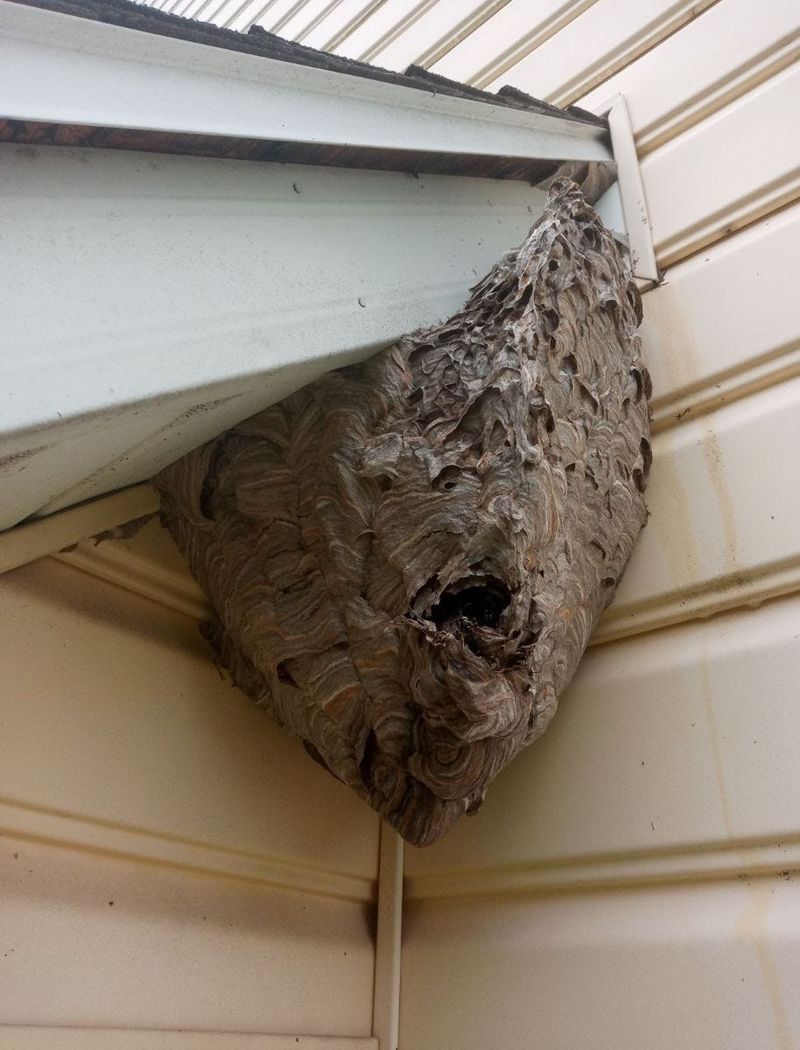
Start by staying clear and watching from a distance. Then ask who or what is likely to cross the nest’s path.
If the nest is outdoors and easy to avoid, leaving it undisturbed is a sound choice, as Penn State Extension describes.
If it sits where people walk, play, or mow, or if it is in a wall or attic, call a pest management professional. Nests near a house are not all equal, so let exposure guide you rather than distance alone.
A quiet nest is usually a short-term neighbor, and a busy doorway is a good reason to call for backup.
Share this story