Some of the scariest-looking animals in a Pennsylvania backyard are actually the most helpful. Bright colors, big jaws, and creepy legs can make anyone jump, but looks can fool you.
Many of these critters eat garden pests and keep your yard healthy for free. Here are seven common neighbors that seem dangerous but deserve a second chance.
1. Eastern Milksnake
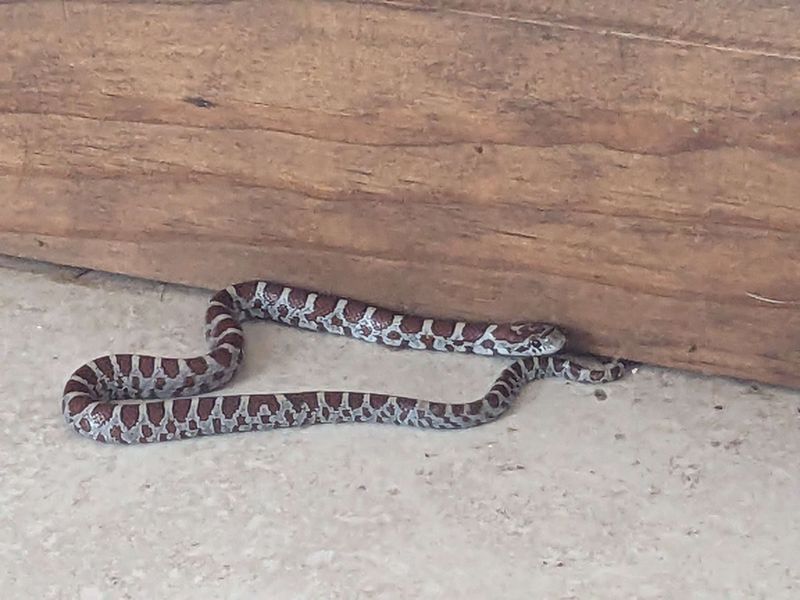
Plenty of Pennsylvania homeowners have called for help after spotting a blotchy snake by the woodpile, sure it was a copperhead. Nine times out of ten, it turns out to be an eastern milksnake.
The red-brown saddles on a gray body really do look alarming at first glance.
Here is the good news. Milksnakes have no venom at all, and they squeeze their prey instead.
Their favorite meals are mice, voles, and other rodents that chew on bulbs and roots.
An easy clue is the pattern. Copperheads have hourglass bands that are wide on the sides and narrow on top, while milksnakes wear rounded blotches.
If one shows up, just let it pass and enjoy the free pest control.
2. Northern Water Snake
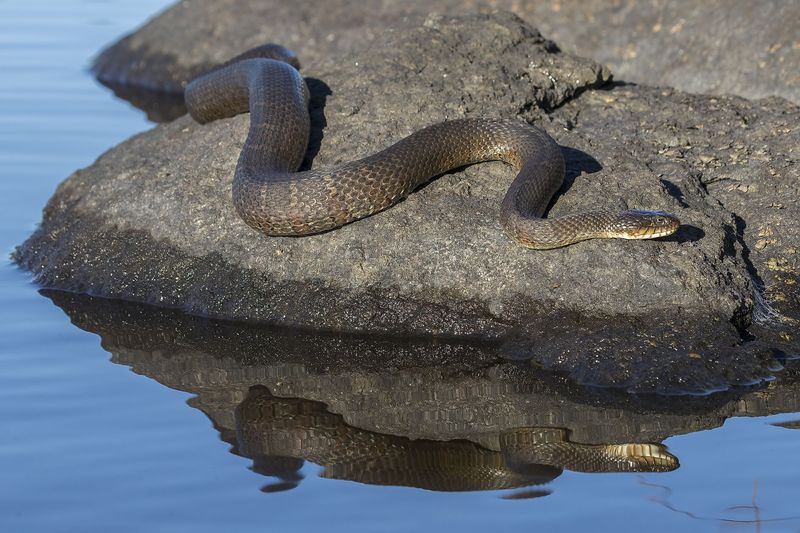
Got a pond or a creek out back? Then you may have met the northern water snake, a thick, dark, banded swimmer that people often mistake for a water moccasin.
Fun fact: cottonmouths do not live in Pennsylvania at all. The closest ones are hundreds of miles south.
So that snake sunning itself on your pond rocks is almost certainly this harmless local.
Fair warning, though. Water snakes can be grumpy when grabbed, and they may bite or release a smelly musk.
Leave them be, and they will quietly snack on small fish and frogs without ever touching your tomatoes.
3. Dobsonfly
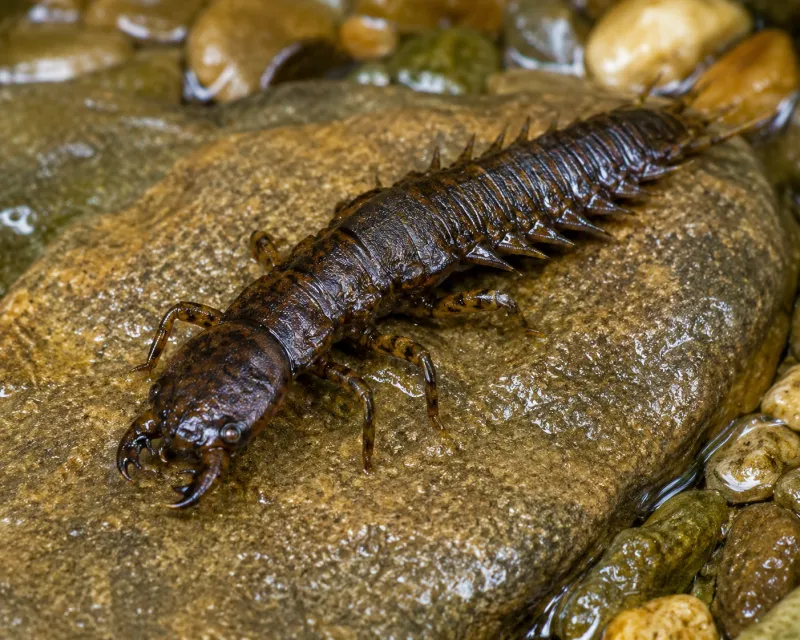
Imagine flipping on your porch light and seeing a five-inch insect with jaws like curved tusks. That is a male dobsonfly, and it looks like something from a monster movie.
Those huge mandibles are mostly for show. Males use them to impress females and wrestle rivals, and they are too long to give a real pinch.
Females have shorter jaws that can nip, but only if you pick one up.
Adults live just a few days and barely eat. Their young, called hellgrammites, live in clean streams, so seeing a dobsonfly is actually a sign that nearby water is healthy.
4. Yellow Garden Spider
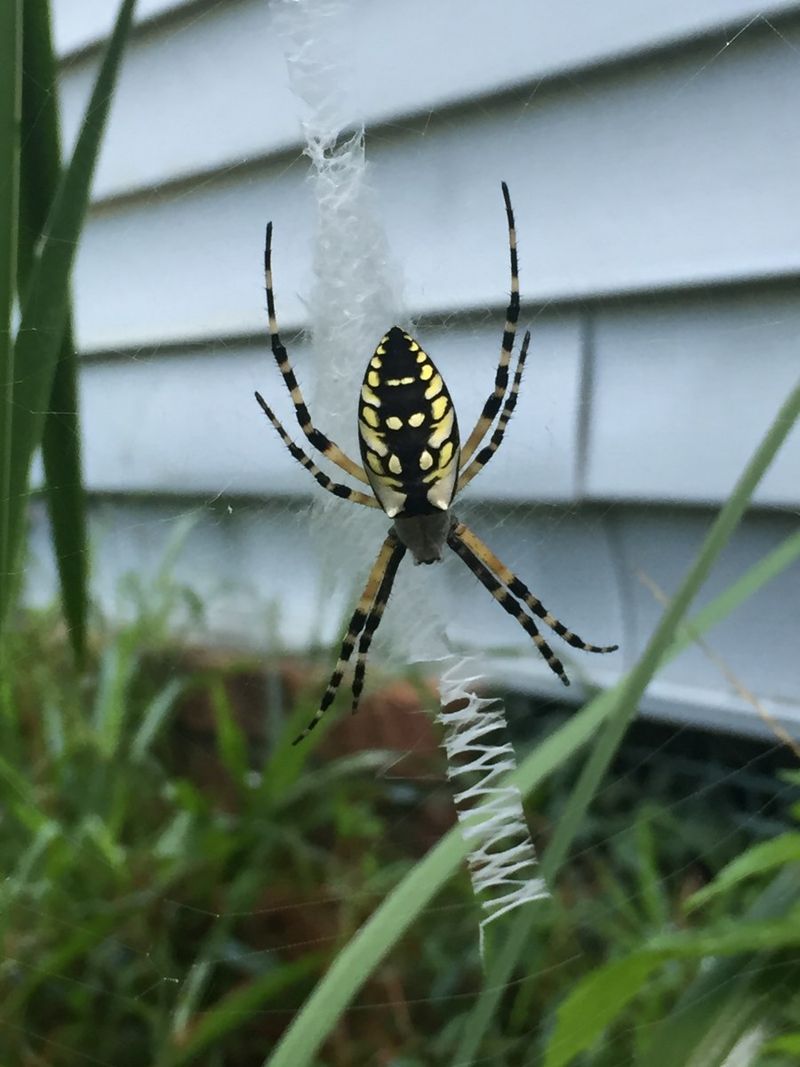
Late summer brings one of the boldest spiders in the state. The yellow garden spider, with its black and gold body, builds giant webs stretched between flowers and tall plants.
Look for a thick zigzag line in the middle of the web. Scientists still argue about its purpose, but some think it warns birds not to fly through.
Grandparents across Pennsylvania have called these “writing spiders” for generations.
Despite the flashy colors, this spider is shy and would rather drop to the ground than bite. It catches grasshoppers, flies, and beetles that would otherwise munch your vegetables.
Consider it a striped garden guard working the night shift.
5. House Centipede
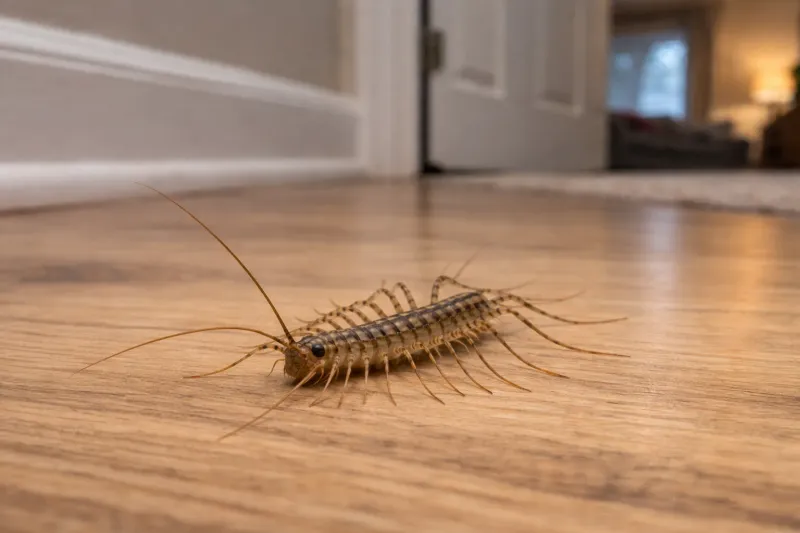
Few things make people scream like a house centipede racing across the basement floor. With fifteen pairs of long legs, it moves fast and looks downright creepy.
Still, it might be one of the best roommates you never asked for. House centipedes hunt silverfish, cockroaches, spiders, and even termites.
They work at night, so you rarely see how busy they are.
Bites are extremely rare and usually feel like a mild bee sting at worst. Outdoors, they help clean up garden pests under mulch and stones.
If you can stand the legs, let them earn their keep.
6. Hummingbird Clearwing Moth
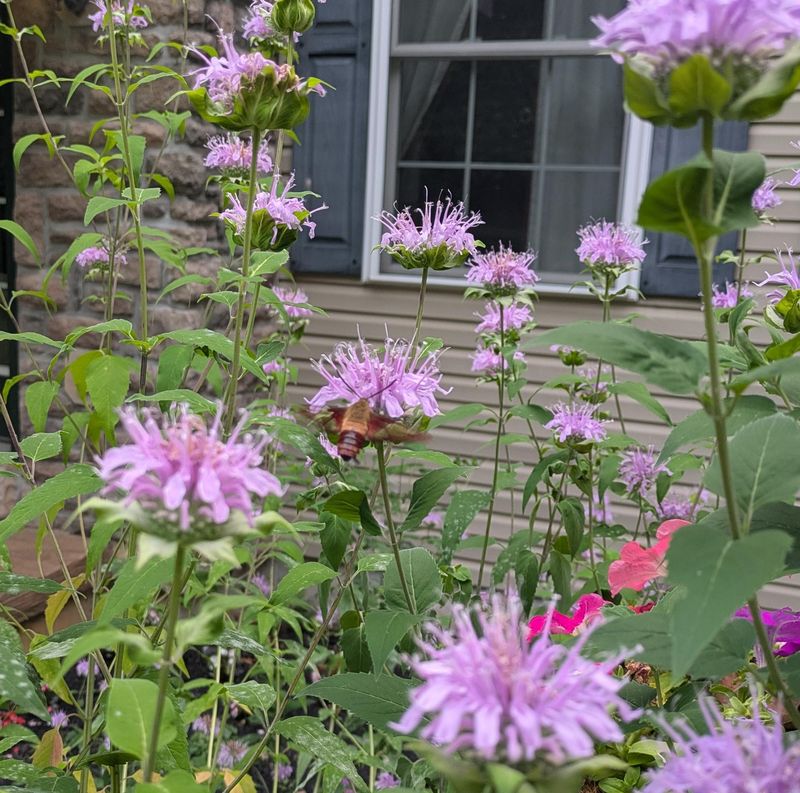
Is it a bee? A tiny bird?
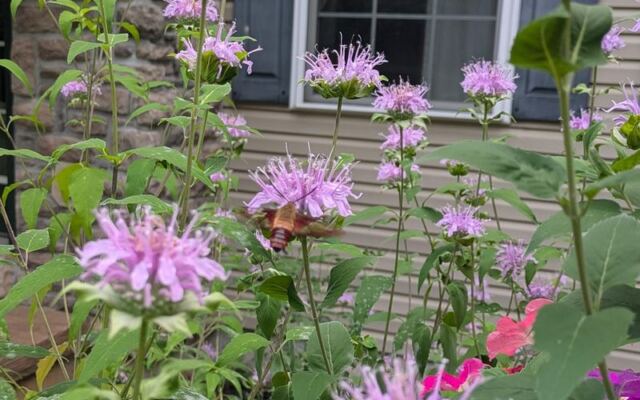
Many gardeners do a double take when they see the hummingbird clearwing moth hovering over bee balm. Its fuzzy body and buzzing flight can make it look like a big bumblebee ready to sting.
Relax, because this moth has no stinger. It sips nectar with a long tongue, flying in the daytime like a hummingbird.
Along the way, it pollinates flowers.
Its caterpillars do nibble honeysuckle and viburnum, but rarely enough to cause real harm. Plant some phlox or bee balm, and you might get a front-row seat to this little air show.
7. Eastern Cicada Killer Wasp
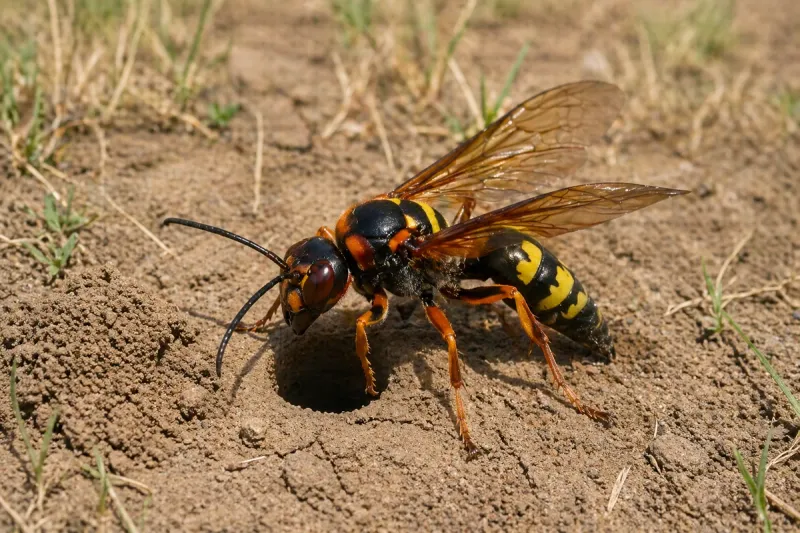
At nearly two inches long, the cicada killer is the giant of Pennsylvania wasps. When dozens of them zoom low over a lawn in July, it can feel like an invasion.
Most of the ones you see are males, and they cannot sting. They patrol their territory and may buzz near your face, but it is pure bluff.
Females can sting, yet they are calm and save their venom for cicadas.
Each female drags a stunned cicada into a burrow to feed her young. They prefer bare, sandy soil, so thicker grass usually encourages them to move along.
Otherwise, they leave your plants alone.
Share this story